Compare wet vs dry cat food with vet-informed pros and cons. Learn how moisture affects urinary and kidney health, how carbs and calories differ, and when co...
Article
•
Designer Mixes
Best Feeding Schedule for Cats

Shari Shidate
Designer Mixes contributor
If you have ever wondered whether your cat should eat once a day, free-feed from a full bowl, or follow a timed routine, you are asking the right question. A thoughtful feeding schedule can support healthy weight, steadier energy, fewer stomach upsets, and a happier household overall. The goal is not perfection. It is a routine that fits your cat’s life stage, health needs, and your real-world schedule.
As a veterinary assistant, I have seen how small changes in timing and portions can make a big difference, especially for cats who gain weight easily, beg all day, vomit on an empty stomach, or have medical conditions like diabetes or kidney disease. Let’s walk through how to build a feeding schedule you can stick with and your cat can thrive on.
Why a feeding schedule matters
Cats are small-prey hunters by nature. In the wild, they often eat multiple small meals across a day, and many indoor cats do best with a similar rhythm. A predictable schedule can help you:
- Manage weight by controlling total daily calories
- Reduce food anxiety because your cat learns food is reliable
- Spot health problems earlier since appetite changes stand out
- Support digestion by avoiding long fasting gaps for cats prone to vomiting
- Coordinate multi-cat homes where one cat steals another’s food
It is also a practical tool. When you know when your cat eats and how much, you can make better decisions with your veterinarian if anything changes.
Start with the basics
1) Total daily calories
The schedule only works if the daily amount is appropriate. Calorie needs vary by age, size, activity level, spay and neuter status, and health. Your cat’s food label provides a starting point, but it is often generous. If your cat is gaining weight, you may need a measured plan.
Action step: Ask your veterinarian for a target weight and daily calorie goal, then use that number to divide meals.
Measuring tip: For dry food, a gram scale is more accurate than a measuring cup. If your bag lists kcal per cup, you can calculate grams by using the food’s kcal per gram (often on the bag or the manufacturer site) or asking the manufacturer for grams per cup for that specific diet.
2) Meal frequency
Most adult cats do well with 2 meals per day, and many do even better with 3 to 4 smaller meals if they vomit between meals, beg constantly, or live in a multi-cat home. Kittens need more frequent meals because they are growing fast.
3) Food type: wet, dry, or mixed
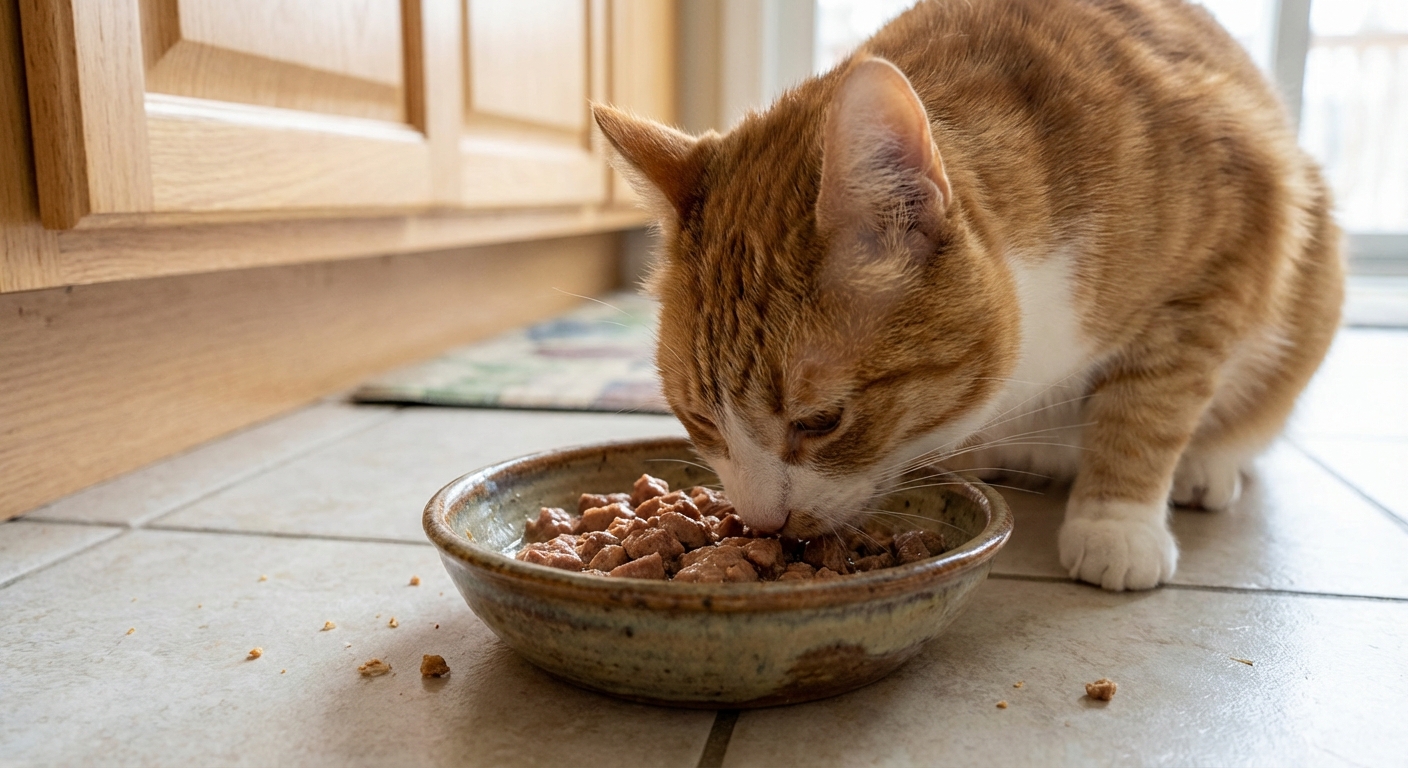
From an evidence-based perspective, many veterinarians encourage some wet food for hydration support, especially for cats prone to urinary issues. Dry food can be convenient and can work well when carefully portioned, particularly with puzzle feeders.
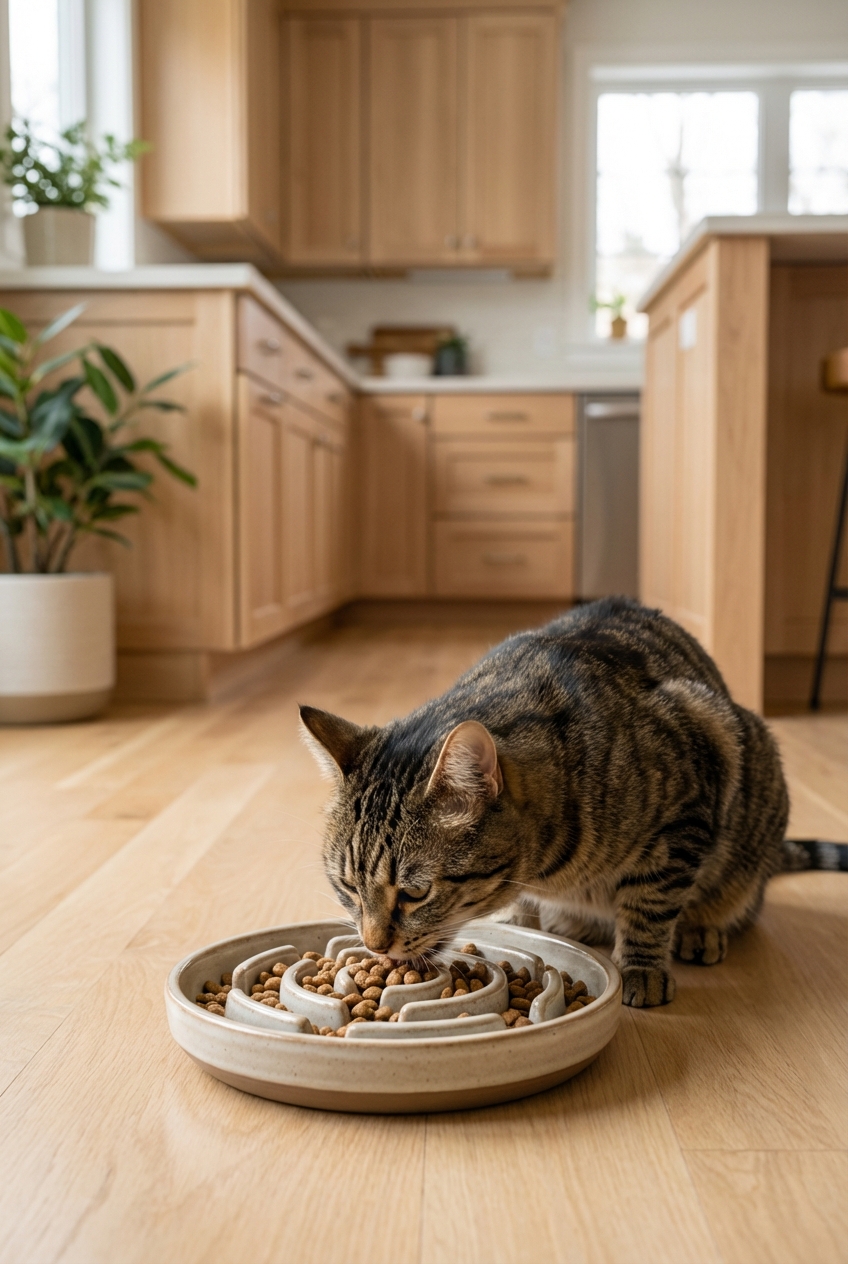
Best of both worlds: Many families succeed with wet meals morning and evening plus a small measured dry portion offered via a feeder or puzzle toy.
Water matters too: Even with wet food, encourage drinking with a cat fountain, multiple water stations, and bowls kept away from the litter box.
Free-feeding and once-a-day feeding
Free-feeding: pros and cons
Free-feeding means leaving food out all day. It can work for some cats, especially those who truly self-regulate and maintain a healthy body condition. It can also be helpful in specific situations, such as cats that need to take in more calories, with close veterinary guidance.
The downsides are common: it makes calorie control harder, can increase conflicts in multi-cat homes, and can hide early appetite changes.
If you free-feed: Measure the full day’s portion first and put only that amount out. If the bowl is refilled “as needed,” it is easy to overfeed without realizing it.
Once-a-day: when it works, when it does not
Some cats tolerate one meal a day, but many do better with 2 or more meals. Once-a-day feeding is more likely to backfire if your cat scarfs and vomits, begs relentlessly, has bile vomiting early morning, or needs tight nutrition timing (for example, diabetes). If your schedule is tight, an automatic feeder can make a multi-meal routine realistic.
Schedules by life stage
Kittens (up to 12 months)
Kittens typically need 3 to 5 meals per day depending on age. They have small stomachs and high energy needs.
- 8 to 12 weeks: 4 meals per day
- 3 to 6 months: 3 to 4 meals per day
- 6 to 12 months: 2 to 3 meals per day
Tip: If you work long shifts, use an automatic feeder for one mid-day portion and keep the other meals consistent.
Healthy adult cats (1 to 7 years)
A reliable, realistic schedule is usually:
- Two meals per day, about 10 to 12 hours apart, or
- Three meals per day if your cat gets nauseous between meals
Many cats love a small “snack” portion offered in a puzzle feeder while you are away, as long as it is counted as part of the daily calories.
Senior cats (often 7 to 10+ years)
“Senior” can start around 7 years for some cats, but many do not show age-related changes until closer to 10 or 11. Older cats can do well with 3 to 4 smaller meals, especially if they have dental sensitivity, digestive changes, or are losing weight. Seniors should be monitored closely for subtle appetite changes.
Watch-outs: Increased thirst, increased urination, weight loss despite eating, or a sudden picky phase are reasons to schedule a veterinary visit.
Common situations
For weight loss (overweight cats)
Free-feeding makes weight loss very difficult for most cats. A structured plan tends to work better:
- 3 to 4 small meals per day to reduce begging
- Use a gram scale for dry food since cups can be inaccurate
- Use slow feeders or puzzle feeders to stretch each meal
Weight loss should be gradual. Rapid weight loss in cats can be dangerous, so work with your veterinarian for a safe target rate.
For cats who vomit yellow foam between meals
If your cat throws up yellow, foamy liquid early in the morning or between meals, one possible reason is that the stomach is empty for too long (this is often discussed as bilious vomiting). Try:
- Smaller, more frequent meals
- A bedtime snack that is part of the daily total
- Consider wet food for easier digestion for some cats
Important: This pattern can also look like other issues such as parasites, food intolerance, pancreatitis, inflammatory bowel disease, or other GI conditions. If vomiting is new, frequent, or paired with weight loss, diarrhea, lethargy, or a behavior change, schedule a veterinary visit.
For diabetic cats (timing matters)
Diabetic cats often need a schedule that matches insulin dosing. Your veterinarian will guide you, but consistency is key:
- Meals timed with insulin, often twice daily
- Same calories, same timing day to day
- Monitor appetite closely, especially if your cat ever refuses a meal
Never adjust insulin on your own without veterinary guidance.
For kidney disease and other chronic illness
Some cats with chronic kidney disease (CKD) do best with smaller, more frequent meals, and they may need extra encouragement to eat. Warming food slightly, offering a quiet feeding spot, and staying consistent can help. If appetite is dropping, nausea and dehydration are common culprits, and your veterinarian can help with a plan that may include appetite support or anti-nausea medication.
For multi-cat homes
When one cat steals food and another eats slowly, schedules can reduce stress:
- Feed separately in different rooms
- Pick up bowls after 15 to 20 minutes
- Consider microchip feeders for cats on different diets
Sample schedules
Option A: Two meals
- 7:00 AM: Breakfast (about 50% of daily calories)
- 7:00 PM: Dinner (about 50% of daily calories)
Option B: Three meals
- 7:00 AM: Breakfast (40%)
- 1:00 PM: Midday meal (20%) via auto feeder or pre-portioned bowl
- 7:00 PM: Dinner (40%)
Option C: Four meals
- 6:30 AM: Meal 1 (25%)
- 11:30 AM: Meal 2 (25%)
- 4:30 PM: Meal 3 (25%)
- 9:30 PM: Meal 4 (25%)
Little reminder: Treats count. Keeping treats generally under 10% of daily calories is a common veterinary guideline.
Switching to a new schedule
Many cats prefer routines, and some will protest change. Transition gradually:
- Pick a start date when you can be consistent for at least 1 to 2 weeks.
- Measure the total daily portion first, then divide it into meals.
- Shift timing by 15 to 30 minutes per day until you reach the new schedule.
- Use enrichment like puzzle feeders, play sessions, and brushing to replace “snack-seeking.”
If your cat is used to free-feeding dry food, start by offering set meals but leave a small measured portion in a puzzle feeder during the day. Then slowly tighten the timing if needed.
Wet food timing and safety
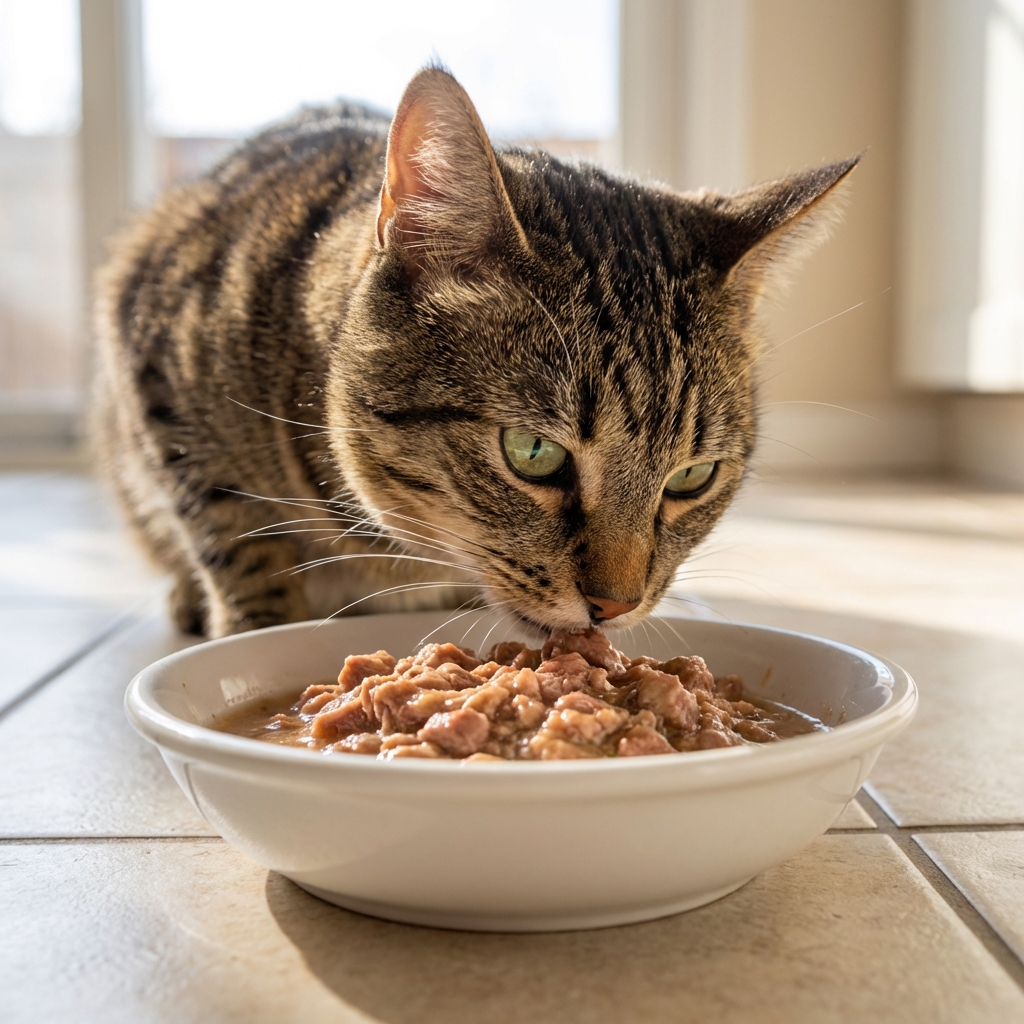
Wet food is wonderful for many cats, but it should not sit out all day. A practical approach is to offer wet meals when you are home and use measured dry food in a timed feeder for mid-day portions if needed.
- Pick up leftovers after about 30 to 60 minutes, and sooner in warm rooms or if flies are an issue.
- Refrigerate leftovers promptly in a covered container.
- Warm chilled wet food slightly by adding a little warm water or letting it sit briefly, since many cats dislike very cold food.
How to tell it is working
- Steady weight and a body shape with a visible waist from above
- You can feel ribs easily with light pressure, but they are not sharply sticking out
- Normal stools and fewer hairball or vomiting episodes
- Less frantic begging between meals after an adjustment period
- You can easily notice appetite changes
A good feeding schedule should feel calm. If every meal is stressful, it is okay to adjust the timing or add one small planned snack.
When to call your veterinarian
Please reach out promptly if you notice any of the following:
- Not eating for 24 hours or eating dramatically less than normal
- Rapid weight loss or sudden weight gain
- Vomiting repeatedly, blood in vomit or stool, or diarrhea lasting more than a day
- Increased thirst and urination
- Difficulty chewing, dropping food, or bad breath that is worsening
Feeding schedules are powerful, but they are not a substitute for diagnosing an underlying medical issue.
Bottom line
The best feeding schedule for cats is the one that supports healthy calories, steady routines, and your cat’s unique needs. Most adult cats do well with 2 meals per day, while many thrive on 3 to 4 smaller meals for comfort and weight control. Start with consistent timing, measure portions, and adjust based on body condition and your veterinarian’s guidance.
If you want a simple first step today, try this: measure one day’s worth of food, choose two consistent meal times, and commit to it for two weeks. Your cat will tell you a lot during that time, and you will have a clearer path forward.
Note: If you want to dig deeper, veterinary nutrition guidance from organizations like WSAVA and AAHA can be a helpful, evidence-based reference point to discuss with your veterinarian.