A vet-assistant guide to feeding diabetic dogs at home: consistent portions and timing, slow carbs with fiber, controlled fat, treat rules, and the must-have...
Article
•
Designer Mixes
Best Diet for Dogs With Diabetes

Shari Shidate
Designer Mixes contributor
When a dog is diagnosed with diabetes, it can feel overwhelming quickly. I see that worry often in the clinic. The encouraging news is that food and routine are powerful tools. The best diet for dogs with diabetes is one that helps keep blood sugar steady, supports a healthy weight, and works predictably with your dog’s insulin plan.
This quick guide walks you through a step-by-step approach you can use today, plus what to ask your veterinarian so your dog stays safe.
First: safety
Diabetes management is a three-part team effort: insulin, diet, and routine. Even a positive change, like switching foods, can change insulin needs.
- Do not switch diets suddenly if your dog is on insulin.
- Talk to your veterinarian before changing food type, feeding times, treat routines, or exercise intensity.
- If you see signs of low blood sugar (weakness, wobbliness, tremors, confusion, seizures), treat it as an emergency and contact a vet immediately.
- If your dog will not eat, vomits, or seems unwell while on insulin, call your veterinarian right away. Skipped meals plus insulin can trigger dangerously low blood sugar.
Many clinics will give you a hypoglycemia plan. If yours has, follow it. If not, ask for one during your next visit so you are not guessing in a stressful moment.
Step-by-step diet plan
There is no one perfect set of macros for every diabetic dog. What matters most is a measured plan you can repeat, matched to your dog’s insulin and any other health conditions.
Step 1: Keep a steady schedule
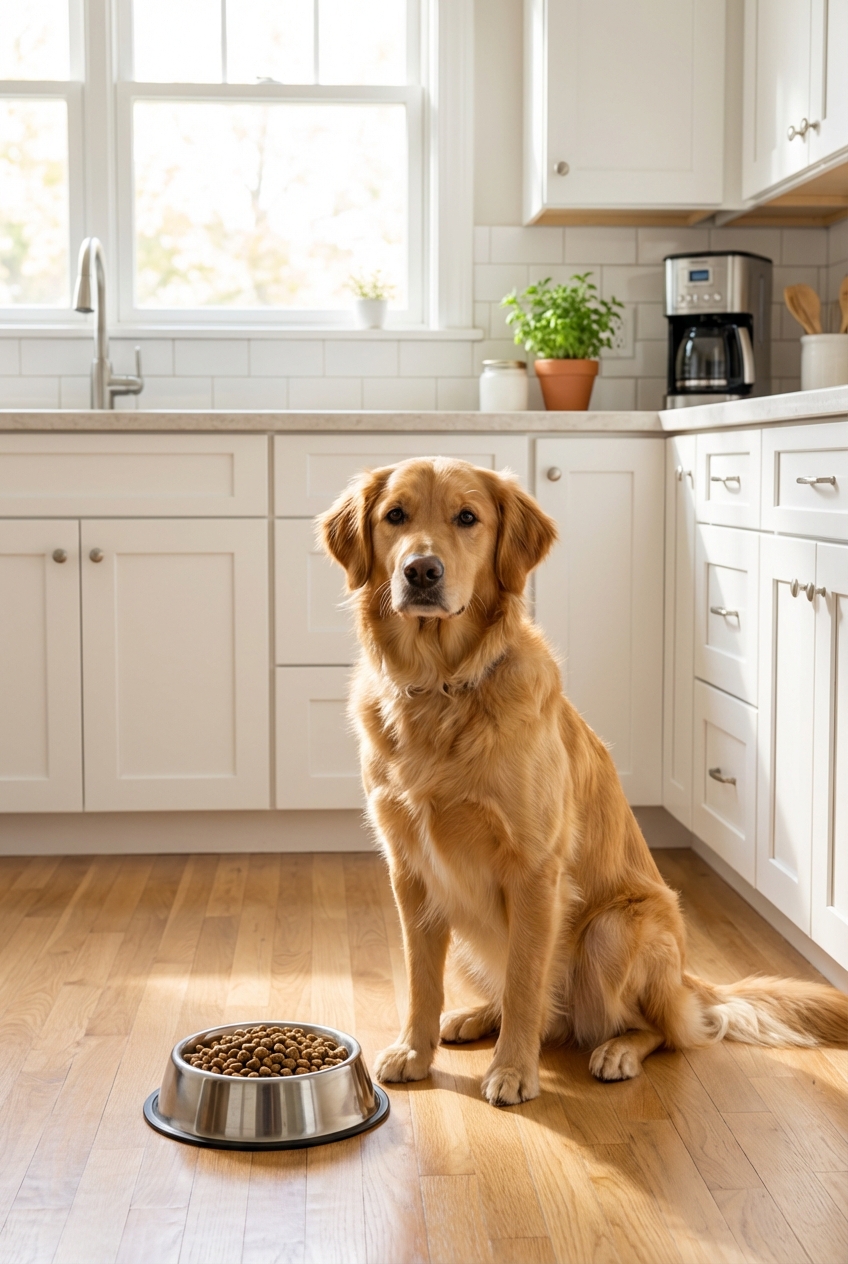
For most insulin-treated dogs, predictability is more important than “perfect” macros. The goal is the same amount of food at the same times every day, paired with insulin timing your vet prescribes. Many dogs are fed twice daily around insulin injections, but your veterinarian will tailor timing to the insulin type and your dog’s response.
- Feed at the same times daily.
- Measure meals using a measuring cup or kitchen scale, not eyeballing.
- Avoid frequent meal changes. If you must change foods, do it slowly and with veterinary guidance.
Step 2: Use fiber and carbs strategically
Many diabetic dogs do well on diets that are higher in fiber with carefully controlled carbohydrates, because fiber can slow glucose absorption after eating and help with fullness. That said, the ideal carb level varies by dog, weight goal, activity level, and other diagnoses.
Depending on your dog, your veterinarian may recommend:
- Prescription diabetic diets (often higher fiber and formulated for consistency)
- Weight management formulas (if your dog needs to lose weight)
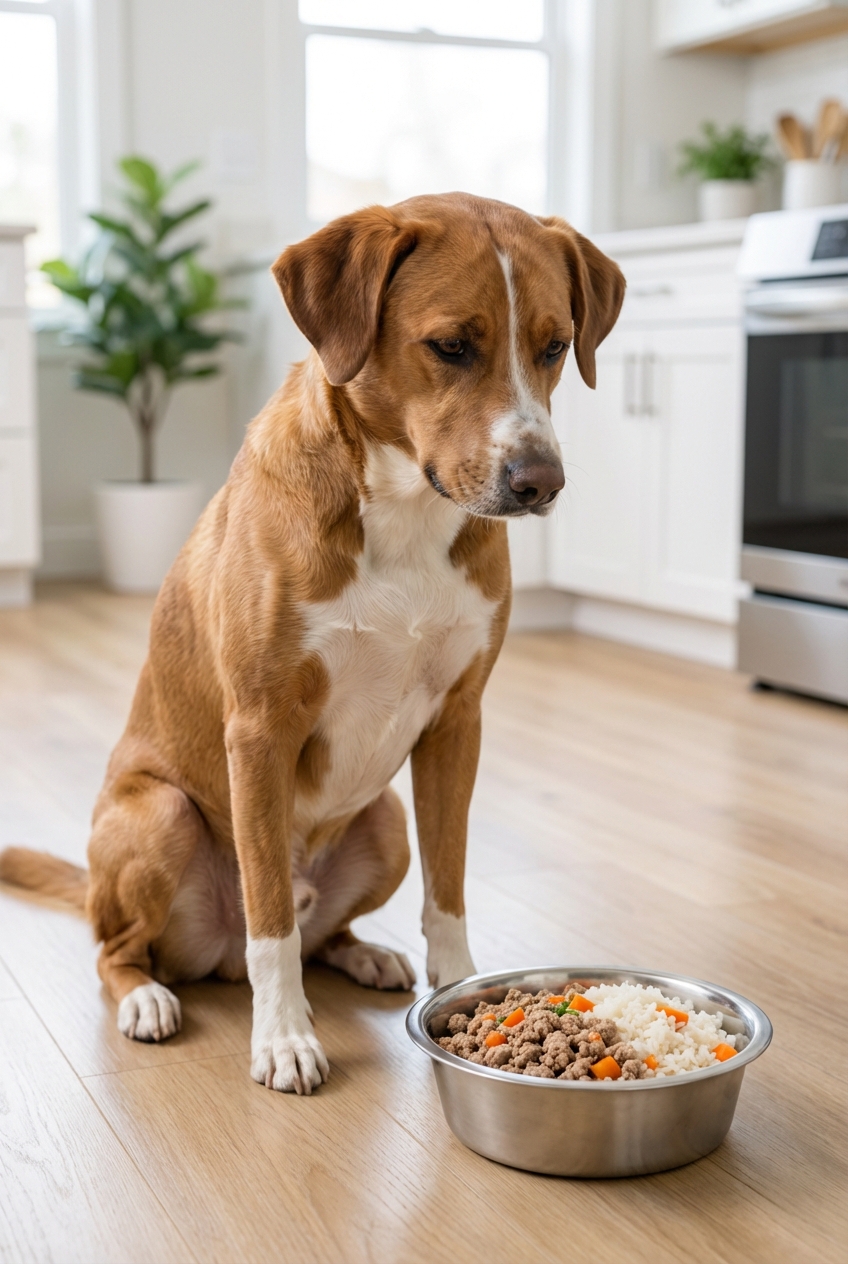
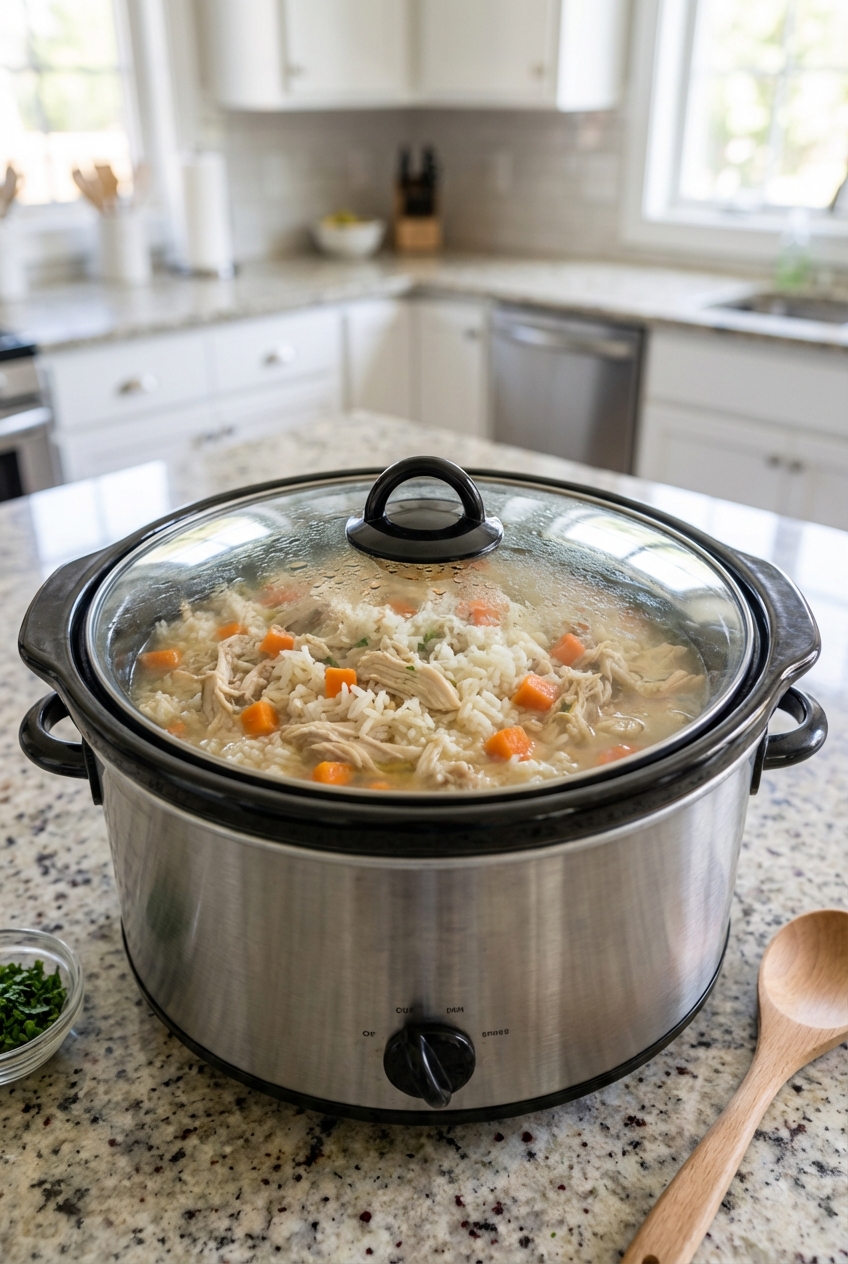
- A carefully planned home-cooked diet with repeatable ingredients and balanced nutrients
One important note: “complex carbs” are not automatically better for blood sugar control. What helps most is that the carb source and amount stay steady so you and your vet can interpret glucose patterns.
Step 3: Prioritize lean protein
Protein supports muscle mass, and maintaining lean muscle helps overall metabolism. Good options (as directed by your vet) often include:
- Skinless chicken or turkey
- Lean beef
- White fish or salmon (watch overall fat)
- Eggs (great protein, easy to digest for many dogs)
If your dog has a history of pancreatitis or high triglycerides, your veterinarian may recommend a lower-fat plan.
Step 4: Set the right fat level
Fat affects digestion and calorie density. It can slow stomach emptying, but it does not reliably “stabilize” glucose for every dog. Too much fat can be a problem for dogs with GI sensitivity, and it may increase risk or worsen pancreatitis in susceptible dogs.
- If your dog is overweight, a lower-fat, higher-fiber plan may be suggested.
- If your dog is underweight, your vet may choose a more calorie-dense option while still keeping glucose steady.
Step 5: Pick slow-digesting carbs (when used)
If carbohydrates are included, many dogs do better with measured, consistent portions of slower-digesting starches rather than sugary or highly refined options.
Often-used options (depending on tolerance and vet approval):
- Brown rice or quinoa (measured carefully)
- Oats
- Lentils or beans (small portions, watch for gas or GI upset)
- Sweet potato (measured carefully)
Avoid “carb chaos,” meaning a different starch source and amount every day. Consistency helps you and your veterinarian interpret blood glucose patterns and adjust insulin safely.
Step 6: Add non-starchy veggies
Non-starchy veggies can boost fiber and add nutrients with fewer calories. Lightly cook, steam, or puree them for easier digestion.
- Green beans
- Broccoli
- Zucchini
- Spinach (moderation)
- Cauliflower
- Carrots (small portions, a bit more starchy)

What to feed
Option A: Prescription diet
This is often the simplest starting point because it is designed for nutrient balance and repeatability. It may also make dose adjustments and monitoring easier.
Ask your vet if a diabetic or high-fiber prescription diet fits your dog’s needs, especially if your dog is newly diagnosed or hard to regulate.
Option B: Vet-approved OTC food
Some dogs do well on carefully chosen non-prescription foods, especially when diabetes is stable. Your vet can help you choose a formula with:
- Strong quality control and clear nutritional adequacy (for example, AAFCO feeding trials or robust formulation standards)
- Appropriate fiber and a carb profile that matches your dog’s needs
- Appropriate calorie density for your dog’s weight goal
Once you find a food that works, try not to rotate formulas. Staying with one recipe helps keep the data clean when you are monitoring glucose.
Option C: Home-cooked (balanced only)
I love whole foods, but diabetic dogs need extra structure. Home-cooked can work well if it is:
- Balanced for vitamins and minerals (not just meat and rice)
- Repeatable day to day
- Reviewed by your veterinarian or a board-certified veterinary nutritionist
Homemade food can be a wonderful tool, but with diabetes, “healthy” is not the same as “balanced.” The safest plan is one you can repeat reliably and measure accurately.
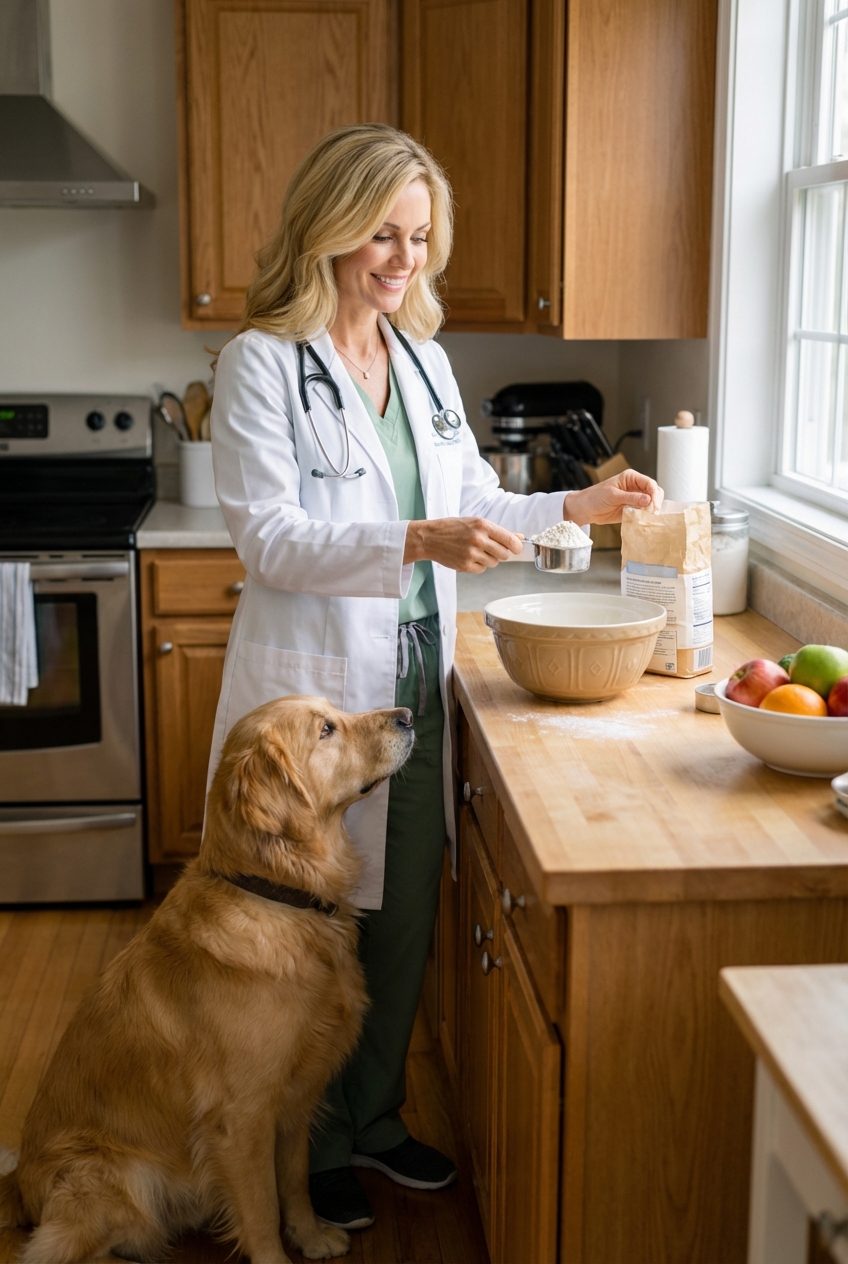
If you want a more actionable path, ask your veterinarian for a referral to a board-certified veterinary nutritionist or a reputable recipe formulation tool they trust. The key is professional formulation and consistency.
Routine for stable glucose
Daily checklist
- Measure meals the same way every time.
- Feed on schedule (your vet will align this with insulin timing).
- Limit treats and keep them predictable.
- Keep exercise steady. Big spikes in activity can change glucose needs.
- Track weight weekly.
- Track thirst and urination. Increased drinking and peeing can signal poor control.
Weight goals
If weight loss is part of the plan, aim for slow, steady progress. Your veterinarian can show you how to use a body condition score and set a safe target rate. Rapid loss or sudden appetite changes are not goals in a diabetic dog.
Safe treat choices
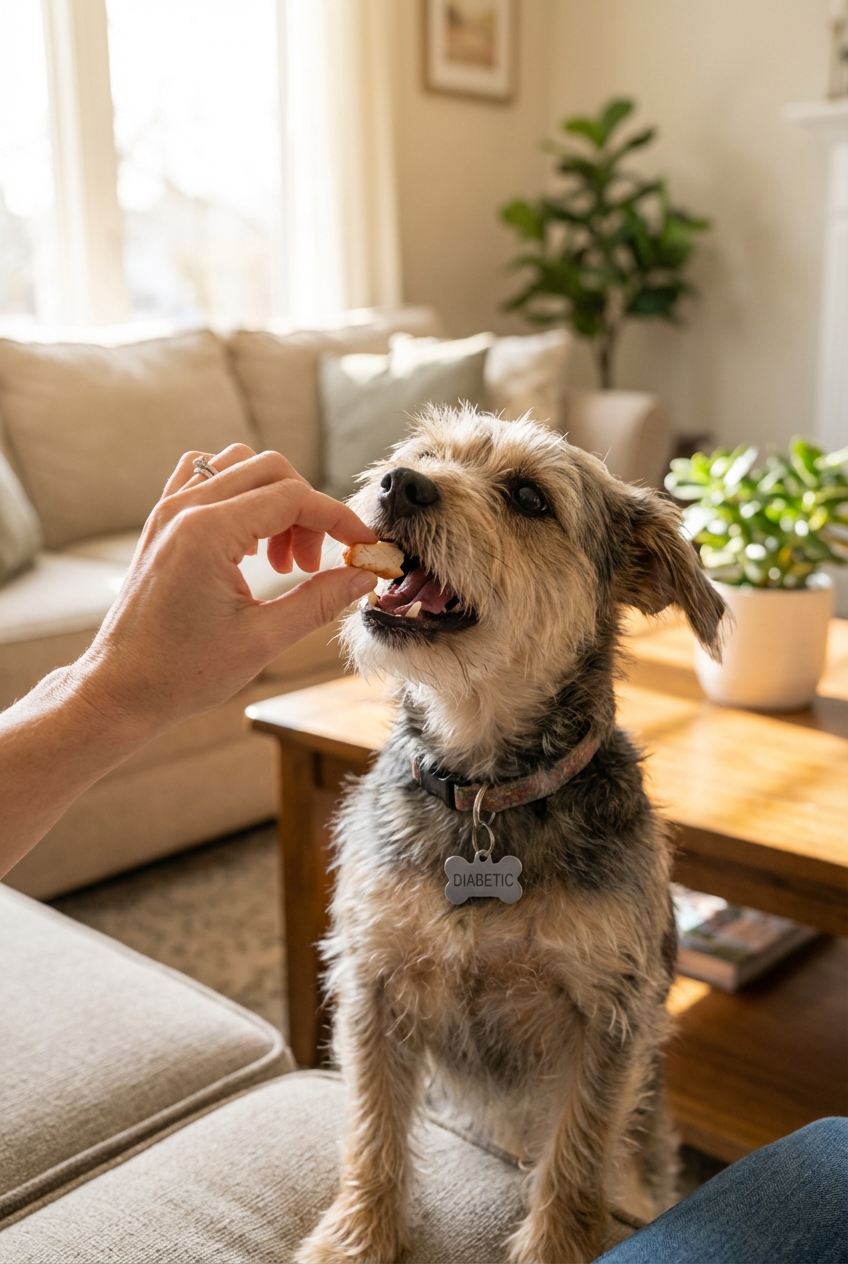
Treats should be low sugar and consistent. Safer options to ask your vet about include:
- Green beans
- Small pieces of cooked chicken breast
- Freeze-dried single-ingredient meats (watch calories)
- Small bites of cucumber
Avoid high-sugar and high-starch treats like many soft training treats, bread, cookies, and large servings of fruit.
Also avoid common “people food” hazards:
- Xylitol (often in sugar-free peanut butter and sweets) is toxic to dogs.
- High-fat table scraps (bacon, sausage, greasy meats, heavy cheese) can trigger GI upset and may worsen pancreatitis in susceptible dogs.
Common mistakes
- Free-feeding (leaving food down all day)
- Frequent food switching
- Unmeasured portions
- Too many treats, especially sugary or starchy snacks
- High-fat table scraps that can trigger GI upset or pancreatitis in sensitive dogs
- Inconsistent exercise patterns from day to day
- Ignoring other health issues that can destabilize diabetes (infections, dental disease, Cushing’s disease, pancreatitis). Diet is powerful, but it is only one lever.
Ask your veterinarian
- What is our ideal feeding schedule based on this insulin type?
- Should we choose a prescription diet or a specific over-the-counter formula?
- What treats are safest, and how many calories per day can treats be?
- Should my dog lose weight, gain weight, or maintain? What is our target rate of change?
- Do you recommend home glucose monitoring or a continuous glucose monitor for my dog?
- How often should we recheck a glucose curve and fructosamine?
- What is your clinic’s hypoglycemia plan, and what should I do if my dog will not eat?
Bottom line
The best diet for a diabetic dog is one you can feed reliably and measure accurately, with veterinary guidance so it matches insulin and your dog’s unique needs. Start with a steady routine, prioritize lean protein and fiber, keep carbs predictable, and treat thoughtfully.
You do not have to do this perfectly to make a big difference. One consistent step at a time adds up to better regulation and a happier, more comfortable dog.