Make meals more tempting and nutritious with simple dog food toppers: bone broth, cooked eggs, sardines, pumpkin, and steamed veggies—plus portions, storag...
Article
•
Designer Mixes
Best Cooked Vegetables for Dogs and Portions

Shari Shidate
Designer Mixes contributor
As a veterinary assistant here in Frisco, Texas, I get asked this all the time: Which vegetables are actually good for dogs, and how much should I feed? The encouraging news is that you do not need to overhaul your dog’s entire diet overnight. Adding a small, consistent amount of cooked vegetables can support digestion, weight management, and overall health, especially when veggies are treated as a nutrient boost and not the main course.
Quick note: This article is general education and does not replace personalized veterinary advice, especially if your dog has a medical condition or is on a prescription diet.
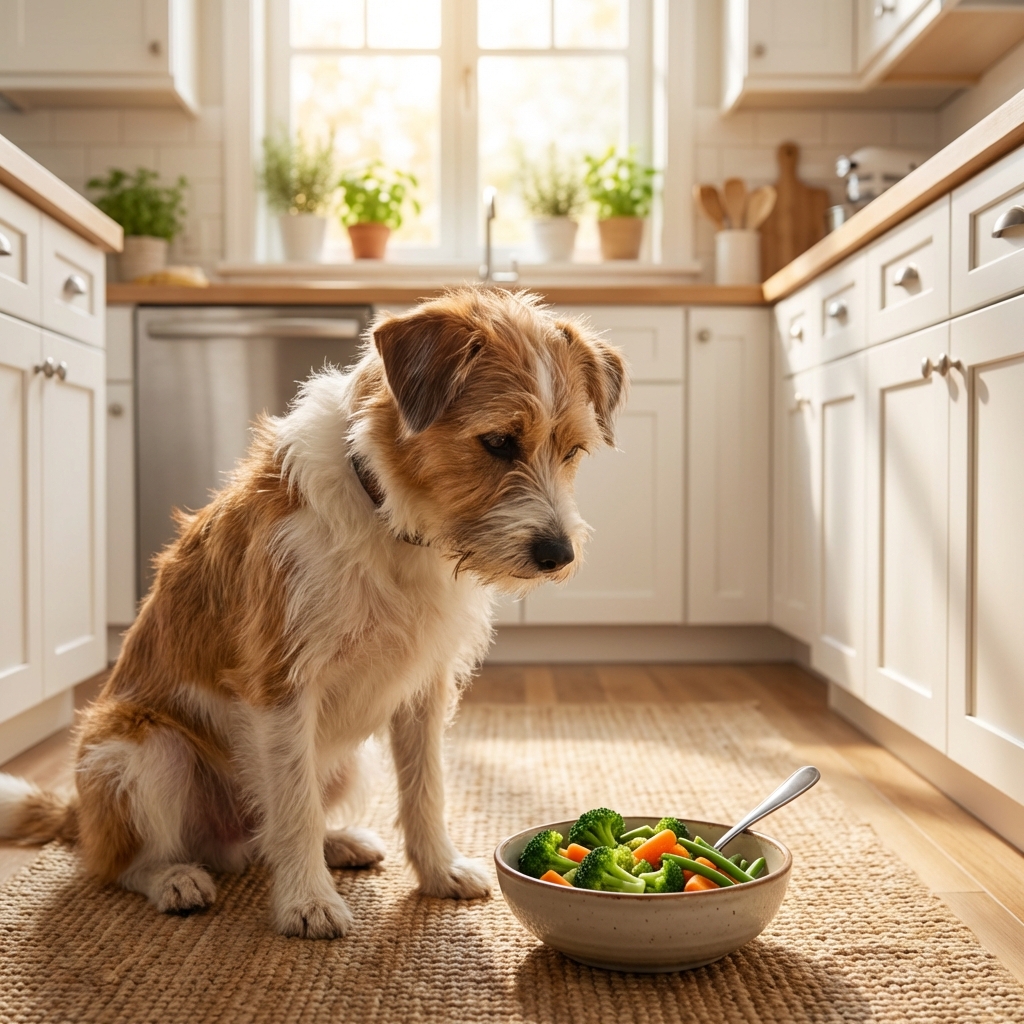
Below, I’ll walk you through the best cooked vegetables for dogs, how to prepare them safely, and practical portion sizes you can use right away.
Why cooked veggies help
Dogs can eat some vegetables raw, but many do better when veggies are lightly cooked. Cooking helps break down tough plant cell walls, which can make nutrients easier to access and can be gentler on the stomach for dogs who get gassy or have sensitive digestion.
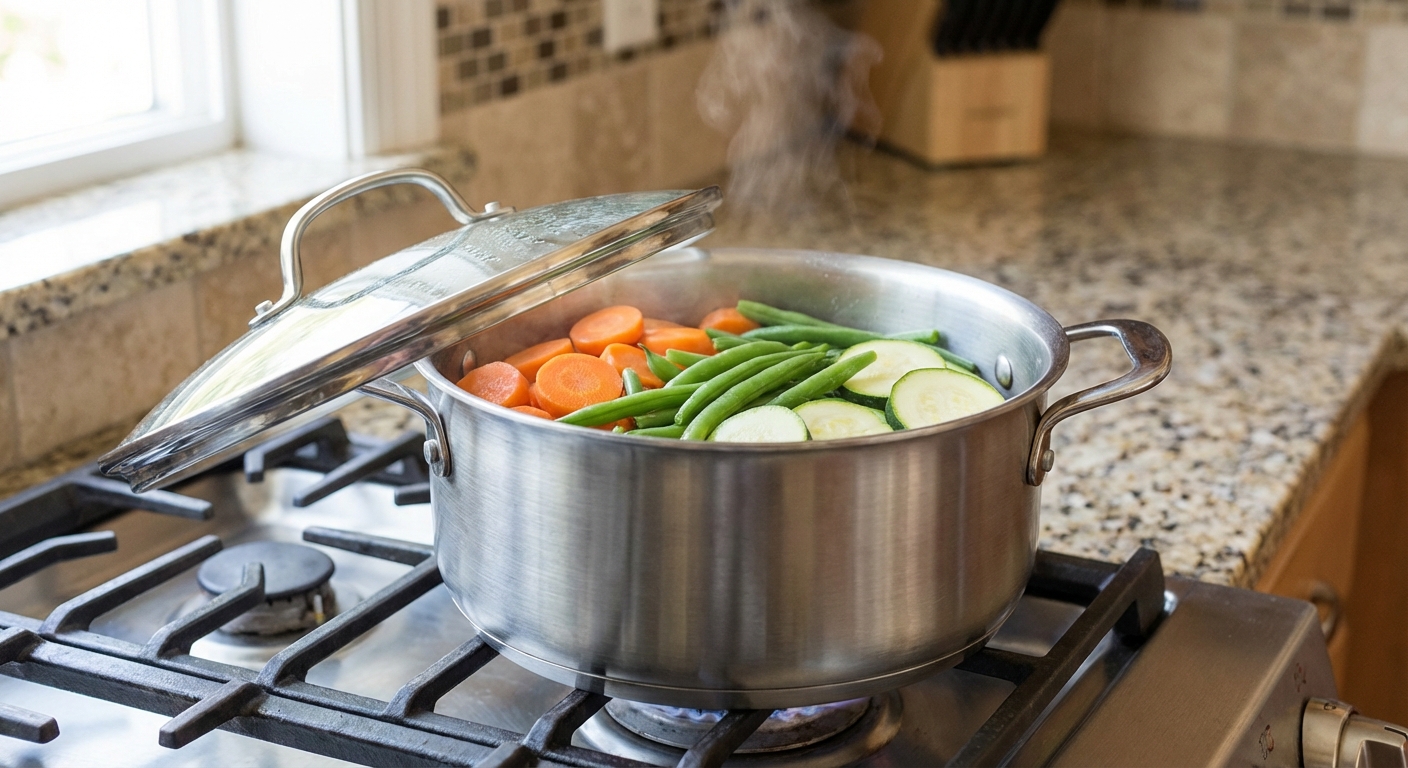
- Best methods: steaming, lightly boiling, roasting (plain)
- Skip: butter, heavy oils, salt, onion powder, garlic powder, spicy seasonings
- Texture tip: chop small or mash for small dogs and seniors
Introduce slowly: start with one veggie at a time and increase over several days so you can watch stool quality and comfort.
Quick rule: for many healthy dogs on a complete-and-balanced base diet, veggies can be up to about 10% to 20% of a meal. To avoid diluting nutrients, it helps to replace an equal amount of their regular food rather than simply adding extras on top. If your vet has you using a higher-fiber plan for weight loss or a medical condition, follow that plan.
Best cooked veggies
These options are widely considered dog-friendly and tend to be well tolerated when cooked and served plain.
1) Carrots
Why they’re great: gentle fiber, beta-carotene (a vitamin A precursor), and a naturally sweet taste many dogs love.
- Serve: steamed or lightly boiled, chopped or mashed
- Safety: avoid big chunks and whole baby carrots for dogs who gulp. Chop to reduce choking risk.
2) Green beans
Why they’re great: low-calorie, satisfying fiber, helpful for dogs who need to feel full while managing weight.
- Serve: steamed or boiled
- Choose: fresh or frozen, or canned with no salt added
- If using canned: if any sodium is present, rinse and drain before serving
3) Pumpkin (plain)
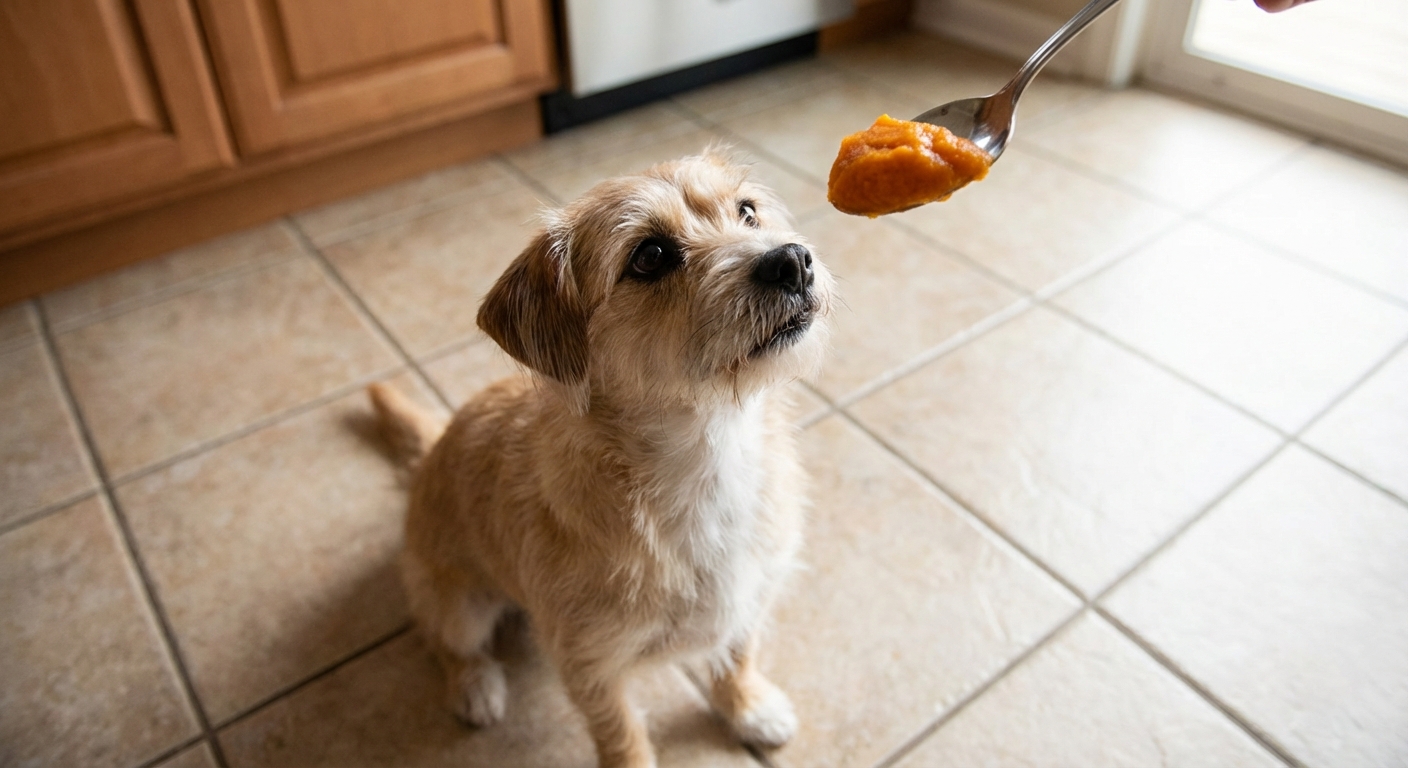
Why it’s great: soluble fiber that can support stool quality. Many vets recommend plain pumpkin for mild constipation or mild diarrhea support.
- Serve: cooked pumpkin or 100% plain canned pumpkin
- Avoid: pumpkin pie filling (sugar and spices)
4) Sweet potato
Why it’s great: fiber and nutrients, often very palatable.
- Serve: baked or steamed, mashed
- Note: it is starchy, so portions matter, especially for dogs with weight concerns
5) Zucchini
Why it’s great: mild flavor, low calorie, easy on digestion for many dogs.
- Serve: steamed or lightly cooked plain, chopped small
6) Broccoli (small portions)
Why it can help: nutrient-dense cruciferous veggie.
- Serve: steamed florets and stems chopped small
- Keep it small: broccoli contains compounds (including isothiocyanates) that can trigger gas or stomach upset in larger amounts
7) Cauliflower (small portions)
Why it can help: another crucifer with good nutrients.
- Serve: steamed, chopped
- Watch: gas, especially in sensitive dogs
8) Spinach (small portions)
Why it can help: provides vitamins and phytonutrients. Some dogs do great with a little spinach mixed into meals.
- Serve: lightly cooked and chopped
- Extra caution: spinach is higher in oxalates, which can be a concern for some dogs prone to calcium oxalate bladder stones, and it may not be a fit for some kidney patients. Ask your veterinarian if your dog has urinary or kidney history.
Other dog-friendly options (plain, cooked)
- Peas: cooked or thawed frozen peas in moderation
- Bell pepper: cooked, no seeds or stem
- Celery: cooked and chopped small for easy chewing
- Cucumber: technically a fruit, but commonly used like a veggie. It is fine in small bite-sized pieces.
What to avoid
Some vegetables are unsafe, and others are safe only in specific forms or amounts. When in doubt, ask your veterinarian or a board-certified veterinary nutritionist.
- Onions, leeks, chives: toxic to dogs (fresh, cooked, powdered, all forms)
- Garlic: part of the allium family and can cause oxidative damage to red blood cells. I recommend not using it routinely. If you are considering it for any reason, ask your veterinarian first.
- Wild mushrooms: risk of toxicity is too high to “guess” correctly
- Raw potato and green potato skin: can be harmful
- Potato note: plain, fully cooked potato flesh is generally considered safe in moderation, but it is starchy and should not crowd out a balanced diet
- Corn on the cob: the cob is a serious obstruction risk
- Pickled or heavily seasoned vegetables: too much sodium and additives
Other produce hazards
- Grapes and raisins: can cause kidney failure in dogs and should be avoided entirely
How much to feed
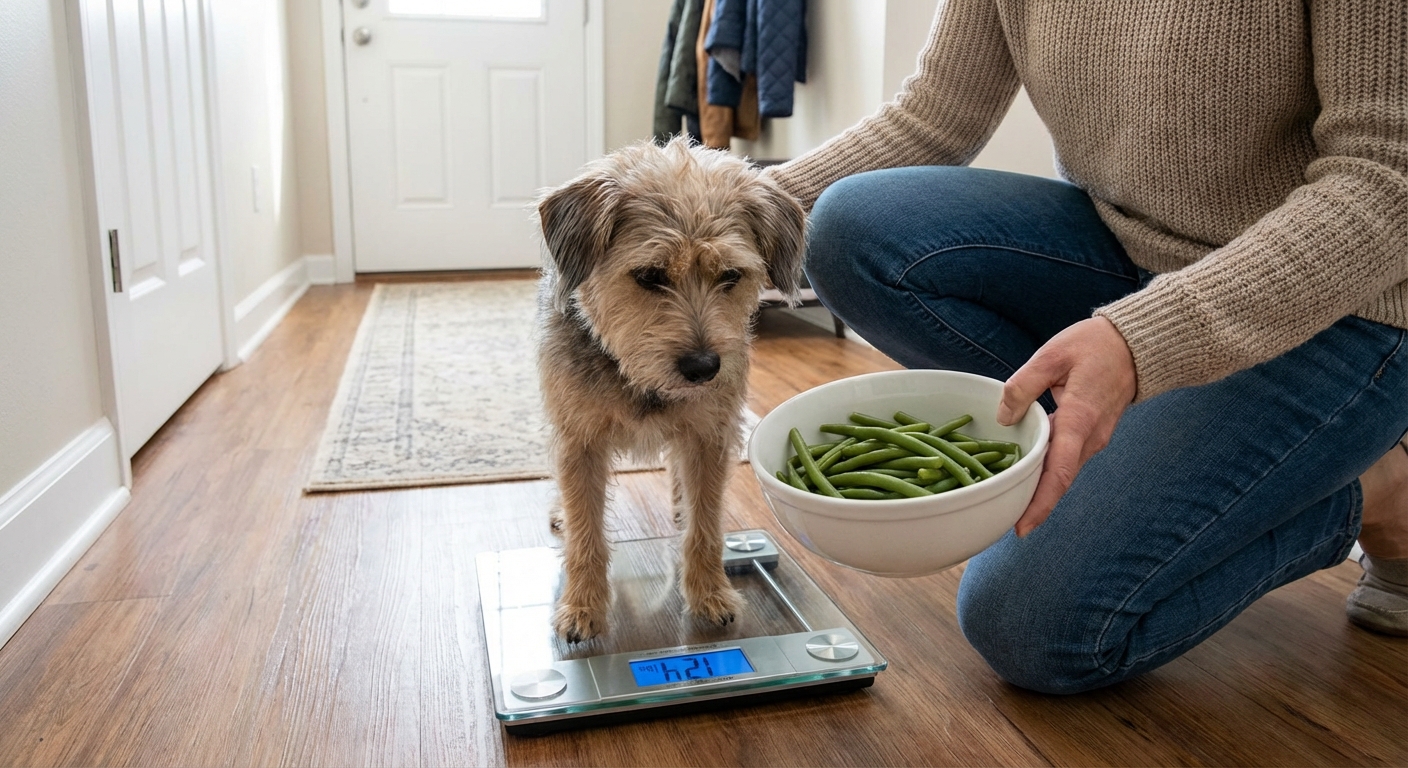
Portions depend on your dog’s size, overall diet, activity level, and why you’re adding vegetables (general wellness versus weight management). Use these as starting points and adjust based on stool quality, body condition, and your vet’s advice. Treats and toppers count toward daily calories, too.
Everyday portions
Target: often up to 10% to 20% of a meal for healthy dogs on a complete-and-balanced base diet, ideally by replacing an equal amount of the regular food.
- Toy dogs (under 10 lb): 1 to 2 teaspoons cooked veggies per meal
- Small dogs (10 to 25 lb): 1 to 2 tablespoons per meal
- Medium dogs (26 to 50 lb): 2 to 4 tablespoons per meal
- Large dogs (51 to 90 lb): 1/4 to 1/2 cup per meal
- Giant dogs (over 90 lb): 1/2 to 1 cup per meal
Weight management (vet-approved)
Many dogs can handle a higher proportion of low-calorie veggies like green beans and zucchini when the goal is fullness with fewer calories. The key is doing it without throwing the diet out of balance. If you replace too much of the main diet, you can short your dog on protein, essential fats, and minerals. Your veterinarian can help set a calorie target and a safe swap percentage.
Sensitive stomachs
Start at half of the amounts listed above and increase slowly every 3 to 5 days. If stools soften, reduce the portion and try a gentler option like pumpkin or carrots.
Prep tips
- Cook plain: no salt, no butter, no onion or garlic powders
- Keep fats minimal: most dogs do not need added oils. If you do use one, keep it to a tiny amount and choose a simple option like olive oil.
- Cool before serving: especially mashed pumpkin or sweet potato
- Cut small: reduces choking risk and improves digestion
- Batch cook: steam a few vegetables twice a week and refrigerate or freeze in meal-sized portions
- Rotate colors: rotating carrots, green beans, pumpkin, and zucchini is an easy way to vary nutrients
If your dog is on a prescription diet or has chronic health issues (kidney disease, pancreatitis, diabetes, urinary stones, or food allergies), get tailored guidance before changing ingredients regularly.
Easy mix-in ideas
You can keep it incredibly simple. Think of veggies like a topper that adds fiber and micronutrients.
- Chicken and green beans: chopped steamed green beans stirred into plain cooked chicken
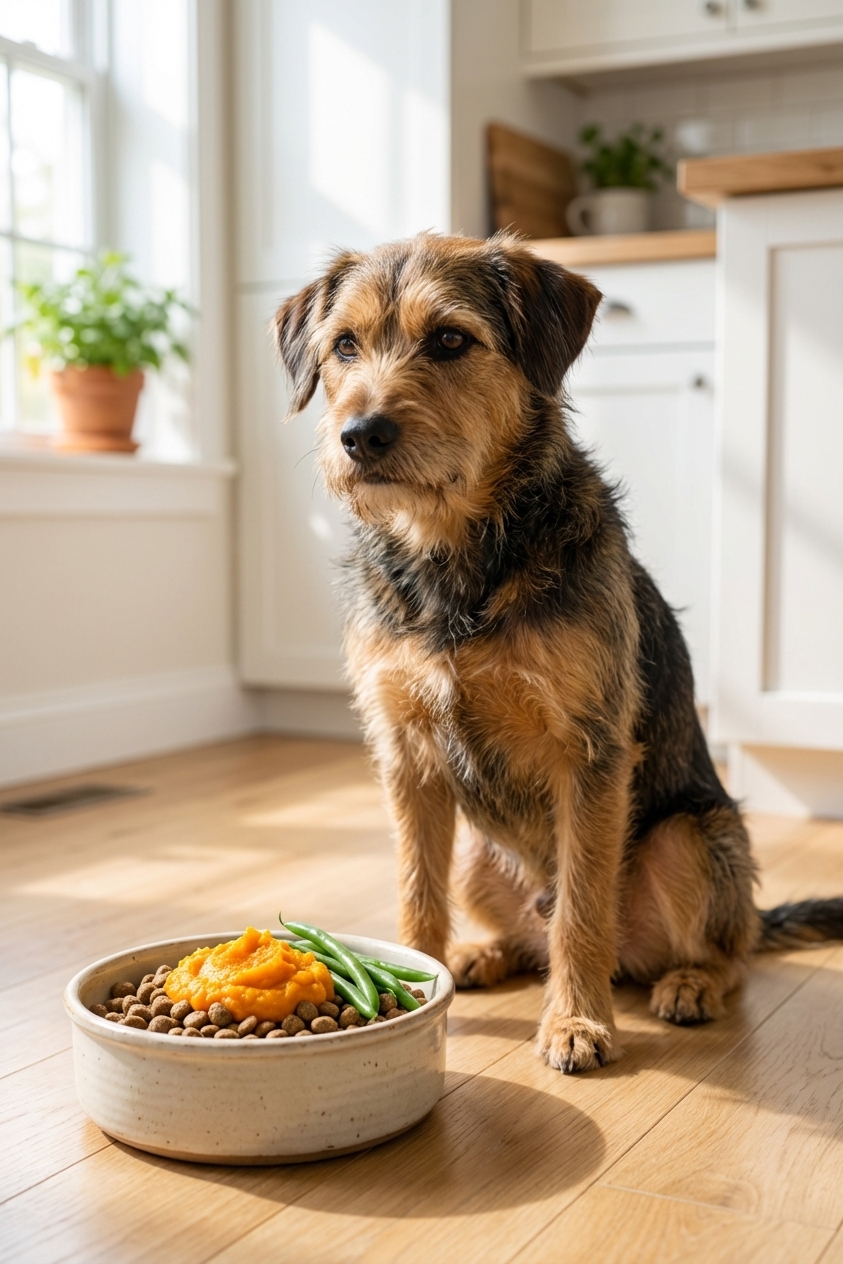
- Turkey and pumpkin: a spoonful of plain pumpkin mixed into lean ground turkey
- Egg and zucchini: scrambled egg with finely chopped cooked zucchini
- Sardine and carrots: small spoon of mashed cooked carrots with a bite of sardine for extra flavor
When to call your vet
Vegetables are usually a safe add-on, but call your veterinarian if your dog has vomiting, persistent diarrhea, significant gas with discomfort, loss of appetite, or if you suspect your dog ate something unsafe (like onion, chives, garlic, or a seasoned food).
Kind reminder: the best diet is the one your dog can digest well, maintain a healthy weight on, and enjoy. Start small, go slow, and let your dog’s stool and energy be your guide.