Apartment life can be an amazing fit for a dog, as long as you choose the right temperament and build a routine that works with walls, neighbors, elevators, and busy schedules. As a veterinary assistant in Frisco, Texas, I have seen that the happiest apartment dogs are not always the tiniest ones. They are the ones whose energy level, barking tendency, and trainability match the lifestyle.
This guide focuses on quieter, manageable dogs and the small-space habits that keep them content. Think of it as lifestyle guidance, not a one-size-fits-all breed list.
What makes a dog apartment-friendly
Square footage matters, but it is not the whole story. The best apartment dogs tend to share a few traits.
- Lower barking tendency: Less reactive barking at hallway sounds, delivery knocks, and other dogs.
- Moderate energy: Happy with walks and play, not climbing-the-walls without a yard.
- People-friendly and adaptable: Comfortable with strangers in elevators and common areas.
- Trainability: Learns house rules like “quiet,” “place,” and polite leash skills.
- Comfort with alone time: Separation-related barking is a top apartment issue.
Quick reality check: any dog can bark. “Quiet breed” really means typically less vocal and often easier to coach into calm behavior.
Quiet dog breeds for apartments
Below are breeds that are commonly reported as quieter and easier to live with in close quarters, assuming they get appropriate exercise, training, and enrichment. Individual personality still matters a lot, especially in rescues and mixes.
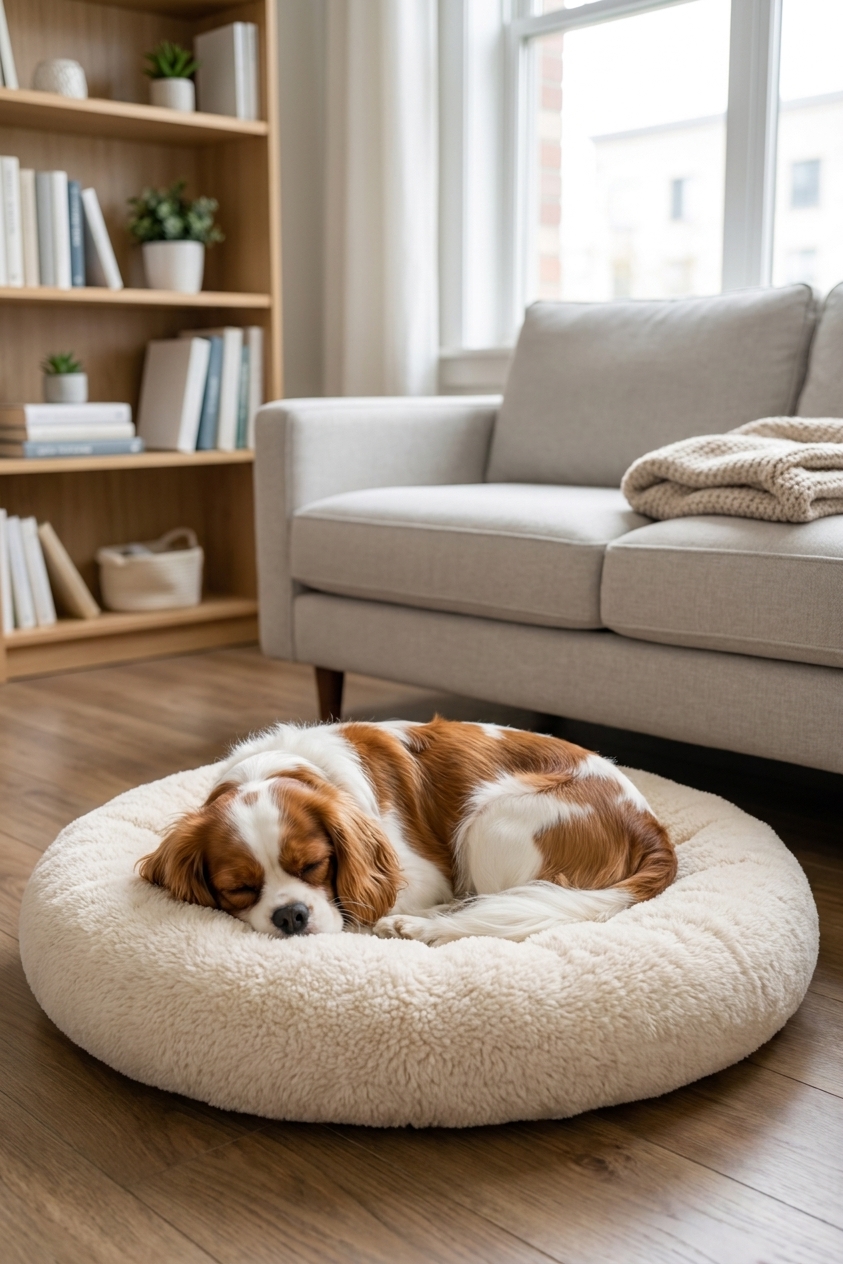
1) Cavalier King Charles Spaniel
Sweet, people-focused, and often content to lounge after a good walk. Many Cavaliers are not big barkers, though they can develop separation anxiety if left alone for long hours.
- Best for: gentle households, work-from-home routines, companion-focused owners
- Watch-outs: mitral valve disease (heart) risk in the breed, possible syringomyelia concerns, ear care, weight gain if over-snacked
2) Greyhound
This surprises people. Greyhounds are typically quiet indoors and are famous for being “45 mph couch potatoes.” They do need daily walks and, when available, they benefit from safe opportunities to run in an enclosed area. Many do not need constant activity.
- Best for: calm homes that can do steady walks
- Watch-outs: high prey drive, thin coat for cold weather, stairs can be an adjustment
3) Whippet
Like a smaller Greyhound, Whippets are often quiet and affectionate. They love comfy blankets, a predictable routine, and short bursts of play.
- Best for: apartments that allow medium dogs, owners who enjoy daily walks
- Watch-outs: can be sensitive to noise, needs warm gear in winter
4) Bichon Frise
Friendly, cheerful, and typically adaptable. Barking varies by individual, but Bichons often do well when trained early and given enough attention and mental enrichment.
- Best for: people who want a small dog with a social personality
- Watch-outs: grooming needs, house-training consistency, can vocalize if bored
5) Shih Tzu
Many Shih Tzus are happy being indoor companions with modest exercise. They can bark at noises if not trained, so early “quiet” cues and hallway desensitization help a lot.
- Best for: small spaces, owners who want a lap dog
- Watch-outs: eye care, breathing issues in some flat-faced dogs, regular grooming
6) Havanese
Havanese are smart, affectionate, and often do well in apartments when they get daily play and training. They love being near their people, so plan ahead for alone time.
- Best for: interactive owners who enjoy training games
- Watch-outs: potential for separation barking without gradual training
7) Maltese
Small, portable, and often content with indoor play plus daily walks. Like many small companion breeds, barking is very trainable, but it can show up if they are under-socialized or startled by building sounds.
- Best for: calm homes, smaller buildings, owners who can commit to training
- Watch-outs: dental care, grooming, fragile around rough play
8) French Bulldog (with important caveats)
Frenchies are often quieter and lower-energy, which can be a great apartment combo. But as a vet assistant, I always add the health caveat: many French Bulldogs have significant brachycephalic (flat-faced) airway challenges.
- Best for: owners who can manage heat sensitivity and keep exercise moderate
- Watch-outs: breathing problems, overheating risk, higher veterinary costs
If you love the “quiet companion” idea but want fewer health risks, consider a Whippet, Havanese, or a responsibly bred mixed-breed with a longer muzzle.
Apartment exercise that works
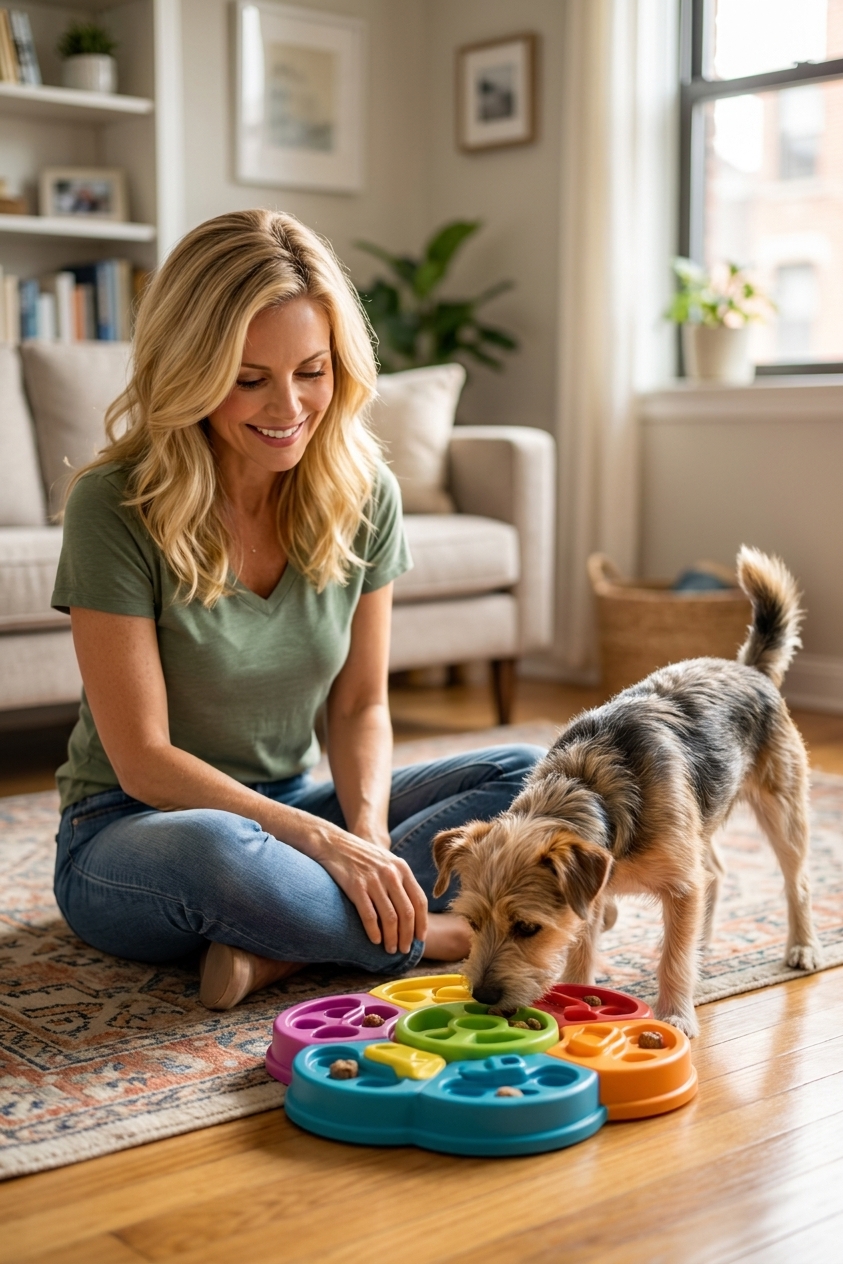
Dogs do not need a backyard to thrive, but they do need daily physical movement and daily mental work. These small-space strategies can help reduce boredom, barking, and zoomies at 10 p.m.
A simple daily baseline
- Potty breaks: most adult dogs do well with 3 to 5 potty trips per day. Puppies and seniors often need more.
- Walks: many dogs do best with 1 to 2 walks daily, adjusted for age, health, and energy level.
- Enrichment: plan for at least one short enrichment session daily (sniffing, training, puzzle food, or a chew).
If you are not sure what is appropriate for your dog’s age or medical needs, your veterinarian can help you build a realistic plan.
Indoor energy burners
- Food puzzles and slow feeders: Turn meals into enrichment. Even a short session of sniffing and problem-solving can help take the edge off.
- Scatter feeding: Toss kibble across a rug or snuffle mat so your dog forages and sniffs.
- Hallway fetch with rules: If your building layout allows, use a soft toy and practice “drop” and “wait.” Keep it short and controlled.
- Tug with cues: Build in “take it,” “drop,” and “all done” to prevent over-arousal.
- Training micro-sessions: Two to five minutes, several times a day. Sit, down, stay, place, loose leash indoors, and “quiet.”
Outdoor routines for apartment life
- Sniff walks: Let your dog sniff. It is not wasted time. Sniffing is real mental exercise.
- Stair or hill reps: If your dog is healthy and your vet approves, a few minutes of controlled stair walking adds conditioning.
- Off-peak potty breaks: If your dog is reactive, go early morning or later evening to avoid crowded lobbies.
- Weekend decompression: A longer nature walk or quiet park visit can help for days afterward.
Prevent barking issues
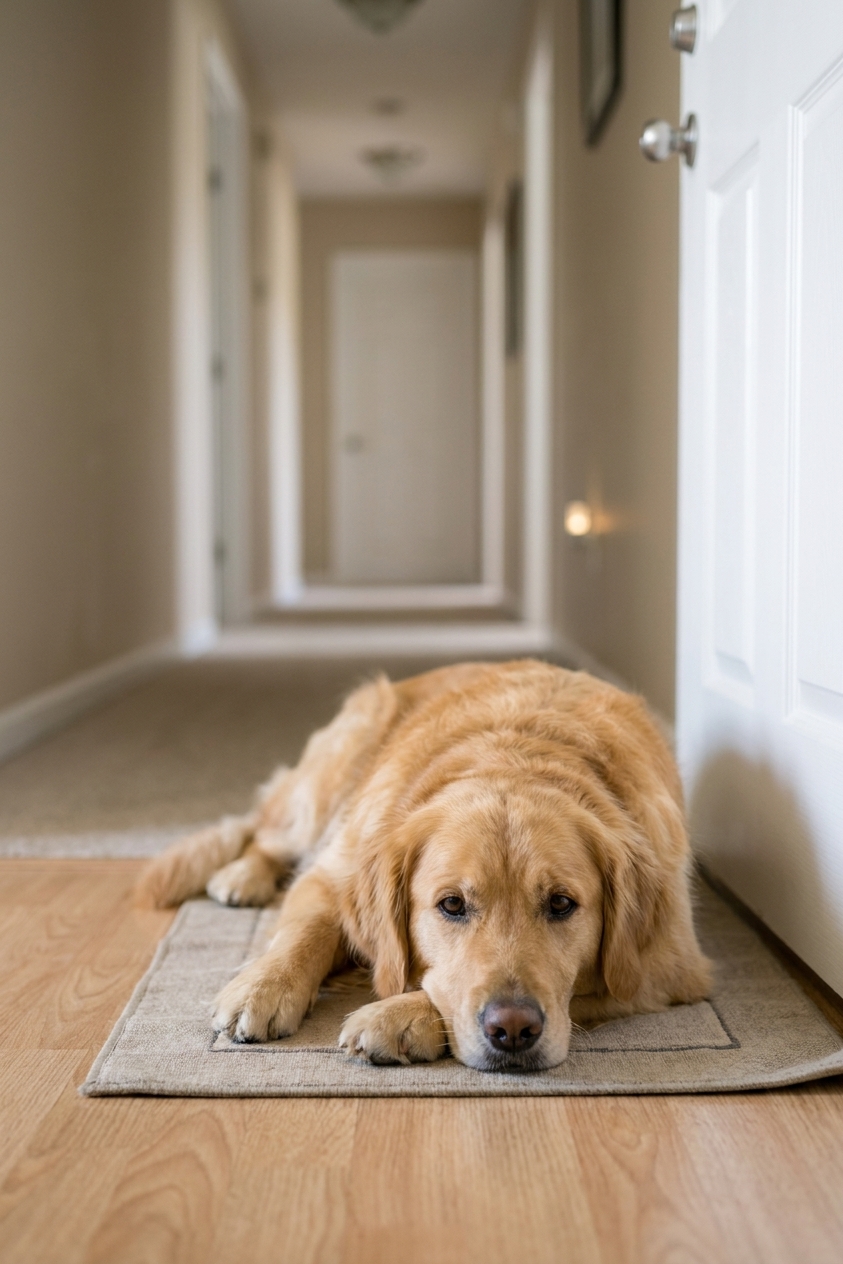
In apartments, barking is rarely just “bad behavior.” It is usually stress, boredom, fear, or habit. The goal is to address the cause, not just hush the symptom.
Set up the environment
- Block triggers: If your dog barks at the window, use frosted window film or close blinds during peak activity times.
- Sound buffering: A white-noise machine or fan can reduce hallway sound spikes that trigger barking.
- Create a safe zone: A covered crate or quiet corner with a bed can lower alert barking.
Train two key apartment skills
- Place: Teach your dog to go to a bed or mat and settle. This is gold for door knocks and hallway commotion.
- Quiet: Reward calm pauses. Start when your dog is already quiet, then gradually work up to mild triggers.
Important: avoid punishment-based barking tools such as shock collars, prong collars used as “bark correction,” or citronella spray collars. These tools can increase anxiety for some dogs and make noise problems worse long term. A force-free trainer can help you build calmer habits instead.
Separation anxiety: a common culprit
If your neighbors report barking when you leave, consider separation anxiety. Helpful steps include:
- Gradual departures: Practice leaving for 30 seconds, then 2 minutes, then 5, building slowly.
- High-value “only when I leave” treats: Stuffed frozen food toys can build a positive association.
- Professional help: A qualified force-free trainer or veterinary behaviorist can be life-changing.
Small-space care basics
Apartment dogs are close to us, our floors, and our furniture. A few habits keep everyone comfortable.
Potty planning
- Choose a consistent potty spot and take the same route. Routine reduces accidents.
- Keep wipes by the door for paws, especially in rainy seasons.
- Consider a balcony potty system only if your building allows it and you can keep it sanitary and odor-free.
Odor and shedding control
- Brush regularly: It is easier to prevent fur buildup than to deep-clean weekly.
- Use a HEPA air purifier if allergies or odors are a concern.
- Wash bedding every 1 to 2 weeks to reduce dander and smells.
Floor-friendly nail care
Long nails are loud on hard floors and can affect posture. If you can hear nails clicking, it is usually time for a trim. Floor type and gait matter, so use this as a rule of thumb, not a diagnosis. Your veterinary clinic or groomer can help, especially if your dog is nervous.
Before you adopt
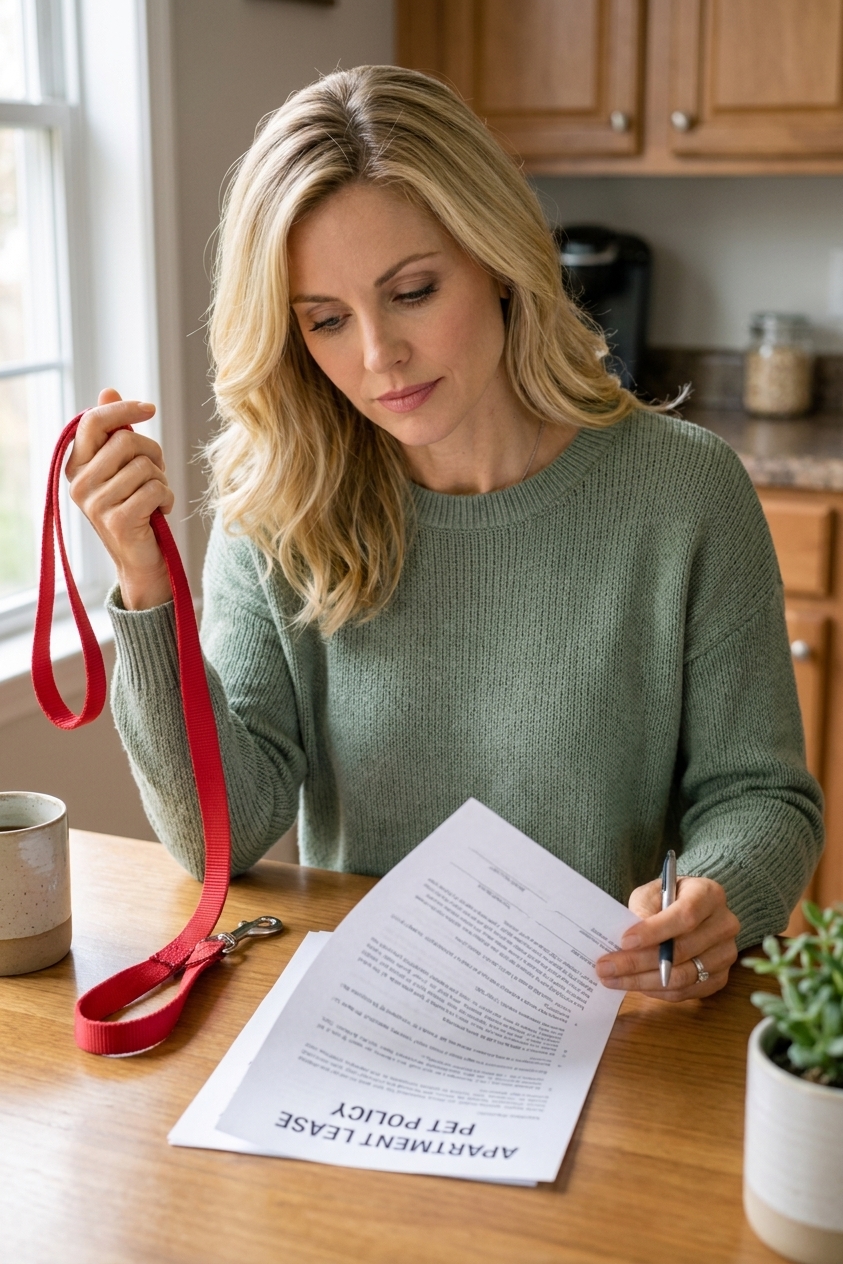
This is where many apartment dog plans fall apart. A great dog for you still has to be allowed by your lease.
Check your lease
- Weight limits and how they are enforced
- Breed restrictions and any “mix” language
- Pet rent, deposits, and one-time fees
- Number of pets allowed
- Noise clauses and complaint procedures
- Required vaccinations, flea prevention, or DNA registration policies
Apartment reality questions
- How many hours will my dog be alone on weekdays?
- Do I have an elevator, and is my dog comfortable with it?
- Is there safe green space nearby for sniff walks?
- Do I have a plan for mid-day potty breaks if needed?
Puppy vs adult
Puppies are adorable, but apartment life is harder in the early months. Expect more potty trips, more chewing risk, and more noise while they learn to settle. For many first-time apartment owners, an adult dog with a known temperament is the smoother path.
Adoption tip: look beyond breed labels
If you are adopting, ask shelter staff or foster families about noise level in the home, response to hallway sounds, and ability to settle. A calm mixed-breed adult is often the best “apartment breed” of all.
A quick note on assistance animals
Rules around service animals and emotional support animals can be complex and vary by location. If this applies to you, check your local regulations and your building’s process, and consider speaking with a qualified professional so you stay on the right side of the law without relying on internet shortcuts.
Apartment dog starter kit
- Crate or playpen (optional but helpful)
- Comfortable bed and a washable blanket
- White-noise machine or fan
- Enrichment toys: snuffle mat, puzzle feeder, lick mat
- Enzyme cleaner for accidents
- Paw wipes and a small towel by the door
- Poop bags and a clip-on dispenser
- Front-clip harness for polite leash walking
If you only buy one thing beyond food and a leash, make it a puzzle feeder. Mental enrichment is one of the most reliable ways to reduce apartment-related behavior issues.
When to call the vet
If barking, pacing, destructive chewing, or accidents are showing up, do not assume it is stubbornness. Pain, digestive issues, and anxiety can all look like “behavior.” Check in with your vet if you notice:
- Sudden behavior changes
- Nighttime restlessness
- New reactivity in the hallway or elevator
- Changes in appetite, stool, or sleep
A quick exam can rule out medical causes and help you build a plan that fits your dog and your building.
The best apartment dog is the one who can relax. Choose for temperament first, then commit to routine. Your neighbors will thank you, and your dog will feel safe and settled.