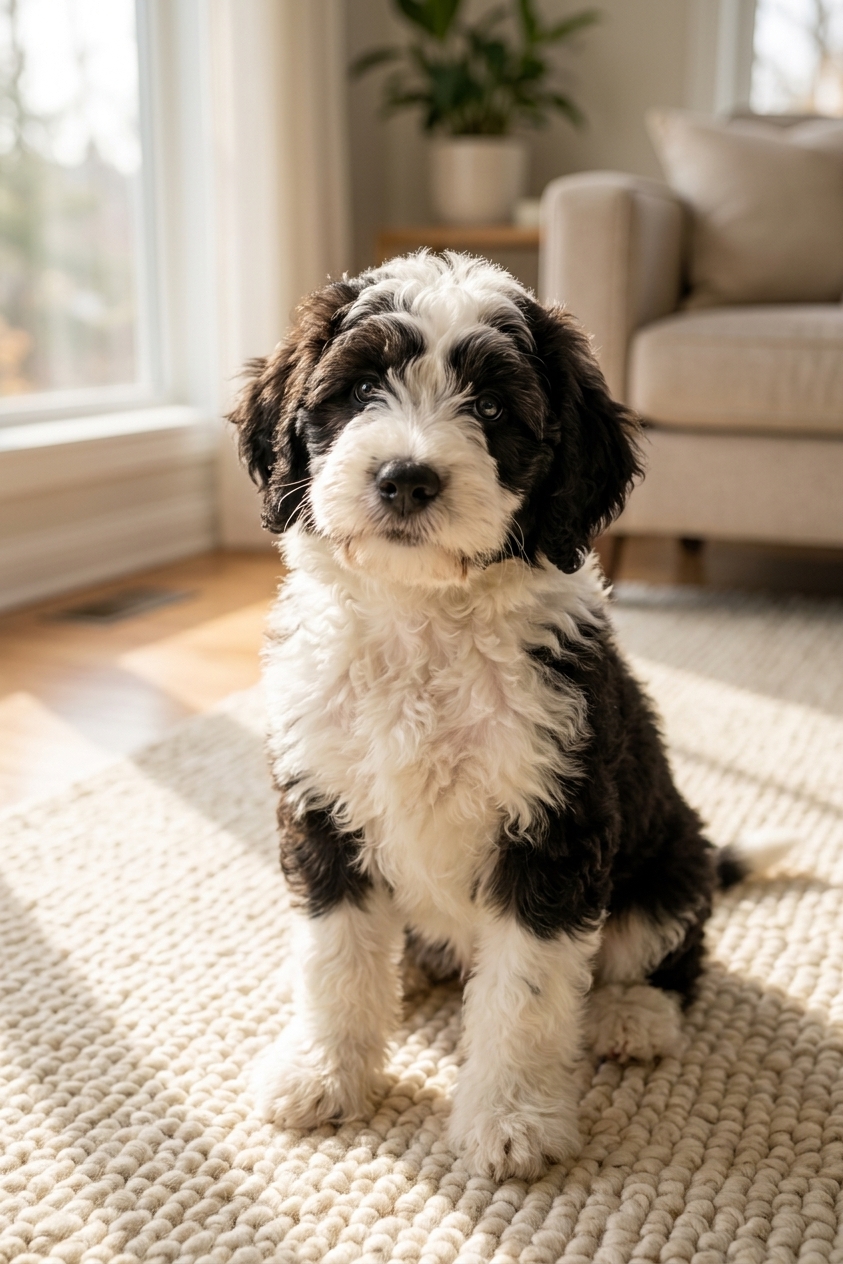
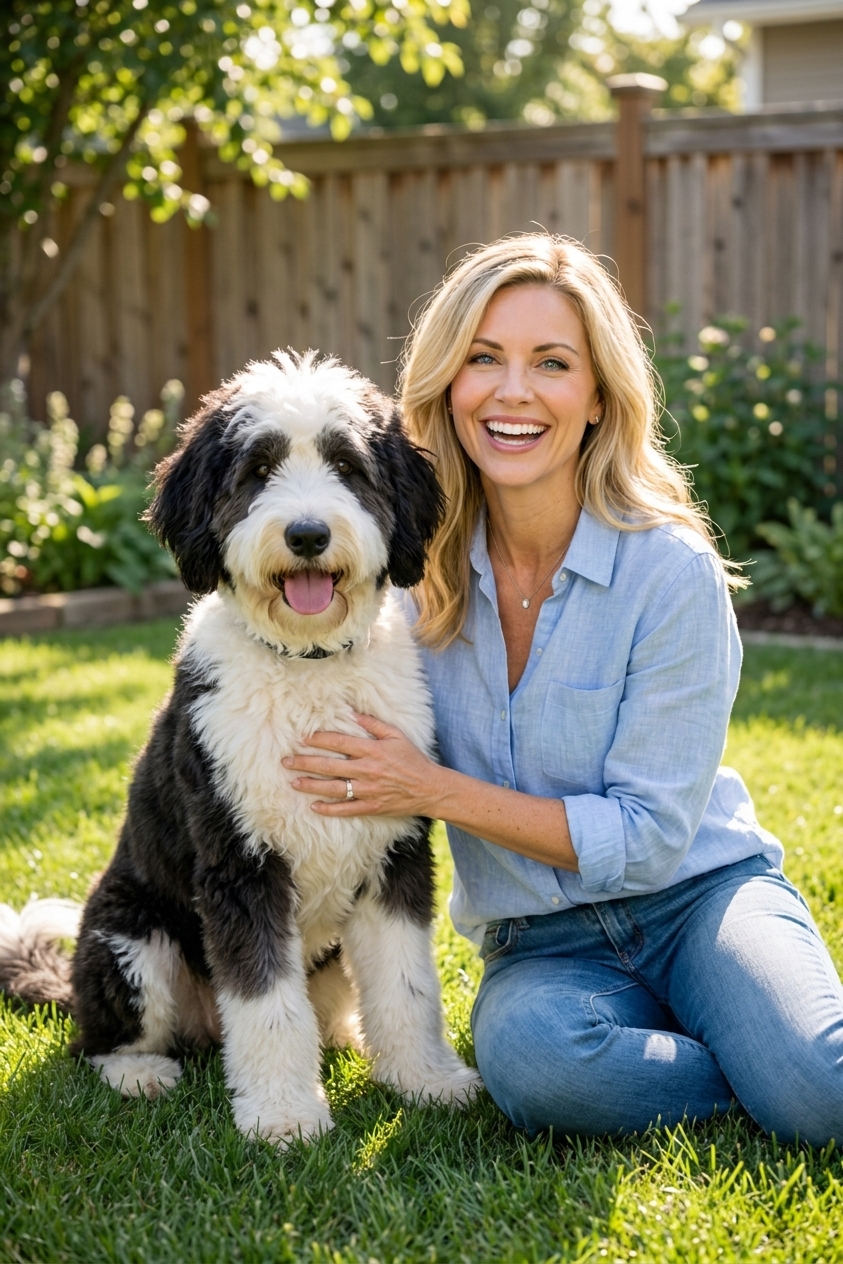
If you are choosing between a Bernedoodle and a Sheepadoodle, you are already in the “big, fluffy, people-loving dog” category. Both mixes can be wonderful family companions, but they are not interchangeable. Small differences in size range, coat type, energy level, and how they mature can change what daily life feels like in your home.
Because these are mixed breeds, there is always variation from puppy to puppy. The best way to decide is to look at the parents (and ideally grandparents), ask for verifiable health testing, and be honest about how much time your family can dedicate to grooming, training, and exercise.
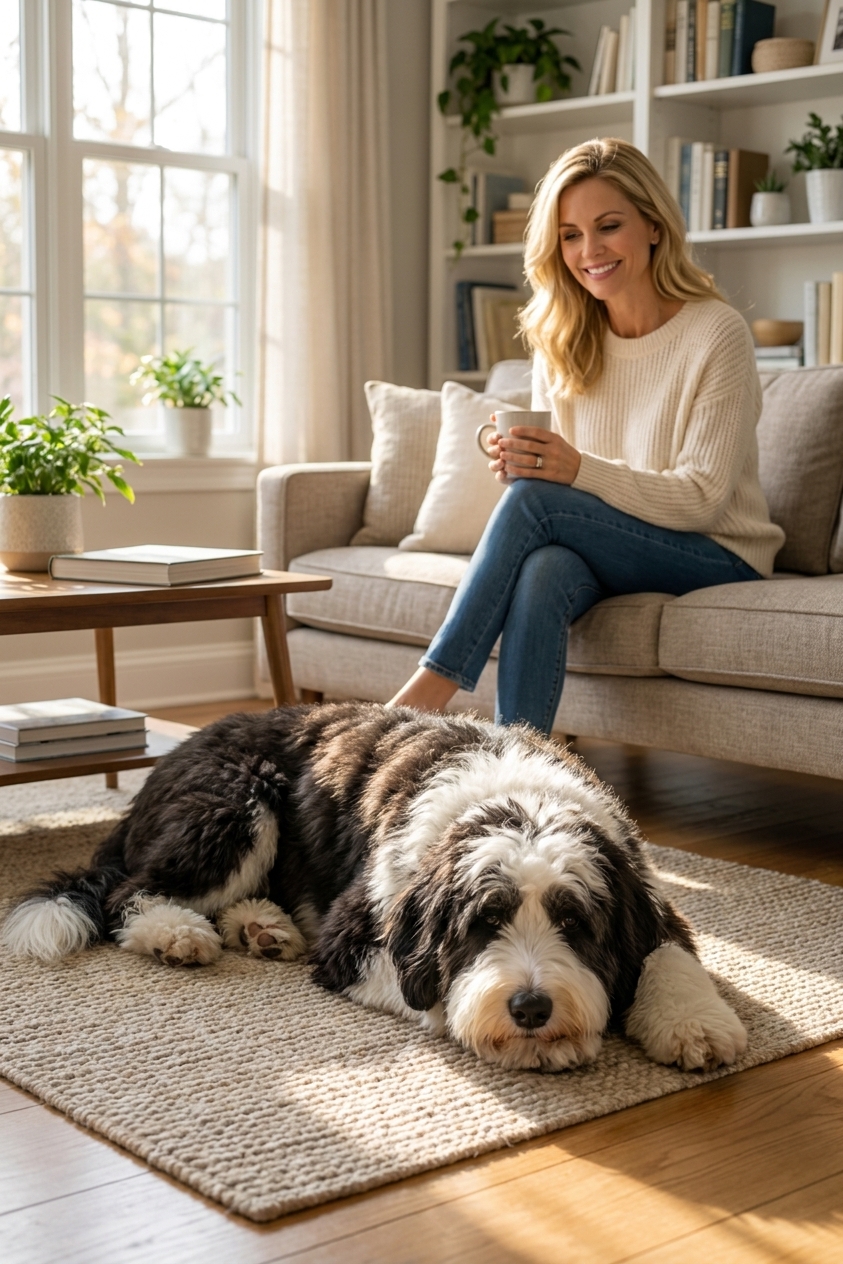
Quick snapshot
- Bernedoodle (Bernese Mountain Dog x Poodle): Often affectionate and people-focused, frequently a bit more laid-back in vibe as adults, but can be sensitive. Coat and size vary widely depending on whether the Poodle parent is standard, mini, or toy.
- Sheepadoodle (Old English Sheepdog x Poodle): Typically playful, social, and active with a classic fluffy “teddy bear” look. Many lean toward higher exercise needs and a bouncy personality, especially as young dogs.
Important reality check: Either mix can be high-energy, intense, or surprisingly calm depending on the individual dog, generation, and the lines behind the parents.
Bottom line: If your household wants a slightly steadier, cuddly companion and you are prepared for grooming, a Bernedoodle may fit. If you want a more energetic, playful dog and can commit to training and coat care, a Sheepadoodle may be a better match.
Size and growth
With both mixes, size depends heavily on the Poodle parent’s size and the individual genetics of the litter. Even within the same litter, you can see noticeable differences in adult weight and build.
Bernedoodle size
- Standard Bernedoodle: Often in the large range, commonly around 60 to 90+ pounds and frequently 23 to 29 inches at the shoulder.
- Mini Bernedoodle: Often 25 to 55 pounds and roughly 16 to 22 inches at the shoulder.
- Toy or tiny types: Some breeders market very small Bernedoodles, but size predictability and ethical breeding practices matter a lot here.
Bernedoodles can look more “Bernese-like” (broader, heavier bone) or more “Poodle-like” (lighter frame). That changes how much space they take up in a car, on a couch, and on your leash.
Sheepadoodle size
- Standard Sheepadoodle: Often 60 to 85+ pounds and commonly 21 to 27 inches at the shoulder, with some larger depending on lines.
- Mini Sheepadoodle: Often 25 to 55 pounds (many are on the lighter end), and roughly 16 to 20 inches at the shoulder.
Sheepadoodles often carry a big, plush coat that makes them look even larger than the scale says.
Apartments
Neither mix is a “small-space dog” by default, but a well-exercised mini of either cross can do fine in an apartment if you commit to daily walks, training, and calm indoor routines. Standards usually do best with more space, easier yard access, and families who enjoy being active outdoors.
Temperament
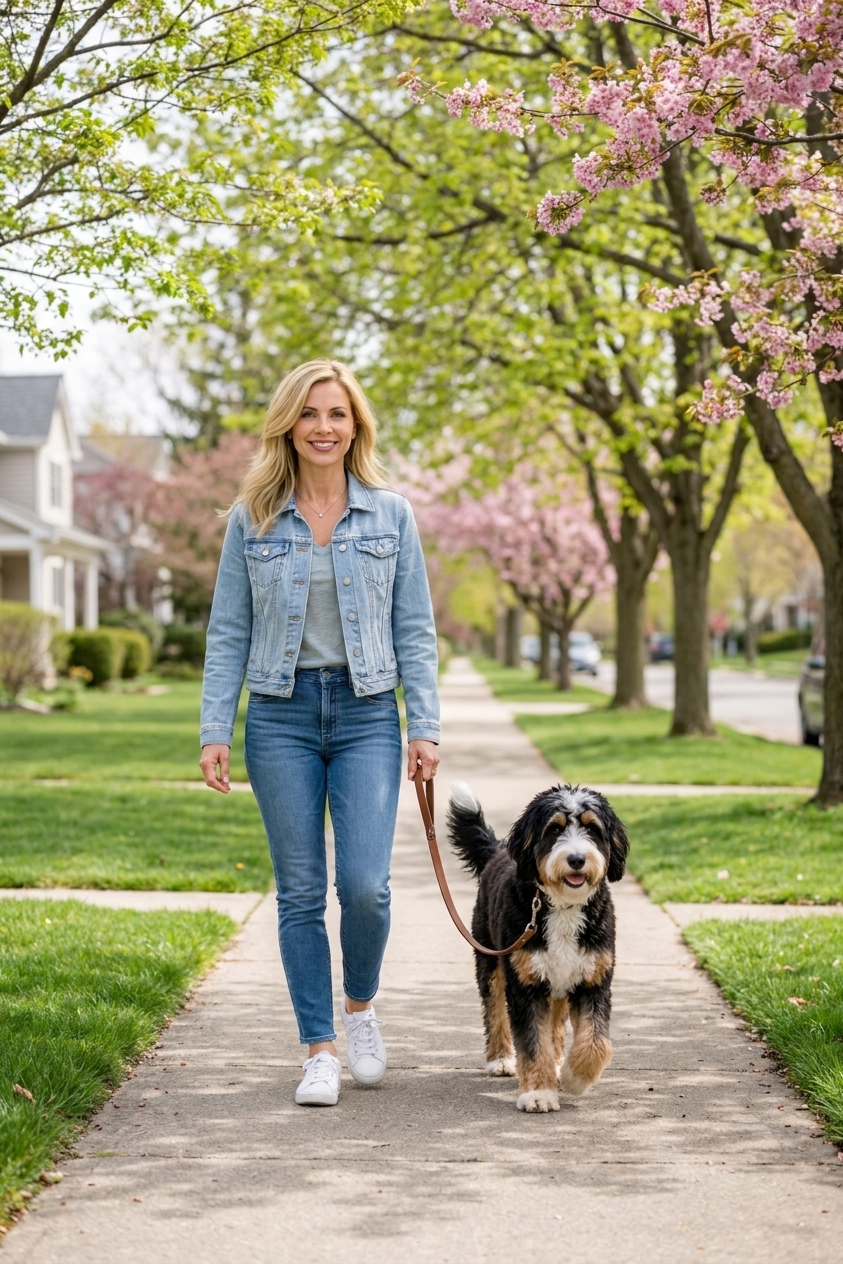
Temperament is where families feel the difference most. Early socialization, training, and the parents’ personalities matter as much as the breed mix.
Bernedoodle temperament
- Affectionate and bonded: Many Bernedoodles love being close to their people and can be true “shadow dogs.”
- Often gentle: The Bernese influence can bring a softer, more easygoing energy, especially in adulthood.
- Sensitivity: Some are emotionally sensitive and do best with calm, consistent training rather than harsh corrections.
- Adolescence can be intense: Like many large dogs, the teenage stage can include jumping, mouthing, and selective listening if training is inconsistent.
Sheepadoodle temperament
- Playful and social: Many Sheepadoodles are outgoing, goofy, and love interacting with people and other dogs.
- Can be exuberant: That bouncy friendliness can mean more jumping, bumping, and excitement, especially in young dogs.
- Smart, sometimes busy: The Old English Sheepdog and Poodle combo can create a dog that needs both physical exercise and mental work.
- Possible herding habits: Some may try to herd kids or other pets, which can show up as circling, nudging, or occasional nipping if not redirected early.
- Possible vocality: Some lines are more alert and talkative, especially if under-stimulated.
Kids, visitors, and other pets
Both mixes can do well with children when they are properly socialized and trained. The main family concern is usually size plus excitement. A large adolescent doodle can accidentally knock over a toddler or an unsteady senior adult.
If you have cats, ask the breeder about early cat exposure and choose a puppy that shows calmer curiosity rather than intense chasing behavior. Plan on slow introductions and supervised time until trust is earned.
Coat and grooming
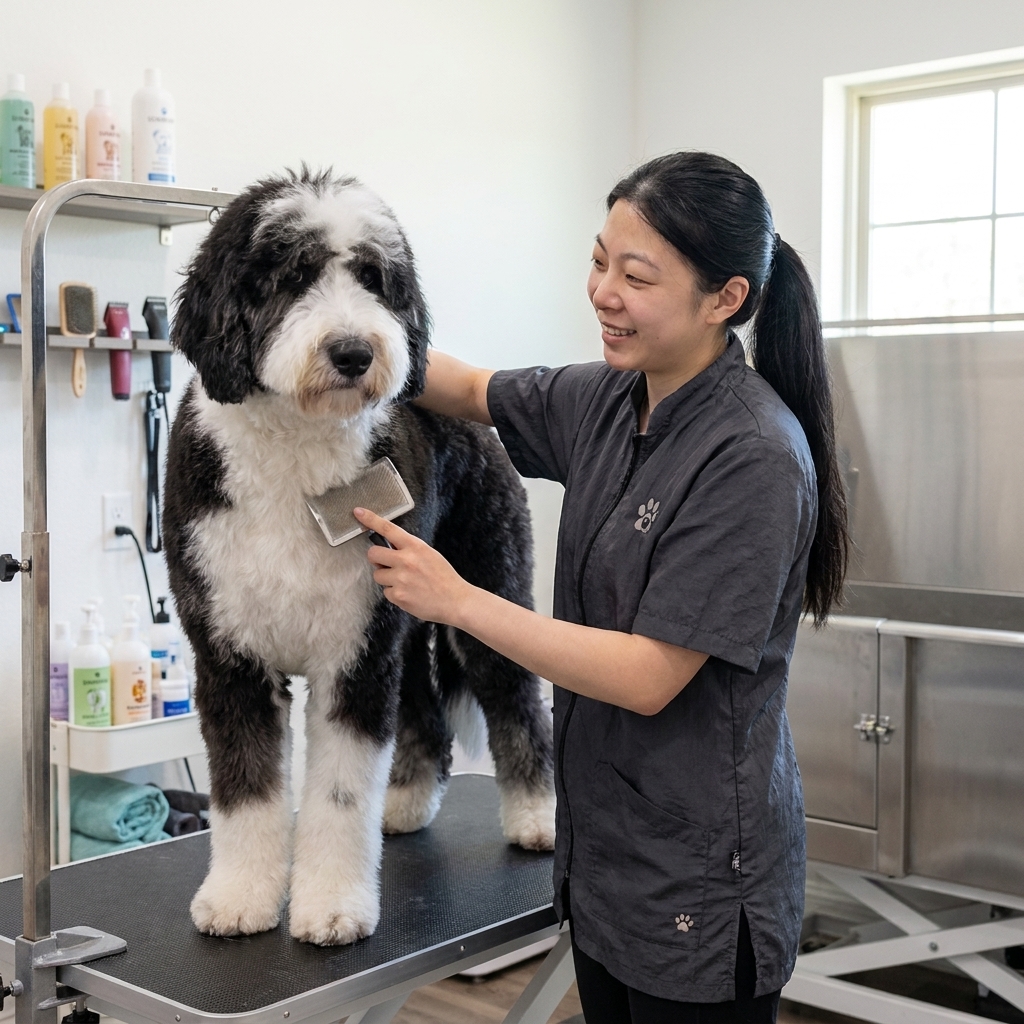
Grooming is not “optional maintenance” with these mixes. Matting can be painful, can hide skin infections, and can turn grooming into a stressful experience for your dog.
Bernedoodle coat types
- Wavy or curly: Often lower-shedding, but higher grooming needs.
- Straighter coats: May shed more and can still mat, especially behind ears, armpits, and around the collar.
- Common colors: Many families love the classic tri-color look, but coat color does not predict coat care.
Sheepadoodle coat types
- Thick and plush: The Old English Sheepdog influence often means a dense coat that can mat quickly.
- Wavy to curly: Many are low-shedding, but they still require frequent brushing and regular professional grooming.
Realistic grooming schedule
- At-home brushing: Usually 3 to 5 times per week for many doodle coats, and daily during coat change or if kept longer.
- Professional grooming: Often every 6 to 8 weeks.
- Key tools: Slicker brush, metal comb, detangling spray, and a plan for the high-mat areas (ears, legs, belly, collar zone).
- Technique that matters: Ask your groomer to show you “line brushing” and then do a quick comb-check to confirm you are reaching the skin.
Family-friendly tip: If you want a fluffier look but also a manageable routine, ask your groomer about a shorter “teddy” trim. A shorter coat can still be cute and is often kinder for active kids and busy schedules.
Allergies and shedding
A lot of families are drawn to doodles for allergy reasons, so let’s be clear: no dog is truly “hypoallergenic,” and no mix can guarantee low shedding. Even within the same litter, you can see different coat textures and different amounts of shedding and dander.
If allergies are a major concern, spend time around adult dogs from the breeder’s lines, not just puppies, and consider speaking with your allergist. A breeder who promises “no shedding” with certainty is not being realistic about genetics.
Exercise and enrichment
Both mixes are athletic enough to become restless if their needs are not met. Under-exercised doodles often show it as jumping, chewing, barking, counter-surfing, and difficulty settling.
Bernedoodle activity level
Many Bernedoodles are moderate-to-active. A typical day might include:
- One longer walk plus a shorter potty walk
- Play in the yard or a sniff-focused walk for mental enrichment
- Short training sessions (5 to 10 minutes) that teach calm manners
Some Bernedoodles are surprisingly energetic, especially younger ones with more Poodle influence. Do not count on “lazy Bernese energy” unless you have met the parents and seen adult relatives.
Sheepadoodle activity level
Sheepadoodles are often on the higher end of the doodle energy spectrum. Many do well with:
- Daily brisk walks and play
- Training games, nosework, or food puzzles
- Dog sports like agility foundations, rally, or structured fetch
Growing joints
For both mixes, protect growing joints without under-doing it. Controlled, low-impact exercise and good footing are your friends, while repetitive high-impact exercise (like long runs on pavement or frequent high jumping) is best avoided while they are still developing. Ask your veterinarian about age-appropriate activity, nutrition, and the right body condition score. Keeping a large puppy lean is one of the best gifts you can give their hips and knees.
Training
These mixes are intelligent and usually food-motivated, which is great news for training. The challenge is consistency. Smart dogs also learn bad habits quickly if the household rules change depending on who is holding the leash.
Common training strengths
- They often learn cues quickly
- They tend to enjoy working with people
- They can excel at basic obedience with positive reinforcement
Common training challenges
- Jumping: Very common in both mixes. Train a default sit for greetings early.
- Mouthiness: Especially during teething and adolescence.
- Leash pulling: Big bodies plus excitement require early leash skills.
- Separation stress: Many doodles are people-attached. Teach alone-time skills gradually.
My favorite practical plan for families: sign up for a positive, reward-based puppy class, then continue into a “teen dog” class. Most families need support most during adolescence, not puppyhood.
Generation basics
Breeders may describe litters using generation labels, and it can help you ask better questions:
- F1: first-generation cross (purebred x purebred). Coat and shedding can be less predictable.
- F1B: often a cross back to a Poodle. This can increase the odds of a curlier, lower-shedding coat, but it can also increase grooming needs and still does not guarantee an allergy-friendly outcome.
- Multi-generation: doodle to doodle breeding. Predictability may improve in some programs, but it depends entirely on the breeder’s selection, health testing, and transparency.
Use generation as a conversation starter, not a promise. The parents and the breeder’s track record matter more than the label.
Household fit
Bernedoodle may fit if you want
- A cuddly companion who is often content to stay near the family
- A dog that may lean slightly calmer in adulthood
- A large-dog look with a softer, affectionate temperament
Sheepadoodle may fit if you want
- A playful, social dog that loves activities and interaction
- A dog that can keep up with a more active household
- A fluffy, teddy-bear style coat and do not mind grooming work
Time alone
These dogs tend to struggle if left bored for long stretches. If your family is gone 9 to 10 hours most days, plan for dog walkers, daycare (if your dog enjoys it), or flexible work arrangements. It is not just about potty breaks. It is about emotional needs and mental stimulation too.
Cost reality
Budget matters with big, fluffy dogs. Expect higher ongoing costs for professional grooming, and for larger dogs, potentially higher food and veterinary expenses too. If grooming every 6 to 8 weeks would be a strain, plan for a shorter trim schedule your groomer can maintain, or reconsider whether a high-maintenance coat is right for your season of life.
Health and lifespan
Mixed-breed dogs can be healthy, but they can also inherit issues common in the parent breeds. Ethical breeding and appropriate health testing are your best protection.
Bernedoodle health considerations
- Orthopedic issues: hip dysplasia, elbow dysplasia
- Eye issues: inherited eye disease screening is important
- Skin and ear problems: common with floppy ears and dense coats
- Cancer risk: Bernese Mountain Dogs have higher cancer rates overall, which is one reason knowing the health history of the Bernese line matters
Sheepadoodle health considerations
- Orthopedic issues: hip dysplasia can occur in large lines
- Eye disease: ask about eye screening
- Skin and ear issues: matting and moisture can contribute to hotspots and infections
- Endocrine concerns: ask about thyroid history in the Old English Sheepdog line
Lifespan: many Bernedoodles and Sheepadoodles live roughly in the 9 to 14+ year range, with smaller varieties often trending longer than very large dogs. Individual genetics and body condition play a big role.
Evidence-based reminder: keeping your dog at a healthy weight is strongly associated with better mobility and longevity. If you can feel ribs easily (without seeing them prominently) and your dog has a visible waist, you are usually in a healthier zone.
What to ask breeders
A responsible breeder should welcome questions. If you feel rushed, guilted, or blocked from seeing records, that is information you should take seriously.
Health testing questions
- What specific health tests were performed on both parents (not just “vet checked”)?
- Do you have results for hips and elbows (OFA or PennHIP), and what were the scores?
- What eye testing was done (and how recently)?
- What genetic screening was done for Poodle-related conditions?
- What is the health history in the Bernese or Old English Sheepdog line, including cancer, thyroid disease, and autoimmune conditions?
Temperament and home-raising questions
- Can I meet the mother, and if possible the father?
- How are puppies socialized before going home (sounds, surfaces, handling, crate exposure)?
- Do you perform temperament evaluations, and how do you match puppies to families?
Coat and grooming realism
- What coat types have you seen in previous litters from these lines?
- What grooming schedule do you recommend, and what do your puppy buyers report?
Policies and puppy age
- At what age do puppies go home? (Most families should expect 8 weeks or older.)
- Do you provide a written contract, and do you have a return-to-breeder clause if life changes?
- What support do you offer after pickup if we have training or health questions?
Red flags
- No proof of health testing, or only DNA tests without orthopedic screening
- Multiple “always available” litters
- Guarantees of “hypoallergenic” or “no shedding” without discussing coat variability
- Puppies sent home extremely young
Decision checklist
If you are torn, try answering these as a family:
- Grooming: Can we brush thoroughly several times a week and budget for grooming every 6 to 8 weeks?
- Energy: Do we enjoy a moderate dog or a busier playful dog, knowing either mix can land on either end?
- Size: Are we prepared for 60 to 90+ pounds and the training that goes with it?
- Noise and activity: Is our home calm or lively, and how will we teach a big dog to settle?
- Time alone: How many hours will the dog be alone on a typical weekday?
- Support: Are we willing to attend training classes through adolescence?
If you answer honestly, you will usually see which dog fits your lifestyle, not just your wishlist.
Final thoughts
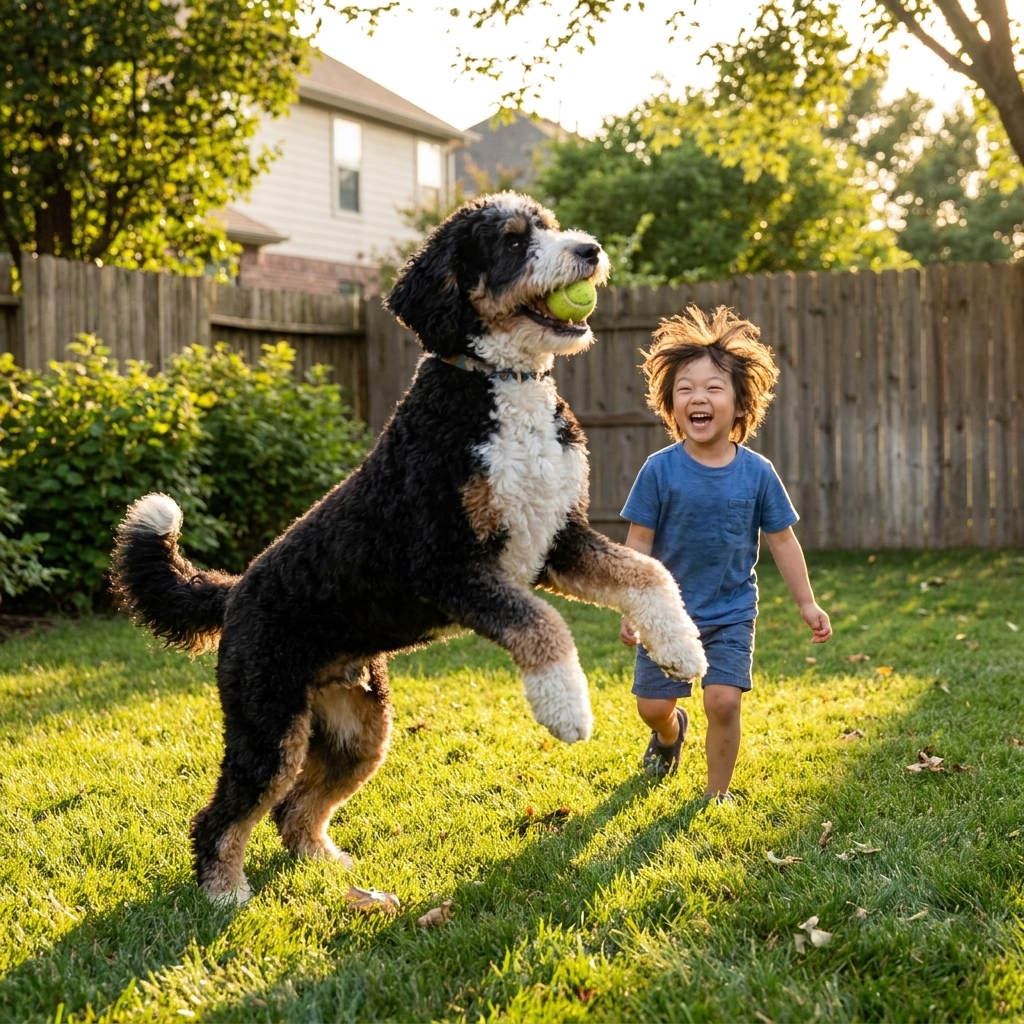
Both Bernedoodles and Sheepadoodles can be wonderful, affectionate companions. The right choice depends less on which mix is “better” and more on which one matches your family’s daily rhythm. Choose the dog whose grooming needs you can truly meet, whose energy level you will enjoy, and whose breeder can show clear, verifiable health testing.
When you get that part right, you are not just picking a puppy. You are setting up the next decade of your life together for success.