Considering a Bernedoodle? Learn about sizes, coat types and shedding, temperament, exercise, training, grooming schedules, common health risks, costs, and w...
Article
•
Designer Mixes
Bernedoodle vs Goldendoodle

Shari Shidate
Designer Mixes contributor
If you are deciding between a Bernedoodle and a Goldendoodle, you are already in a very good place. Both mixes can be affectionate, people-oriented, and wonderfully trainable. The best fit usually comes down to three everyday realities: size, temperament, and the time and budget you can truly dedicate to grooming and health care.
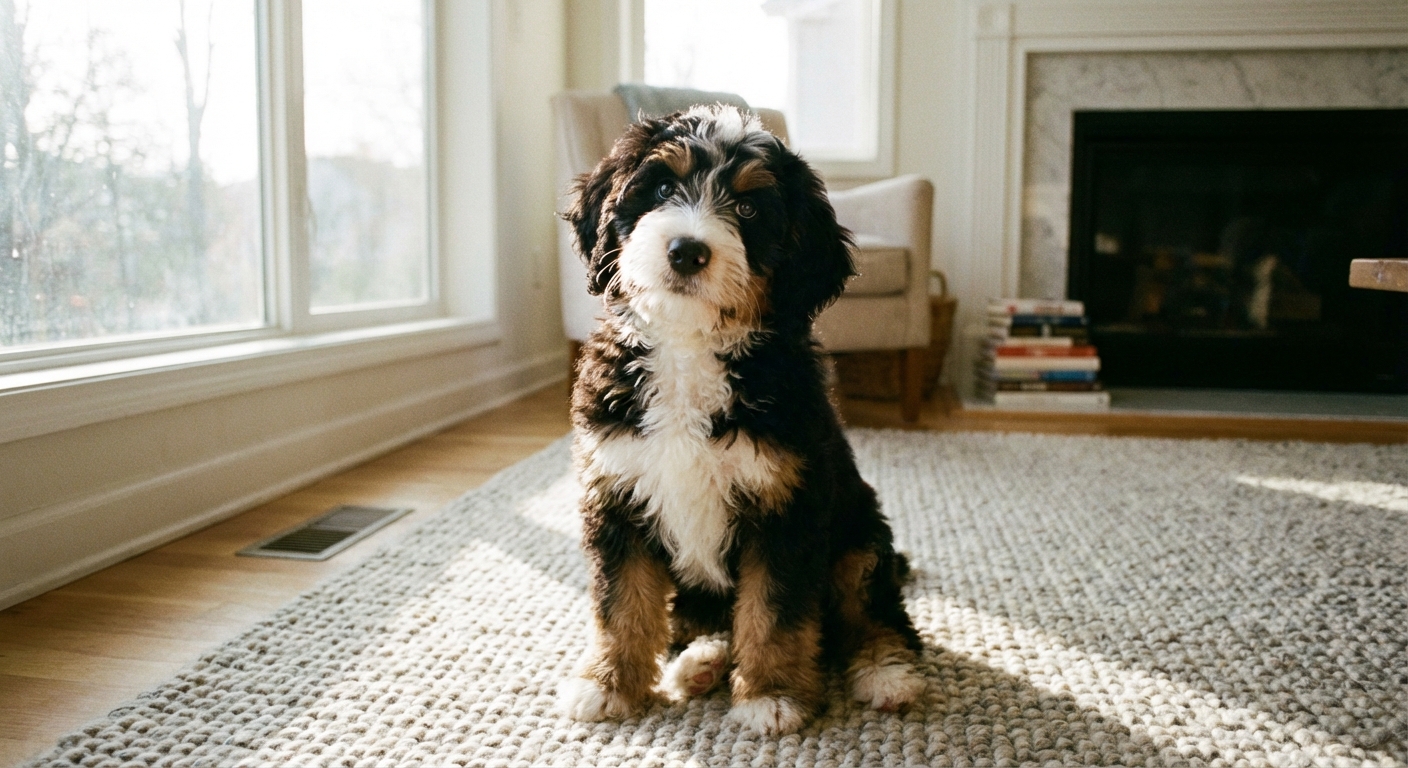
Below is an owner-focused, practical comparison based on common breed tendencies and what many groomers and veterinary teams see day to day. It also covers what can vary depending on the breeder, the parents, and the generation (F1, F1B, multigen).
Quick comparison table
Use this as your fast filter, then read the sections that match your lifestyle.
| Trait | Bernedoodle (Bernese Mountain Dog × Poodle) | Goldendoodle (Golden Retriever × Poodle) |
|---|---|---|
| Typical vibe | Often a little more reserved at first, very attached to family, can be goofy and sensitive | Often very social and eager-to-please, usually friendly with strangers |
| Size ranges | Mini, medium, standard; standards can be quite large and heavy-boned | Mini, medium, standard; standards tend to look more athletic and usually less “plush” than Bernedoodles |
| Energy level | Moderate to moderately high; many have a decent off switch indoors if exercised | Moderate to high; many need more daily activity and engagement |
| Trainability | High, but can be more sensitive or stubborn; responds best to calm, consistent training | Very high; often thrives with training games and routine |
| Grooming | Moderate to high; coats range from wavy to curly and can mat easily | Moderate to high; matting is common without brushing and professional trims |
| Shedding | Low to moderate; depends heavily on coat type and genetics | Low to moderate; depends heavily on coat type and genetics |
| Average lifespan | Often 10 to 14 years, with wide variation by size, genetics, and overall health | Often 10 to 15 years, with wide variation by size, genetics, and overall health |
| Common health watch-outs | Hip/elbow dysplasia, cruciate injuries, bloat risk in large deep-chested individuals, cancer risk in some Bernese lines, allergies/ears | Hip/elbow dysplasia, allergies/ears, cancer risk in some Golden lines, eye issues |
| Price range (US) | Often $2,500 to $5,000+ depending on size, coat, breeder, demand (varies by region and year) | Often $2,000 to $4,500+ depending on size, coat, breeder, demand (varies by region and year) |
| Best for | Families wanting a cuddly, sturdy dog and can handle grooming and size | Families and active owners who want a consistently social, trainable companion |
Generations: F1, F1B, multigen
If you keep seeing “F1” and “F1B” on breeder websites, here is the quick translation, plus why it matters for coat and predictability.
- F1: Poodle × Bernese (or Golden). These pups can be the least predictable for coat and shedding because you are combining two very different coat types in one step.
- F1B: An F1 doodle bred back to a Poodle. This is often done to increase the odds of a curlier, lower-shedding coat, but it also tends to increase grooming needs and matting risk.
- Multigen: Doodle × doodle (often several generations in). Some lines become more consistent over time, but outcomes still vary. Ask the breeder for photos of adult dogs from the same pairing or line, not just puppies.
Important reality check: No generation guarantees “hypoallergenic.” If allergies are a concern, spend time with adult dogs from the breeder’s lines and talk to your allergist, not just the breeder.
Size: mini, medium, and standard
Doodle sizes are not standardized across breeders, so think in ranges, not exact numbers. The Poodle parent (toy, mini, or standard) largely determines adult size, but Bernese and Golden genetics can still pull a pup up or down. The ranges below are common breeder-reported ranges, and individual dogs can land outside them.
Bernedoodle size range
- Mini Bernedoodle: often ~25 to 49 lb, ~18 to 22 in at the shoulder
- Medium Bernedoodle: often ~45 to 70 lb, ~20 to 24 in
- Standard Bernedoodle: often ~70 to 90+ lb, ~23 to 29 in
Bernedoodles can be surprisingly big-boned and “plush” in build, especially in standard sizes.
Goldendoodle size range
- Mini Goldendoodle: often ~15 to 35 lb, ~13 to 20 in
- Medium Goldendoodle: often ~35 to 55 lb, ~17 to 21 in
- Standard Goldendoodle: often ~50 to 75+ lb, ~21 to 24 in
Goldendoodles are often more athletic-looking and may feel “lighter” than a Bernedoodle at the same weight.
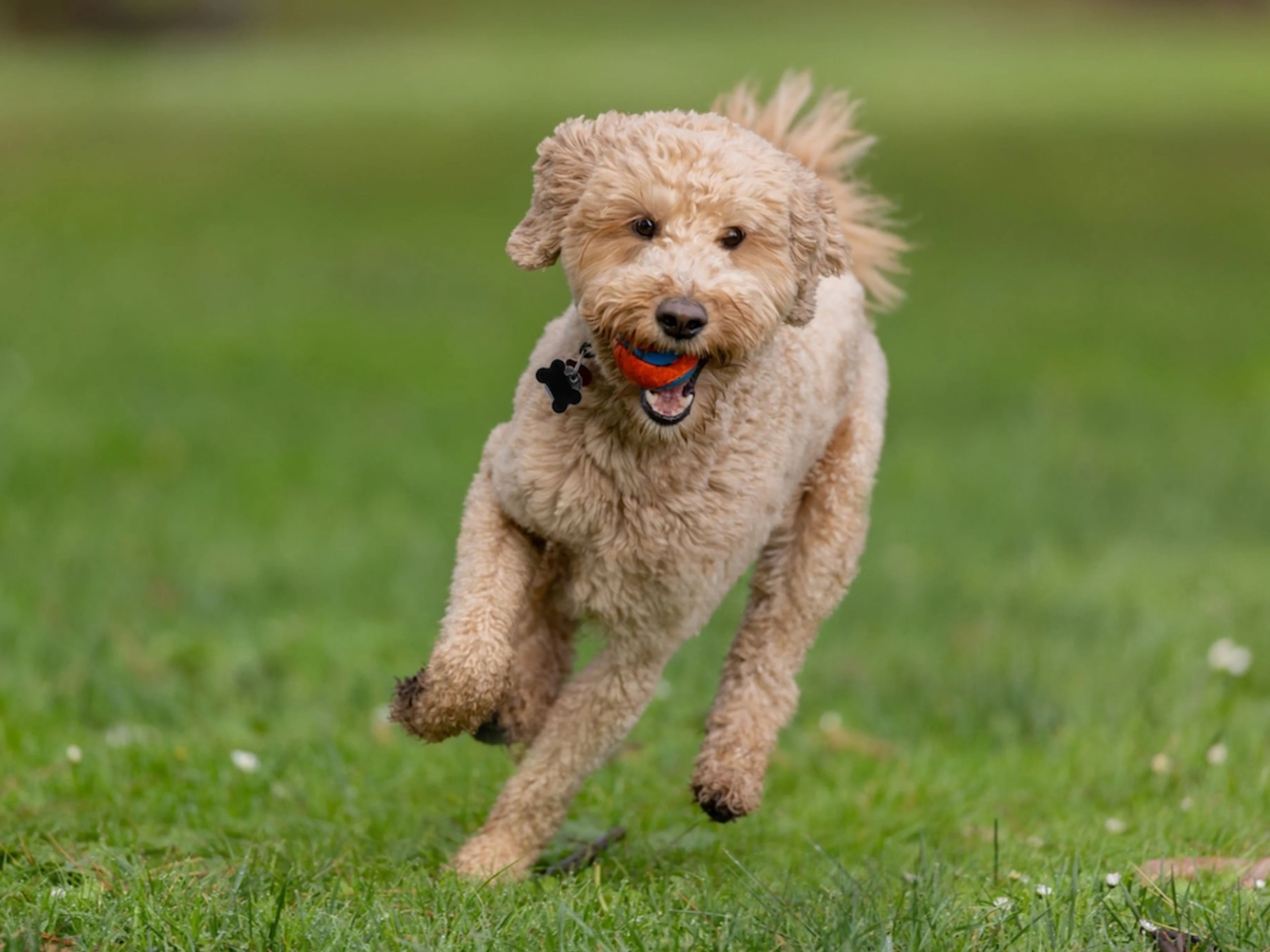
Apartment note: If you live in an apartment, a mini or smaller medium is typically the most realistic choice for either mix, but daily exercise and training matter more than the label. A bored mini doodle can be louder and more destructive than a calm, well-exercised bigger dog.
Temperament: what owners notice
Temperament is where these two mixes can feel different day to day. Individual variation is real, but there are patterns that show up again and again.
Bernedoodle temperament
- Devoted family dog: Many Bernedoodles bond intensely with their people and love being close.
- Warms up slower: Some take a little longer with strangers compared with many Goldendoodles.
- Sensitive: They often do best with calm, positive training and predictable routines.
- Goofy and cuddly: The Bernese side often adds a big, affectionate, clownish energy.
Goldendoodle temperament
- Social: Many are friendly with neighbors, visitors, and other dogs.
- Eager-to-please: Retriever genetics often shine through in training and family life.
- Playful: They can be more ready-to-go and may need more enrichment.
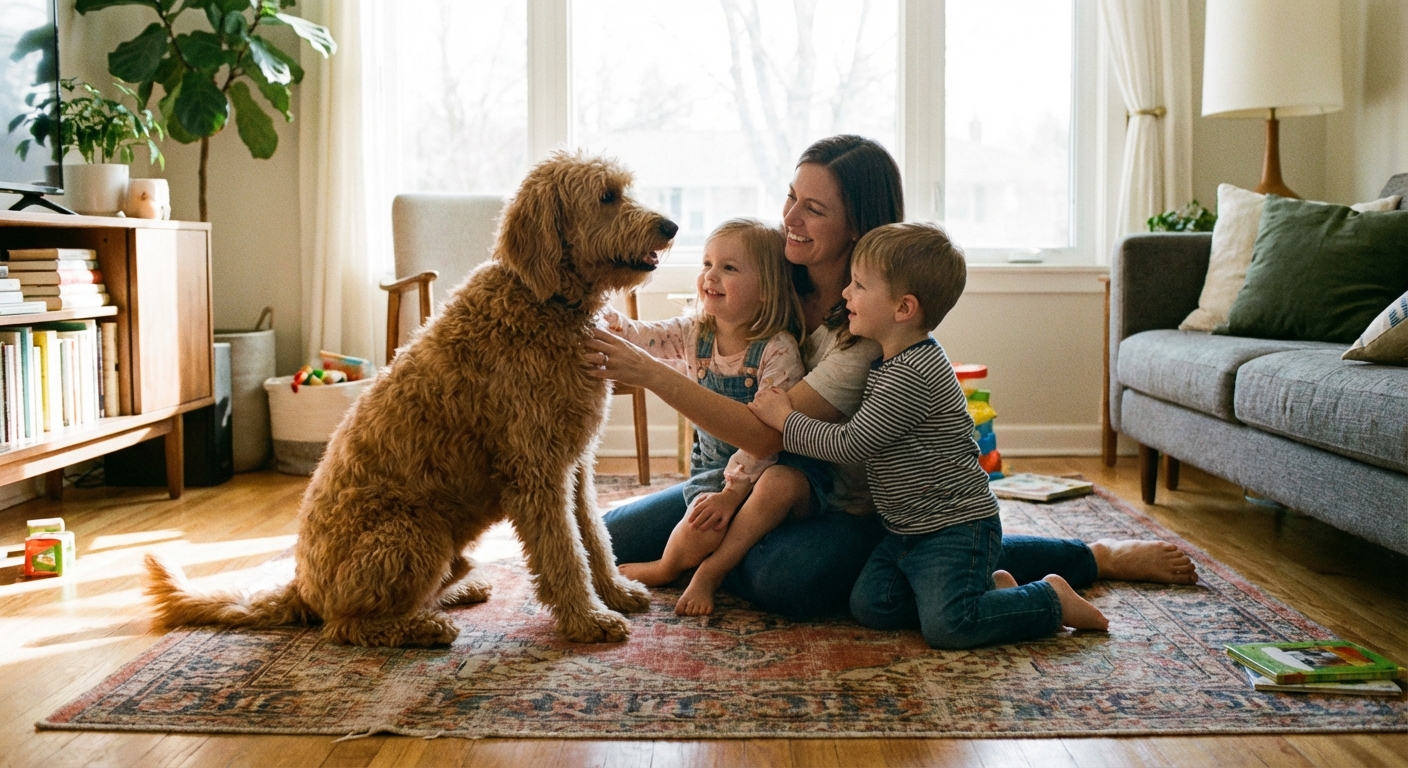
- Great with kids: With good socialization and boundaries, this is a common strength.
From my experience as a veterinary assistant: Both mixes can develop nuisance behaviors like jumping, mouthiness, counter-surfing, and barking if exercise, training, and rest are not balanced. The cutest puppy habits become the hardest adult habits, so start the basics early.
Exercise: what “enough” looks like
People do not usually regret choosing the “wrong” doodle. They regret underestimating daily exercise and enrichment.
- Mini and smaller medium: plan for 45 to 90 minutes total per day of walks, play, and short training sessions.
- Medium to standard: plan for 60 to 120 minutes total per day, plus a job for their brain (sniff walks, puzzle feeders, basic obedience drills, fetch with rules).
Tip that helps: Two shorter sessions (morning and evening) usually work better than one long weekend workout.
Grooming and shedding
Here is the honest truth: “doodle coat” is not one coat. You can get anything from loose waves to tight curls, and that changes the shedding, brushing needs, and how often you will book a groomer.
Coat types you may see
- Wavy fleece: common, soft, moderate maintenance, matting risk if brushing is skipped
- Curly wool: often lower shedding but higher matting risk without consistent brushing
- Straighter coat: can shed more and still mat around friction areas (collar, armpits, ears)
Basic grooming schedule (most doodles)
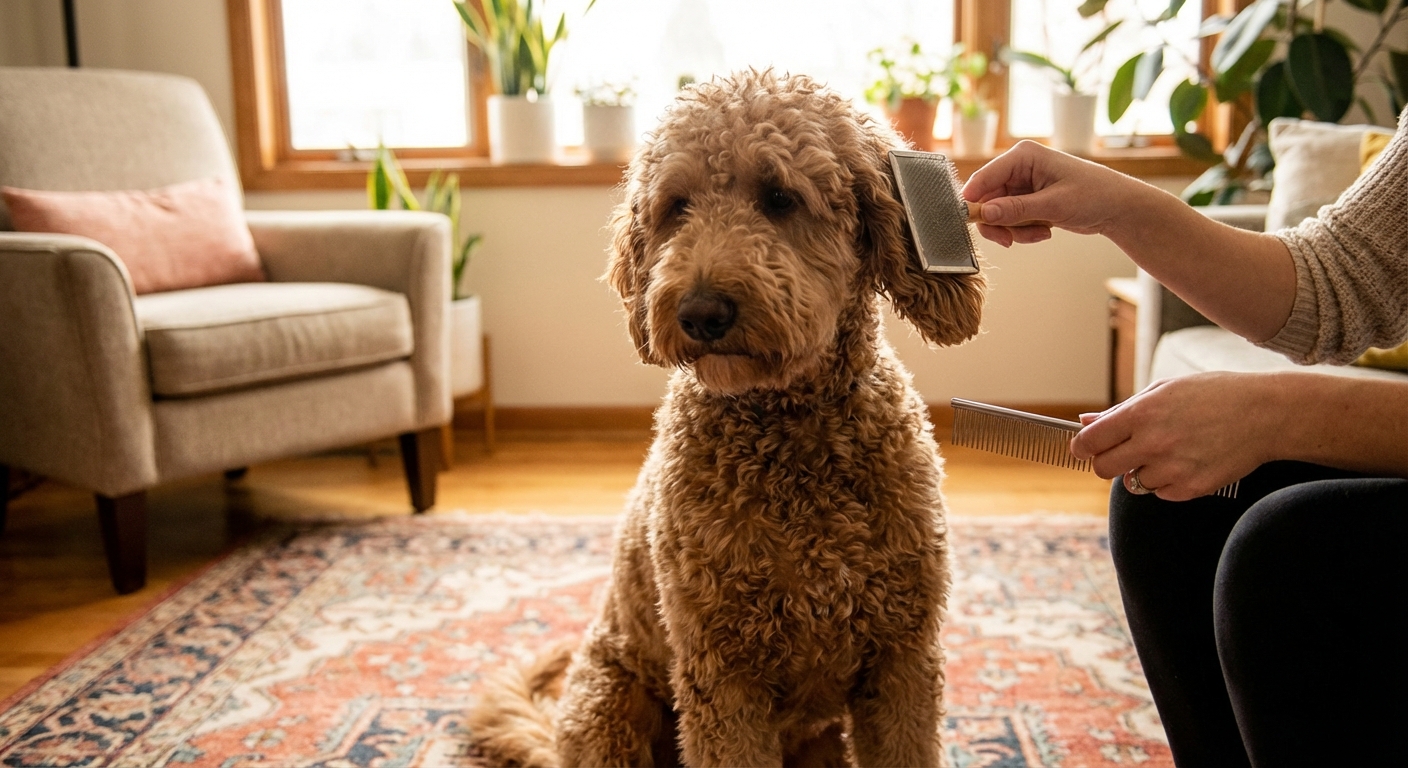
- Brush at home: 3 to 5 times per week (daily for curlier coats)
- Professional grooming: every 6 to 8 weeks is typical
- Ears: check weekly, especially after swimming or baths
- Nails: every 2 to 4 weeks, depending on wear
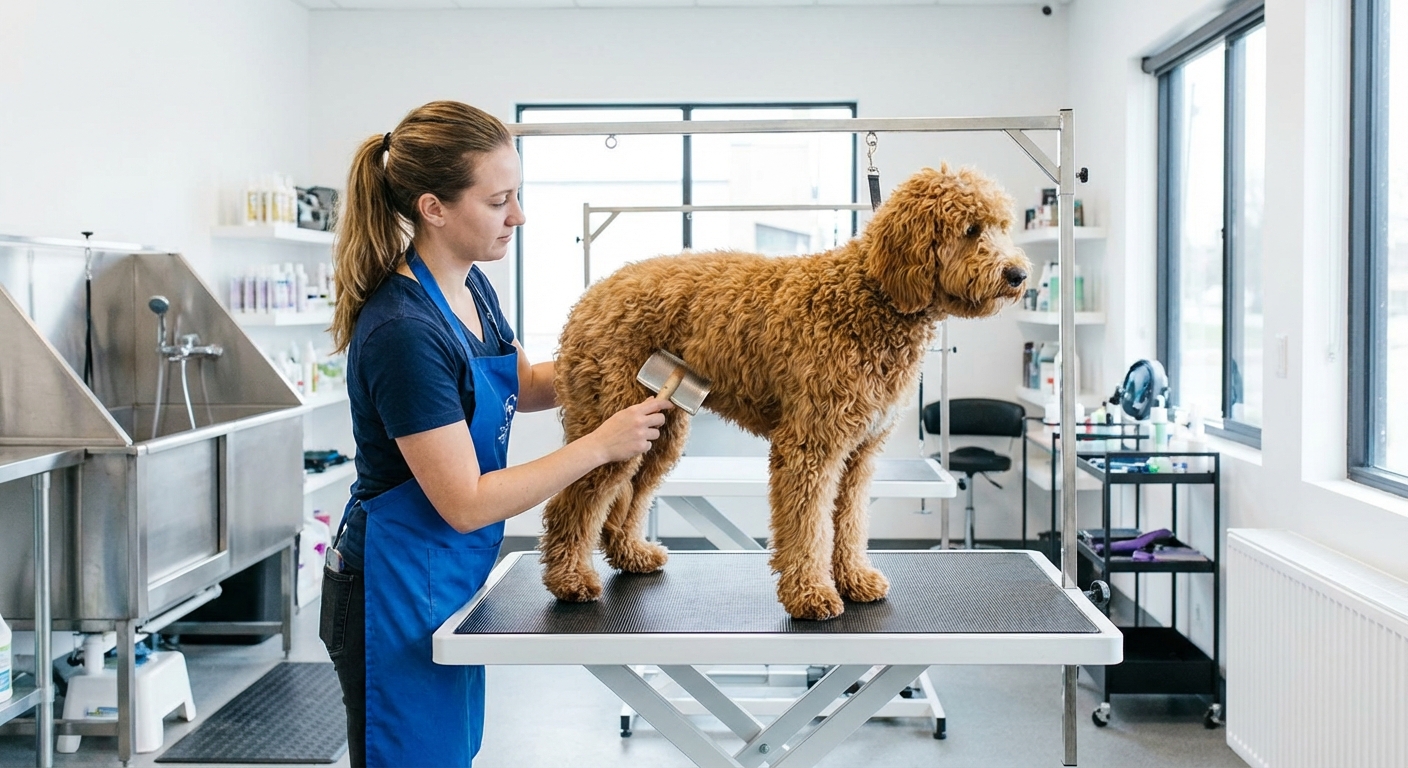
Budget tip: Grooming can easily run $80 to $160+ per visit in many US cities, more for large dogs or heavy coats. Pricing is highly regional and can change year to year, so call local groomers before you commit.
Health concerns
Mixed-breed dogs can benefit from genetic diversity, but doodles are not automatically healthier. What matters most is responsible breeding, health testing on the parent dogs, and lifelong prevention.
Bernedoodle health watch-outs
- Orthopedic issues: hip and elbow dysplasia, cruciate ligament injuries
- Bloat (GDV): a concern in large, deep-chested individuals; ask your vet whether your dog’s build and risk factors make preventive gastropexy worth discussing
- Cancer risk: Bernese Mountain Dogs have higher rates of certain cancers, so ask about longevity and family history
- Ear infections and allergies: commonly reported in doodles due to ear anatomy, hair in ears, and skin sensitivity
Goldendoodle health watch-outs
- Orthopedic issues: hip and elbow dysplasia
- Allergies and ear infections: commonly reported by owners and frequently treated by vets
- Eye conditions: ask about eye testing and family history
- Cancer risk: Golden Retrievers also have increased cancer rates in many lines; good breeders should be transparent
Health testing to look for
At minimum, ask for orthopedic screening (hips and elbows), eye testing, and any breed-relevant genetic screening the breeder uses. If a breeder cannot clearly explain their testing and share documentation, that is a sign to pause.
Lifespan and maturity
Both mixes are usually long-term family dogs, but lifespan can vary a lot by size and lineage.
- Bernedoodles: often around 10 to 14 years. Smaller dogs within the mix tend to live longer than very large, heavy dogs.
- Goldendoodles: often around 10 to 15 years. Again, smaller sizes tend to have longer averages.
Ask the breeder for the ages and causes of death of dogs in their lines. It is one of the most practical questions you can ask.
Cost: price and first-year budget
Price varies by region, breeder reputation, size, coat color, and demand. Mini sizes and in-demand markings can push prices up.
Typical puppy price (US ranges)
- Bernedoodle: often $2,500 to $5,000+
- Goldendoodle: often $2,000 to $4,500+
First-year costs many owners forget
- Veterinary care: exams, vaccines, fecal tests, preventatives, spay or neuter
- Training: a quality puppy class is one of the best investments you can make
- Grooming: professional grooming plus home tools
- Food: larger dogs cost more to feed; ask your vet what is appropriate for growth
- Insurance: optional, but worth pricing out early due to allergy and orthopedic trends
Actionable advice: Before you put down a deposit, call two groomers in your area and ask what they charge for an adult standard doodle. That one phone call can prevent a lot of sticker shock later.
Best fit by lifestyle
For families with kids
- Goldendoodle: often the easier default for a busy, social household because many are naturally outgoing and eager-to-please.
- Bernedoodle: wonderful family dogs too, especially if you want a calmer cuddle companion, but early socialization is important so shyness does not take root.
For apartments and smaller spaces
- Best bet: mini or smaller medium in either mix, plus daily walks and structured training.
- Watch-outs: separation anxiety and demand barking can happen in both mixes if the dog is under-stimulated.
For active owners
- Goldendoodle: often a great match for hiking, jogging, and fetch lovers, especially if you enjoy training games.
- Bernedoodle: many enjoy adventure too, but some lean more moderate and may prefer bursts of play with a solid nap afterward.
For first-time owners
- Goldendoodle: often straightforward for first-timers who can commit to training and daily exercise.
- Bernedoodle: can be very beginner-friendly too, especially calmer individuals, but sensitivity means harsh training can backfire fast.
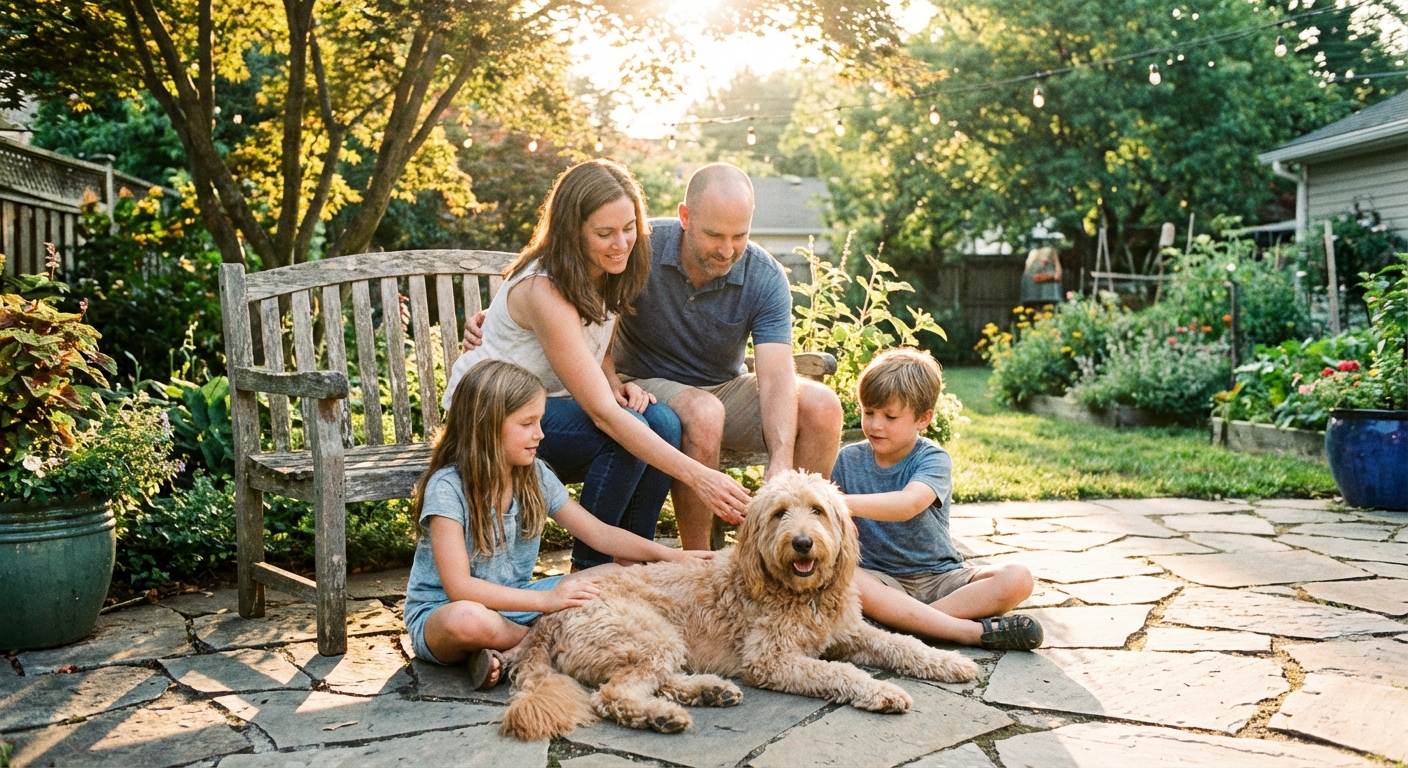
If you want the shortest decision rule: Choose a Goldendoodle if you want the higher-odds, highly social greeter type. Choose a Bernedoodle if you want a slightly more laid-back, family-centered companion and you are comfortable with the possibility of a larger, heavier dog.
How to choose a responsible breeder or rescue
- Ask for health testing documentation on the parent dogs, not just verbal reassurance.
- Meet the dam if possible and observe her temperament and comfort with people.
- Ask about puppy socialization (handling, household sounds, early enrichment, exposure done safely).
- Get clarity on coat expectations and grooming needs. No breeder can guarantee hypoallergenic, but they can explain likely outcomes and what they see in their lines.
- Review the contract for return policy, health guarantees, and spay or neuter terms.
- Avoid puppy mills and backyard breeding: if the breeder will not share test results, will not let you ask questions, or is pushing urgency over transparency, walk away.
If you are open to rescue, doodle-specific rescues and local shelters sometimes have Bernedoodles and Goldendoodles, especially adolescents. A foster-based rescue can also help match energy level and temperament to your home.
Bottom line
Bernedoodles and Goldendoodles are both capable of being incredible companions, but they are not low-maintenance dogs. If you plan for grooming, prioritize training, and choose a reputable source, you will set yourself and your future pup up for a healthier, happier life.
My favorite advice for doodle shoppers is simple: pick the dog that matches your schedule, not your dream schedule. Consistency is what makes these mixes shine.