A vet assistant’s guide to the Aussiedoodle: adult size ranges, personality, exercise needs, training and socialization, grooming and shedding, plus key he...
Article
•
Designer Mixes
Bernedoodle

Shari Shidate
Designer Mixes contributor
Bernedoodles are one of those “best of both worlds” mixes that can truly fit into a lot of families. They blend the Bernese Mountain Dog’s gentle, people-focused personality with the Poodle’s brains and often a lower-shedding coat. But I always tell potential owners the same thing I tell clients at the clinic: mixed breeds are not copy-and-paste. A Bernedoodle can inherit more Bernese traits, more Poodle traits, or a little of both.
This guide will help you understand what to expect, what to ask breeders or rescues, and how to set your Bernedoodle up for a healthy, happy life.
Quick note: This is general guidance. Your own dog’s needs can vary based on size, coat, age, health history, and lifestyle. When in doubt, your veterinarian (and your groomer) are your best teammates.
What is a Bernedoodle?
A Bernedoodle is a cross between a Bernese Mountain Dog and a Poodle (most commonly a Standard Poodle, but sometimes a Miniature Poodle for smaller sizes). They are typically bred as:
- F1 Bernedoodle: 50% Bernese, 50% Poodle.
- F1B Bernedoodle: often an F1 bred back to a Poodle (commonly advertised as about 75% Poodle, 25% Bernese) to increase the chance of a curlier, lower-shedding coat. Important: some breeders use “F1B” to mean backcross to a Bernese, so always ask what they mean and who the backcross parent is.
- Multigen: Bernedoodle to Bernedoodle crosses. In some established lines this may be somewhat more predictable, but variation still happens.
Because these are mixes, no breeder can guarantee exact coat type, adult size, temperament, or whether a dog will be “hypoallergenic.” What they can do is stack the odds by selecting healthy, stable parent dogs and raising puppies with proper socialization.
Size
Bernedoodles are often marketed in multiple sizes. Adult size depends on the Poodle parent’s size, overall genetics, and sometimes which generation you are choosing.
- Standard Bernedoodle: often 50 to 90+ pounds
- Mini Bernedoodle: often 25 to 50 pounds
- Toy or Tiny: varies widely and can be harder to predict
Some breeders also share height ranges (measured at the shoulder). Those can be helpful, but weight and build are still the better day-to-day reality check for things like food, crates, and joint stress.
Tiny/Toy note from the clinic side: many “tiny” Bernedoodles involve Mini or Toy Poodles. Smaller mixes can be great dogs, but the smaller you go, the more important it is to ask about health history and how size was achieved. “Tiny” is not automatically a problem, but it can be less predictable.
As a veterinary assistant, I like to remind families that size is not just about how much dog you can lift. It affects joint risk, exercise needs, food costs, crate size, medication dosing, and even grooming time.
Coat, shedding, and allergies
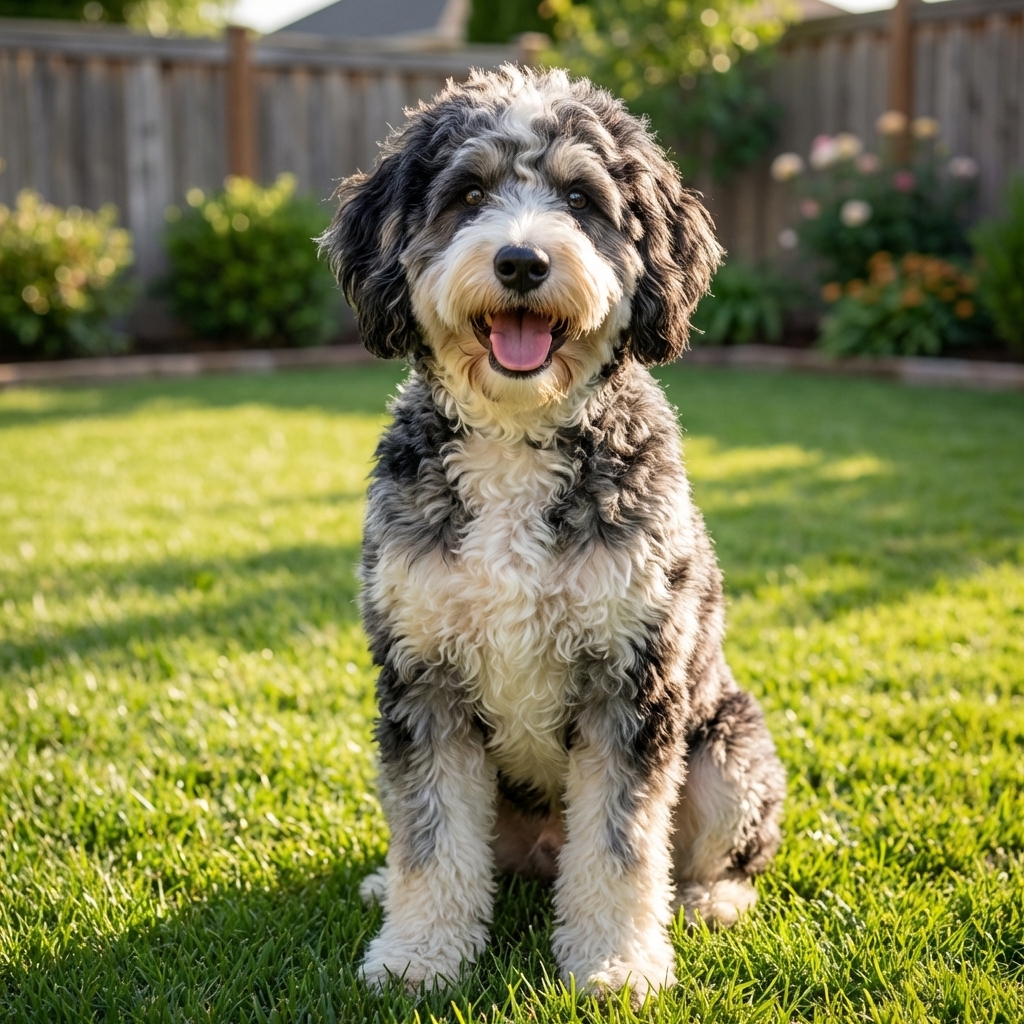
Coat is one of the biggest reasons people choose a Bernedoodle, and also one of the most misunderstood topics. Even within the same litter, coats can vary.
Coat types
- Wavy (fleece): often moderate shedding to low shedding; tends to mat if not brushed.
- Curly (wool-like): often lower shedding; can mat quickly without consistent grooming.
- Straighter coat: may shed more (more Bernese-like) and still can tangle.
Are Bernedoodles hypoallergenic?
No dog is truly hypoallergenic. Allergies are typically triggered by proteins in dander, saliva, and urine, not just hair. Some people with mild allergies do better with curlier, lower-shedding dogs, but it is a correlation, not a guarantee.
Action step: If allergies are a concern, spend time with adult Bernedoodles (not just puppies) and talk with your allergist before committing.
Temperament
When Bernedoodles are well-bred and well-raised, many are:
- Affectionate and people-oriented
- Smart and trainable
- Playful without being nonstop
- Good family companions when kids are taught respectful handling
That said, temperament can swing either direction. Poodles can be sensitive and quick learners. Bernese Mountain Dogs are often gentle and steady, but they can be slow to mature and can struggle if training is inconsistent.
Common challenges
- Jumping and mouthiness in adolescence (very normal, very trainable)
- Separation stress if the dog is never taught alone time
- Overexcitement when visitors arrive
- Fear periods during puppy development that require patience and positive exposure
Temperament and training go hand in hand. The good news is that most Bernedoodles respond really well when their days include both movement and a little mental work.
Exercise and enrichment
Most Bernedoodles do best with a mix of physical exercise and mental work. A quick walk is nice, but a smart dog also needs a “job.”
Daily goals
- Exercise: 45 to 90 minutes total, split into 2 to 3 sessions
- Training: 5 to 10 minutes, 1 to 2 times daily
- Enrichment: food puzzles, sniff walks, hide-and-seek, basic agility, or trick training
Important: For puppies, avoid forced long runs and repetitive high-impact jumping. Large-breed puppies need time for bones and joints to develop safely. Ask your veterinarian about age-appropriate activity.
Sample day (real-life doable)
- Morning: potty break + 15 to 25 minute walk + 3 minute training (sit, down, touch)
- Midday: puzzle feeder or scatter feeding in the yard for 10 minutes
- Evening: 20 to 40 minutes of walk or play + 5 minute training + chew time to settle
Next up is training, because exercise alone will not fix jumping, pulling, or “I must greet every person” behavior.
Training
Bernedoodles tend to thrive with positive reinforcement, clear structure, and consistency. Harsh corrections often backfire, especially with sensitive dogs.
Skills to prioritize
- Name response and attention cues
- Loose-leash walking (start early, go slow)
- Settle on a mat for calm inside behavior
- Leave it and drop it for safety
- Gentle greetings to prevent jumping
Socialization (the right way)
Socialization is not flooding your puppy with chaotic experiences. It is controlled, positive exposure to the world: surfaces, sounds, friendly people, calm dogs, and grooming handling. A puppy class with a qualified trainer is one of the best investments you can make.
Grooming
Bernedoodles are adorable, but that teddy-bear coat can become a matting nightmare without routine care. Matting is not just cosmetic. It can trap moisture, cause skin infections, and make grooming painful.
Typical needs
- Brushing: 3 to 5 times per week (daily for curlier coats or longer styles)
- Professional grooming: often every 6 to 8 weeks
- Ear care: check weekly, especially if your dog swims or has hair-heavy ears
- Nail trims: every 2 to 4 weeks
- Dental care: daily brushing is ideal
Technique that actually prevents mats
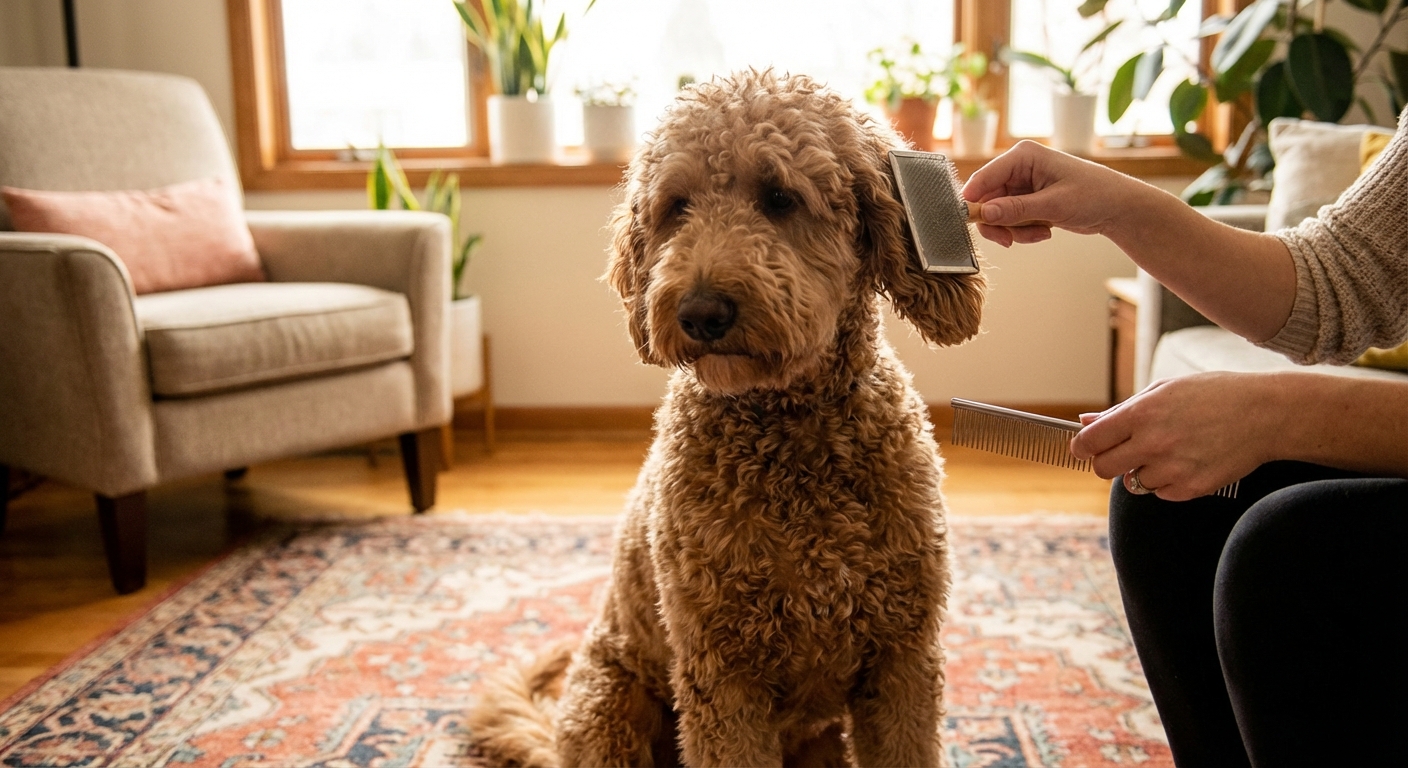
If you take one grooming tip from this article, let it be this: brush to the skin, not just the top layer of fluff.
- Line-brushing: work in small sections and brush from the skin outward.
- Follow with a metal comb: if the comb does not glide to the skin, there is still a tangle starting.
- High-friction zones: behind the ears, armpits, collar area, belly, and base of tail.
Action step: Ask your breeder what adult coat types they see in their lines and what grooming schedule they recommend. Then call a local groomer before you bring a puppy home to confirm pricing and availability.
Health
Mixed-breed dogs can be healthy, but they can also inherit risks from both sides. Ethical breeding and smart preventive care make a real difference.
Common concerns
- Hip and elbow dysplasia (especially in larger dogs)
- Cranial cruciate ligament (CCL) injury (often called “ACL” in casual conversation)
- Ear infections (floppy ears plus hair plus moisture)
- Allergies and skin issues
- Gastrointestinal sensitivity in some lines
- Eye issues (varies)
- Bloat (GDV) risk in larger, deep-chested dogs
Lifespan
Lifespan varies widely with size and genetics. Many Bernedoodles fall in a broad range of about 10 to 15 years. Larger dogs and dogs with more Bernese influence may trend shorter, while smaller mixes may live longer. The best predictor is often the health, size, and longevity in the parent lines, so ask about it directly.
Breeder questions (non-negotiables)
- What health testing was done on both parents, and can you see proof (OFA or PennHIP for hips, elbows, current eye exams, and relevant genetic tests)?
- How are puppies raised and socialized in the home?
- What is your return policy if the family cannot keep the dog?
- Can you tell me about the temperament of the parents and past litters?
- How do you match puppies to homes (energy level, confidence, handling tolerance)?
Red flags to watch for
- No proof of health testing, or they refuse to share documentation.
- Guaranteed “hypoallergenic” claims.
- Puppies sent home very early, or no discussion of early socialization.
- They will ship a puppy with no screening questions for you.
- No contract, no return policy, or pressure to decide immediately.
Even with health testing, nothing is guaranteed. But transparency, documentation, and thoughtful breeding practices are a strong sign you are dealing with someone responsible.
Nutrition
Food matters. It shows up in your dog’s coat, stool quality, energy level, and long-term health. Bernedoodles range from small to very large, so nutrition should match life stage and size.
Puppies (especially Standards)
Large-breed puppies need controlled growth. In many cases, a veterinarian-recommended large-breed puppy diet may help support appropriate growth by keeping calories and calcium to phosphorus balance in a safer range for developing joints.
Adults
For adults, aim for a high-quality diet with:
- Clearly identified protein sources
- Appropriate fat levels for activity and body condition
- Fiber and digestibility to support healthy stools
- Measured portions to prevent weight gain
If you are interested in fresh or homemade feeding, go slowly and work with your veterinarian or a board-certified veterinary nutritionist to keep meals balanced. Even adding small amounts of whole foods can be a gentle starting point for many dogs.
Practical tip: Keep your Bernedoodle lean. You should be able to feel ribs easily under a thin layer of fat. Healthy weight is one of the kindest gifts you can give your dog’s joints.
Costs to plan for
This is the part that surprises families the most. Bernedoodles are not usually “cheap dogs” to maintain, even when you do everything right.
- Grooming: professional grooming every 6 to 8 weeks is common, plus tools at home (slicker brush, metal comb, nail trimmers).
- Training: a good puppy class and a few private sessions can prevent expensive behavior problems later.
- Preventive care: vaccines, deworming, and flea, tick, and heartworm prevention.
- Insurance or a savings fund: helpful for surprises like CCL injuries, GI issues, or emergency visits.
Is a Bernedoodle right for you?
A Bernedoodle can be a wonderful choice if you want a social, trainable companion and you are ready for grooming, training, and daily engagement.
Great fit for
- Families who enjoy daily walks and playtime
- People who want a friendly dog that loves being part of the household
- Owners who are committed to grooming at home or professional grooming schedules
Not the best fit for
- People who want a low-maintenance coat
- Homes where the dog will be alone for long hours every day
- Owners who prefer a very independent dog
Bottom line: Bernedoodles do best when their needs are met on purpose: training, grooming, healthy weight, and structured social time. If you can offer that, you will likely end up with the kind of dog that makes you smile every single day.
Quick checklist
- Schedule your first vet visit within the first week.
- Discuss a vaccine plan, deworming schedule, and flea, tick, and heartworm prevention with your veterinarian.
- Pick a groomer and book the first “puppy intro” appointment early.
- Enroll in a reward-based puppy class.
- Buy a slicker brush, metal comb, nail trimmers, and an ear cleaner approved by your vet.
- Puppy-proof your home and plan a safe confinement area.
- Make alone-time training part of the routine from day one.