A curious nose. A very waggy welcome.
If you are choosing between a Bengal and a Savannah, you are already looking at two of the most athletic, busy, brainy house cats around. They can be wonderful companions, but they can become stressed quickly in the wrong setup. Let’s compare them in the ways that matter day to day: size (especially Savannah generation), noise, leash potential, climbing requirements, legality, and what health paperwork you should expect from a responsible breeder.
At a glance: the real choice
- Bengal: Medium-sized, extremely active, often very interactive and toy-driven, with a reputation for being chatty and for loving vertical space and water play. Many Bengals are manageable for experienced cat homes with serious enrichment.
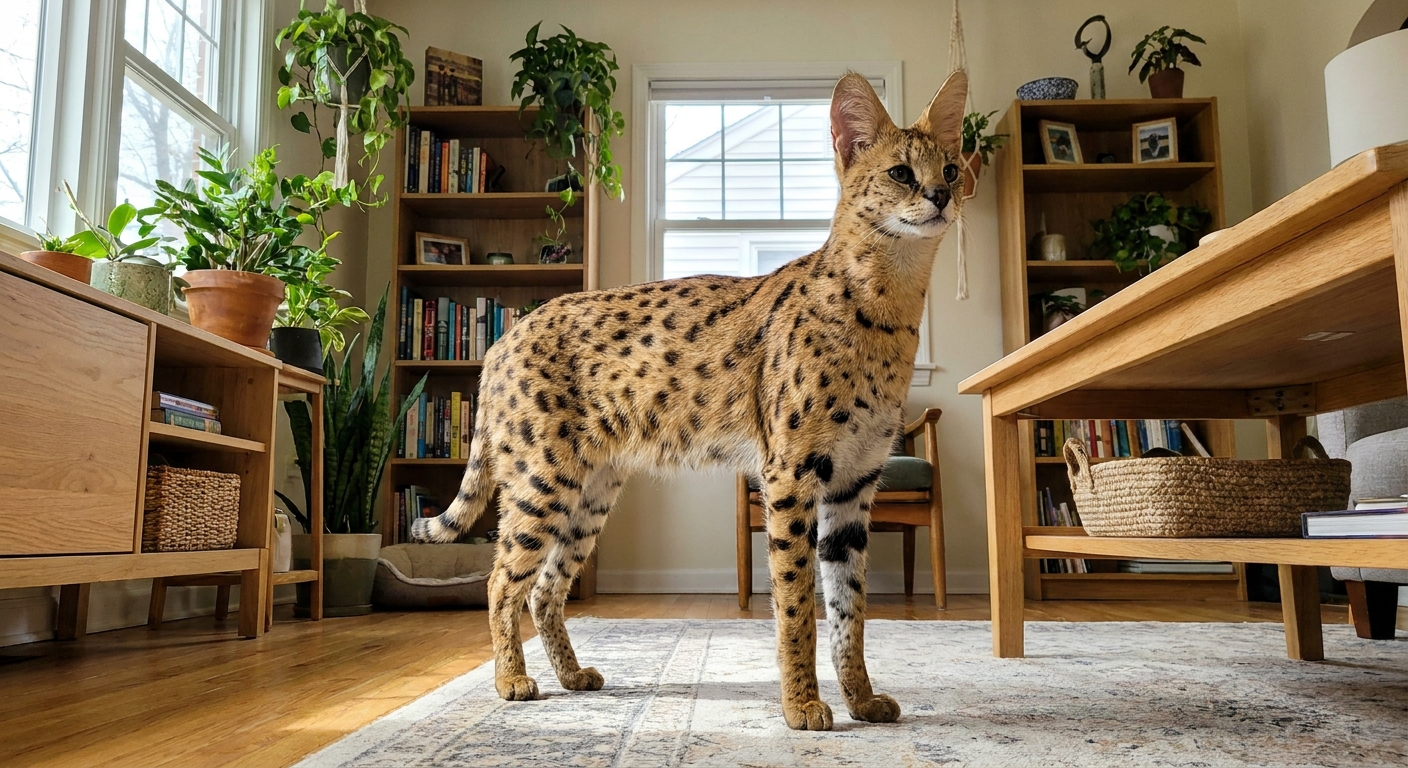
- Savannah: Size and intensity can scale dramatically with generation. Early-generation Savannahs (closer to serval ancestry) are often taller, more demanding, and more legally restricted. Later generations often fit “busy cat” homes more easily, but still need significant climbing and play.
Size: Bengal vs Savannah
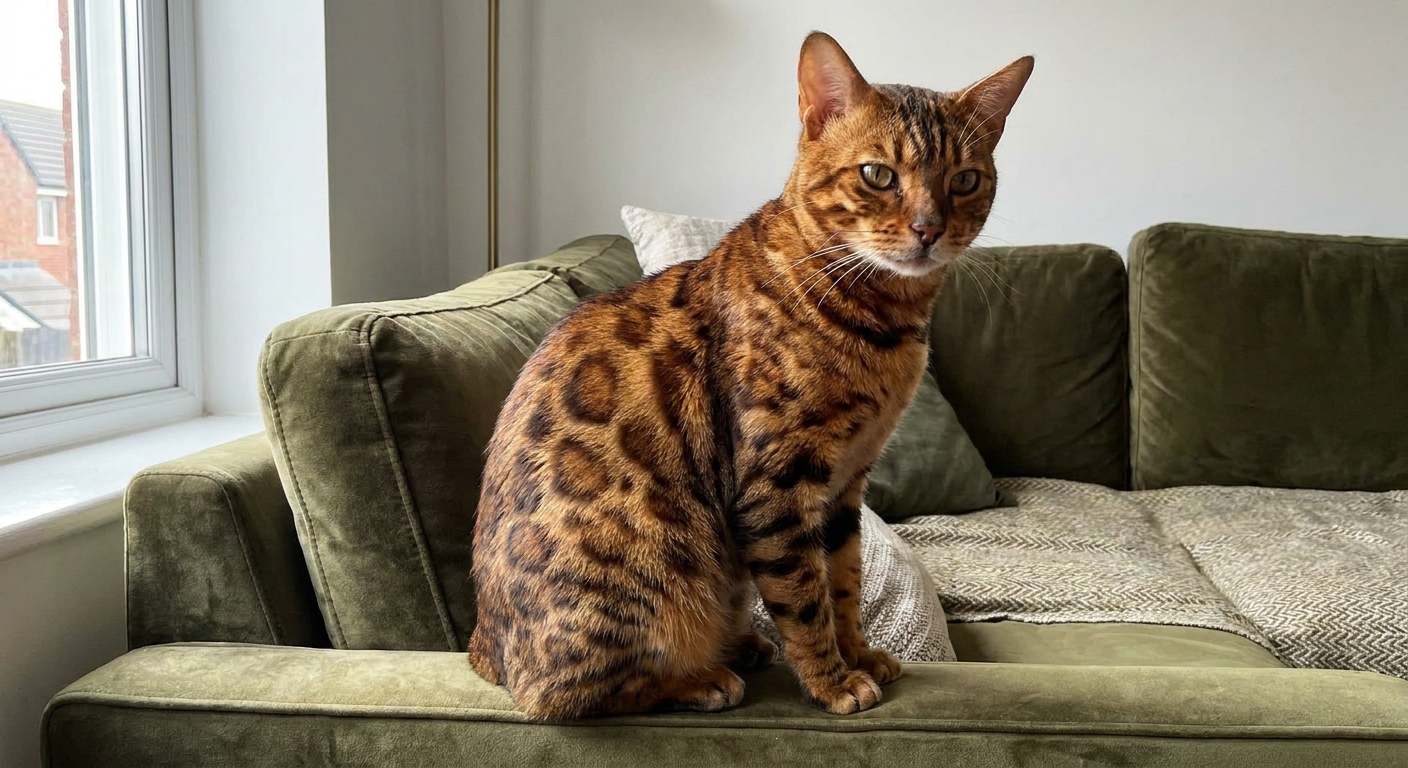
Bengals are generally a medium cat with a muscular, athletic build. Savannahs are usually taller and longer-legged, and the biggest swing is their generation.
Typical adult size ranges
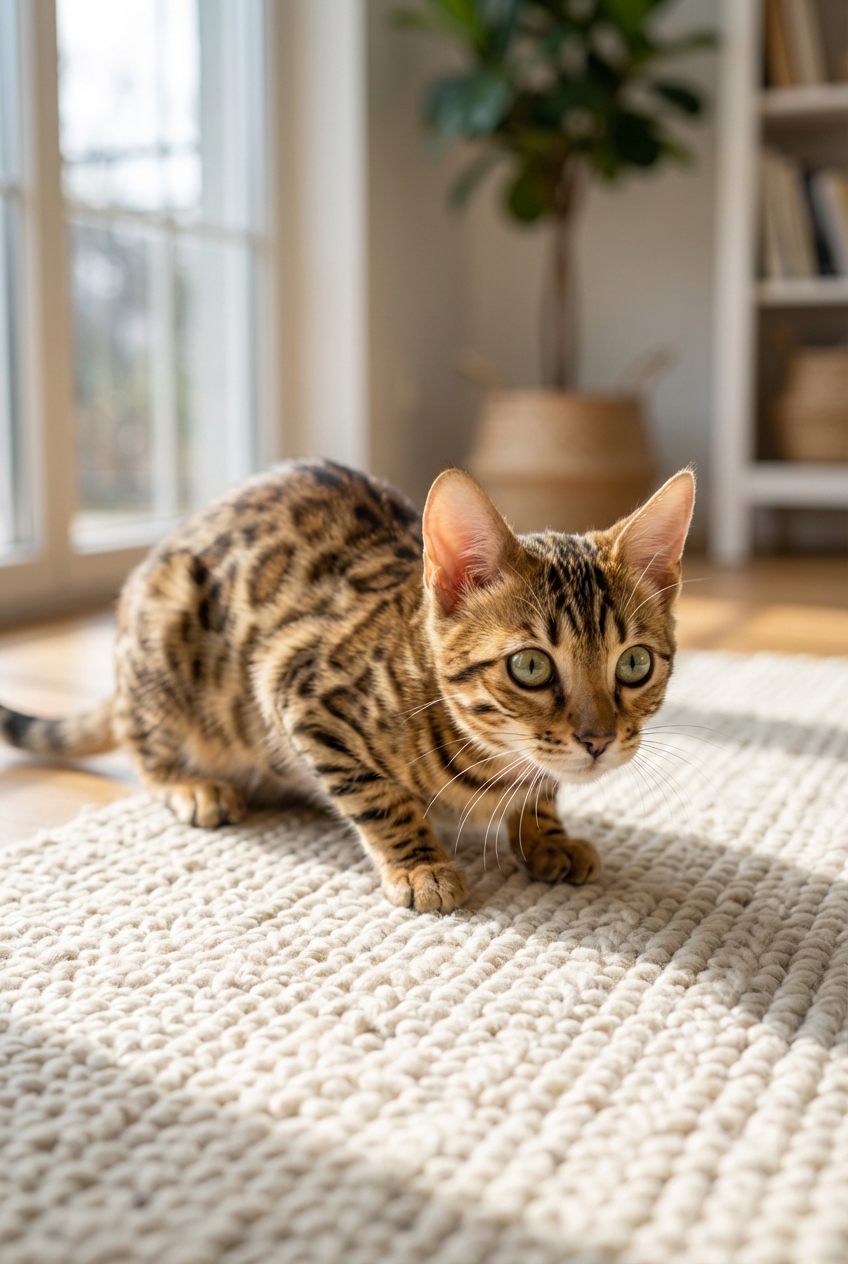
- Bengal: commonly around 8 to 12 pounds, with some males and some lines running larger. They tend to feel dense and strong for their size.
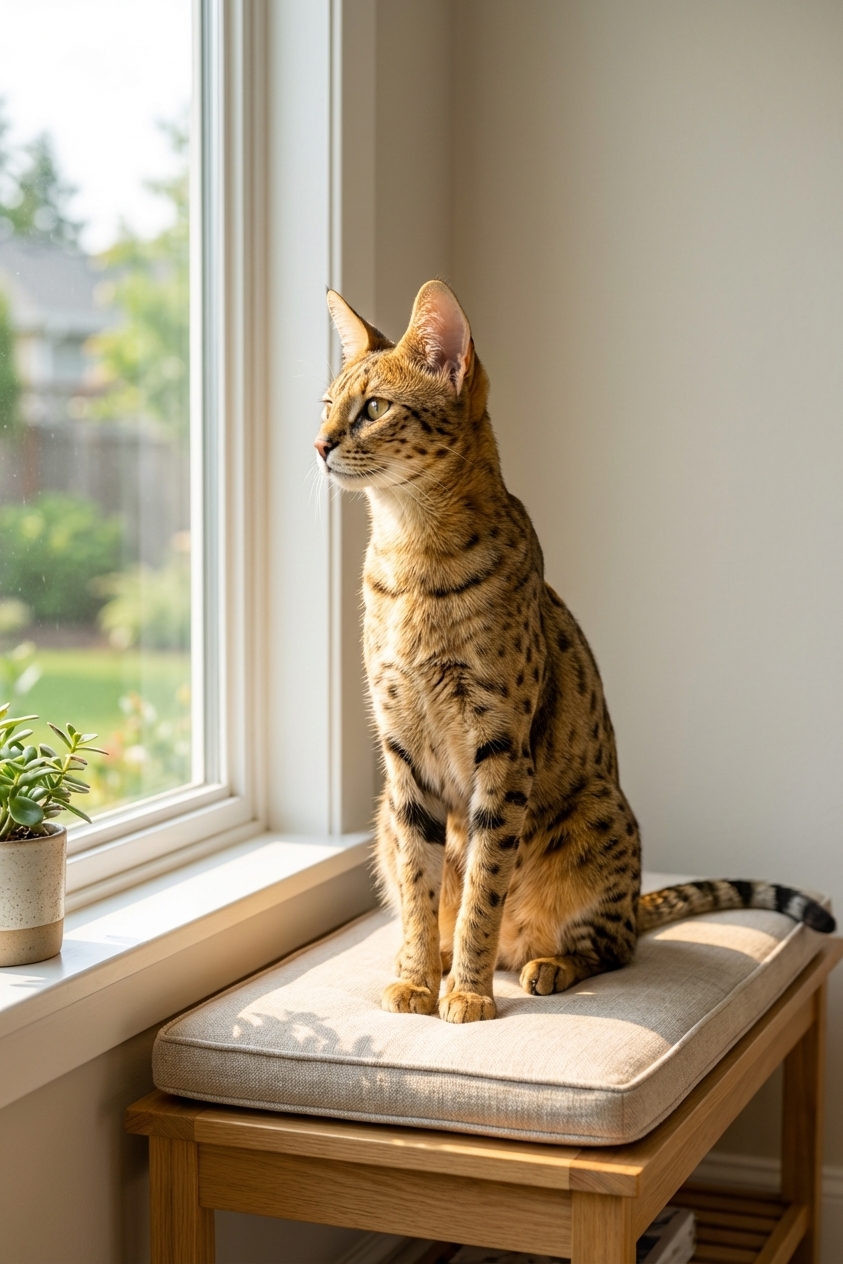
- Savannah: varies widely by generation, sex, and lines. Many pet Savannahs fall roughly 10 to 20 pounds, but the more consistent difference is often height and length, not just weight.
Why Savannah generation matters
Savannah cats are often labeled F1, F2, F3, F4, F5 and beyond. In general:
- F1 to F2: typically the most serval-like in body, height, and day-to-day intensity. These are the most likely to overwhelm a standard “cat-proofed” apartment.
- F3: still very high-drive and athletic, and in many areas, still the most likely to face legal restrictions alongside F1 to F2.
- F4: often tall, busy, and curious, but many owners find them easier to integrate into a household routine than F1 to F3.
- F5 and later: often closer to a very energetic domestic cat in management, while still retaining the Savannah look and a strong need for climbing and play.
Quick reality check (and yes, Bramble would call it a sniff-test): ask the breeder for the cat’s generation, the parents’ generations, and adult weights and heights of close relatives. Two Savannahs with the same “F” label can still mature very differently depending on lines.
Energy and climbing needs
Both breeds are high-drive. If your mental picture of “having a cat” is a quiet companion who naps while you work, either breed can feel like adopting a tiny athlete with opinions.
Bengal activity patterns
- Often bursts of intense play, then crash, then back again.
- Many Bengals obsess over motion: wand toys, springs, fetch, running water.
- Without daily interactive play, some Bengals create their own fun: climbing curtains, counter-surfing, opening cabinets, and escalating nighttime zoomies.
Savannah activity patterns
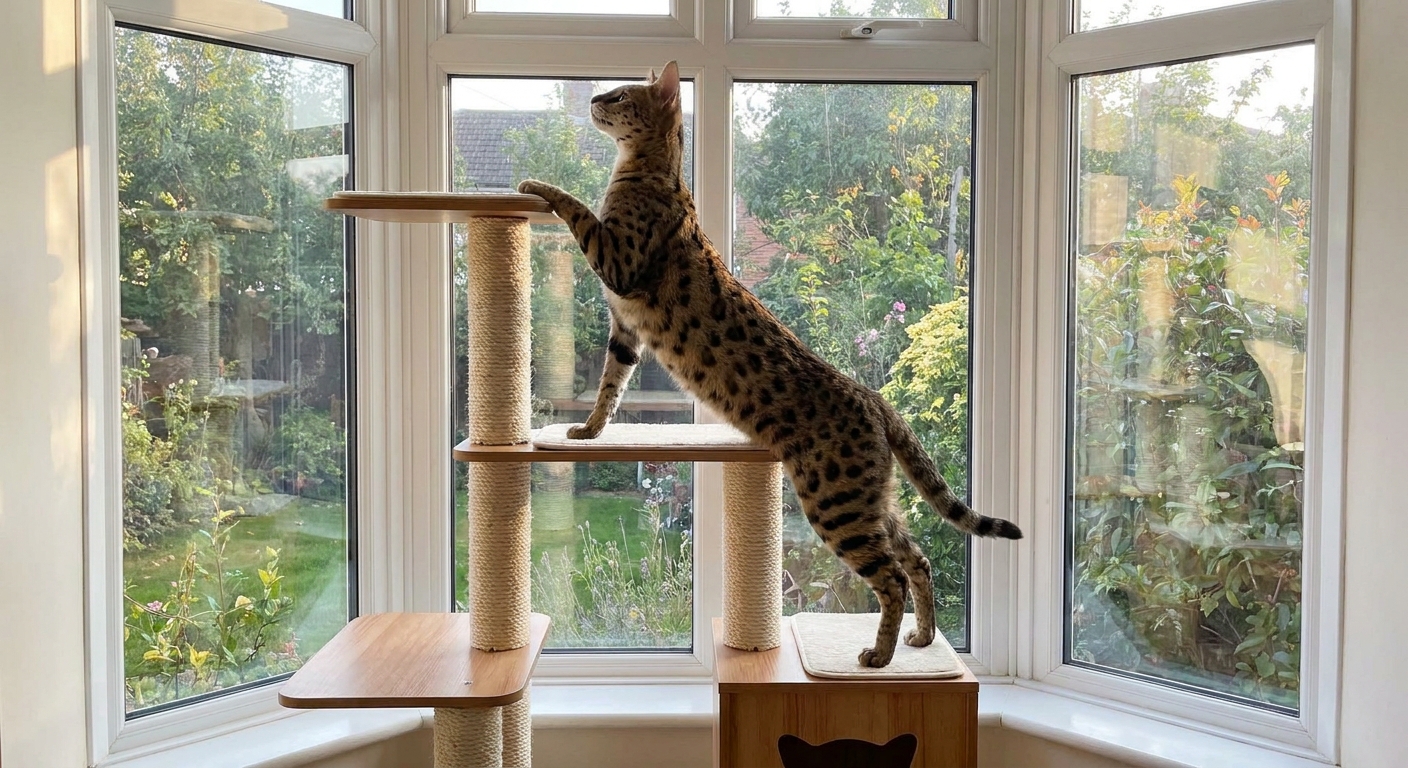
- Commonly needs more vertical territory and, depending on generation, more room.
- Many are powerful jumpers and serious explorers. Think “top of the fridge is step one.”
- They often do best with structured enrichment: climbing routes, puzzle feeders, training sessions, and predictable play windows.
Home setups that get strained
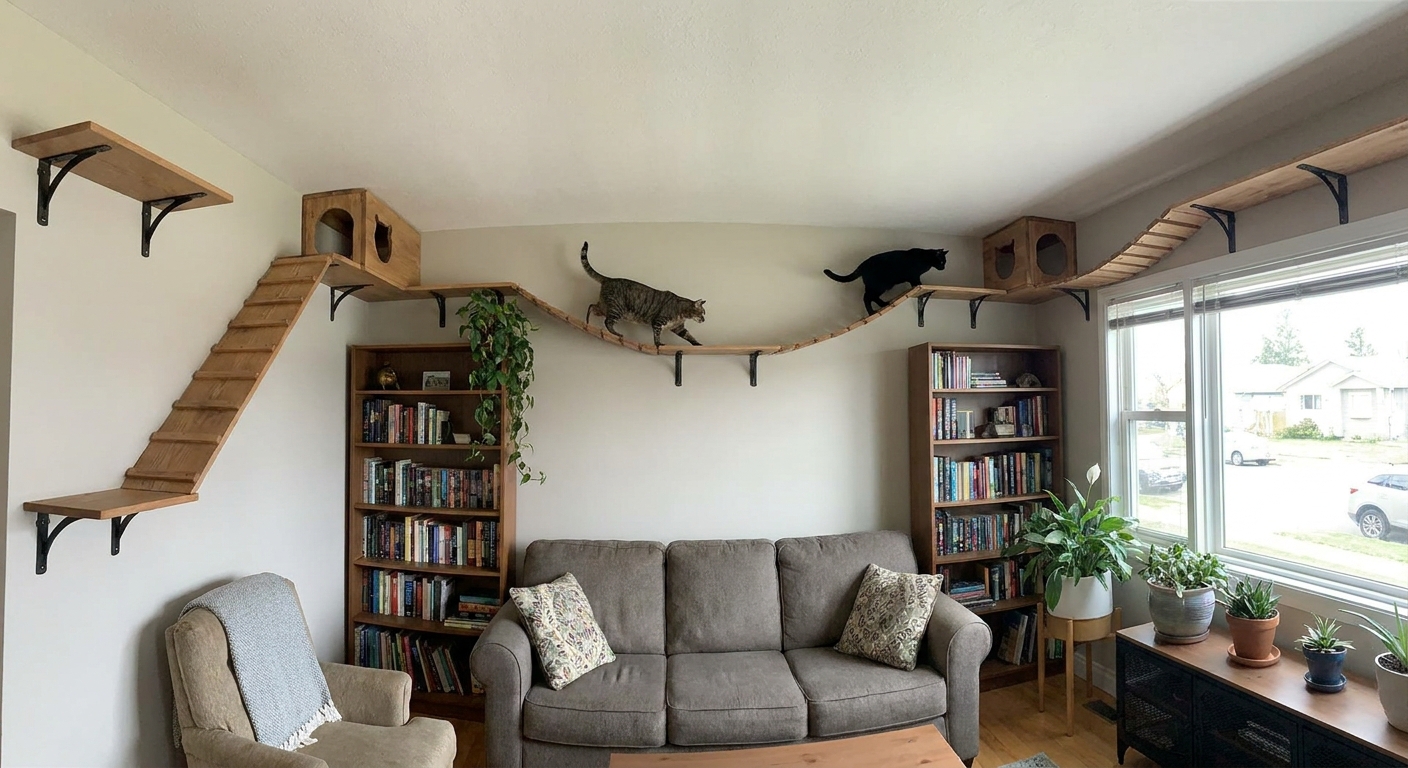
- Minimal vertical space: A single short cat tree usually is not enough for either breed.
- Breakable decor everywhere: Both breeds are “gravity testers.” Savannahs can be especially challenging due to height and reach.
- No daily play time: If no one can commit to interactive play and training, these cats may develop stress behaviors or destructive habits.
If you choose either breed, plan for a tall, sturdy cat tree, wall shelves or a climbing tower, and a routine of two or more daily play sessions.
Vocalization
Both Bengals and Savannahs can be vocal. The difference is often how they vocalize and what triggers it.
- Bengal: commonly chatty and communicative, especially when bored, excited, or trying to recruit you for play. Some have loud, insistent “where are you going” commentary.
- Savannah: can be talkative too, but many owners report a mix of chirps, trills, and strong “I want that now” demands. F1 to F2 cats, in particular, can be more intense overall, including in how they seek attention.
If you live in a noise-sensitive home such as thin apartment walls, roommates, a baby sleeping nearby, or a work-from-home schedule full of calls, either breed can be a challenge. The best protection is enrichment and routine, not hoping for a quiet individual.
Leash training and outdoor time
These are two of the cat types many owners choose to leash-train, but “can” and “should” are different questions. Outdoor time adds risks: escape, dogs, cars, toxins, parasites, and disease exposure.
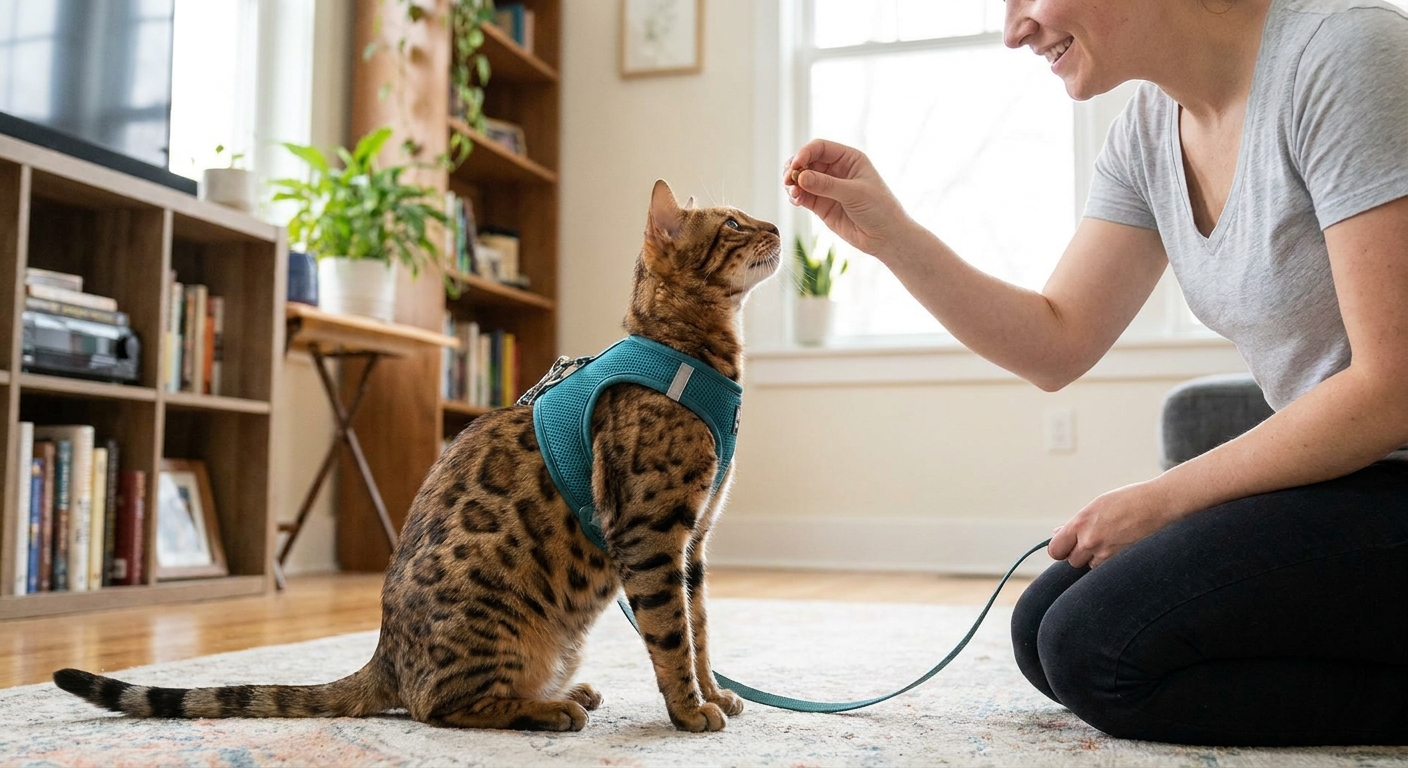
Bengal on a leash
- Often learns harness skills quickly with positive reinforcement.
- Many enjoy short, routine walks or backyard sessions.
- They still need strong indoor enrichment even if they go outside.
Savannah on a leash
- Frequently benefits from leash training because they crave exploration and territory.
- Early generations can be stronger, faster, and harder to manage if startled.
- A secure catio or fully enclosed yard space can be a safer “outdoor” compromise.
For both breeds, choose a well-fitted H-style or vest harness, start indoors, and treat it like a long-term skill. Never attach a leash to a collar for these high-drive jumpers.
Legality and housing rules
This is the part where puppy-scout Bramble raises a paw and asks the boring but crucial question: Are you allowed to own one where you live?
Savannah legality varies
Savannah cats can be restricted or banned in some locations, particularly early generations (often F1 to F3, sometimes F4). Rules can come from:
- State or provincial laws
- County or city ordinances
- HOAs and landlord policies
- Insurance requirements
Before you put down a deposit, confirm the rules with your local wildlife agency or animal control and also check your lease. Breeder assurances are not enough, even when well-meaning. Also: rules change, and enforcement can vary, so verify what is current right now.
Bengal legality is usually simpler
Bengals are typically treated as domestic cats, but certain jurisdictions restrict early-generation Bengals (closer to Asian leopard cat ancestry). If a listing mentions an “F” generation for a Bengal, that is your cue to double-check local rules.
Health screening and paperwork
Both breeds can come from excellent programs or questionable ones. Because these are high-demand, high-price cats, it is extra important to ask for documentation and walk away if answers are vague.
What to ask any breeder for
- Written contract that spells out the terms clearly
- Health records (vaccinations, deworming, vet checks) with dates
- Microchip information if the kitten is chipped, or the plan and timeline if not
- Return policy or rehoming clause (what happens if placement is not working)
- Registration or pedigree documentation where applicable, and an explanation of what it does and does not guarantee
Bengal health screening to discuss
- HCM screening: Ask whether the breeding cats have current echocardiogram results and who performed them (ideally a veterinary cardiologist), including the date.
- PK-deficiency DNA test: Bengal lines can carry pyruvate kinase deficiency. Responsible breeders often test breeding cats.
- PRA-b DNA test: Ask about genetic testing for progressive retinal atrophy risk in the breeding cats.
- Infectious disease practices: Ask what screening is done for FeLV and FIV (if any), and what documentation you will receive. Testing practices vary, and your breeder should be able to explain their protocol.
Savannah health screening to discuss
- HCM and cardiac screening: HCM can occur in Savannahs too. Ask whether their lines receive echocardiograms, how often breeding cats are screened, and whether there is any family history.
- General wellness documentation: Vaccination schedule, deworming records, and a written health guarantee that clearly states what is covered.
- Digestive history: Ask whether the line is known for sensitive stomachs, chronic loose stool, or IBD-like issues, and what diet the kittens are doing well on.
- Spay and neuter plan: Many reputable breeders place kittens with a spay and neuter agreement, or altered prior to placement when appropriate.
A responsible breeder is usually happy to show test results, explain what they mean, and talk frankly about what their lines tend to be like as adults.
Grooming, shedding, allergies
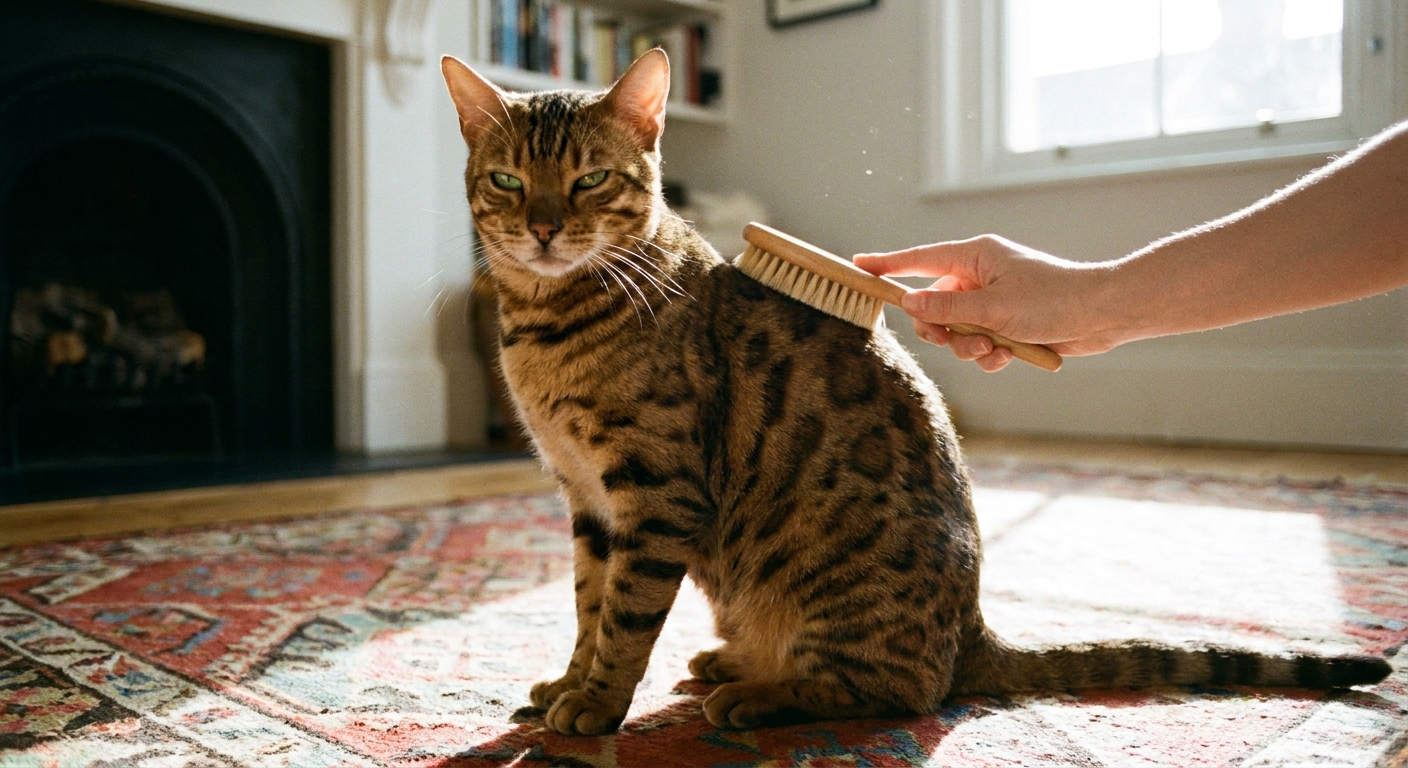
Both Bengals and Savannahs are short-haired and usually pretty low-maintenance in the grooming department. You will still get shedding, and neither breed is hypoallergenic. A quick weekly brush, nail trims, and dental care habits go a long way, especially for cats who like to use their athleticism on your furniture.
Costs and vet comfort
Beyond purchase price, budget for enrichment gear that can survive a small acrobat, plus higher-than-average “oops” costs if your cat swallows something or launches off a bookshelf. Also consider that some veterinarians and boarding facilities are less comfortable with early-generation hybrids, or they may have extra policies. It is worth calling your vet and any pet-sitter or boarding option before you commit, especially for F1 to F3 Savannahs.
Kids and busy households
Both breeds can do well with respectful kids, but their intensity can be a lot for very young children or households where the cat will be grabbed, chased, or woken up constantly. The winning recipe is simple: teach calm handling, create kid-free retreat zones, and keep play structured (wand toys and training sessions beat wrestling hands every time).
Which home fits which cat?
A Bengal often fits best if you…
- Want a high-energy, interactive cat that can thrive in a typical home if you commit to daily play and enrichment
- Can provide vertical space and keep counters and cabinets secured
- Are ready for a cat who may be chatty, persistent, and extremely smart
A Savannah often fits best if you…
- Have the space and structure for a very athletic cat with big climbing goals
- Are comfortable training and enriching like it is part of the daily routine
- Have confirmed legality and housing approval in writing, especially for earlier generations
- Are prepared for a cat that may be taller, stronger, and harder to contain if bored
Homes likely to struggle
- Very small apartments with little vertical space, especially if the household is away most of the day
- Homes with fragile decor and open shelving everywhere, unless you are willing to redesign cat routes and storage
- Strict quiet expectations, since both breeds can vocalize when under-stimulated
- Low-enrichment routines, where play and training do not happen consistently
If you already have a Bengal kitten
If your Bengal is already in your home and you are looking for day-to-day kitten routines like feeding rhythm, litter box habits, play schedules, and safe enrichment, use a dedicated kitten care plan from your veterinarian or a trusted Bengal care resource. This page is here to help you decide between Bengal and Savannah, not replace kitten-specific guidance.
Quick FAQs
Is a Savannah always bigger than a Bengal?
Not always by weight, but Savannahs are often taller and longer-legged, and early-generation Savannahs can be significantly larger overall. Bengals tend to cluster in a more predictable medium range.
Which is easier for a first-time cat owner?
Neither is an easy “starter cat.” If someone is set on one of the two, many homes find a well-bred Bengal or a later-generation Savannah easier than an early-generation Savannah, but individual temperament and your enrichment plan matter more than a label.
Do they need a catio?
Not required, but a secure catio is one of the best upgrades for either breed if you can do it safely and legally. It provides exploration without the same risk level as free-roaming outdoors.
Can they live with other pets?
Often yes, when introductions are slow and controlled. Their high prey drive and intense play style can overwhelm timid cats or small pets. Plan on separate safe zones and supervised introductions.