Vet-assistant tips to ease dog allergy itch safely at home: rinses, oatmeal baths, omega-3s, cool compresses, and lick prevention—plus remedies to avoid an...
Article
•
Designer Mixes
Benadryl for Dog Itching

Shari Shidate
Designer Mixes contributor
If your dog is chewing their paws, rubbing their face on the carpet, or scratching so much you are losing sleep too, it is natural to wonder: can Benadryl help?
Benadryl (diphenhydramine) is a common antihistamine that many veterinarians use for certain types of itching, especially allergy-related itch. But here is the key: Benadryl is not a cure-all for every itchy dog. Sometimes it helps a lot, sometimes only a little, and sometimes it can mask a problem that needs different treatment. Let’s walk through the facts so you can make a safe, smart decision.
What it does and does not do
What it can help
Benadryl blocks histamine, a chemical involved in allergic reactions. In dogs, it is most often used for:
- Mild allergy symptoms such as itchy skin, mild hives, or sneezing
- Insect bites or stings (as part of a plan from your veterinarian)
- Vaccine reactions (your vet may recommend it, and timing matters)
- Mild motion sickness or situational sedation in some dogs (results vary, and it is not a primary itch treatment)
What it usually will not fix
If the itch is driven by infection, parasites, or chronic allergy disease, Benadryl may not be enough. Many “itchy dog” cases are actually caused by:
- Fleas (even one bite can trigger intense itch in allergic dogs)
- Mites (mange) or lice
- Yeast or bacterial skin infections
- Hot spots (acute moist dermatitis)
- Environmental allergies that need stronger medications
- Food allergies (Benadryl is often disappointing here)
Evidence-wise, diphenhydramine is considered safe for many dogs when properly dosed, but studies and clinical experience show its effectiveness for itching can be variable. That is why veterinarians often prioritize finding and treating the root cause.
Dosage: common guideline
A commonly referenced veterinary guideline is:
- Diphenhydramine 1 mg per pound of body weight per dose
- Given every 8 to 12 hours, if your veterinarian says it is appropriate
Example: A 25 lb dog may be dosed around 25 mg per dose.
Important: This is a general guideline, not a personalized prescription. Your vet may set a different schedule and may also set a maximum dose based on your dog’s size, age, and medical history. Puppies, seniors, and dogs with certain health conditions can need a different plan entirely.
Small but helpful detail: Most over-the-counter tablets are labeled as diphenhydramine HCl. In day-to-day veterinary use, the dosing guidance you see is typically applied to these standard products, but your veterinarian should still confirm what form you are using and the exact milligrams per tablet.
Use plain Benadryl only
If your vet approves Benadryl, choose plain diphenhydramine. Avoid combination products. In particular, Benadryl-D (which contains pseudoephedrine) can be dangerous for dogs.
Be careful with liquids and extended-release
- Liquid Benadryl is easy to overdose because concentrations vary (mg/mL). Some formulations may also include ingredients that are unsafe for dogs, such as xylitol or alcohol.
- Extended-release or time-release tablets should generally be avoided unless your veterinarian specifically directs you to use them.
When to avoid or use vet guidance
Please call your veterinarian first if any of these apply:
- Your dog has glaucoma, urinary retention, prostate enlargement, heart disease, high blood pressure, thyroid disease, liver disease, or a seizure history
- Your dog is pregnant or nursing
- Your dog is on medications that can interact (sedatives, some pain meds, some anxiety meds, certain seizure meds)
- Your dog is very young, very small, or medically fragile
Also skip the “wait and see” approach if itching is severe or sudden. Intense itch can spiral into hot spots and infections quickly.
When itch is an emergency
Get urgent veterinary help (emergency clinic if needed) if you see:
- Trouble breathing, noisy breathing, or blue gums
- Facial swelling, widespread hives, or rapidly worsening swelling (an emergency symptom regardless of cause)
- Repeated vomiting, weakness, collapse, or extreme lethargy
- Severe pain, large areas of raw or oozing skin, or a quickly spreading rash
Side effects to watch for
Most dogs tolerate diphenhydramine reasonably well, but side effects can happen. Common ones include:
- Drowsiness (most common)
- Dry mouth
- GI upset (vomiting or diarrhea)
- Urinary retention
Less commonly, some dogs get the opposite effect and become:
- Restless
- Agitated
- More vocal
Allergies vs fleas vs infection
Here are quick clues we often use in clinic conversations with pet parents. These are not a diagnosis, but they help you know what to do next.
Allergies often look like
- Paw licking and chewing
- Face rubbing
- Itchy ears
- Seasonal patterns (spring, summer, fall)
Fleas often look like
- Intense itching at the rump, tail base, and back legs
- Small black specks (flea dirt) in the coat
- Itching that improves fast with effective flea control
Yeast or bacterial infections often look like
- Odor that is often described as musty, “corn chips,” or sour
- Greasy coat, redness, thickened skin
- Recurrent ear infections
- Itch that returns quickly after temporary relief
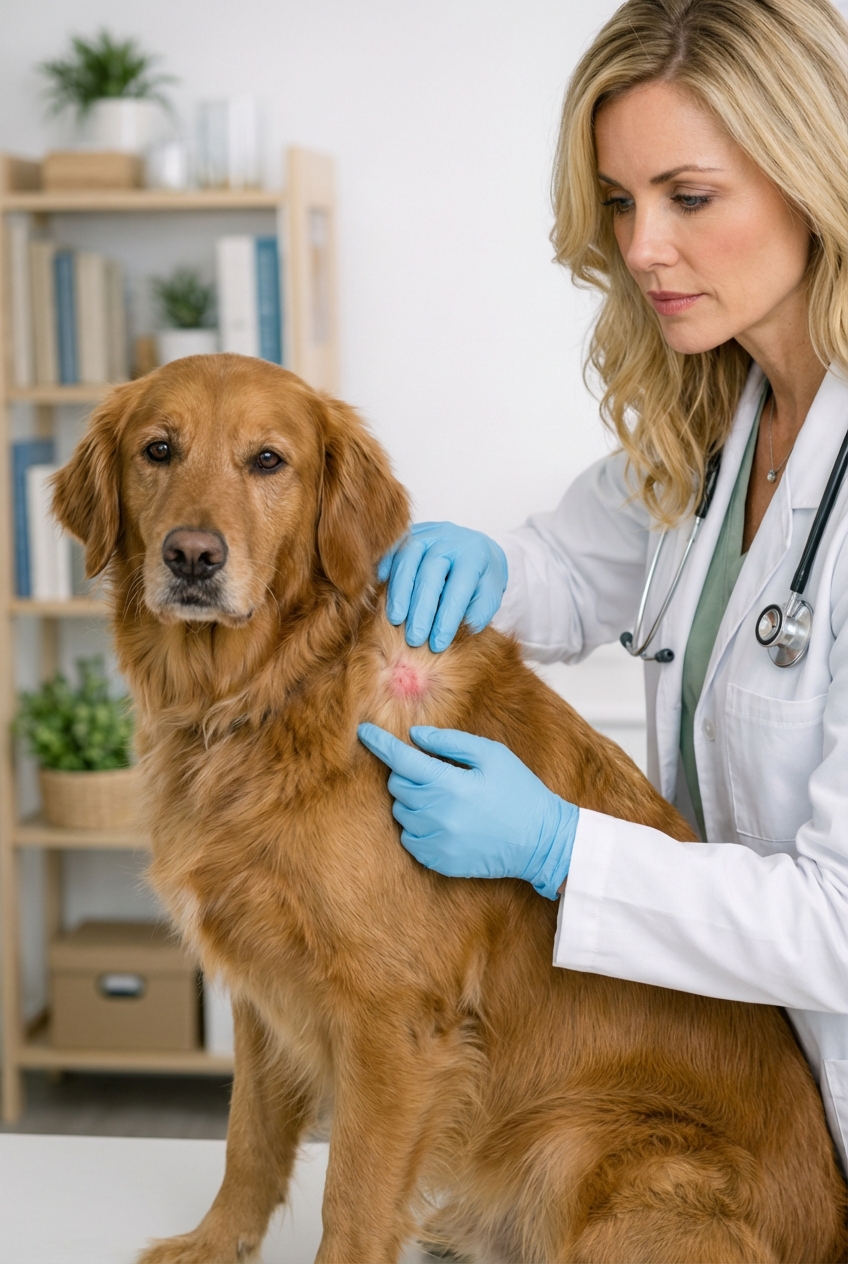
If your dog has any odor, oozing, scabs, hair loss, or painful skin, it is time for a veterinary exam. Antihistamines alone will not treat infection.
If Benadryl is not helping
If you try Benadryl with your veterinarian’s approval and you are not seeing meaningful improvement, do not keep escalating at home. It usually means one of these is true:
- The itch is not histamine-driven (common)
- The dose or timing is not appropriate for your dog
- There is an untreated trigger (fleas, mites, infection)
- Your dog needs a stronger, targeted allergy medication
Your veterinarian may recommend options such as:
- Prescription itch control medications (often more effective for allergic itch)
- Medicated shampoos or mousses for yeast or bacterial overgrowth
- Ear cytology and proper ear medication if ears are involved
- Skin testing or elimination diet trials for chronic cases
One more note: If your dog is headed toward allergy testing, tell your veterinarian about any antihistamines being used. Benadryl can interfere with some testing and your vet may want a washout period.
Gentle home itch relief
While you are figuring out the cause with your veterinarian, these supportive steps can reduce itching and protect skin:
- Stay strict on flea prevention, even if you do not see fleas
- Wipe paws and belly after outdoor time to remove pollen and irritants
- Use a vet-approved soothing shampoo and rinse thoroughly
- Prevent self-trauma with an e-collar if your dog is breaking the skin
- Keep nails trimmed to reduce damage from scratching
- Track patterns: when symptoms worsen, what foods or treats changed, where your dog walked
And please do not underestimate how helpful a simple “itch diary” can be. When you show your vet a timeline, you often get answers faster.
Fast safety checklist
- Confirm your dog’s itch is likely allergy-related, not infection or parasites
- Call your veterinarian for the correct dose, frequency, and maximum
- Use plain diphenhydramine only, no decongestants
- Avoid liquids, extended-release tablets, and any product with unsafe sweeteners unless your vet approves the exact product
- Watch for sedation, GI upset, or agitation
- If your dog is worsening, has facial swelling, or has trouble breathing, seek emergency care
If your dog is itchy enough to keep you both up at night, that is your sign to go beyond symptom relief and look for the true trigger. You deserve answers, and your dog deserves comfort.
Quick FAQs
How long does Benadryl take to work?
Many dogs show effects within 30 to 60 minutes. Itch improvement can be subtle. If there is no improvement after a couple properly dosed attempts, check in with your vet.
Can I give Benadryl every day?
Some dogs are instructed to use it short-term, but long-term daily use should be guided by your veterinarian. There may be more effective and better tolerated options for chronic itch.
What if the skin is red and smelly?
That can suggest yeast or bacterial infection, or both. Benadryl will not treat that. Your dog needs an exam and likely medicated therapy.