Wondering if Pepcid can help your dog’s nausea or reflux? Learn vet-approved uses, weight-based dosing ranges, what products to avoid, side effects, and wh...
Article
•
Designer Mixes
Benadryl Dosage for Dogs

Shari Shidate
Designer Mixes contributor
As a veterinary assistant here in Frisco, Texas, I get asked about Benadryl for dogs all the time. It is one of those over-the-counter meds that can be genuinely helpful in the right situation, and genuinely risky if we guess the dose or use it when we should not.
Let’s walk through the evidence-based basics: when Benadryl is appropriate, how to dose it safely, what to watch for, and when to skip it and call your veterinarian instead.
Quick note: This article is general education, not a substitute for veterinary care. Dosing and safety can vary by dog, condition, and the product you have at home.

What Benadryl is and what it can help with
Benadryl is the brand name for diphenhydramine, an antihistamine. In dogs, it is most commonly used for mild allergic reactions and itching related to histamine release.
Common vet-approved uses
- Environmental allergies (itchy skin, mild hives)
- Insect bites or stings (mild swelling, itch)
- Vaccine reactions (only if your vet has instructed you to use it)
- Motion sickness in some dogs (not first-line, and results are mixed)
What it does not reliably treat
- Anxiety (it may make a dog sleepy, but it does not treat anxiety itself)
- Severe allergic reactions (Benadryl is not a substitute for emergency care)
- Skin infections (itch from infection needs veterinary treatment)
Benadryl dosage for dogs
The commonly cited veterinary guideline for plain diphenhydramine is:
1 mg per pound (mg/lb) by mouth, every 8 to 12 hours
In metric units, that is about 2 mg/kg per dose (since 1 mg/lb ≈ 2.2 mg/kg). You may see broader ranges published (up to around 4 mg/kg in some references), but for at-home, over-the-counter use, I recommend sticking with the simple math above unless your veterinarian tells you otherwise.
Some vets may approve dosing up to 2 to 3 times per day depending on the situation and your dog’s medical history. That is exactly why it is worth confirming first when you can.
Quick examples (using 1 mg per pound)
- 10 lb dog: 10 mg per dose
- 25 lb dog: 25 mg per dose
- 50 lb dog: 50 mg per dose
- 75 lb dog: 75 mg per dose
Important: Do not exceed your veterinarian’s directions. Some dogs need less, and some dogs should not take it at all.
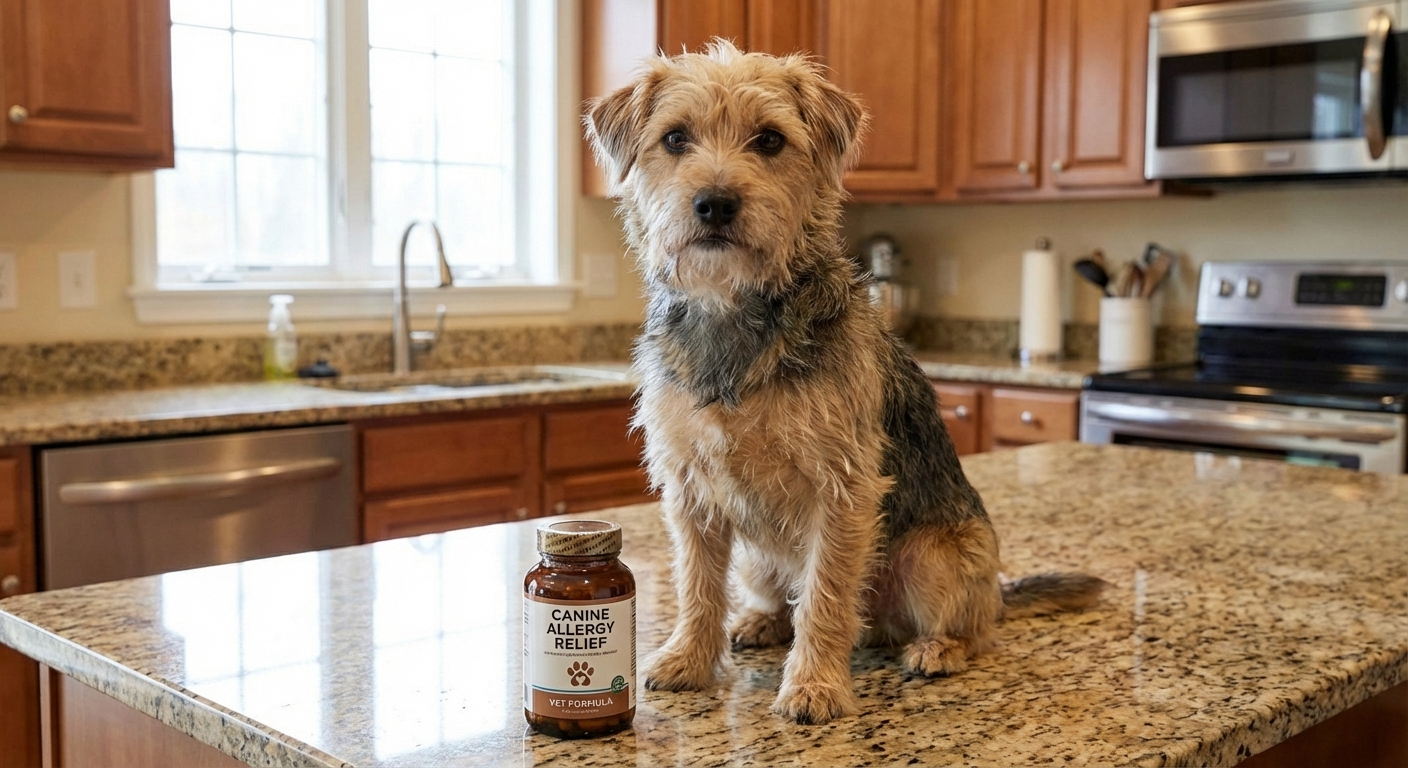
Choosing the right product
This is where many well-meaning pet parents accidentally get into trouble.
Use plain diphenhydramine only
- Look for an active ingredient list that says only diphenhydramine HCl.
- Avoid combination products that include decongestants or pain relievers.
Avoid these ingredients unless your vet says otherwise
- Pseudoephedrine (Benadryl-D), which can be dangerous for dogs
- Acetaminophen, which can be toxic
- Alcohol in some liquid formulations
- Xylitol (highly toxic to dogs) in some flavored liquids or chewables
Tablets vs. liquids
Tablets are usually the easiest to dose accurately. Many diphenhydramine tablets are 25 mg, but always confirm the strength on the package.
If your veterinarian says it is appropriate, some tablets can be split (for example, halves) to get closer to your calculated dose. For tiny dogs, splitting can still be imprecise, so ask your vet about a safe liquid option and an exact dose in mL.
Liquids can be tricky because concentrations vary a lot, especially among children’s products. Always check the label for mg per mL, and avoid products with xylitol or alcohol. When in doubt, call your vet and ask what product to buy.
When Benadryl is not safe
Diphenhydramine is not a good fit for every dog. Please check with your vet first if your dog has ongoing health issues or is on prescription medication.
Use caution or avoid if your dog has
- Glaucoma
- Heart disease or high blood pressure
- Prostate enlargement or trouble urinating
- Hyperthyroidism
- Liver disease (may affect how medications are processed)
- Seizure disorder (may not be appropriate for some patients)
- Pregnancy or nursing
Drug interactions matter
Benadryl can interact with other medications that cause sedation or affect the nervous system (including some pain medications and anxiety medications). If your dog takes anything regularly, it is worth a quick call to your vet or pharmacist. Also tell your vet if your dog is on an MAOI-type medication (less common, but important).
Extra caution for certain dogs
I also recommend extra caution for seniors, very small dogs, and flat-faced breeds (like French Bulldogs, English Bulldogs, and Pugs) since sedation and airway issues can be a bigger concern.
Side effects to watch for
Most dogs tolerate diphenhydramine well, but side effects can happen, especially if the dose is too high or the dog is sensitive.
Common side effects
- Drowsiness or grogginess
- Dry mouth
- Mild diarrhea or mild GI upset
Less common but concerning
- Agitation or restlessness (some dogs get wired instead of sleepy)
- Rapid heart rate
- Vomiting that does not stop
- Wobbliness or marked weakness
If you notice severe symptoms or anything that scares you, contact your veterinarian or an emergency clinic right away.

Allergic reactions: when to go now
Benadryl is for mild allergy symptoms. Do not wait at home if your dog is showing signs of an emergency reaction.
Seek urgent or emergency care if you see
- Any facial swelling (muzzle, eyelids), even if it seems mild at first
- Difficulty breathing, noisy breathing, or pale gums
- Collapse, weakness, or extreme lethargy
- Repeated vomiting, or vomiting and diarrhea together, especially after a sting or new exposure
- Hives spreading rapidly
Anaphylaxis can move fast. In those cases, the right move is emergency veterinary care, not another dose at home.
Practical dosing tips
Step-by-step
- Weigh your dog as accurately as possible. If you are unsure, use a recent vet weight or weigh yourself holding your dog, then subtract your weight.
- Confirm the product strength (for example, 25 mg tablets).
- Calculate 1 mg per pound, then choose the closest practical amount without exceeding your calculated dose unless your vet advises otherwise.
- Set a schedule of every 8 to 12 hours if continuing, and do not stack doses too close together.
Puppies and tiny dogs
This is where I recommend extra care. Tiny bodies make tiny dosing mistakes a bigger deal. Talk with your veterinarian about the best form of diphenhydramine and a dose in mg and mL if needed.
How long does it last?
Many dogs show effects within about 30 to 60 minutes, and the effects often last for several hours. If your dog’s symptoms are not improving, keep getting worse, or keep returning, it is time to reassess with your vet instead of continuing to dose at home.
FAQ
Can I give Benadryl with food?
Yes. Giving it with a small meal or treat can help if your dog gets mild stomach upset.
Can Benadryl be used daily?
Sometimes, but it should not be your long-term plan without your vet guiding you. Chronic itch often needs a fuller strategy, like allergy management, parasite prevention, skin support, and sometimes prescription meds.
Is Benadryl the best allergy medication for dogs?
Not always. Some dogs respond well, and others do not. Your veterinarian may recommend different antihistamines or prescription options depending on your dog’s symptoms and history.
The bottom line
Benadryl can be a helpful tool for mild allergies and itch, but it is still a medication. The safest approach is to use plain diphenhydramine, dose based on your dog’s current weight, and loop in your veterinarian if symptoms are intense, persistent, or unusual.
If you want one simple takeaway to keep in your back pocket: 1 mg per pound every 8 to 12 hours is a common guideline used for many dogs, but your dog’s medical history and the product you choose matter just as much as the math.
References
- Merck Veterinary Manual: Diphenhydramine (overview and cautions)
- Plumb’s Veterinary Drug Handbook: Diphenhydramine (dosing ranges, contraindications, and interactions)