Use these 14 proven questions to evaluate any dog breeder—health testing proof, socialization plans, vaccine/deworming records, contracts, go-home age, and...
Article
•
Designer Mixes
Belgian Malinois vs. German Shepherd

Shari Shidate
Designer Mixes contributor
If you are deciding between a Belgian Malinois and a German Shepherd, you are looking at two highly intelligent, widely used working breeds. They can both be loyal family companions, but they are not interchangeable. In day-to-day life, the biggest differences usually come down to energy level, intensity, and how much structure the dog needs to thrive.
As a veterinary assistant, I always encourage people to choose the breed that fits your real schedule, not your dream schedule. A mismatch often shows up as anxiety, destructiveness, reactivity, or chronic stress for the dog and the family.
Quick note: I am not your dog’s veterinarian or behavior professional. Lines and individual dogs vary a lot, so use this as a starting point and talk with a qualified trainer and your vet for personalized guidance.
Quick overview
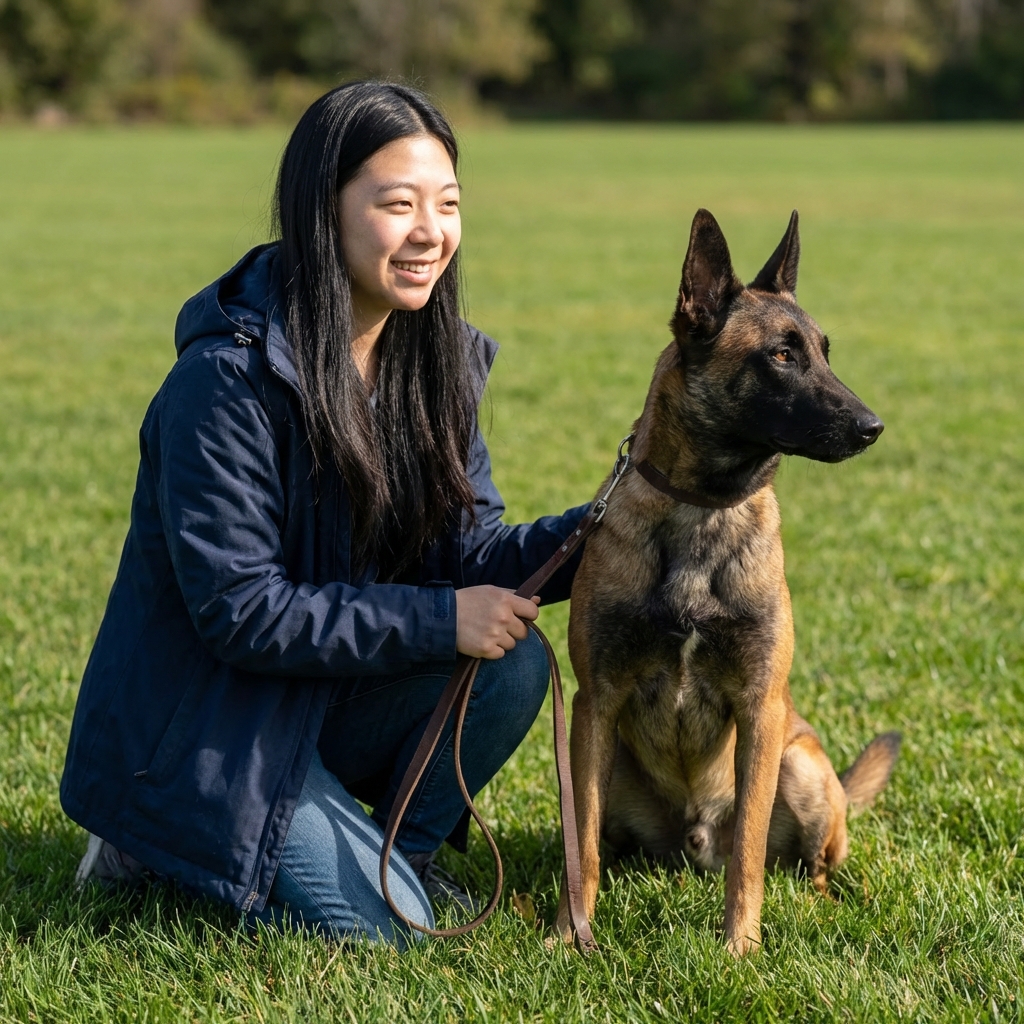
Belgian Malinois
- Vibe: High-drive, laser-focused, fast and intense
- Best for: Experienced owners, active lifestyles, training as a hobby, dog sports, working roles
- Common challenge: Under-stimulation can lead to problem behaviors quickly
German Shepherd
- Vibe: Confident, versatile, protective, often more “settle-able”
- Best for: Active families, owners who want a trainable companion and watchdog, varied routines
- Common challenge: Genetic health issues can be a bigger factor depending on lineage
Size and lifespan
These breeds are similar in overall “big dog” footprint, but individuals and lines vary.
- German Shepherd: Often 50 to 90 lb; typical lifespan around 9 to 13 years
- Belgian Malinois: Often 40 to 80 lb; typical lifespan around 10 to 14 years
Takeaway: Plan for large-dog costs, large-dog training needs, and large-dog management for a decade or more.
Temperament and personality
Belgian Malinois are often described as “always on.” Many have a strong desire to work, chase, carry, bite, or solve problems. That can be wonderful in the right home, but it also means they may struggle if they are expected to lounge around for long stretches with minimal direction. Sport and working lines especially can feel like a full-time hobby, not a casual pet.
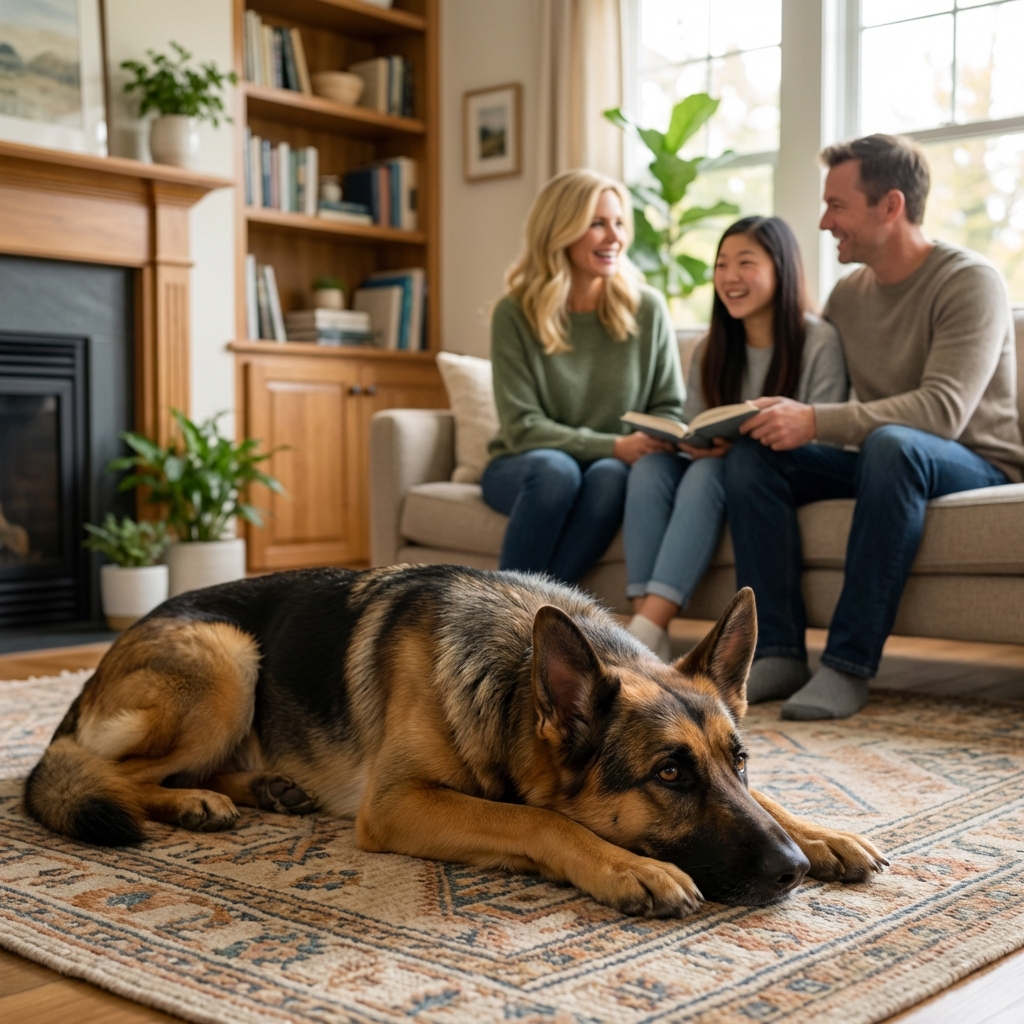
German Shepherds are also driven and protective, but many lines are a bit more forgiving for typical household life. They tend to bond deeply with their people, can be excellent with kids when raised and managed well, and often have more of an “on and off switch” than most Malinois. That said, working-line German Shepherds can be closer to Malinois intensity than many people expect.
Both breeds can be wary of strangers, and both benefit from early, careful socialization that focuses on calm neutrality, not forced greetings.
Takeaway: Expect intensity from both, but Malinois intensity is more likely to show up as constant motion and drive unless you actively teach calm.
Exercise needs
This is where many people get surprised. These breeds need more than physical exercise. They need daily mental work, skill-building, and a predictable routine to feel balanced. Minutes matter less than the quality and structure of the outlet.
Belgian Malinois activity needs
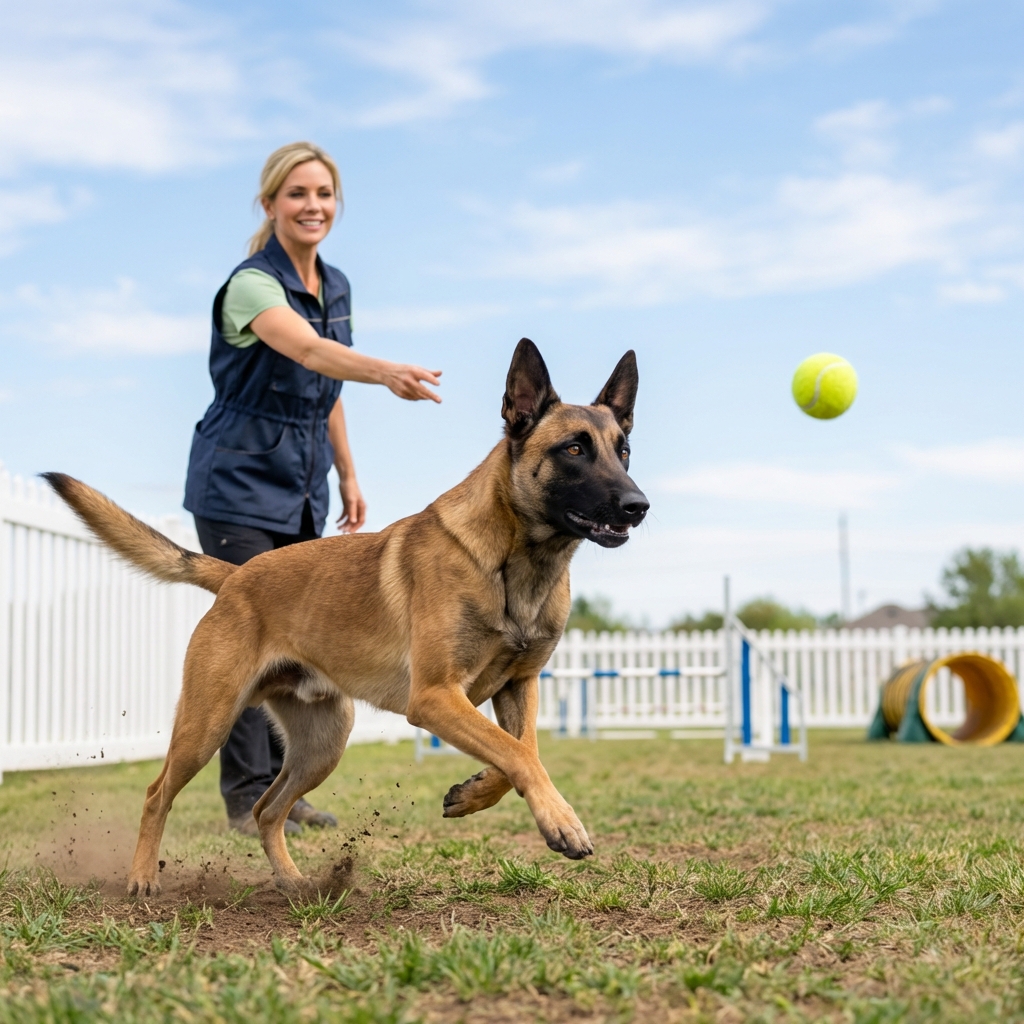
- Often needs high-intensity outlets daily (structured fetch, tug with rules, running with training breaks, sport foundations)
- Thrives with a job: obedience, scent work, agility, protection sports, advanced trick training
- If bored, may develop pacing, vocalizing, chewing, fence running, or reactive behaviors
German Shepherd activity needs
- Needs consistent daily exercise, and many do well with a solid routine plus training
- Enjoys purposeful walks, hiking, obedience, and games that engage the brain
- Can become destructive if under-stimulated too, sometimes at a slower burn than a Malinois
Actionable tip: If you cannot realistically commit to at least 60 to 120 minutes a day of combined exercise and training, a Malinois is often not the right choice. Many Malinois will need more than that, and they do best with structured work, not just free running. Many German Shepherds can do well with less, but plenty still need 90+ minutes and a real routine.
Takeaway: Think “daily plan,” not “a couple long walks on weekends.”
Trainability
Both breeds are extremely trainable, but they can feel different to live with.
Malinois often learn quickly and intensely, and they can become obsessive about movement, toys, or tasks. They do best with clear rules, short training sessions throughout the day, and reinforcement that channels drive without turning the dog into a frantic athlete. Teaching an off-switch is not optional.
German Shepherds are famously versatile. Many are eager to please, steady learners, and excel in service work, detection, and family companion roles. They still need thoughtful training, especially around guarding tendencies and leash manners.
Actionable tip: Prioritize training for calm behaviors: settle on a mat, gentle greetings, loose leash walking, impulse control, and calm crate time. These skills matter more for household harmony than fancy tricks.
Training safety note: High-drive dogs can have real fallout from harsh corrections (increased fear, reactivity, conflict). If you want to use tools or compulsion-based methods, do it only with an experienced professional who has a strong track record with working breeds.
Takeaway: The best-trained dogs are usually the ones taught how to relax, not just how to perform.
Barking and guarding
Both breeds can be vocal and protective, and this can be a feature or a problem depending on your lifestyle.
- Alert barking: Common in both. Without training, it can turn into nonstop “patrolling.”
- Protectiveness: Both can be naturally suspicious of strangers, especially in adolescence. This is where early training and controlled exposures matter.
- Liability: If you rent, travel often, or have frequent visitors, plan for management (secure gates, structured introductions, leash skills) and check local rules and insurance requirements.
Takeaway: A “protective dog” is only an asset when you also have excellent control and clear boundaries.
Grooming and shedding
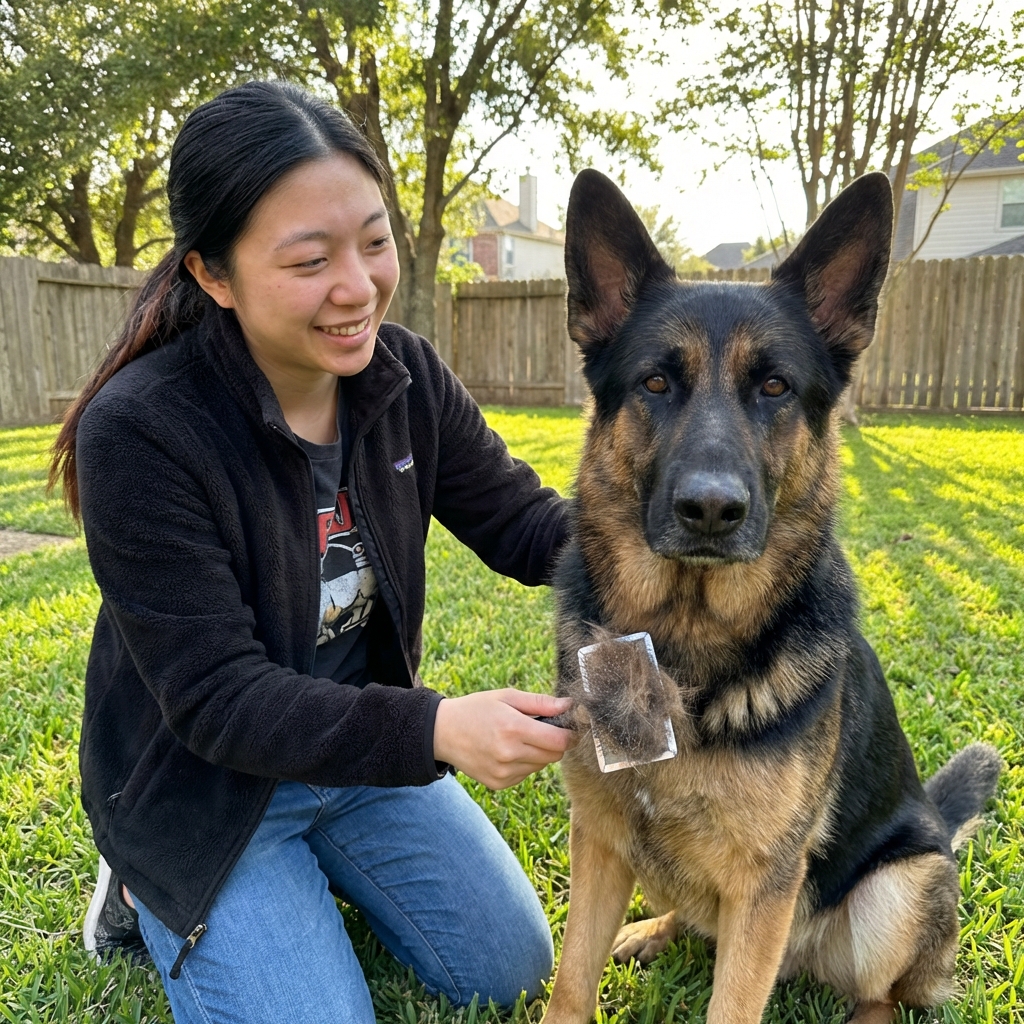
Neither breed is low-shed. If shedding stresses you out, it is better to know that now.
- German Shepherd: Usually heavier shedding, especially during seasonal coat blows. Regular brushing is a must.
- Belgian Malinois: Shorter coat, but still sheds consistently and seasonally.
Actionable tip: A simple routine helps: brush 2 to 4 times per week, bathe occasionally as needed, keep nails short, and start tooth brushing early. Dental disease is one of the most common issues we see in clinics across all breeds.
Takeaway: If you want a clean house, plan on brushing and vacuuming being part of the deal.
Health
Good breeding matters for both breeds, and it is one of the most important parts of this decision. Line differences (show vs working, and even kennel to kennel) can dramatically change both temperament and health risk.
Common health concerns in German Shepherds
- Hip and elbow dysplasia
- Degenerative myelopathy (in some lines)
- Bloat (gastric dilatation-volvulus)
- Allergies and chronic ear or skin issues in some dogs
Common health concerns in Belgian Malinois
- Hip and elbow dysplasia (can occur in any athletic breed)
- Eye disease in some lines (for example, progressive retinal atrophy and cataracts)
- High-drive stress behaviors if lifestyle is mismatched (not a disease, but it impacts welfare)
Actionable tip: Ask breeders for proof of orthopedic testing (hips and elbows via OFA, PennHIP, or equivalent) and ask what they are selecting for temperament. If eye issues run in the line, ask about a CAER eye exam. For degenerative myelopathy, remember the DNA test is a risk marker, not a guarantee of disease.
Choose a dog based on the lifestyle you can repeat every day, not the lifestyle you hope to start next month.
Takeaway: In powerful working breeds, health testing and stable temperament are not “nice to have.” They are the foundation.
Family fit
Both breeds can do well in families, but management matters, especially during the adolescent phase.
- With kids: German Shepherds often integrate more easily into family routines. Malinois can be great too, but their intensity, mouthiness, and speed can overwhelm small children without careful training and supervision.
- With cats: Either breed can live with cats if raised carefully, but Malinois are more likely to have a strong chase drive. Slow introductions and ongoing management are important.
- With other dogs: Socialization helps, but these breeds can be selective. Neutral, calm dog interactions are often safer than chaotic dog-park play for many individuals.
Actionable tip: If you have toddlers or multiple pets, look for a breeder or rescue that can match you with a dog who has demonstrated stability in a home setting.
Takeaway: The right individual dog matters as much as the breed label.
Work and sports
If you want a dog for protection sports, high-level obedience, or demanding work, this is where the Malinois often stands out. Their athleticism and drive are a big reason they are common in police and military roles.
German Shepherds remain a top choice for service work, search and rescue, and family protection. They are also widely used in scent work and therapy roles when temperament is appropriate.
Takeaway: Malinois often shine in speed and intensity; German Shepherds often shine in versatility and steadiness, depending on the line.
Which breed fits you?
A Belgian Malinois may fit if
- You have prior experience with high-drive working breeds
- You enjoy daily training and want it to be part of your lifestyle
- You are interested in dog sports or a real working role
- You can provide structure, boundaries, and consistent enrichment
A German Shepherd may fit if
- You want an active, loyal companion with strong trainability
- You want a protective dog with more “off switch” potential
- You can commit to exercise and training, but your days are more variable
- You are willing to research breeders carefully to find healthy, stable lines
My honest guidance: If you are on the fence, most households do better with a well-bred German Shepherd than a Malinois. Many Malinois end up in rescue simply because they are too much dog for the average home, even very loving homes.
Before you decide
- Time: Can you train and exercise daily for the next 10 to 14 years?
- Space: Not just yard size, but safe containment and enrichment options.
- Budget: Quality food, training, gear, vet care, and possibly sport or daycare costs.
- Support: A reputable trainer familiar with working breeds.
- Source: Ethical breeder with health testing, or a rescue that can assess drive and temperament.
Breeder and rescue checks
- Health testing: OFA or PennHIP hips and elbows, and breed-relevant testing (ask what they screen for and why).
- Temperament: Meet at least the dam if possible, ask what traits they breed for (stable nerves, recovery, sociability), and how they handle fear periods.
- Puppy raising plan: Ask about early socialization, novelty exposure, and how they set puppies up for household skills.
- Contract: Clear return policy, support if issues arise, and realistic placement (they should say “no” sometimes).
If you want the best of both worlds, you might also consider a well-matched shepherd mix or a lower-drive line, depending on your goals.