Clear feeding guidelines for bearded dragons at every age—meal frequency, portions, insect vs greens ratios, safe feeder sizing, best foods, supplements, a...
Article
•
Designer Mixes
Bearded Dragon Feeding Schedule

Shari Shidate
Designer Mixes contributor
Feeding a bearded dragon is not just about what you offer. It is also about when you offer it. A consistent schedule supports healthy growth, steady energy, strong bones, and a calmer routine for you and your dragon.
Below is a practical, vet-informed feeding schedule you can follow at home, plus simple care tips that help digestion and nutrition work the way nature intended.
Quick note: Husbandry and appetite can vary by individual, season, and setup. Use this as a structure, then confirm details with a qualified reptile veterinarian if you are unsure.
Quick basics
Bearded dragons are omnivores, but their needs shift fast as they grow. In general:
- Babies and juveniles need more insects for growth and protein.
- Adults need more greens and fewer insects to help prevent obesity and fatty liver disease.
Rule of thumb: As your dragon gets older, the diet gradually moves from insect-heavy to greens-heavy.
Schedule by age
Baby bearded dragons (0 to 3 months)
Goal: support rapid growth while protecting digestion.
- Insects: 2 to 3 feedings per day (morning, early afternoon, optional late afternoon)
- Greens: offer a small fresh salad daily to build the habit
- Timing: feed insects after basking is available and your dragon is fully warmed up (often about 30 to 60+ minutes depending on your setup and temps)
Easy routine: Lights on, warm up until basking temps are reached, then first insect feeding. Offer salad later in the morning, then another insect feeding early afternoon.
Juveniles (3 to 12 months)
Goal: steady growth without overfeeding.
- Insects: 1 to 2 feedings per day
- Greens: fresh salad each day
- Timing: keep the last insect meal earlier in the day for good digestion
Adults (12+ months)
Goal: maintain lean body condition and long-term organ health.
- Greens: offer daily
- Insects: typically 1 to 4 times per week depending on body condition, activity, and the type of feeder insects you use
- Timing: offer salad in the morning, insects on scheduled days in the early afternoon
Best time to feed
Bearded dragons rely on heat and UVB to digest properly. For most homes, the best feeding windows are:
- Morning: offer salad after your dragon has warmed up under the basking light
- Midday to early afternoon: insect feeding (especially for babies and juveniles)
- Avoid late feedings: try to finish meals at least 2 to 3 hours before lights out so food can move through the gut with proper warmth
If your dragon eats right before bedtime, you may see slower digestion, leftover food sitting in the stomach, or sluggish behavior the next morning.
How much to feed
Exact amounts vary by genetics, temperature, activity level, and even season. Instead of chasing a perfect number, use these safe guardrails:
- Choose appropriately sized insects: a common guideline is feeders no larger than the space between the eyes, but always consider your dragon’s size, chewing ability, and your husbandry (heat, hydration, and substrate all matter).
- Use a timed feeding window: offer insects for about 10 to 15 minutes, then remove extras. This helps prevent overfeeding and reduces stress from loose insects.
- Remove uneaten insects: especially crickets, which can stress or nibble on your dragon.
- Watch body condition: a healthy adult should look sturdy, not round, and the tail base should not look overly puffy.
If you are unsure, take a monthly photo from above and from the side. Small changes are easier to spot over time.
Best foods
Greens and veggies
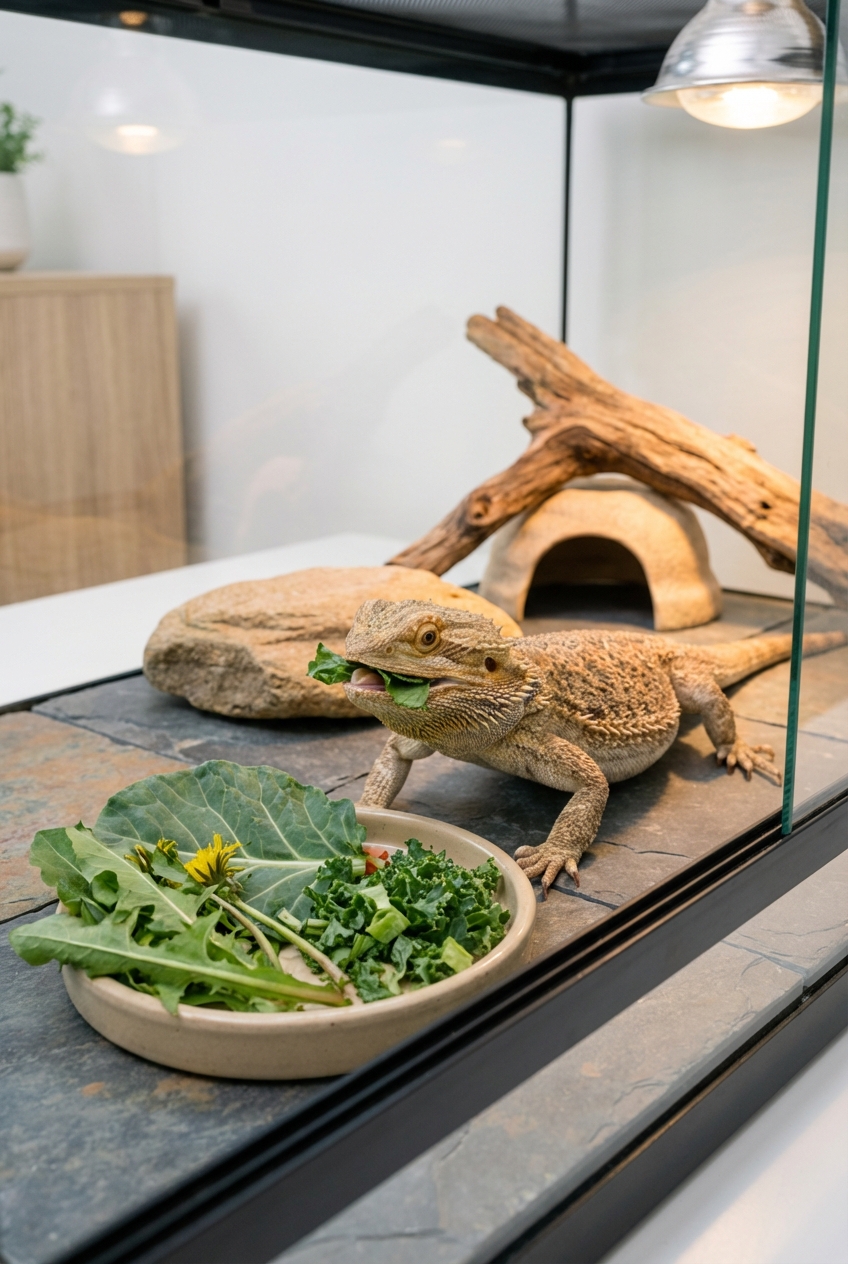
Build salads around nutrient-dense greens. Rotate to create variety.
- Great staples: collard greens, mustard greens, turnip greens, dandelion greens
- Good add-ins: squash, bell pepper, prickly pear cactus pads (nopales), cilantro
- Spinach and kale: kale is generally fine in rotation for most dragons. Spinach is better treated as an occasional item because of oxalates, so it should not be a frequent staple.
Insects
- Common staples: dubia roaches, crickets, black soldier fly larvae
- Treats in moderation: mealworms, superworms, waxworms (higher fat, can contribute to weight gain)
Foods to avoid or limit
- Avoid: avocado, rhubarb, fireflies (toxic), wild-caught insects that may carry pesticides or parasites
- Limit: iceberg lettuce (low nutrition), fruit (sugary, can cause loose stool if overused)
Supplements
Even a great feeding schedule can fall short without correct supplementation, especially for calcium. This matters because bearded dragons are prone to metabolic bone disease when UVB, calcium intake, or both are inadequate.
- Calcium powder: commonly used several times per week (often more frequently for babies and egg-laying females)
- Multivitamin: usually 1 to 2 times per week, depending on diet variety and your veterinarian’s guidance
Calcium with D3 or without? If your dragon has strong, correctly placed UVB, many keepers use calcium without D3 most of the time and reserve D3 for limited use. If UVB is weak, incorrect, or absent, D3 misuse can become a risk either way. When in doubt, ask a reptile veterinarian to tailor this to your exact bulb and setup.
Important: Supplement routines vary based on your UVB strength and enclosure. If you can, bring photos of your lighting and your supplement containers to your reptile vet so they can fine-tune your plan.
Setup tips for safe feeding
1) Heat and UVB matter
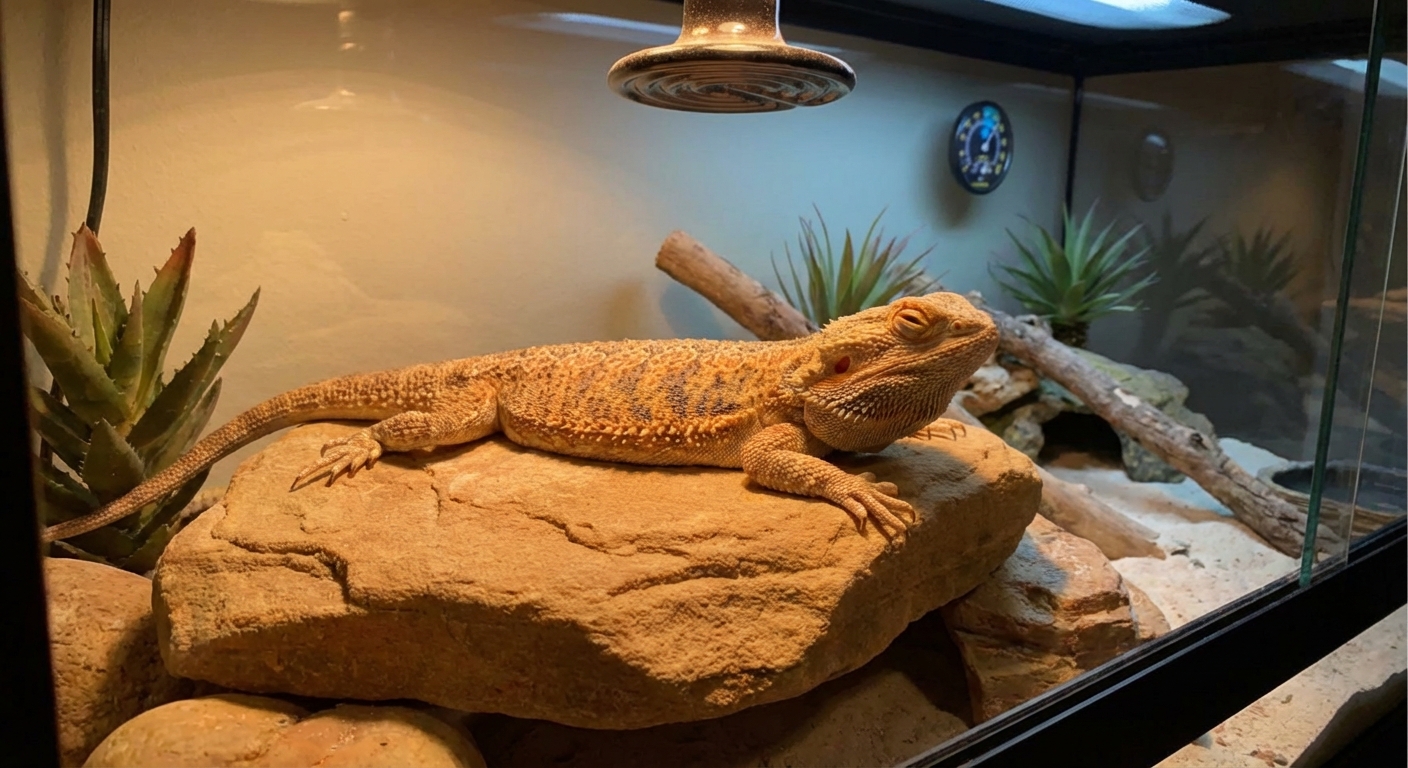
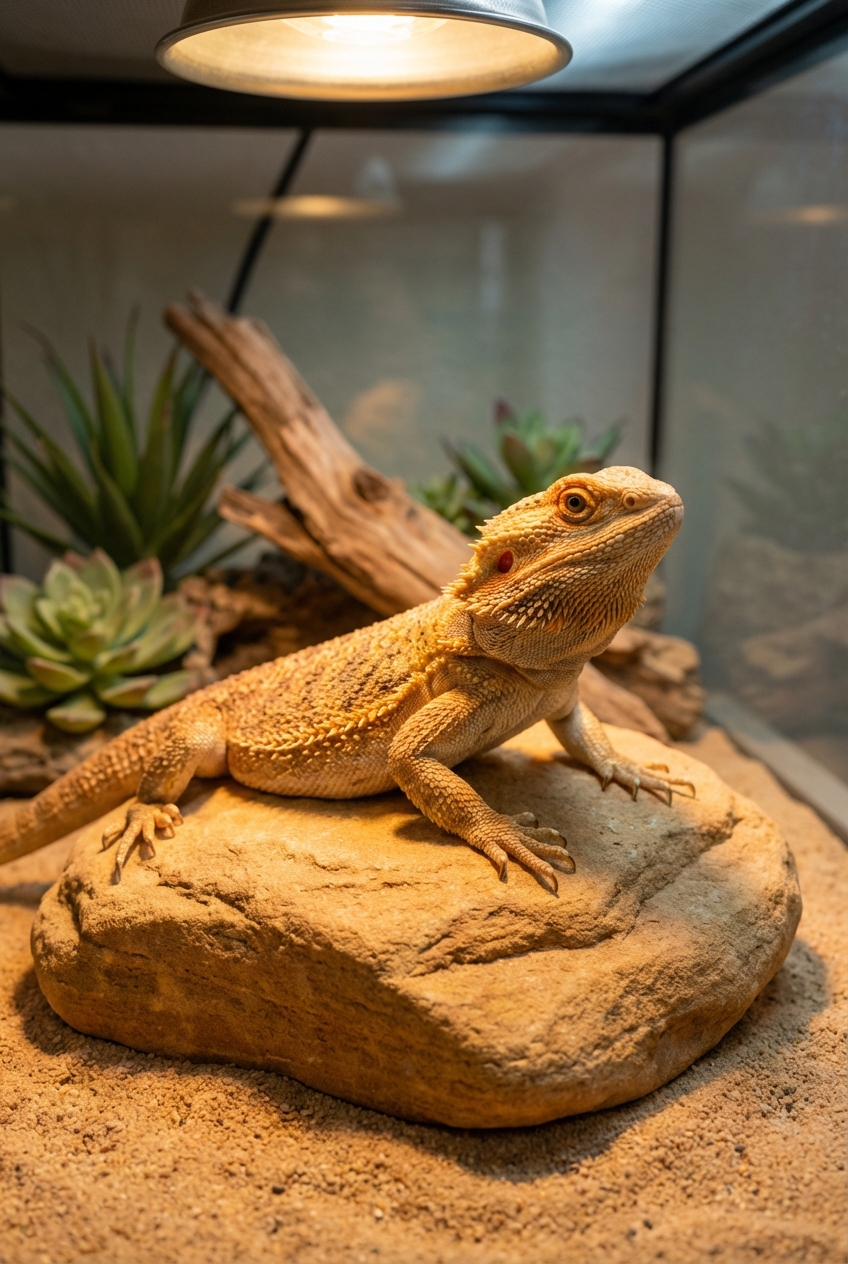
A proper basking spot and quality UVB lighting help your dragon metabolize calcium and digest food. If temperatures or UVB are off, appetite and stool quality often change first.
- Basking surface (adults): often around 100 to 110 F (38 to 43 C)
- Basking surface (babies): often around 105 to 110 F (41 to 43 C)
- Cool side: commonly around 75 to 85 F (24 to 29 C)
Use a temp gun to measure the basking surface, not just air temps. For UVB, use a high-quality bulb designed for desert species, follow safe distance guidelines, and replace it on the manufacturer’s schedule (output drops before the bulb looks “burned out”).
2) Hydration is subtle
Many bearded dragons do not drink from a water bowl regularly. Most hydration should come from diet and proper husbandry, including:
- Fresh, rinsed greens
- Moist veggies like squash
- Occasional supervised soaks for specific needs (like stuck shed or constipation), if recommended by your veterinarian
3) Lower impaction risk
- Do not feed oversized insects
- Keep basking temperatures appropriate
- Avoid loose, easily swallowed substrates for dragons that like to lunge at food
Sample schedules
Juvenile example (daily)
- 8:00 AM: lights on
- 9:00 AM: fresh salad
- 12:00 PM: insect feeding (10 to 15 minutes, dusted as needed)
- 3:00 PM: optional second insect feeding depending on growth and body condition
- Evening: remove leftovers, allow at least 2 to 3 hours of warmth before lights out
Adult example (weekly)
- Most days: salad in the morning, veggies rotated through the week
- 2 to 4 days per week: insect meal early afternoon (10 to 15 minutes, dusted as needed)
- Adjust: if your dragon is gaining excess weight, reduce insect days; if they are underweight or very active, discuss increasing calories with your vet
When to adjust
It is smart to tweak your feeding schedule if you notice:
- Persistent poor appetite (especially with lethargy)
- Runny stool for more than a day or two
- Hard stools, straining, or no stool with a decreased appetite
- Rapid weight change
- Swollen jaw, tremors, or weakness (possible calcium or UVB-related issues)
If any of these show up, schedule a reptile veterinarian visit. In my experience as a veterinary assistant, early support is almost always easier and less stressful than trying to fix a problem after weeks of decline.
Feeding schedules work best when they match the animal in front of you. Use the structure, then let your dragon’s body condition, stool, and energy guide the fine-tuning.