A complete bearded dragon care guide covering habitat setup, safe substrates, UVB and basking temps, feeding by age, supplements, hydration, cleaning routine...
Article
•
Designer Mixes
Bearded Dragon Care You Need

Shari Shidate
Designer Mixes contributor
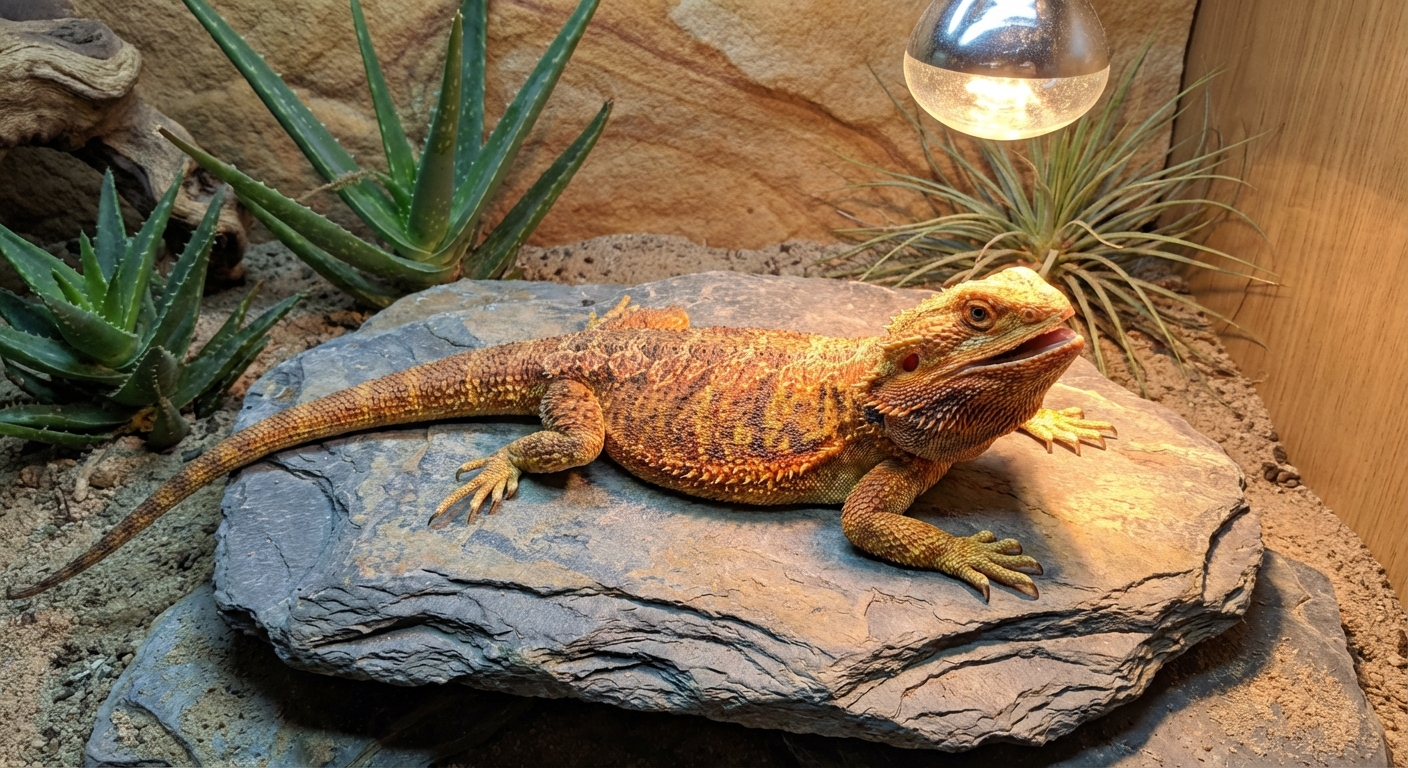
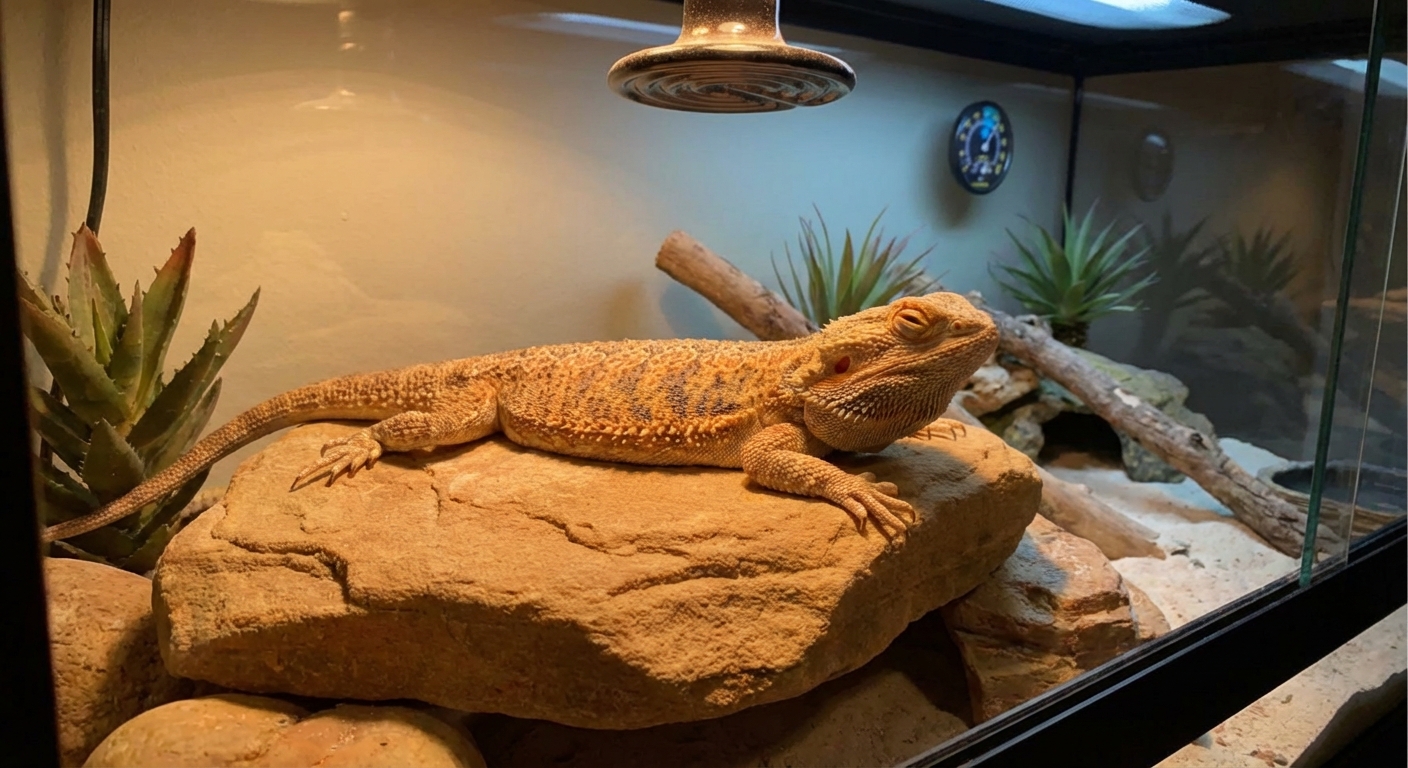
Bearded dragons are friendly, curious little reptiles, and they can thrive in a home setup when their “big three” needs are met: heat, UVB light, and a balanced diet. Most problems owners run into trace back to one of those basics being just a little off.
Let’s walk through what truly matters so you can feel confident day to day, not overwhelmed.
Start with the right enclosure
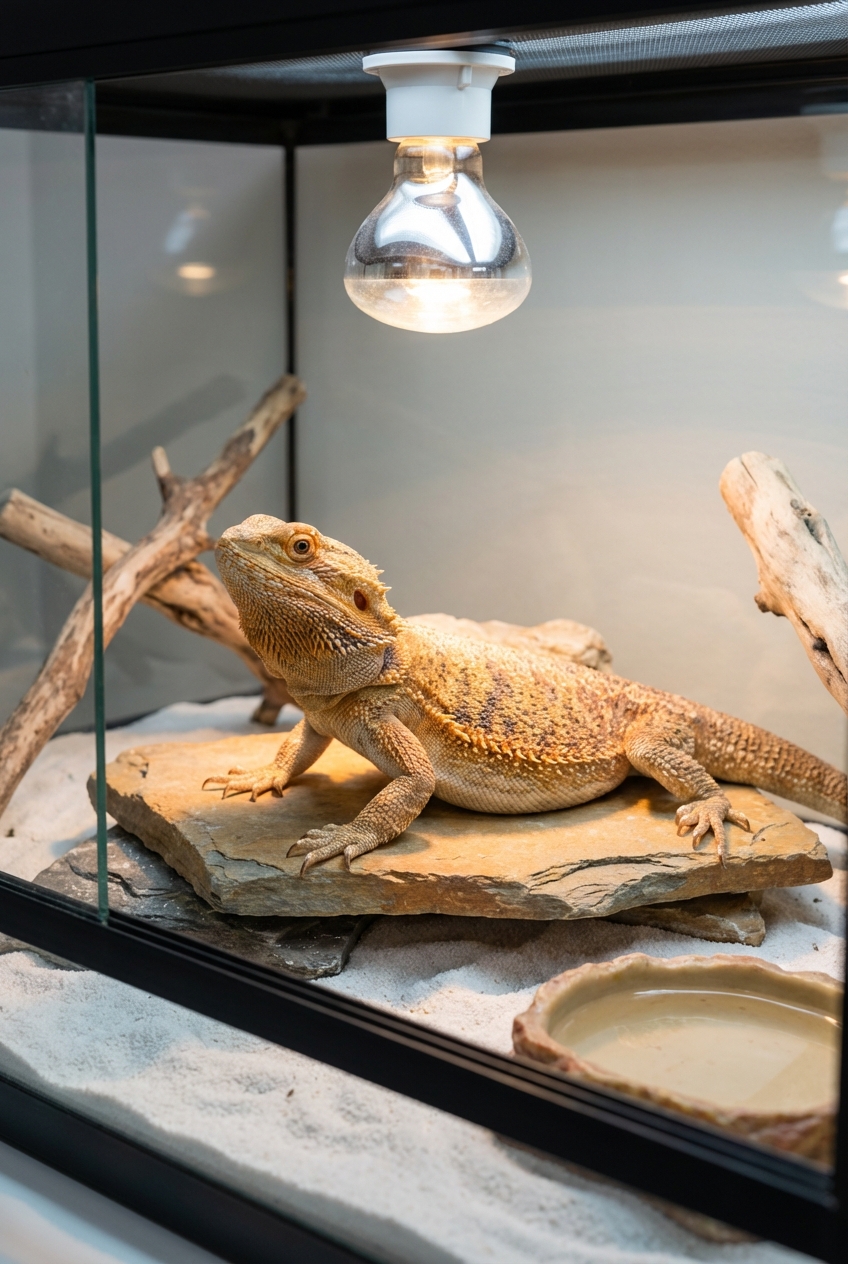
Think of the tank as your dragon’s entire world. A well-sized, simple setup beats a cramped, decorated one every time.
Tank size
- Adults: a 4x2x2 foot enclosure is a commonly recommended minimum for an adult. Many keepers now prefer larger (especially longer) when space and budget allow.
- Juveniles: can start smaller, but many owners save money and stress by starting with the adult-sized enclosure.
Safe substrate
For most pet bearded dragons, especially juveniles, choose options that are easy to clean and reduce the risk of accidental ingestion.
- Good starter choices: paper towels, non-adhesive shelf liner, or tile.
- Use caution with loose substrates (like sand). They can increase the risk of impaction, especially with suboptimal heat and UVB, dehydration, illness, or inappropriate particle size.
Essential “furniture”
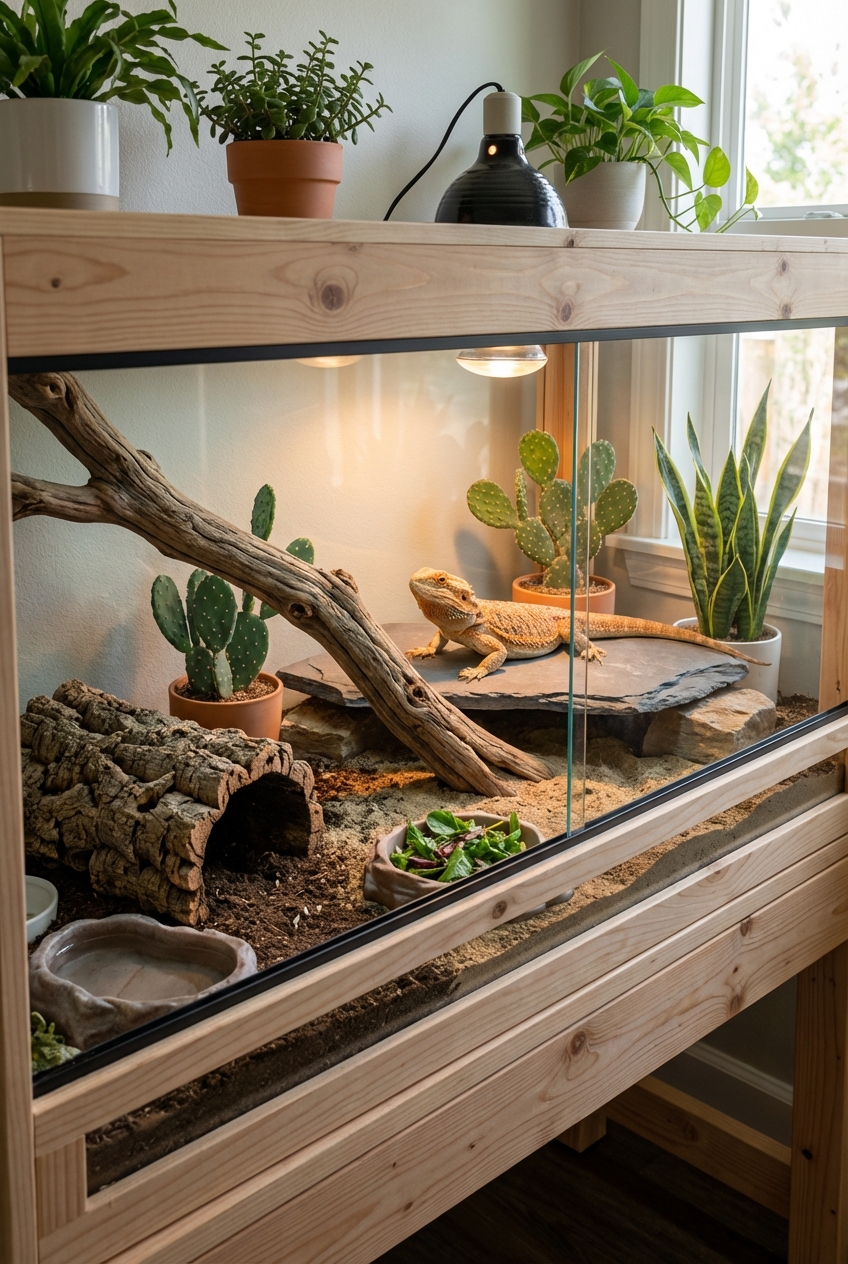
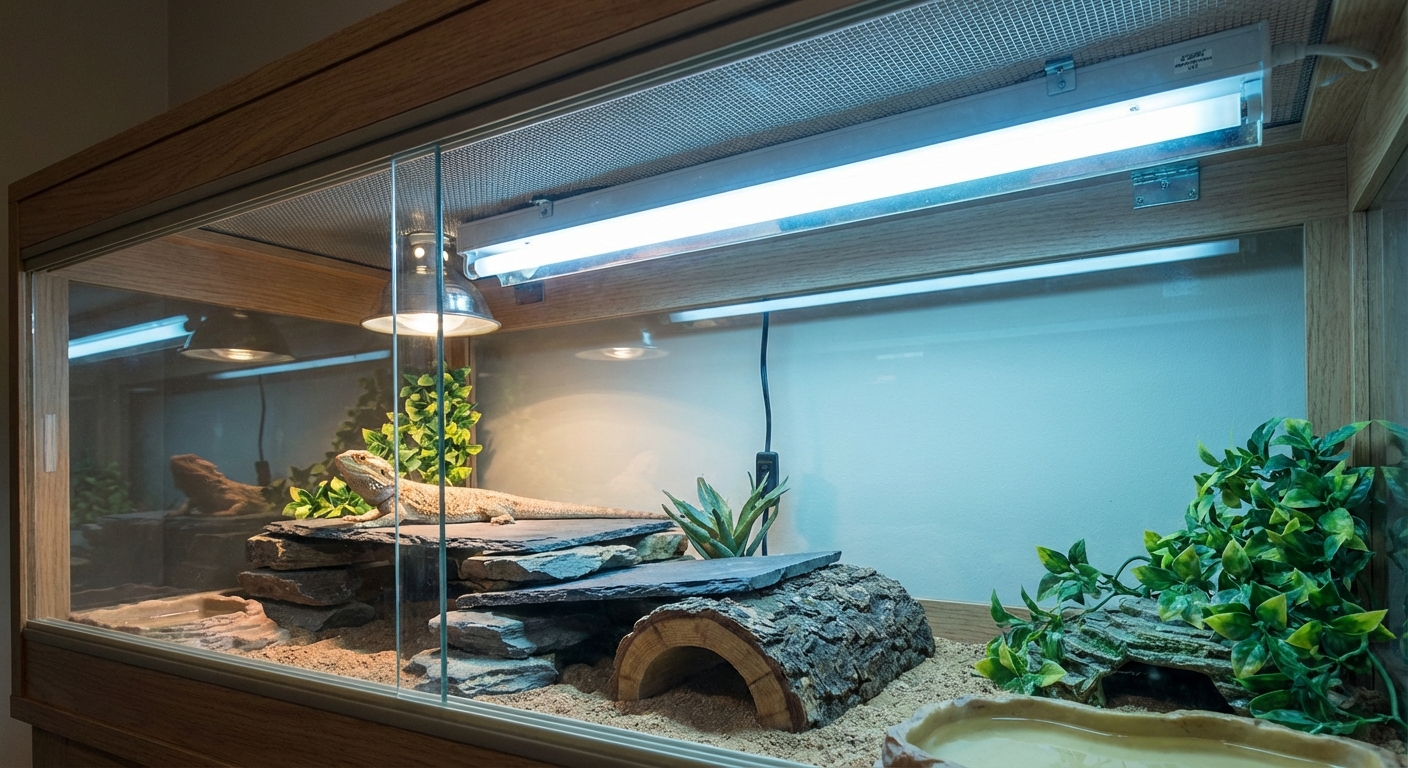
- A sturdy basking platform that gets your dragon close enough to heat and UVB.
- At least one hide for security.
- Climbing options like a safe branch or ledge for enrichment.
- Food and water dishes (even if your dragon rarely drinks from a bowl).
Heat and UVB: the two non-negotiables
If you only take one thing from this article, make it this: bearded dragons cannot stay healthy without proper heat and UVB. These two factors drive appetite, digestion, immune function, and bone health.
Temperature gradient
Your dragon needs the ability to move between zones to self-regulate.
- Basking surface (adult): often targeted around 100 to 110°F.
- Cool side: often around 75 to 85°F.
- Night: many homes are fine as long as temperatures stay at or above about 65°F. If supplemental night heat is needed, a ceramic heat emitter (no light) or a deep heat projector is usually preferred.
How to measure correctly: Use a reliable digital probe thermometer for basking surface temps (probe secured on the basking spot), and/or an IR temp gun for quick spot checks. Stick-on dial gauges are often inaccurate.
Avoid red or colored bulbs at night: They are often marketed for reptiles, but they can disrupt sleep and normal day-night rhythms.
UVB lighting
UVB helps your bearded dragon make vitamin D3, which helps them absorb calcium. Without it, they are at risk for metabolic bone disease, a painful and sometimes irreversible condition.
- Use a high-quality linear UVB tube (not a tiny coil bulb) sized appropriately for the enclosure.
- Most modern setups use T5 HO fixtures. Common bulb strengths you will see are 10.0 or 12 percent, but the right choice depends on your enclosure height, whether the bulb sits over mesh, and the reflector.
- Place the basking area so your dragon can safely get within the effective UVB range for your bulb and fixture setup. Distance varies by brand and mounting, so follow the manufacturer guidance.
- Replace UVB bulbs on the schedule recommended by the manufacturer, even if the bulb still shines. UVB output declines over time.
If you are unsure, ask your exotics vet or a reputable reptile specialist to help you match the UVB strength and placement to your exact enclosure. A small adjustment can make a huge difference.
Feeding basics
Bearded dragons are omnivores, but their needs change with age. A common mistake is feeding an adult like a growing baby, which can lead to obesity and related problems.
Juveniles
- Typically eat more insects than adults.
- A common routine is insects 1 to 2 times daily (in appropriate portions), plus greens offered daily so they learn to eat them.
- Offer appropriately sized insects (a common guideline is nothing larger than the space between the eyes).
Adults
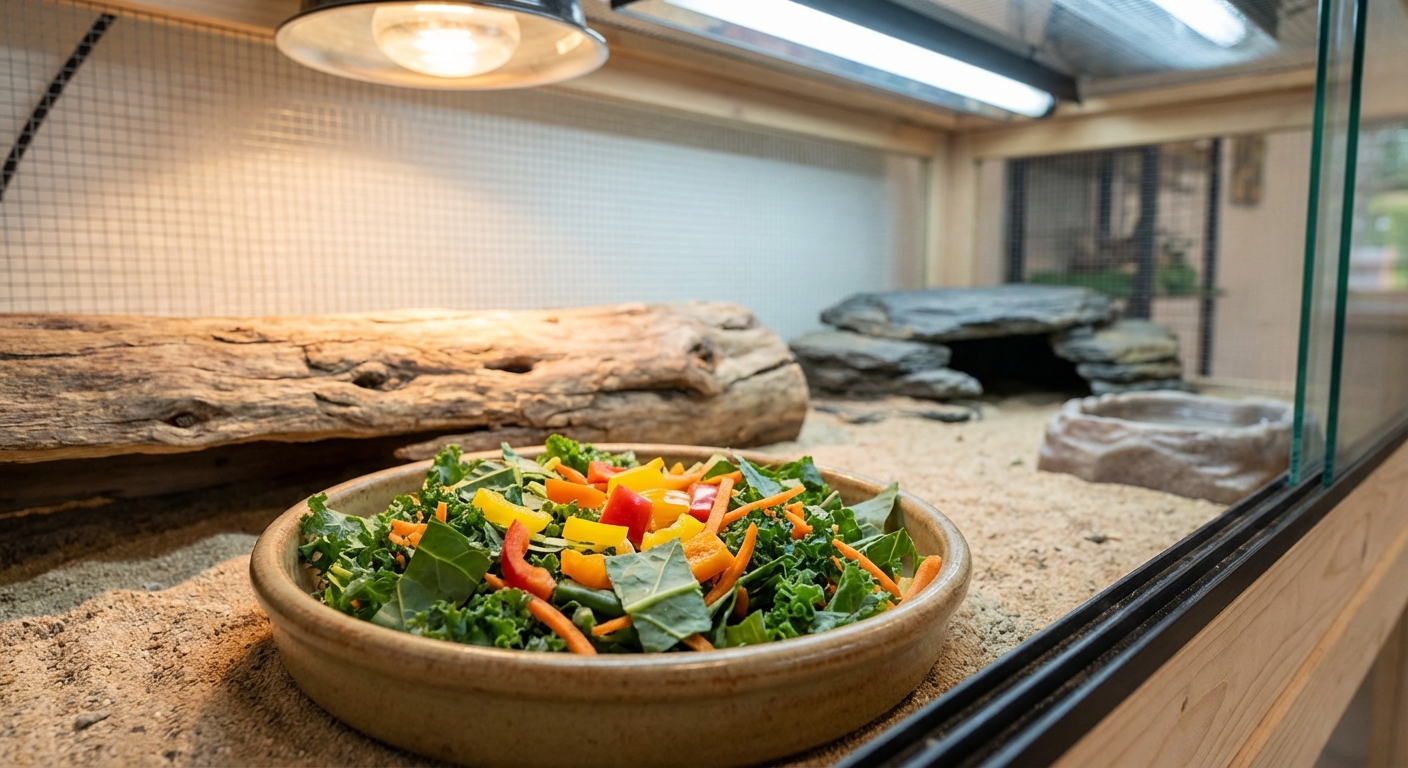
- Shift toward a diet that is mostly leafy greens and vegetables, with insects offered in more limited amounts.
- Many adults do well with insects about 1 to 3 times per week, depending on body condition and activity.
- Aim for variety and consistency rather than treat-heavy feeding.
Best staple greens and veggies
- Staple greens: collard greens, mustard greens, turnip greens, dandelion greens.
- Veggie additions: squash, bell pepper, green beans, prickly pear cactus pads (prepared safely).
Insects commonly used
- Often used feeders: dubia roaches, crickets, black soldier fly larvae.
- Use treats sparingly (like waxworms) since some are very fatty.
Foods to avoid
- Avoid or keep as rare treats: iceberg lettuce (low nutrition), fruit (sugary), and oxalate-heavy greens like spinach as staples.
- Never feed: avocado, rhubarb, fireflies, or wild-caught insects that may carry pesticides or parasites.
Supplementation
Most bearded dragons need a smart supplement routine, but more is not always better.
- Calcium powder is commonly used, especially for insect meals.
- A multivitamin is often used less frequently.
Your exact schedule depends on age, diet, and UVB quality. When in doubt, ask your reptile vet to tailor it to your dragon.
Hydration and humidity
Bearded dragons come from arid regions, so they generally do not need high humidity. Too much humidity, poor ventilation, and dirty enclosures can contribute to respiratory issues.
- A common target range is around 30 to 40 percent humidity, with good ventilation.
- Provide a fresh water bowl and change it regularly.
- Many dragons hydrate through greens and by licking droplets from freshly washed veggies rather than drinking from a bowl.
- If your dragon is shedding, a short, supervised soak can help, but it should not replace proper habitat conditions.
If you notice very dry or tacky saliva, unusually hard or chalky urates, persistent lethargy, or sunken-looking fat pads, dehydration could be part of the picture and it is worth a vet check.
Handling and enrichment
One of the sweetest things about bearded dragons is how tolerant they often are of gentle handling. Still, they need time to settle in and they need handling done the right way.
Handling tips
- Support the full body, including the legs and tail base.
- Keep sessions short at first, especially for a new dragon.
- Avoid handling right after meals (they need warmth and rest for digestion).
- Wash hands before and after handling to reduce risk of spreading germs.
Enrichment ideas
- Offer safe climbing areas and change the layout occasionally.
- Try different salad textures and colors to encourage natural foraging.
- Supervised out-of-enclosure time in a safe, warm area can be enriching.
Cleaning and routine care
Cleanliness is one of the simplest ways to prevent parasites, skin issues, and lingering odors.
- Daily: remove droppings, wipe obvious messes, refresh water.
- Weekly: clean surfaces and dishes with a reptile-safe disinfectant.
- Monthly or as needed: deeper clean of enclosure and decor.
Always rinse and dry thoroughly if you use any cleaning agents, and make sure your dragon is away from fumes until everything is fully ventilated.
When to see a vet
I’m big on calm, early action. Reptiles hide illness, so waiting it out can cost valuable time.
- Not eating for an extended period (especially with weight loss)
- Soft or swollen jaw, shaky movements, or limb weakness (possible metabolic bone disease)
- Sunken fat pads, tacky saliva, or persistent lethargy
- Wheezing, bubbles from the nose, open-mouth breathing (outside of basking)
- Diarrhea or very foul-smelling stool that persists
- Black beard and persistent stress signals without an obvious cause
- Difficulty passing stool, dragging back legs, or a bloated abdomen
Brumation note: Many adults slow down seasonally and may eat less. Because illness can look similar, it is smart to check husbandry, monitor weight, and consider a vet visit before assuming brumation.
If you can, seek an exotics veterinarian with reptile experience. Bring a photo of your setup and details about temperatures, UVB type, diet, and supplements. Those clues help vets pinpoint the root cause faster.

Quick daily checklist
If you like simple routines, this one keeps most owners on track.
- Confirm basking area is heating properly and lights are on a 12 hour timer.
- Offer fresh salad and remove leftovers later.
- Spot-clean droppings and wipe messes.
- Observe behavior: alertness, posture, breathing, and appetite.
- Check that your dragon can move between warm and cool zones easily.
When your heat, UVB, and diet are consistent, bearded dragons usually reward you with better appetite, brighter eyes, stronger sheds, and that calm, confident “basking in the sun” look.