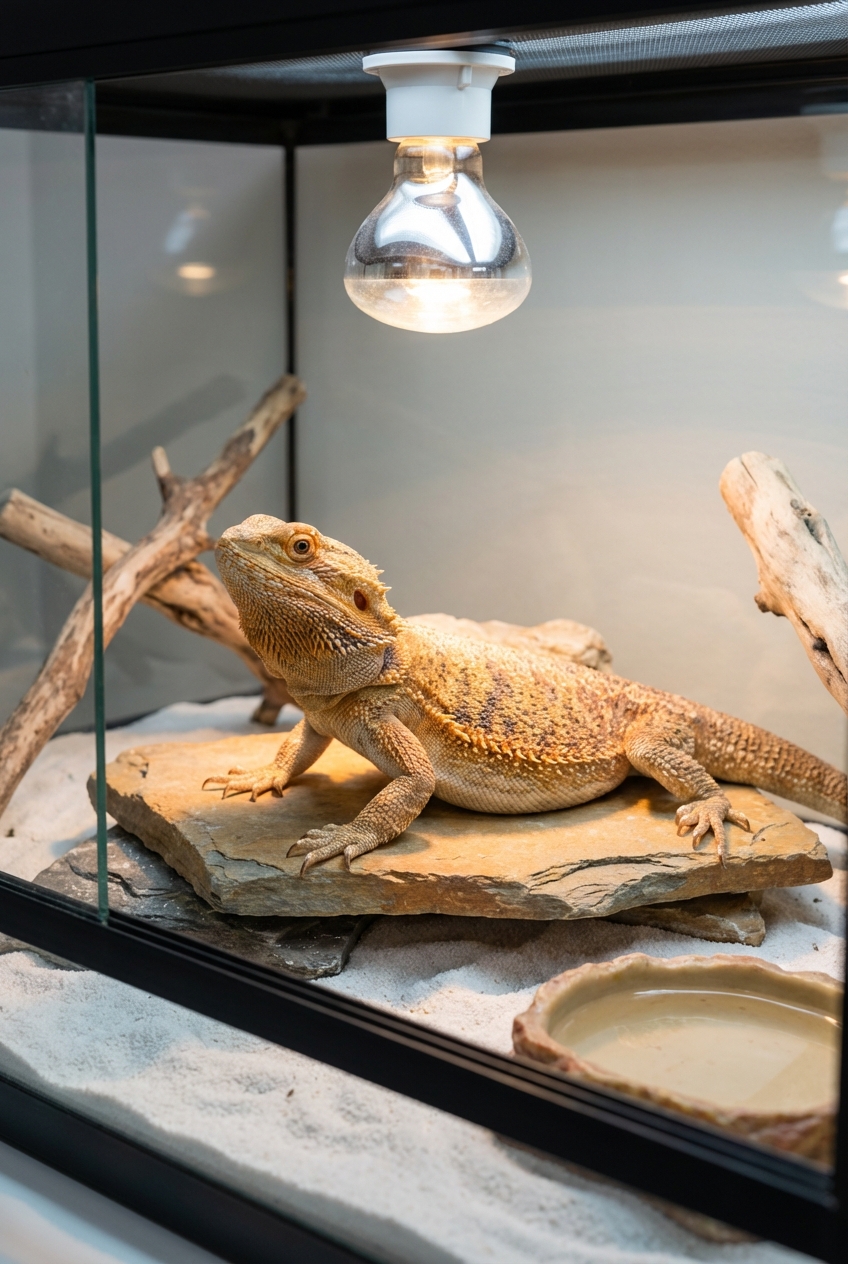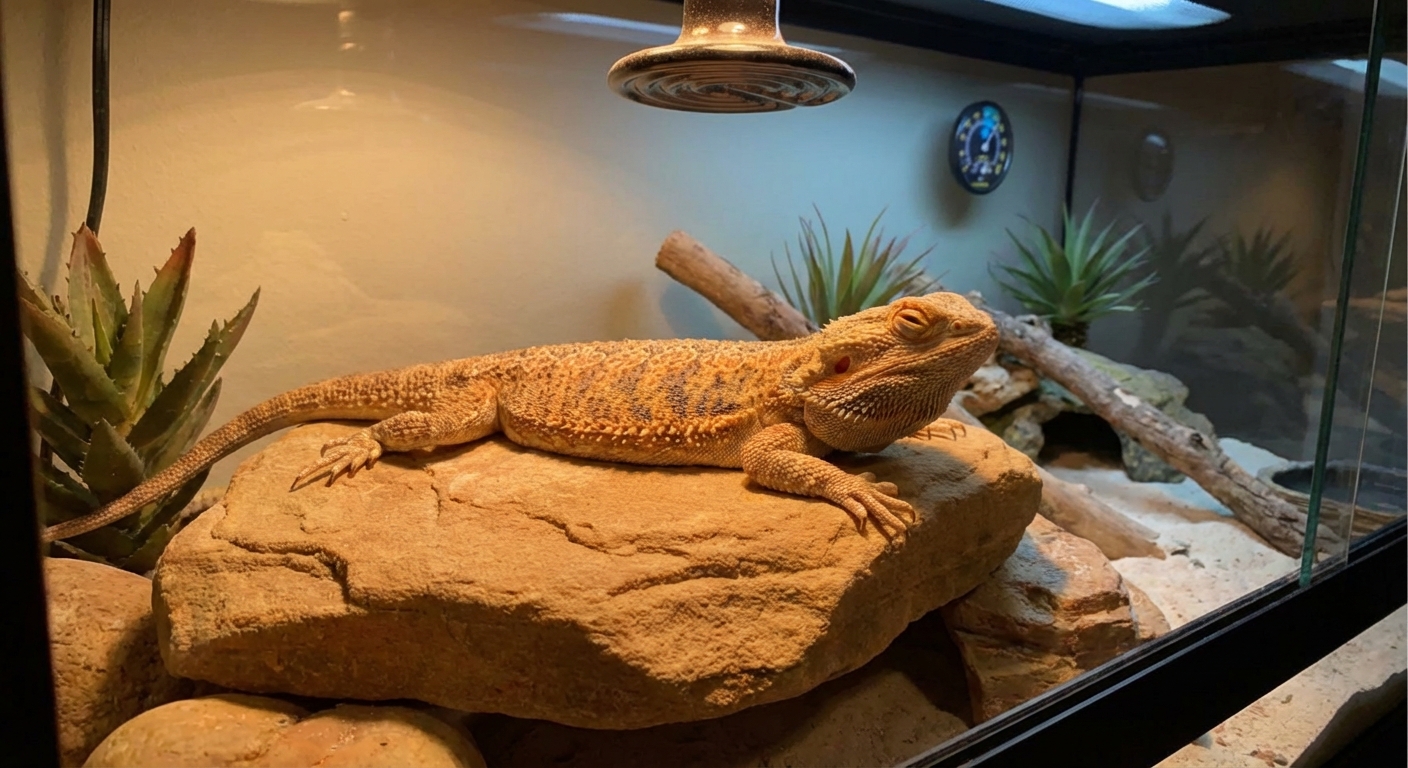
A complete bearded dragon care guide covering habitat setup, safe substrates, UVB and basking temps, feeding by age, supplements, hydration, cleaning routine...
Article
•
Designer Mixes
Bearded Dragon Care Guide

Shari Shidate
Designer Mixes contributor
Bearded dragons are one of the most rewarding pet reptiles because they are curious, hardy, and often surprisingly social. But their health is tightly connected to their environment. If the lighting, heat, and diet are even a little “off,” problems like poor appetite, lethargy, constipation, and metabolic bone disease can show up fast.
I am writing this like I would explain it to a friend who just brought home their first beardie: we are going to focus on the essentials first, then build a setup that supports long-term health.
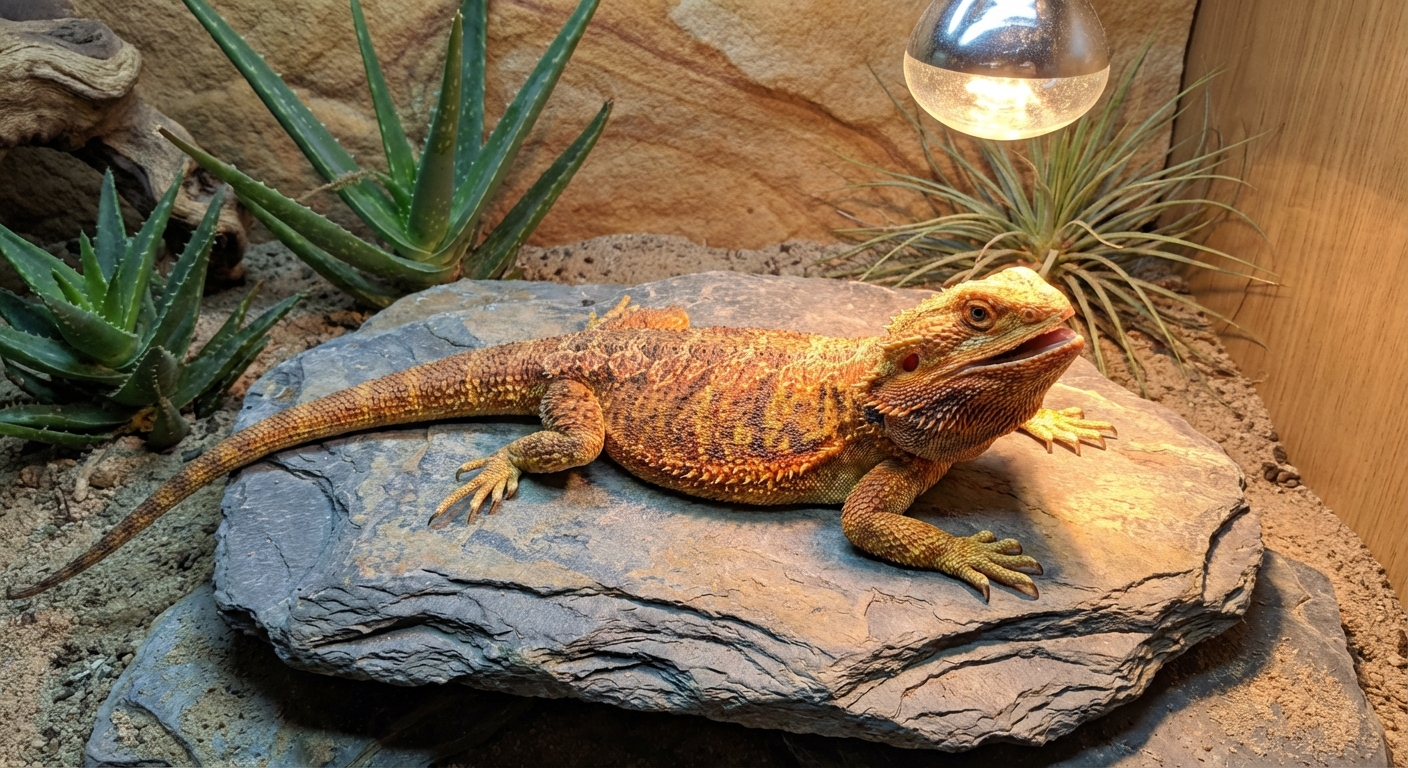
Quick facts at a glance
- Life span: Often 8 to 12+ years with proper care
- Adult size: Commonly 18 to 24 inches
- Best for: People who can manage daily lighting and temperature checks
- Most common beginner mistake: Inadequate UVB or incorrect temperatures
Choosing your bearded dragon
Start with a healthy dragon
When you are picking a bearded dragon, look for bright, alert eyes, steady movement, and a body that looks filled out, not bony at the hips or spine. A healthy beardie should be curious and responsive, not limp or listless.
- Clear eyes and nose, no crust or bubbles
- No blackened tail tip or swollen joints
- Clean vent area, no diarrhea staining
- Strong grip and normal walking, not dragging
Tip: Ask what the dragon is currently eating and what UVB they are using. If the seller cannot answer, consider that a red flag.
Enclosure setup
Tank size
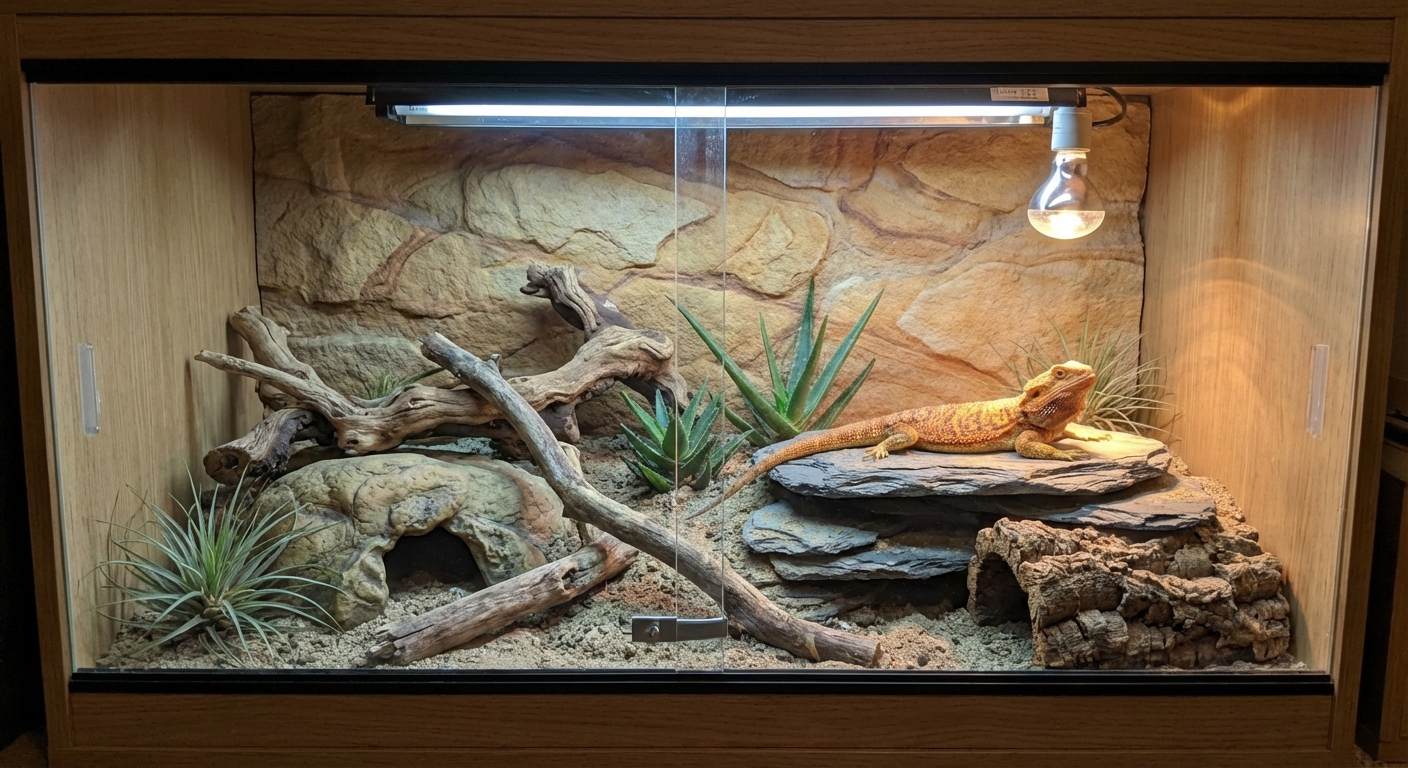
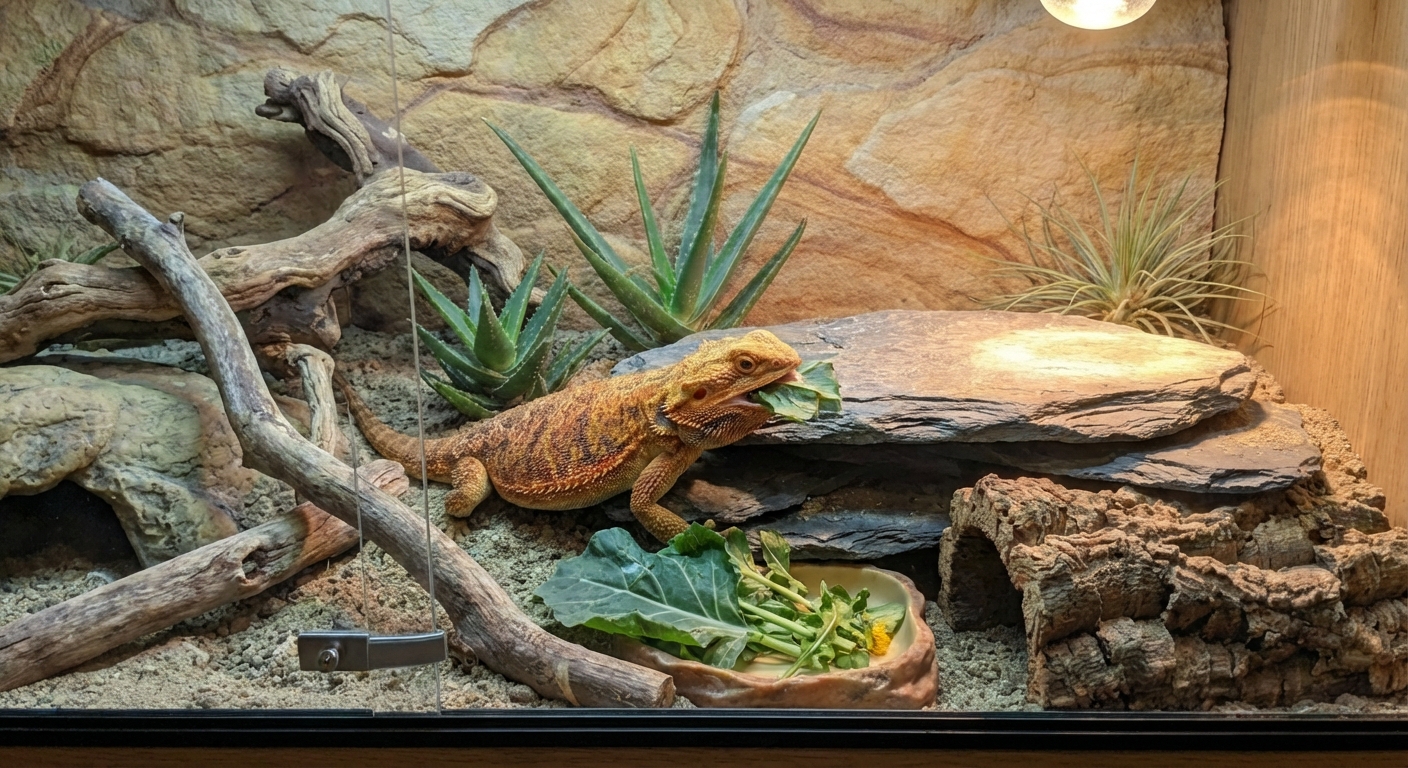
For an adult, a 4 ft x 2 ft x 2 ft enclosure is a great target because it allows a true heat gradient. Babies can start smaller, but most owners quickly upgrade, so it is often cheaper to start with the adult-size habitat.
Substrate
Substrate is a hot topic. For beginners, I recommend choosing safety and easy cleaning.
- Great beginner options: Paper towels (especially for juveniles), slate or ceramic tile, non-adhesive shelf liner
- Skip reptile carpet: It can snag claws, trap debris, and is difficult to truly disinfect
- Use caution: Loose substrates can increase the risk of impaction if husbandry is not correct or the dragon is a baby, ill, or dehydrated
If you want a naturalistic loose substrate later, discuss it with a reptile-savvy vet and make sure your heat, UVB, and hydration are truly dialed in first.
Enrichment and layout
Bearded dragons thrive when they can climb, bask, and hide.
- Basking platform that is sturdy, stable, and easy to disinfect
- At least one hide on the cool side, and many dragons appreciate a second hide
- Branches or ledges for climbing and exploring
- A dig box can be helpful, especially for females that may lay eggs
- Avoid heat rocks: They can cause serious burns
Lighting and heat (the real “medicine”)
If you do only one thing really well, make it this section. The right light and heat are what allow a bearded dragon to digest food, absorb calcium, and stay active.
UVB lighting
Bearded dragons need strong, reliable UVB to make vitamin D3, which is necessary for calcium absorption. Without it, they can develop metabolic bone disease, a painful and sometimes irreversible condition.
- Use a high-quality linear UVB tube (not a tiny coil bulb)
- Common, well-regarded examples include T5 HO linear tubes like Zoo Med ReptiSun 10.0 and Arcadia 12% or 14% (choose strength and mounting based on your enclosure)
- Use a reflector if your fixture supports one, because it significantly improves usable UVB
- Replace UVB bulbs on schedule (many need replacement about every 6 to 12 months, depending on type and brand)
Important: UVB distance depends on variables like bulb strength, reflector, and whether it shines through a screen top. Mesh can reduce UVB a lot. If you mount UVB on top of mesh, you often need to reduce the basking distance or use a stronger setup. If you mount the UVB inside the enclosure, you must ensure safe distances and secure installation. Always follow the manufacturer’s distance chart.
Action step: If you can, use a UV meter. If not, choose a trusted UVB brand and follow distance and replacement guidance carefully.
Heat gradient
Beardies need a warm basking area and a cooler retreat so they can self-regulate.
- Basking surface temperature: often around 95 to 105°F for many adults, with some individuals preferring slightly warmer. 110°F is more common for juveniles or very active young dragons
- Cool side: commonly around 75 to 85°F
- Night temps: a drop is normal. Supplemental heat is usually only needed if your home drops below 65°F
Use digital probe thermometers and, ideally, an infrared temp gun to measure the basking surface where your dragon actually sits. Then watch behavior. If your dragon is always dark, hiding, or avoiding the basking spot, something is off even if the numbers look “fine.”
Light and lamp placement
Set up the enclosure so your dragon gets heat and UVB in the same place.
- Place the UVB and basking bulb on the same side, overlapping the main basking platform
- Use a bright white basking bulb for daytime. Bearded dragons respond better to bright, daylight-like conditions than dim “heat-only” lighting
- Make sure your dragon can move easily from the bright basking zone to shade and the cool side
Day and night cycle
A consistent light schedule supports appetite and behavior. Many homes do well with 12 hours on and 12 hours off, adjusting slightly with seasons if desired.
Heating at night
If your home gets cold at night (below about 65°F), use a ceramic heat emitter or radiant heat panel rather than a colored night bulb. Colored bulbs can disrupt natural rhythms.
Diet and nutrition
Bearded dragons are omnivores, and their needs change with age. Younger dragons typically eat more insects for growth, while adults shift toward more plant matter. The goal is variety and consistency, not perfection in one day.
How often to feed
- Babies and juveniles: insects daily (often 1 to 2 feedings per day depending on age and appetite), plus a daily salad to build the habit
- Adults: salad daily, and insects usually 2 to 3 times per week to help prevent obesity
These are general targets. Your dragon’s body condition, activity, and your vet’s guidance matter more than any single schedule.
Staple greens (daily for most adults)
Offer a fresh salad using nutrient-dense greens.
- Collard greens
- Mustard greens
- Turnip greens
- Dandelion greens
- Endive and escarole
Rotate options to keep meals interesting and nutritionally broad. Chop pieces appropriately so they are easy to eat.
Vegetables to rotate
- Squash (butternut, acorn)
- Bell pepper
- Green beans
- Okra
- Carrots (in moderation)
Fruit
Fruit is best as an occasional treat because it is high in sugar. Small amounts of berries are often used as enrichment.
Insects (protein)
Choose gut-loaded, appropriately sized insects. A common rule is that insects should be no longer than the space between your dragon’s eyes.
- Great options: Dubia roaches (where legal), crickets, black soldier fly larvae
- Treat options: Hornworms (hydrating), waxworms (high fat)
- Use caution: Mealworms and superworms can be tough for small juveniles due to their tougher outer shell, and they can contribute to impaction risk if husbandry is not on point
Avoid feeding wild-caught insects, which can carry parasites or pesticides.
Supplements: calcium and vitamins
Supplements are not a replacement for UVB and a good diet, but they support overall balance.
- Calcium: commonly used several times per week
- Multivitamin: often used 1 to 2 times per week
Exact schedules vary based on age, UVB strength, and diet. If you are unsure, your reptile vet can recommend a plan that fits your setup.
Quick avoid list
- Avocado and rhubarb: toxic
- Fireflies: extremely toxic
- Spinach: not a good staple (it can bind calcium). Small amounts occasionally are less of a concern, but do not rely on it
- Iceberg lettuce: mostly water and low nutrition
Water and hydration
Many bearded dragons do not drink from a bowl reliably, but fresh water should still be offered. Hydration can also come from appropriately hydrated greens, occasional soaks, and moisture-rich feeders (like hornworms) as treats.
Watch for dehydration signs: tacky saliva, constipation, reduced fecal output, and thick or chalky urates. Wrinkled skin and sunken eyes are often mentioned, but they can be nonspecific, so it is best to look at the whole picture and get veterinary help if you are concerned.
Handling and bonding
Most bearded dragons can become comfortable with gentle handling, but trust is built through consistency.
- Support the whole body, including the legs and tail base
- Approach calmly from the side rather than from above
- Keep early sessions short and positive
- Wash hands before and after handling
If your dragon is new, give them time to settle in before frequent handling. Stress can suppress appetite.
Shedding, brumation, and normal behavior
Shedding
Shedding is normal. Provide rough surfaces for gentle rubbing and keep husbandry correct. Avoid peeling skin, which can injure healthy tissue underneath.
Brumation
Some adult bearded dragons slow down seasonally. They may eat less, sleep more, and hide. Because illness can look similar, it is wise to be cautious.
- First, confirm your temps and UVB are correct, since low heat or weak UVB can mimic “brumation”
- Consider a vet visit and a fecal test before allowing a long brumation, especially if it is your first time seeing this behavior
- Juveniles: do not assume brumation is normal. Get vet guidance
Common behaviors
- Arm waving: often a submissive gesture
- Head bobbing: can be dominance, excitement, or communication
- Glass surfing: may signal stress, desire to explore, or incorrect temperatures
Cleaning and maintenance
Cleanliness helps prevent parasites and bacterial overgrowth, and it also makes your dragon’s poop a useful health signal instead of a mystery.
Daily
- Remove feces and soiled substrate
- Refresh water bowl
- Remove leftover salad before it wilts
Weekly
- Disinfect food and water dishes
- Wipe down surfaces
- Spot-clean decor
Monthly (or as needed)
- Deep clean enclosure and decor with a reptile-safe disinfectant
- Rinse thoroughly and allow to dry
Health red flags (when to call a vet)
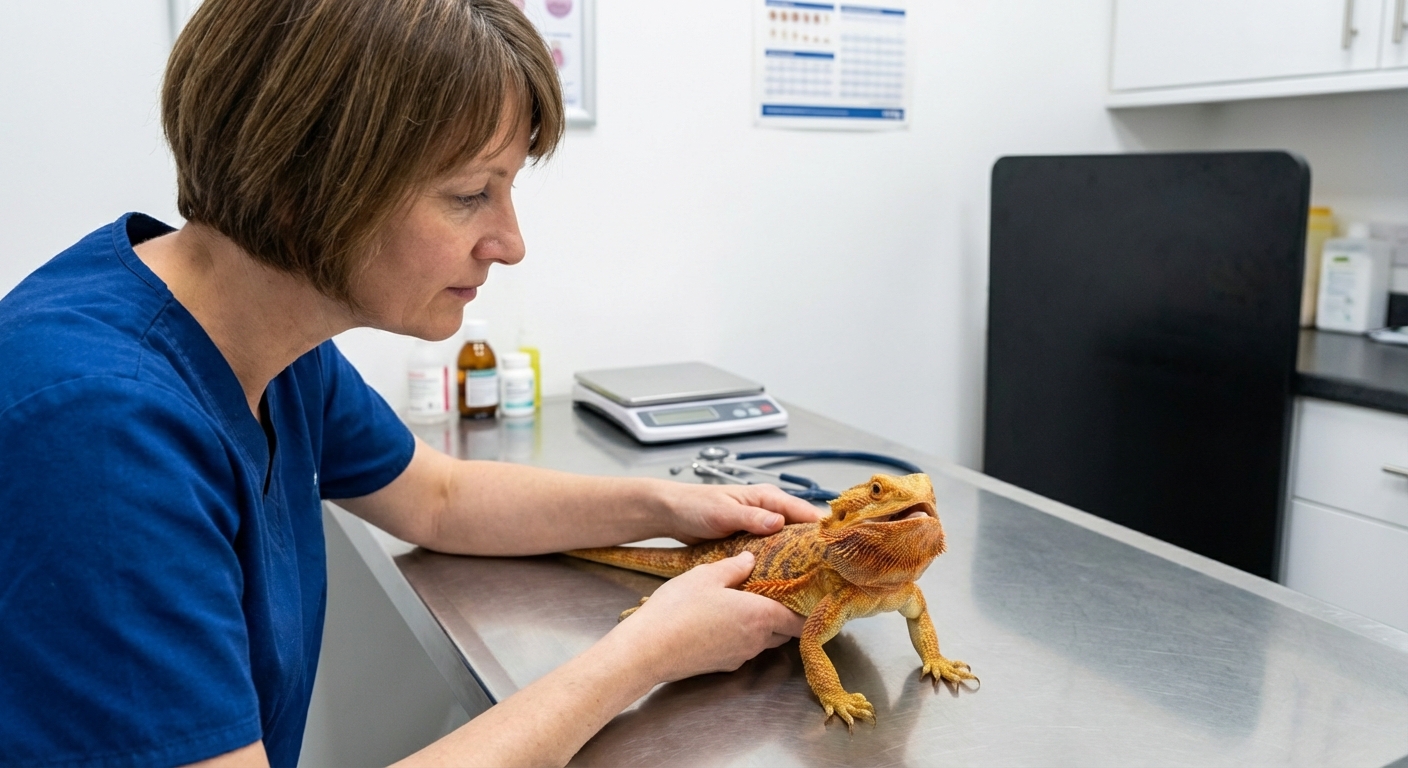
Bearded dragons hide illness well, so small changes matter. If you notice any of the following, it is time to call a reptile-experienced veterinarian.
- Not eating for an extended period (especially outside of brumation patterns)
- Lethargy, weakness, or trembling
- Swollen jaw or limbs, soft jawline, difficulty moving (possible metabolic bone disease)
- Persistent diarrhea or very foul stools
- Constipation or straining
- Wheezing, mucus, open-mouth breathing when not basking
- Black beard that stays dark, signs of pain
- Visible mites or abnormal skin lesions
In reptile care, “husbandry” is part of medical care. If your dragon is not thriving, checking UVB strength, bulb placement, and temperatures is often the first step alongside a veterinary exam.
Preventive care
Yearly wellness exams are a smart idea, especially for adult dragons. Many vets also recommend periodic fecal testing to screen for parasites. For new dragons, a fecal test early on can be a great baseline, especially if they came from a pet store, expo, or a mixed collection.
First week checklist
Want a calm start? Here is a simple plan you can follow.
- Confirm basking surface temperature with a temp gun
- Confirm cool side temperature with a probe thermometer
- Confirm UVB is a linear tube and set at the correct distance for your setup (mesh vs inside mounting matters)
- Set a consistent day-night light schedule
- Offer a salad daily and monitor what is actually eaten
- Offer appropriate insects and track appetite
- Log poop frequency and appearance, including urates
- Minimize handling for the first few days if your dragon seems stressed
Bottom line
Bearded dragon care is not about doing everything “fancy.” It is about getting the core inputs right: strong UVB, the right heat gradient, and a balanced, age-appropriate diet. Once those are in place, most beardies become confident little companions who love their basking spot, their salad routine, and their daily check-ins with you.
If you want, I can help you troubleshoot your current setup. A quick list of your enclosure size, UVB brand and placement (over mesh or inside), basking surface temps, and your dragon’s age goes a long way.