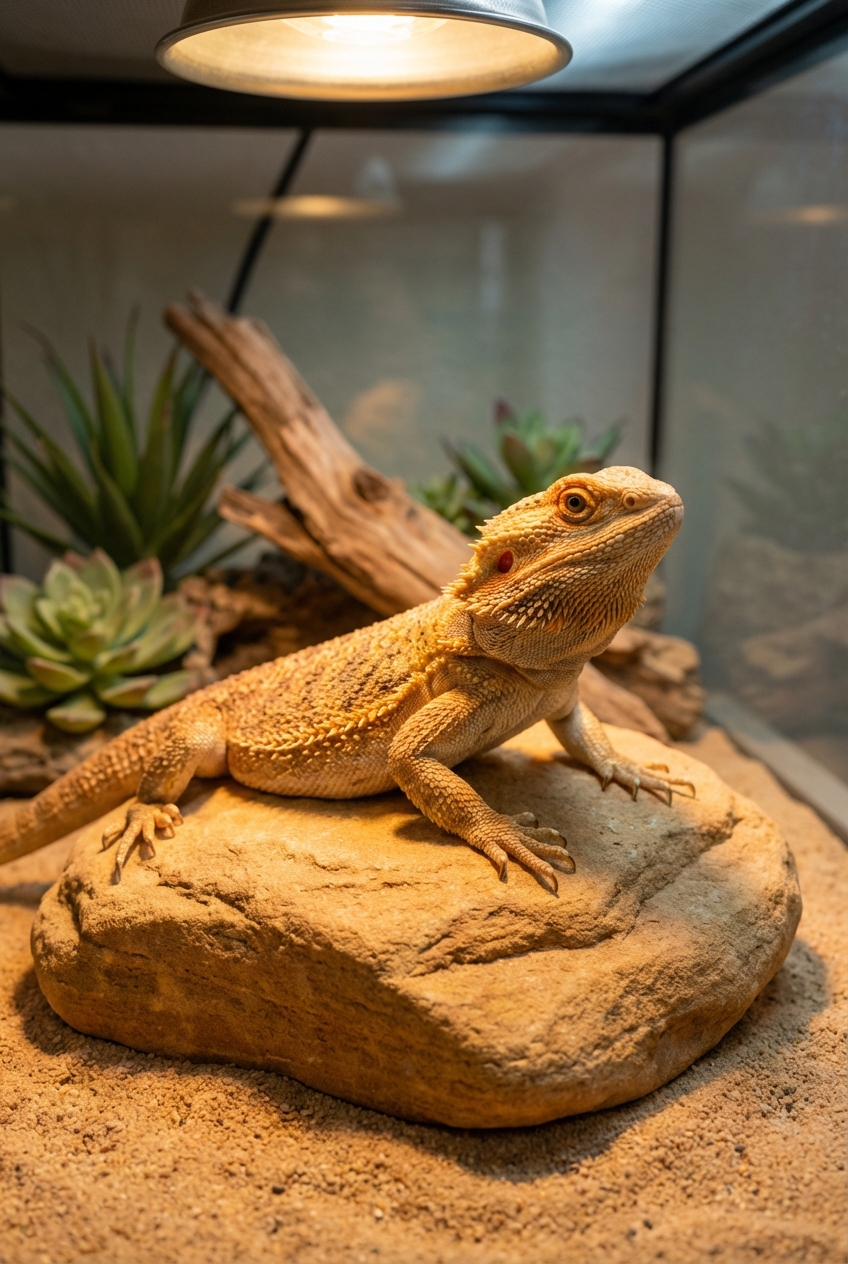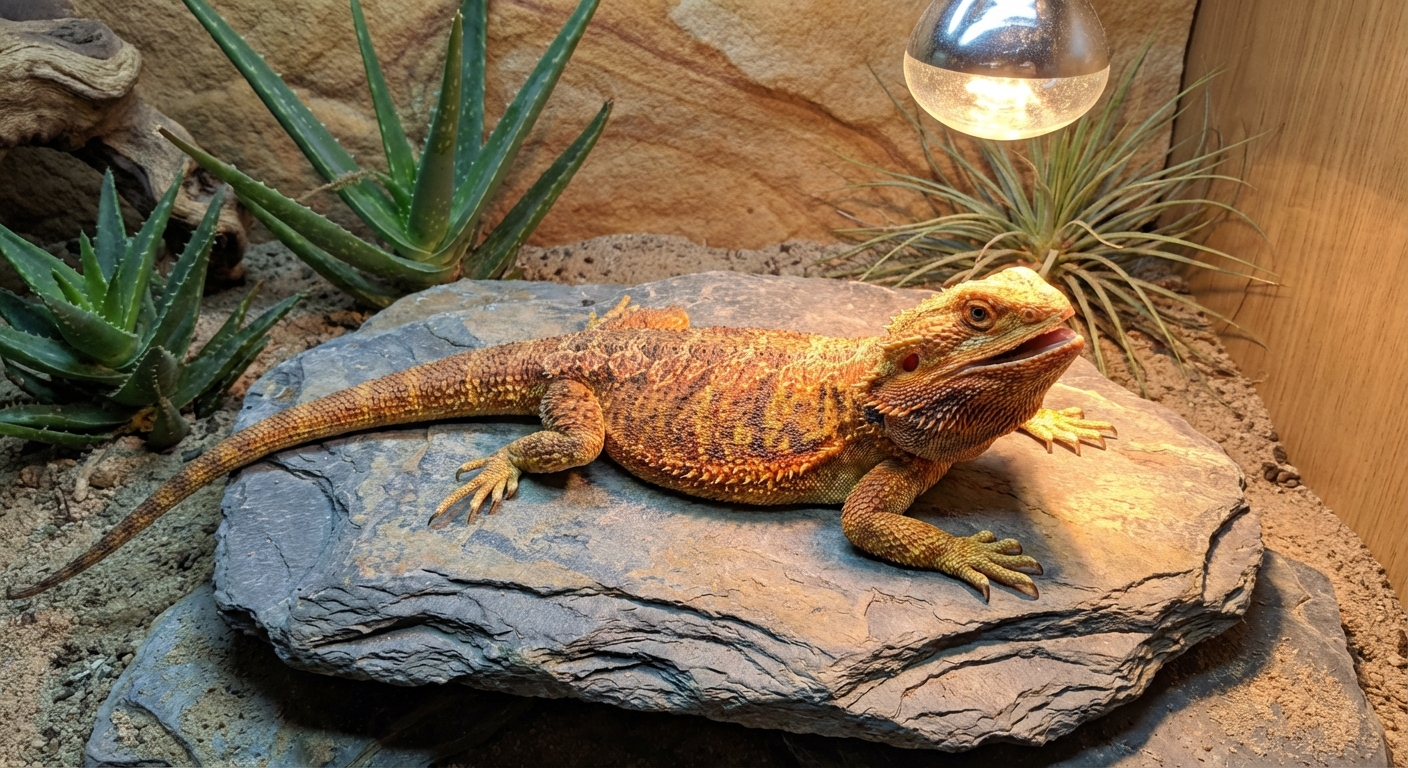
A complete bearded dragon care guide covering enclosure setup, safe substrates, UVB lighting, heat gradients, feeding by age, supplements, handling, cleaning...
Article
•
Designer Mixes
Bearded Dragon Care

Shari Shidate
Designer Mixes contributor
Bearded dragons are one of the most beginner-friendly reptiles, but they are not “set it and forget it” pets. In my experience as a veterinary assistant, most bearded dragon health problems start with husbandry issues, especially lighting, temperatures, and diet. The good news is that once the basics are set up correctly, daily care becomes simple and consistent.
Start with the right habitat
Enclosure size
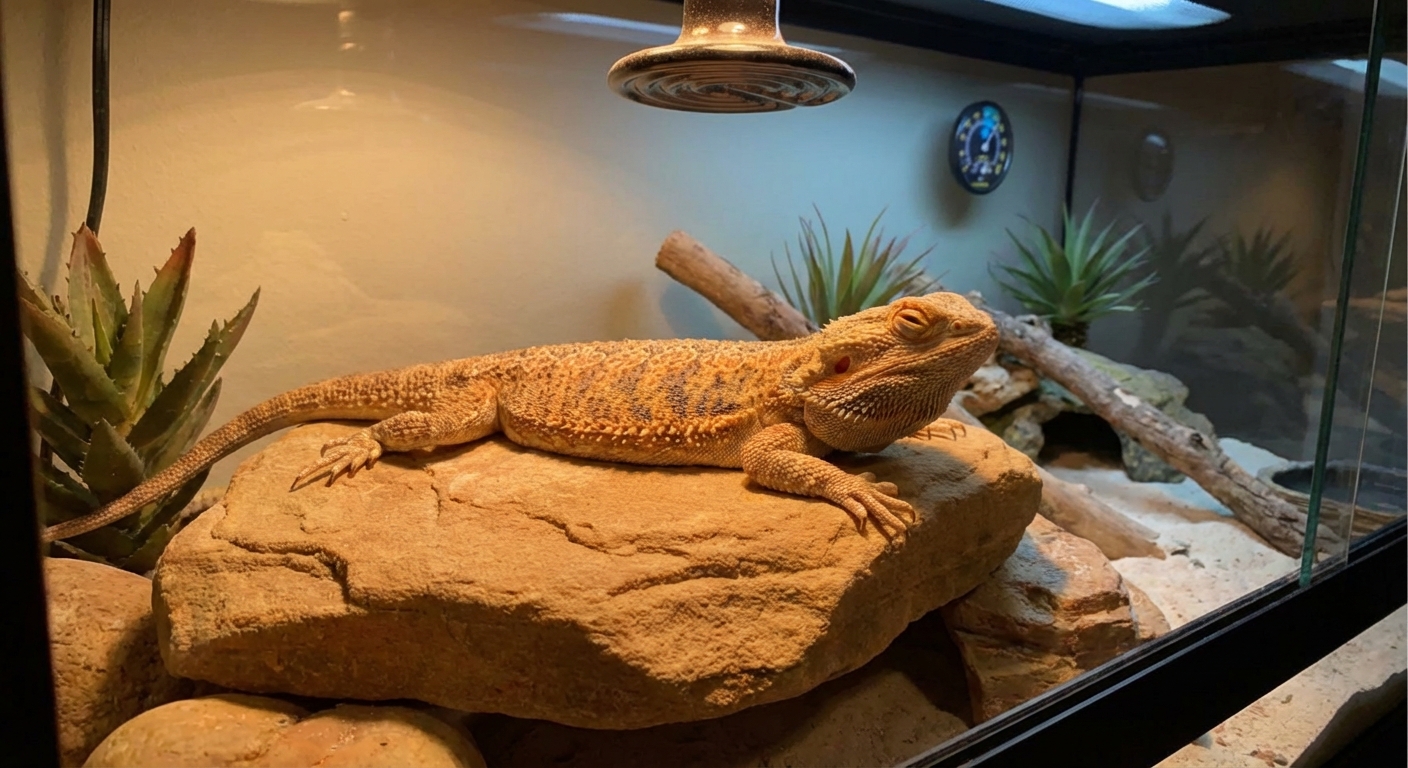
Bigger is better because it allows a true temperature gradient. As a general baseline:
- Babies and juveniles: at least a 40-gallon breeder style enclosure (bigger is still beneficial).
- Adults: a 4x2x2 foot enclosure is a common, comfortable standard.
Bearded dragons are terrestrial and love to sprawl, so prioritize floor space and safe climbing areas over tall, narrow tanks.
Substrate (flooring)
The “best” substrate depends on your experience level and your dragon’s age and health. Safe, practical options include:
- Textured tile (easy to clean and helps with nail wear)
- Non-adhesive shelf liner (easy to swap and wipe down)
- Paper towels or butcher paper (excellent for quarantine or babies)
About reptile carpet: It is commonly sold, but it is increasingly discouraged due to sanitation issues (it can harbor bacteria even when it looks clean) and the risk of snagged nails. If you use it, keep multiple pieces on hand so you can swap and wash frequently, and inspect daily for frays.
Loose substrates can be used by experienced keepers in well-managed setups, but they carry higher risk for ingestion and irritation, especially with juveniles or dragons housed with incorrect heat and UVB.
Lighting and heat
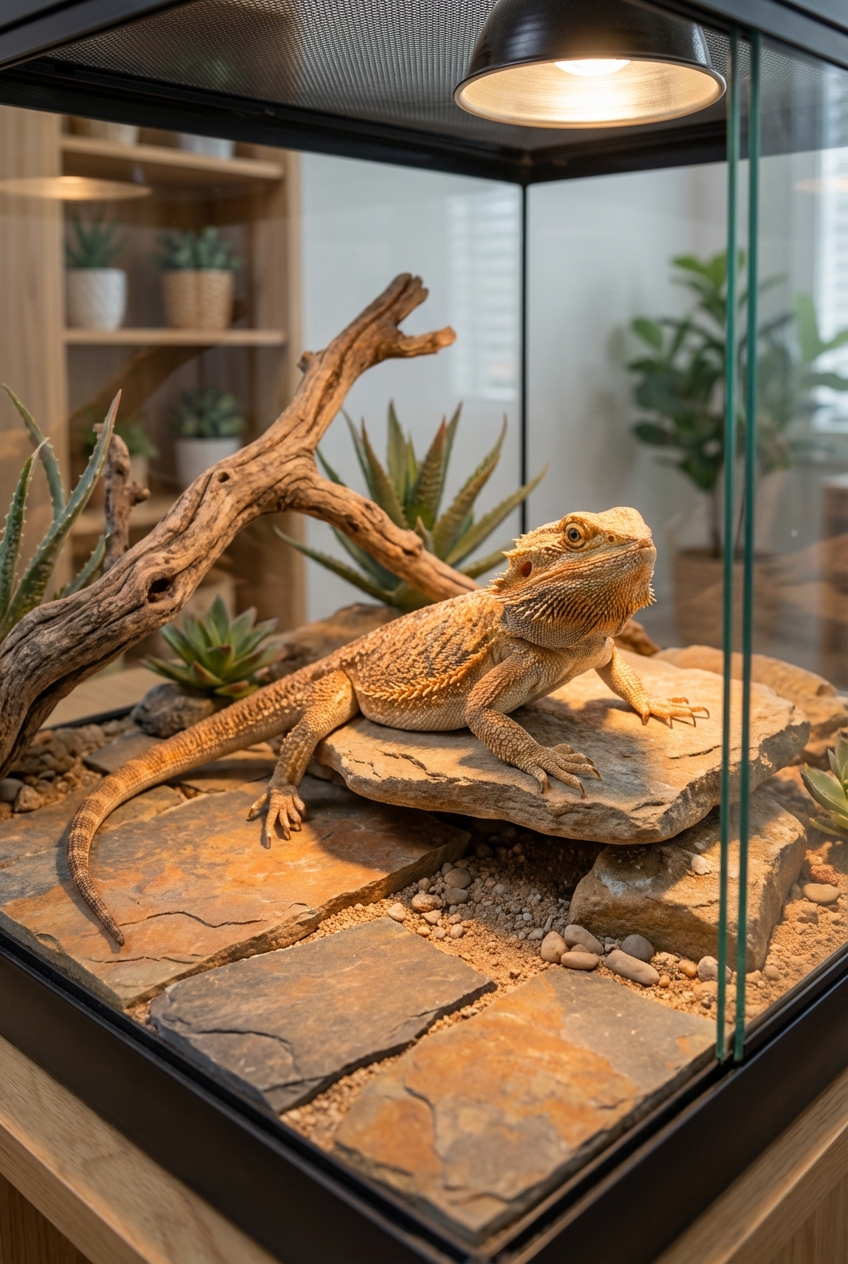
If you remember one thing, make it this: UVB and proper heat are non-negotiable. Without them, bearded dragons cannot properly metabolize calcium, and that can lead to metabolic bone disease.
UVB lighting
- Use a high-quality linear UVB tube (not a small coil bulb) that spans a large portion of the enclosure.
- Follow the manufacturer’s distance guidelines and use the correct fixture and reflector.
- Replace UVB bulbs on schedule even if they still light up, because UV output declines over time.
A bright, well-lit enclosure encourages natural activity, appetite, and healthy behavior.
Temps and basking
Bearded dragons thermoregulate by moving between warm and cool zones. Your enclosure should provide a clear gradient with these target ranges:
- Basking surface temp: 105 to 110°F for babies and juveniles, 100 to 105°F for adults
- Warm side ambient: roughly 88 to 95°F
- Cool side ambient: 75 to 85°F
Use digital thermometers with probes for ambient temps, and a temperature gun to check basking surface temps where your dragon actually sits. Sticky analog gauges are often inaccurate.
Night heat
Many homes do not need extra night heat. If your room stays 65°F or warmer, it is typically fine to let the enclosure cool at night. If your room regularly drops below 65°F, use a non-light-emitting heat source (like a ceramic heat emitter or radiant heat panel) so you do not disrupt the day-night cycle.
Feeding your bearded dragon
Nutrition changes a lot from babyhood to adulthood. A simple way to think about it is: young dragons need more protein for growth, while adults need more plant matter for long-term health.
What to feed
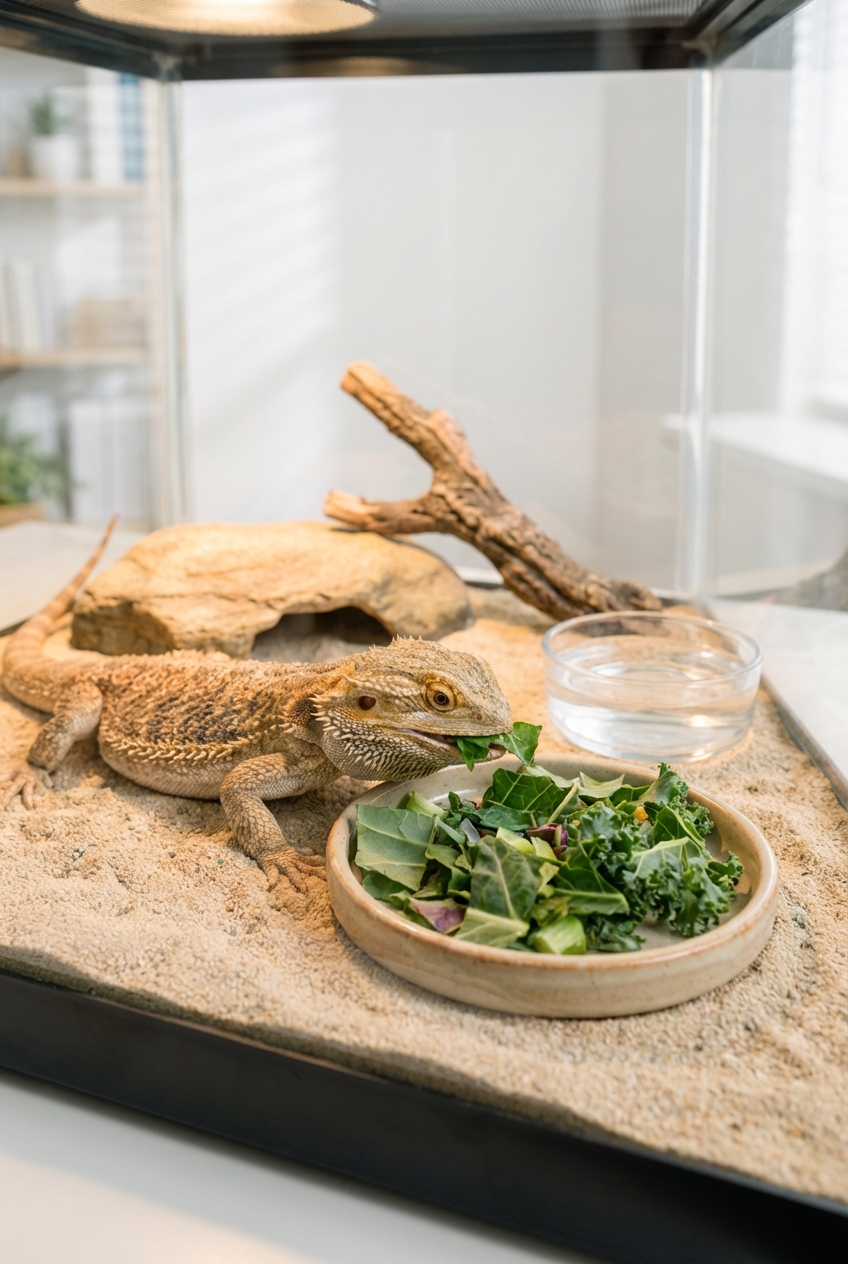
Staple greens and vegetables:
- Collard greens, mustard greens, turnip greens
- Dandelion greens (pesticide-free)
- Squash varieties (butternut, acorn), bell pepper
Insects (appropriately sized):
- Dubia roaches, crickets, black soldier fly larvae
- Occasional treats like hornworms (hydrating) depending on your dragon’s condition
Fruits: offer rarely and in small amounts. Many dragons love fruit, but it is sugary and can contribute to digestive issues if overused.
Feeding schedule basics
- Juveniles: typically more frequent insect meals, plus daily greens.
- Adults: greens daily, insects fewer times per week.
Your exact schedule will depend on your dragon’s age, body condition, activity level, and vet guidance.
Supplements
Most bearded dragons need calcium supplementation, and some also need a multivitamin on a schedule. This varies with UVB strength, diet quality, and life stage. A reptile-savvy veterinarian can help you choose the right products and frequency.
Hydration
Some dragons rarely drink from a bowl, but fresh water should still be offered. You can also support hydration with water-rich feeders and safe greens. Occasional supervised soaks can help some individuals, but they are not a substitute for correcting enclosure temps and hydration through diet.
Daily and weekly care
Daily checklist
- Confirm basking heat and UVB are on and functioning
- Offer fresh greens and remove leftovers later
- Provide insects as scheduled
- Spot clean waste and any soiled surfaces
- Observe behavior, appetite, and stool
Weekly and monthly tasks
- Deep clean décor and surfaces as needed
- Wash food and water dishes regularly
- Check fixture placement, bulb age, and thermostat settings
- Weigh your dragon (especially juveniles or any dragon with health concerns)
Consistency is what keeps small issues from turning into expensive emergencies.
Handling and enrichment
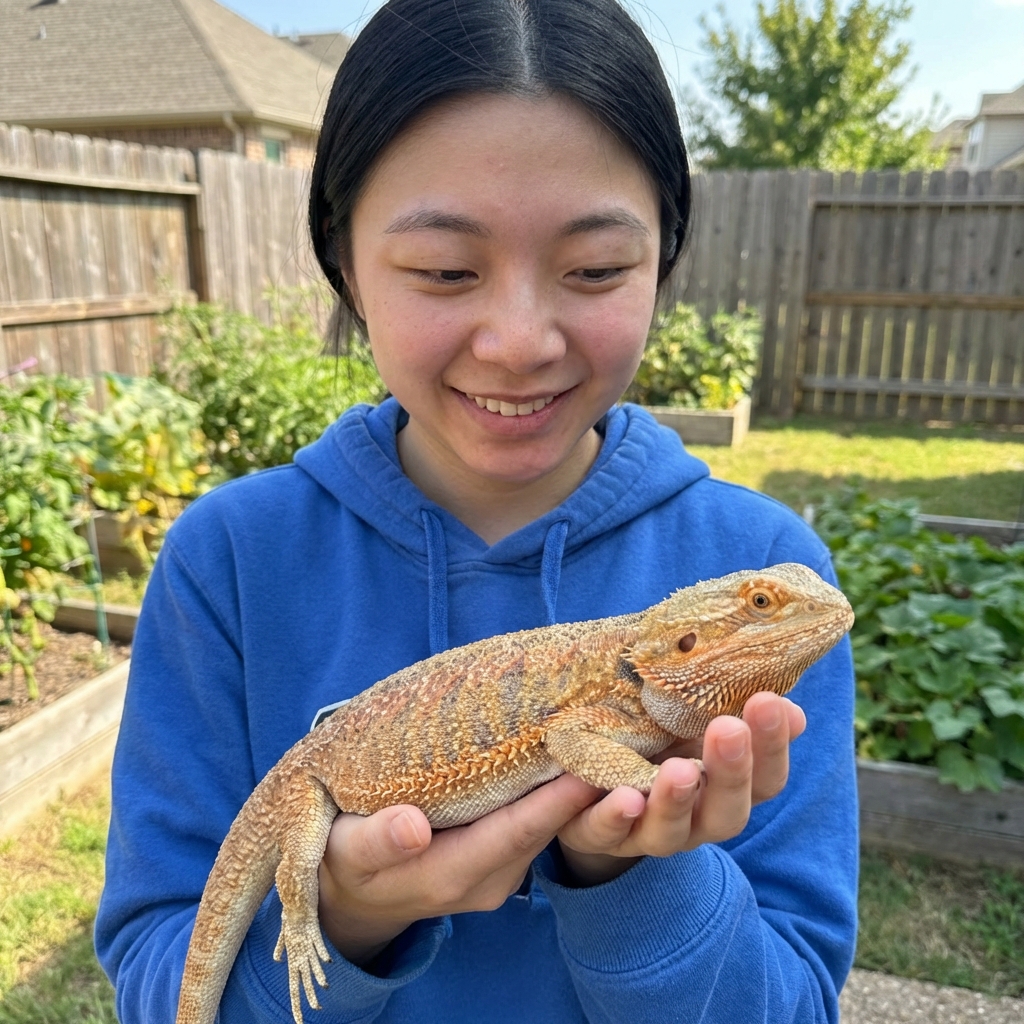
Bearded dragons can be wonderfully social once they feel safe. Move slowly, support the body fully, and keep handling sessions calm and short at first.
Enrichment ideas
- Provide branches and sturdy platforms for climbing and basking
- Rotate safe décor occasionally to encourage exploration
- Offer supervised time outside the enclosure in a secure, warm area
Watch for stress signals like black bearding, puffing, frantic movement, or repeated attempts to escape.
Health problems
Bearded dragons often hide illness until they are quite sick, so subtle changes matter.
Red flags
- Loss of appetite lasting more than a couple of days, especially in juveniles
- Lethargy, weakness, tremors, or soft jaw (possible calcium issues)
- Persistent diarrhea or very foul-smelling stool
- Swelling of limbs or jaw, trouble walking, abnormal posture
- Labored breathing, mucus, open-mouth breathing when not basking
- Not passing stool, bloated belly, straining
- Retained shed constricting toes or tail tip
Important: many symptoms look similar across conditions, so avoid guessing with supplements or home remedies. Correcting husbandry plus a reptile-savvy veterinary exam is the safest path.
Brumation
Adult bearded dragons may enter a seasonal slowdown called brumation. They can sleep more, eat less, and hide for weeks. Because illness can mimic brumation, it is smart to schedule a wellness check, including a fecal exam, before assuming everything is normal.
During brumation, many keepers reduce feeding, continue offering water, and maintain a stable light and heat schedule based on veterinary guidance and the dragon’s condition.
Quick setup summary
- Large enclosure with a clear warm-to-cool gradient
- Linear UVB tube installed and replaced on schedule
- Temps dialed in: basking 105 to 110°F (juveniles) or 100 to 105°F (adults), cool side 75 to 85°F
- Night heat only if needed (below 65°F, and use non-light heat)
- Age-appropriate diet of leafy greens plus properly sized insects
- Calcium and vitamin supplementation as needed
- Cleanliness and observation as part of your routine
When bearded dragon care feels “complicated,” it is usually because one essential needs attention. Fix the lighting and heat first, then dial in nutrition, and you will be amazed how quickly many dragons perk up.
Vet care
Even if your dragon seems healthy, a relationship with a reptile-experienced veterinarian is one of the kindest things you can do. I recommend:
- New pet exam soon after adoption
- Fecal testing to check for parasites
- Annual or as-needed wellness visits, especially for adults, rescues, or dragons with prior health issues
Prevention is almost always easier than treatment, and it starts with good husbandry and good information.