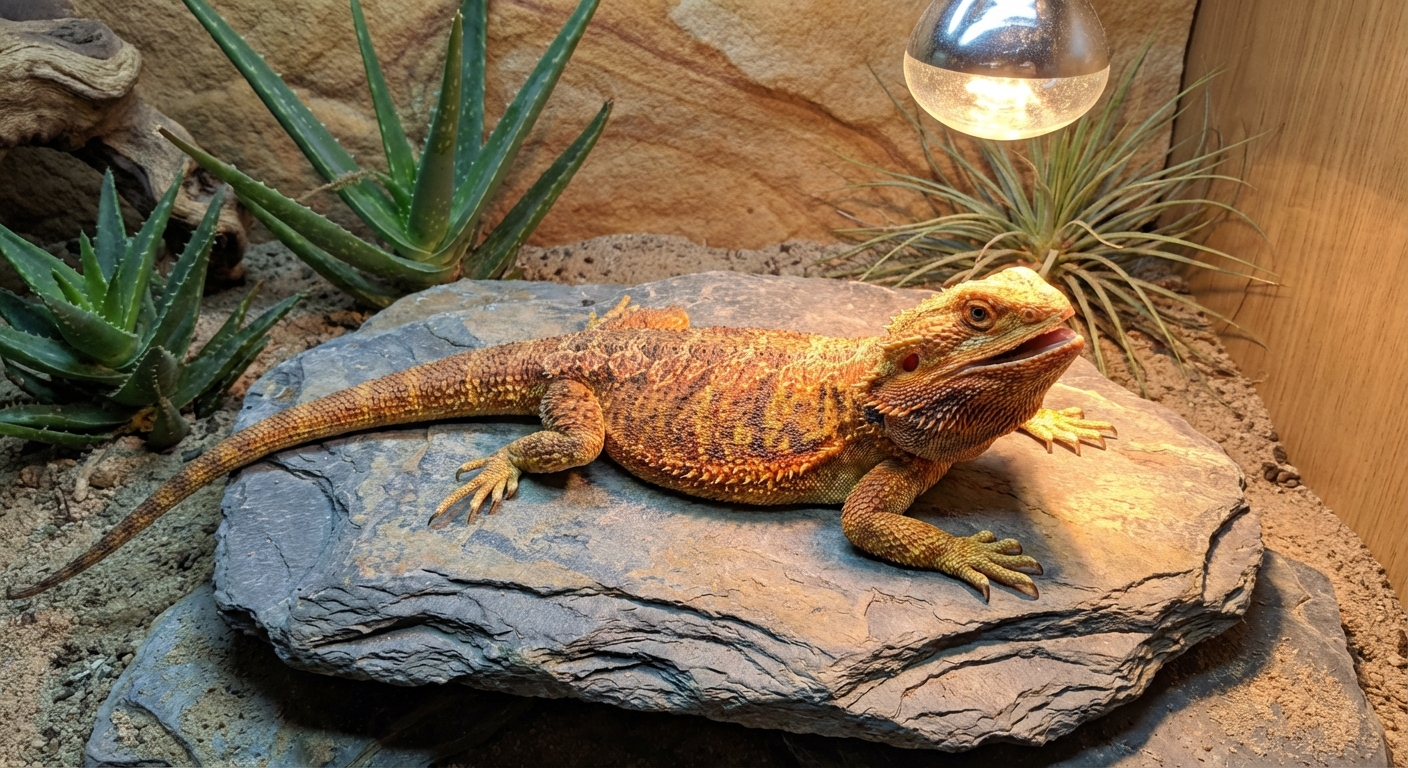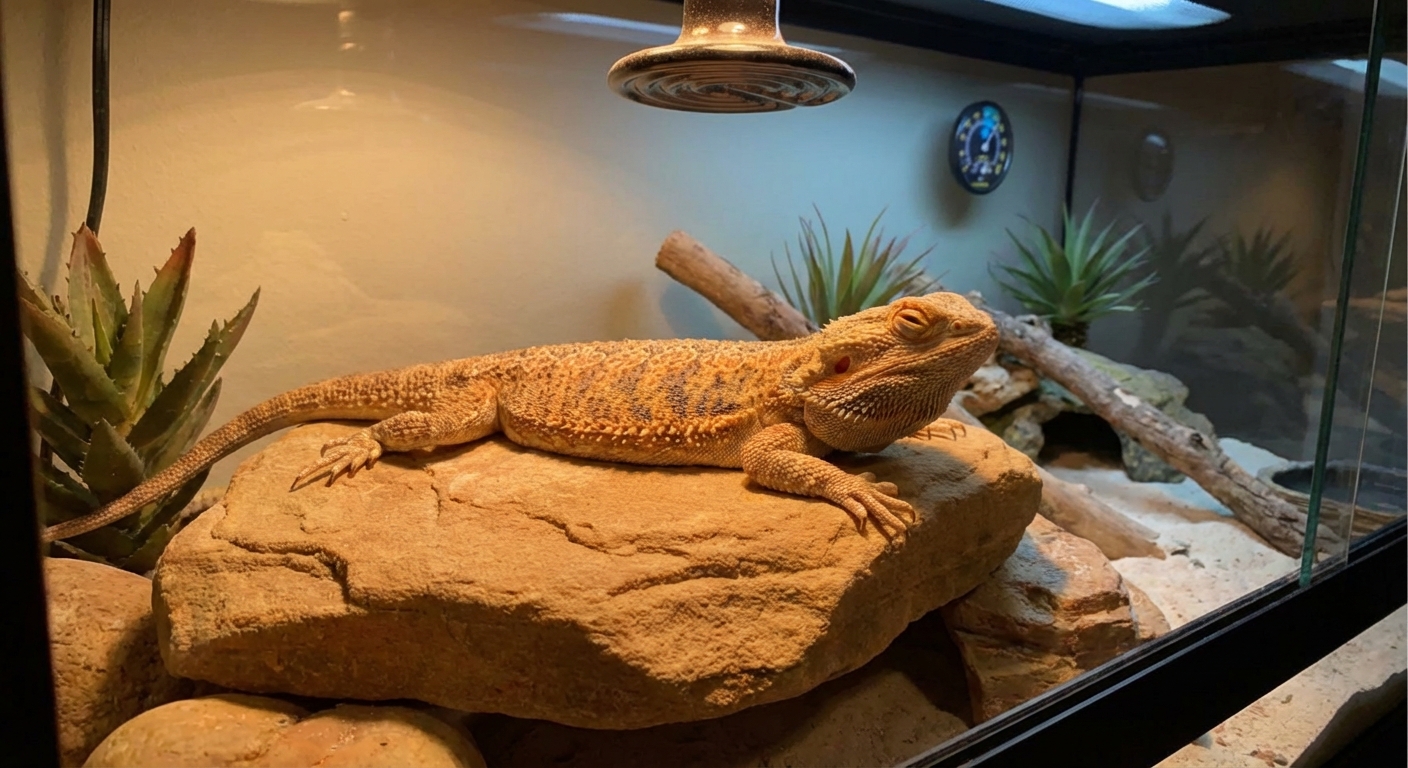
A complete bearded dragon care guide covering habitat setup, safe substrates, UVB and basking temps, feeding by age, supplements, hydration, cleaning routine...
Article
•
Designer Mixes
Bearded Dragon Brumation Symptoms

Shari Shidate
Designer Mixes contributor
Brumation can be confusing the first time you see it. One day your bearded dragon is bright-eyed and chasing greens, and the next they are hiding, eating less, and settling into long naps. In many healthy adult dragons, that shift is normal seasonal biology. In others, it can signal a problem like parasites, dehydration, incorrect temperatures, or metabolic bone disease.
This veterinarian-informed guide will help you recognize typical brumation symptoms, understand what is not normal, and know what to do at home so you can keep your dragon safe.
What brumation is
Brumation is a reptile’s version of a seasonal slow-down. Unlike true hibernation in mammals, reptiles can still wake up, move around, and sometimes drink water. Their metabolism decreases, they sleep more, and they often eat much less.
Most common timing: fall and winter, though indoor dragons may brumate at odd times due to lighting and temperature cues.
Most common candidates: healthy adult bearded dragons. Juveniles can act sleepy too, but in young dragons, low appetite and lethargy are more likely to be husbandry or health related and deserve a closer look.
Quick husbandry targets
“Temps and UVB are correct” sounds simple, but it is not always obvious in real life. These are commonly used targets for healthy adult bearded dragons. If your setup differs (or your dragon is a juvenile, senior, or ill), a reptile veterinarian can help you tailor them.
- Basking surface temp: about 100 to 110 F (38 to 43 C), measured on the basking surface with an infrared temp gun or a probe placed directly on the surface.
- Cool side ambient: about 75 to 85 F (24 to 29 C).
- Night temps: often safe in the mid 60s to low 70s F (about 18 to 22 C) for healthy dragons, but avoid prolonged cold.
- UVB: a quality high-output linear UVB (often a T5 HO fixture) mounted at an appropriate distance with proper placement. Replace bulbs on the manufacturer schedule (commonly about 6 to 12 months depending on bulb type and use).
- Tools: digital probe thermometers and an IR temp gun are the fastest way to confirm what your dragon is actually experiencing.
If you want, tell me your enclosure size, UVB brand and distance, and your basking surface temp reading and I can sanity-check the setup.
Normal brumation signs
If your dragon has been otherwise healthy and your temperatures and UVB are on target, these signs can fit normal brumation:
- Sleeping longer and staying in the hide more often
- Reduced appetite or refusing food for days to weeks
- Less activity, slower movements, less interest in handling
- Basking less, though many dragons will still move to the basking spot occasionally
- Fewer bowel movements because they are eating less
- Preference for darker, cooler areas in the enclosure
A key detail: many dragons gradually ramp down over a couple of weeks, rather than switching overnight.
Brumation vs. sick
This is the part I care about most, because “sleepy” can describe both normal brumation and serious illness. If you are unsure, it is appropriate to call an experienced reptile veterinarian and schedule a wellness exam.
More consistent with brumation
- Adult dragon with a history of being a good eater and active in warmer months
- Clear eyes and normal breathing
- Body condition stays steady, with only mild weight fluctuation
- Alert and responsive when gently disturbed
- No diarrhea, no foul smell, no blood in stool
Red flags
- Rapid or significant weight loss over 1 to 2 weeks
- Persistent black beard, signs of pain, or marked weakness
- Sunken fat pads on the head or very prominent bones
- Wheezing, clicking, bubbles, or mucus from nose or mouth
- Open-mouth breathing when not basking
- Diarrhea, very foul stool, or visible parasites
- Vomiting or regurgitation
- Tremors, twitching, soft jaw, limb deformities or trouble using the legs (possible metabolic bone disease)
- Notable color change from baseline plus lethargy or weakness (for example persistent dark stress coloration, pallor, or looking “off” outside of a normal shed cycle)
- Juvenile dragon that stops eating and sleeps constantly
If your bearded dragon is losing weight, showing breathing symptoms, or acting weak, do not assume brumation. Those are call-the-vet signs.
Before you allow brumation
In an ideal world, brumation is something you plan for, not something that surprises you. The steps below are commonly recommended by reptile veterinarians as a safety check, especially if this is your dragon’s first brumation.
1) Confirm husbandry basics
- UVB: Use a quality UVB system appropriate for bearded dragons and replace bulbs on schedule. Weak UVB can cause lethargy and appetite changes that look like brumation.
- Basking temps: Verify with a reliable digital probe thermometer and an IR temp gun for basking surface temps. Incorrect heat is one of the most common causes of “sleepy” reptiles.
- Photoperiod: Keep a consistent day and night cycle with a timer.
2) Weigh and track
Weigh your dragon on a kitchen scale in grams. Write it down and recheck weekly. Weight trends are more useful than a single number.
Practical rule of thumb: if your dragon loses about 10% (or more) of their body weight, or is steadily trending downward week after week, contact a reptile veterinarian. Smaller losses can still matter in smaller dragons or dragons that started thin.
3) Consider a fecal exam
Parasites can mimic brumation at home, especially because the signs overlap (low appetite, low energy, weight change). A fecal test through a reptile vet can help rule out common intestinal parasites before your dragon slows down.
4) Make sure digestion is not stalled
If a dragon stops basking but still has food in the gut, digestion can slow down. Many keepers allow a pre-brumation digestion window by keeping normal heat and lighting and waiting for a normal bowel movement before a deeper rest. The right timing depends on your temperatures and the size of the last meals, so when in doubt, ask your veterinarian for a plan.
Care during brumation
Once you have ruled out urgent health concerns, supportive care is mostly about safety, stability, and monitoring.
Water and hydration
- Provide fresh water in a shallow dish.
- If your dragon wakes up and seems interested, you can offer water by drops on the snout.
- Watch for dehydration indicators that may include tacky saliva, changes in urates (very dry or unusually small), and weight loss. Sunken eyes or wrinkled skin can happen too, but they can be non-specific and vary by individual and shedding status.
Keep the enclosure stable
Do not make dramatic changes day-to-day. Brumation is stressful enough without constant adjustments. Maintain safe temperatures, a consistent light cycle, and a clean habitat.
Do not force feed
Force feeding a brumating dragon can backfire, especially if they are not basking normally and digestion is slow. If you are worried about intake, that is a reason to consult your reptile veterinarian, not to guess at home.
Baths and soaks
A lot of owners wonder if they should wake a brumating dragon for regular baths. In general, avoid routine soaking if it stresses your dragon or repeatedly interrupts rest. If you are concerned about hydration or constipation, focus on confirming husbandry and offering water when they naturally wake, and ask your vet whether soaks make sense for your specific case.
Limit handling
Gentle checks are fine, but frequent handling can disrupt rest and raise stress.
Track a few simple data points
- Weekly weight in grams
- Notes on wake-ups, drinking, and bowel movements
- Any changes in breathing, posture, or appearance
How long it lasts
Brumation length varies. Some dragons slow down for a few weeks. Others can brumate for a few months, especially adults with strong seasonal rhythms. What matters most is that your dragon remains stable and does not show red-flag symptoms.
If your dragon is brumating longer than expected and you notice weight loss, weakness, or new symptoms, schedule a vet exam. It is better to check than to miss something treatable.
Breeding and egg risks
In adult dragons, seasonal slowdowns can overlap with reproductive hormones. If you have an adult female that is lethargic, not eating, or acting uncomfortable, consider the possibility of egg-related issues (like egg binding) or follicle problems. Those are not “wait it out” situations. If you see straining, swelling, weakness, or a rapid decline, contact a reptile veterinarian promptly.
When to call a vet
Seek veterinary help promptly if you notice:
- Rapid weight loss, inability to stand, or severe lethargy
- Any respiratory signs, including wheezing, mucus, clicking, or open-mouth breathing
- Persistent black beard, pain response, or unusual swelling
- Diarrhea, blood in stool, or foul-smelling stool
- Neurologic signs like tremors, twitching, head tilt, or loss of coordination
- A juvenile dragon acting brumation-like
- An adult female with lethargy plus possible egg-related symptoms
Bring your temperature readings, UVB brand and age, diet details, and recent weights to the appointment. Those details help your veterinarian narrow down causes faster.
FAQs
Should I turn off lights?
Some keepers reduce daylight hours seasonally, but you still want a consistent, safe setup. If you are unsure, ask your reptile veterinarian what they recommend for your dragon’s age, body condition, and history.
Is it normal to wake up for a day?
Yes, that can happen. Many brumating dragons have brief wake periods to reposition, drink, or bask, then return to resting.
What if my dragon wants a little food?
Some dragons nibble occasionally. If they are basking normally and you are seeing normal bowel movements, small meals may be fine. If they are not basking, skip feeding and consult your vet, because digestion can slow or stall when body temperature stays low.
Bottom line
Brumation can be completely normal, especially in healthy adult bearded dragons, but it should not be a set-it-and-forget-it situation. The most veterinarian-aligned approach is simple: confirm husbandry, track weight, consider parasite screening, and take red-flag symptoms seriously.
If you would like, tell me your dragon’s age, current weight trend, basking surface temperature, cool-side temperature, UVB brand and bulb age, and how long the appetite drop has been happening, and I can help you sort what looks normal versus what needs a veterinary visit.