A complete bearded dragon care guide covering habitat setup, safe substrates, UVB and basking temps, feeding by age, supplements, hydration, cleaning routine...
Article
•
Designer Mixes
Bearded Dragon Bath Quick Guide

Shari Shidate
Designer Mixes contributor
Bath time can be a safe, low-stress way to help keep your bearded dragon clean, loosen stuck shed, and support comfort during messy stools. It is not a cure-all, and most dragons do not need daily baths. When done correctly, an occasional soak can be a helpful part of routine care.
As a veterinary assistant, I always tell reptile parents the same thing: safe setup comes first. Most bath problems happen because the water is too deep, too warm, the footing is slippery, or the dragon is left unattended.
When a bath helps and when it does not
Good reasons to bathe
- Stuck shed, especially around toes, tail tip, and beard spines.
- Cleaning the vent area after a messy stool.
- Comfort support for mild constipation (a warm soak can relax muscles and sometimes helps a bowel movement, but it is not a reliable treatment).
- Encouraging drinking for some dragons (baths are not a primary hydration method, but some will sip while soaking).
When to skip the bath
- Open wounds, active skin infections, or raw, bleeding shed.
- Severe lethargy, black beard with obvious distress, or trouble breathing.
- Recent ingestion of loose substrate (a bath will not fix an impaction and can delay needed care).
- Right after a big meal, especially insects, since some dragons regurgitate when stressed.
Bathing can support comfort and cleanliness, but it should never replace correct heat, UVB, nutrition, and veterinary care when your dragon is ill.
Fast bath setup
What you need
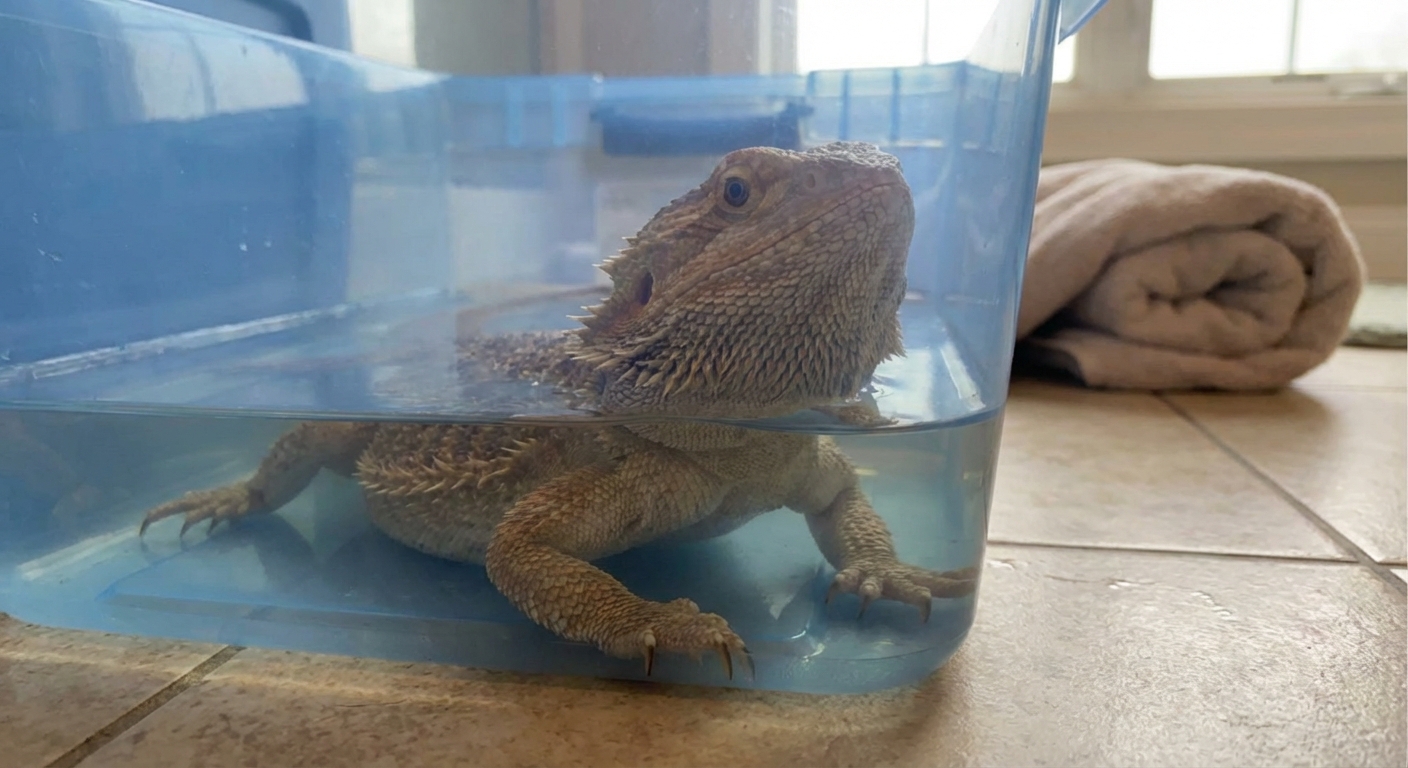
- A clean, smooth-sided plastic tub used only for your reptile (often safer than a sink)
- Warm water
- A thermometer (best option) or careful wrist test
- A small cup for gentle pouring
- A towel for drying and warmth afterward
- Optional: a clean washcloth or textured mat for secure footing
Water depth
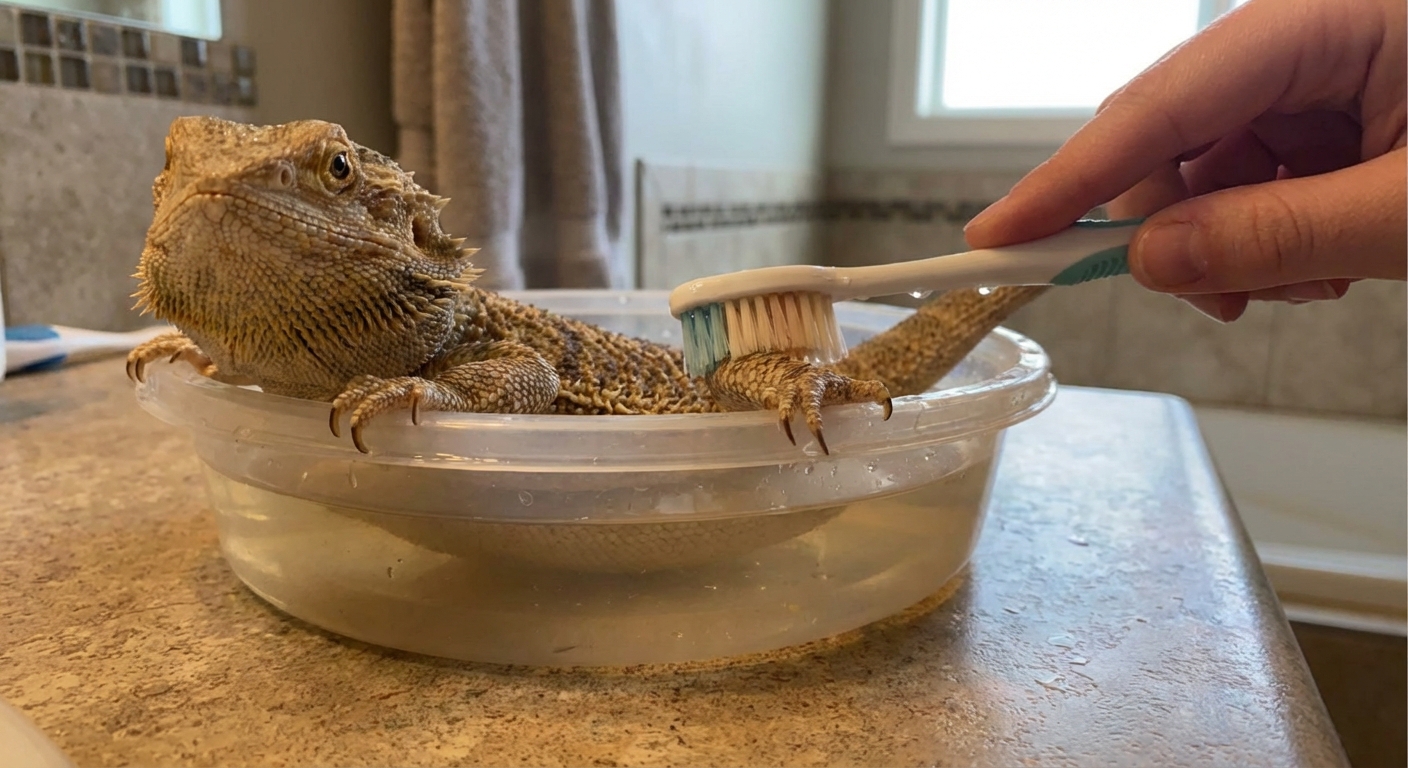
Keep water shallow. A good target is up to the elbows so your bearded dragon can keep their head comfortably above water. It should be never above shoulder level. Babies and juveniles should be even shallower.
Water temperature
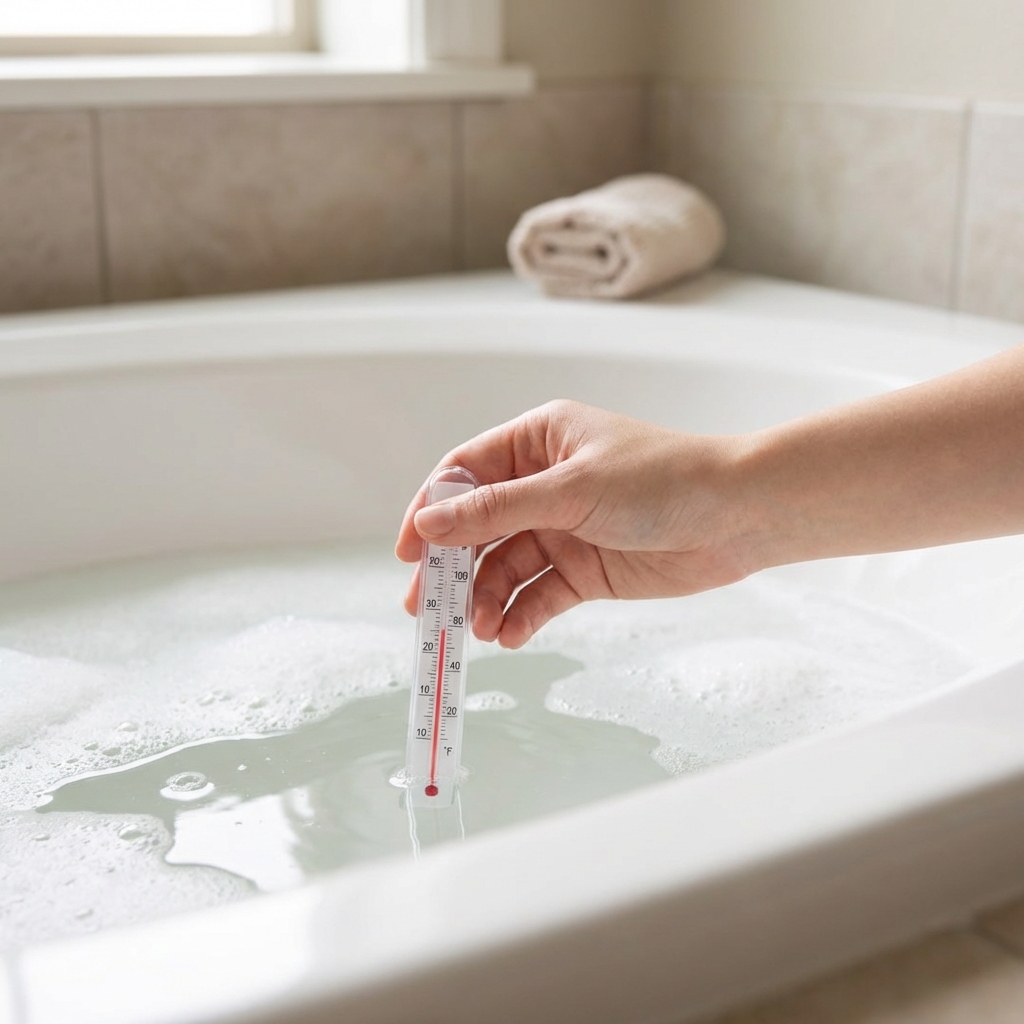
Aim for lukewarm, roughly 85 to 92°F (29 to 33°C). Around 90°F is a good target for many dragons, but always use a thermometer when you can and watch your dragon’s behavior. Avoid hot water. Reptiles can overheat quickly and may not show it until they are already stressed.
Water and tub hygiene
- No soaps, oils, or fragrances unless a reptile veterinarian specifically prescribes them.
- If your dragon poops in the bath, end the bath, discard the water, and rinse your dragon with clean lukewarm water.
- Afterward, wash the tub with hot soapy water, rinse very well, then disinfect (for example, a dilute bleach solution) and rinse again. Let it dry completely before storing.
- If you use a sink, make sure it is thoroughly rinsed and free of cleaner residue. A dedicated bin is usually simpler and safer.
Step-by-step: a safe 10-minute bath
Warm the room first. Drafty bathrooms can chill a dragon fast.
Set up secure footing. Place a clean washcloth or textured mat in the bottom so they do not slide.
Fill the tub with shallow, lukewarm water. Double-check depth and temperature.
Place your dragon in slowly. Support the body with both hands and let them adjust.
Supervise the entire time. Never leave them unattended, even “for a second.”
Soak for 5 to 10 minutes. For most healthy dragons, this is plenty.
Optional gentle rinse. Use a cup to pour water over the back and tail. Avoid pouring near the face or over the head.
Dry thoroughly. Pat dry, especially around the vent and in creases around the legs and tail base.
Return to a warm basking area. They need heat to thermoregulate after any water exposure.
If your bearded dragon drinks in the bath, that is common. Keep the water clean and shallow, and do not pour water anywhere near the nose or mouth. End the bath if they seem stressed, like frantic scratching to escape, rapid breathing, or a dark or black beard.
Shed help without hurting the skin
Warm water can soften retained shed, but the key is patience. Never peel shed that is not ready to release because you can tear healthy skin and create a doorway for infection.
Gentle options
- Longer soaks are not better. Stick to 10 to 15 minutes max for shed support.
- Soft toothbrush. With very light pressure, brush in the direction of the scales on areas with loose shed only.
- Check toes and tail tip. Retained rings here can tighten and reduce circulation.
If you notice toes, tail tip, or shed areas turning dark, swollen, or painful, contact an experienced reptile veterinarian promptly.
How often should you bathe?
Frequency depends on age, stool habits, and overall husbandry. For most dragons, baths are best viewed as as needed, not required on a strict schedule.
- Healthy adults: as needed for cleaning or mild shed support. Many do fine with occasional baths, such as every week or two, or less.
- Juveniles: 1 to 2 short baths weekly can be helpful if they tolerate it, but prioritize proper enclosure temps, UVB, and fresh greens for hydration.
- During heavy shedding: you can add an extra short soak, but avoid daily long baths.
Remember, bearded dragons absorb very little water through the skin compared to amphibians. Hydration is mainly supported through drinking, proper diet (moist greens and veggies), and correct enclosure conditions.
Common mistakes to avoid
- Water too deep leading to panic or aspiration risk.
- Water too warm causing overheating and stress.
- Slippery footing that makes them scramble and panic.
- Leaving the dragon alone, even in “shallow” water.
- Bathing too often which can increase stress and may irritate skin.
- Using soaps, oils, or fragrances unless specifically prescribed by a reptile veterinarian.
- Bathing a cold dragon and returning them to a cool enclosure.
- Assuming a bath fixes constipation while ignoring husbandry issues like low basking temps, dehydration, or parasites.
When to call a reptile vet
Please seek veterinary guidance if you see any of the following:
- Constipation lasting more than a few days, straining, a swollen belly, or lethargy plus not eating
- Repeated diarrhea or very foul, watery stools
- Wheezing, bubbles from the nose, coughing, or open-mouth breathing outside of basking
- Black beard with weakness, persistent hiding, or obvious pain
- Swollen joints, shaky movement, or signs of metabolic bone disease
- Retained shed causing swelling or darkened toes or tail tip
A quick bath can support comfort, but if something feels off, trust that instinct and get your dragon checked out.