A vet-assistant guide to cleaning your dog’s ears the safe way—what to use, what to avoid, step-by-step technique, how often to clean, and when to call y...
Article
•
Designer Mixes
Basset Hound Ear Care and Stubbornness

Shari Shidate
Designer Mixes contributor
Basset Hounds are pure charm: soulful eyes, a signature low-and-slow walk, and a nose that seems to have a mind of its own. As a veterinary assistant, I can tell you two things come up again and again with this breed: keeping those adorable ears healthy, and learning how to work with their stubborn streak instead of fighting it.
The good news is that both are very manageable with a simple routine and a little patience.
Quick note: This article is educational and not a substitute for a veterinary exam. If your dog has severe pain, significant swelling, bleeding, or any balance or eye movement changes, call your vet promptly.
Why Basset Hound ears need extra care
Basset Hounds have long, heavy, low-hanging ears with limited airflow. That can create a warm, moist environment where yeast and bacteria may thrive, especially if your dog swims, gets frequent baths, or has allergies. Add in their low-to-the-ground lifestyle and you also get more dirt, pollen, and debris near the ear opening.
Common ear issues in Bassets include:
- Yeast overgrowth (can have a musty or “corn chip” type odor, but odor alone is not diagnostic)
- Bacterial infections (may be more painful or have thicker discharge, but you cannot reliably tell yeast vs bacteria at home)
- Allergy-related inflammation (itching, recurring redness)
- Ear mites (more common in puppies or multi-pet households)
What healthy ears look like
A normal, healthy ear typically has:
- Light pink skin with minimal wax
- No strong odor
- No head shaking or repeated scratching
- No redness, swelling, or discharge
If you are not sure what “normal” looks like for your dog, snap a quick photo on a day their ears look good. It gives you an easy baseline to compare later.
A simple at-home ear care routine
You do not need to over-clean ears. Overdoing it can irritate the canal and make problems worse. For many Basset Hounds, a routine check a few times a week and a gentle clean as needed is the sweet spot.
Step 1: Do a quick sniff and look
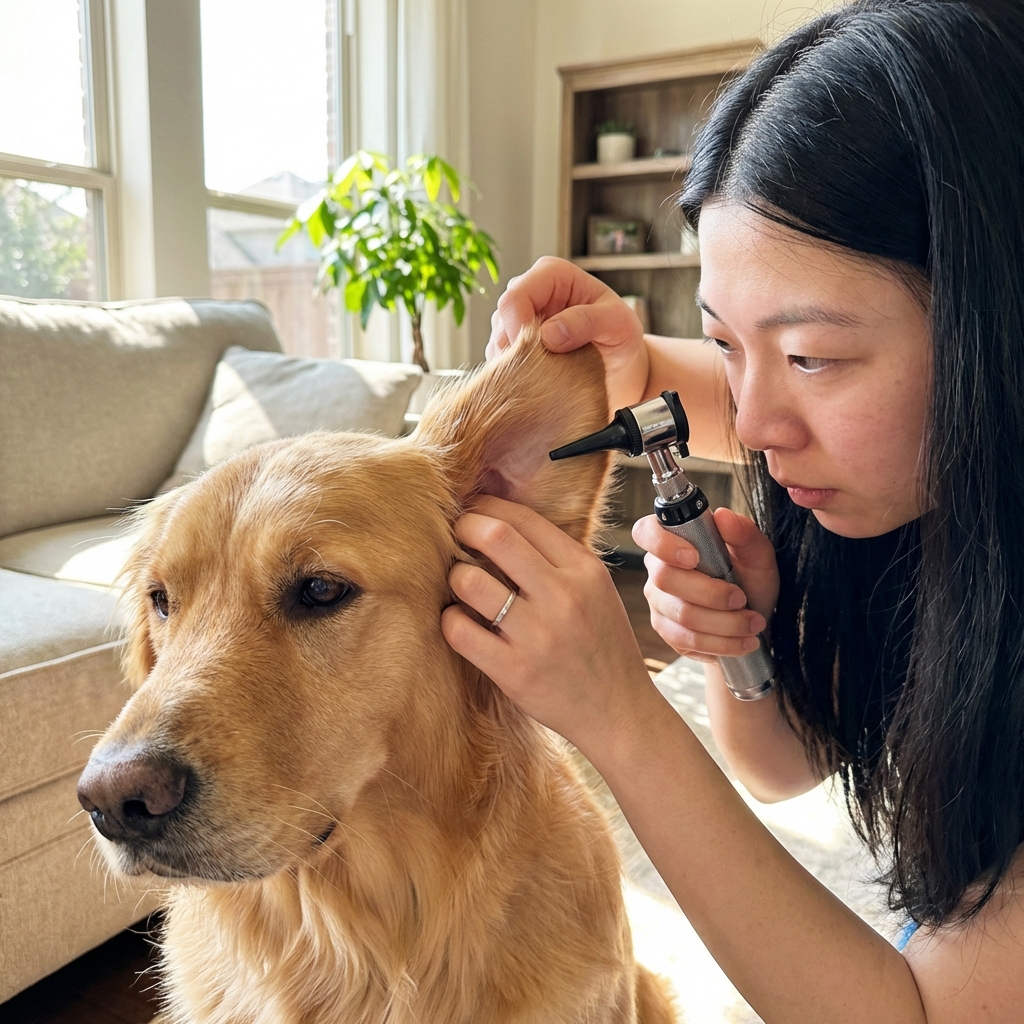
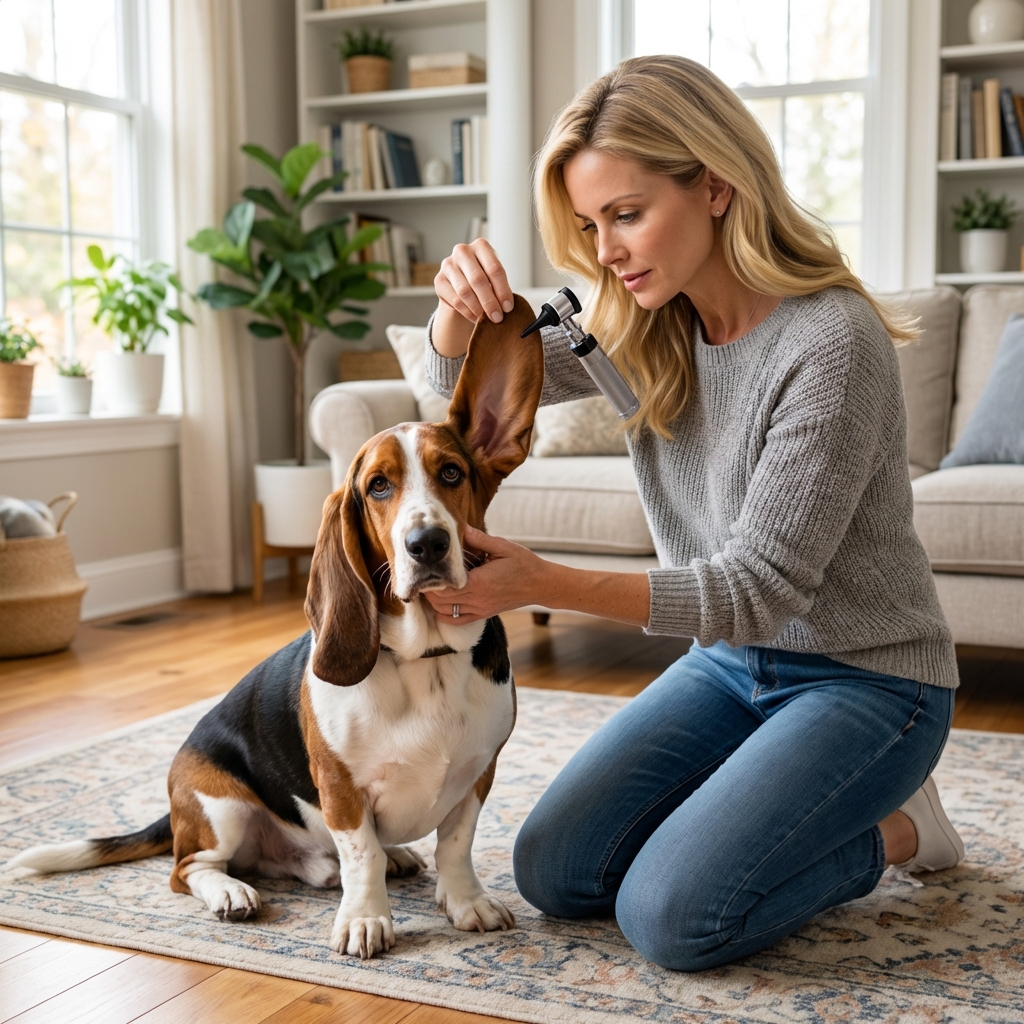
Lift the ear flap and look only at the ear opening and the visible part of the canal. Do not probe deeper. A mild waxy smell can be normal. A strong odor can signal trouble.
Step 2: Use the right cleaner
Choose a veterinary ear cleaner recommended by your vet, especially if your Basset has a history of infections. Avoid hydrogen peroxide, alcohol, and DIY mixes unless your veterinarian specifically guides you. These can sting and inflame the ear canal.
Step 3: Clean gently
- Apply a generous amount of cleaner into the canal opening as directed on the bottle.
- Massage the base of the ear for 20 to 30 seconds. You should hear a gentle “squish.”
- Let your dog shake their head.
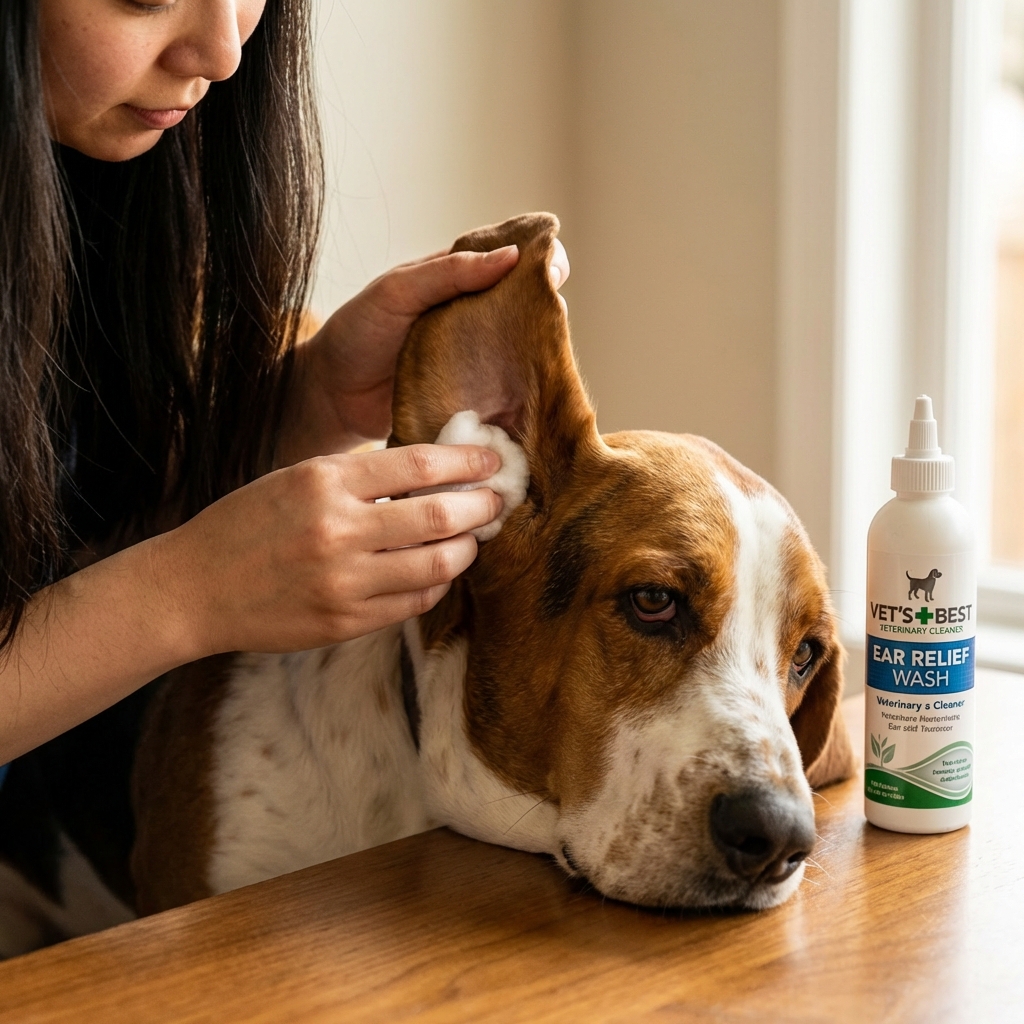
- Wipe the visible part of the canal and inner flap with cotton balls or gauze.
Skip cotton swabs. They can push debris deeper and risk injury.
What not to do
- Do not use cotton swabs inside the canal.
- Do not use essential oils, vinegar, or homemade mixes unless your vet tells you exactly what to use and how.
- Do not clean an ear that is extremely painful, ulcerated, or bleeding. Call your vet instead.
- Do not assume odor tells you the cause. Yeast and bacteria need different treatments.
How often to clean
It depends on the dog, their lifestyle, the type of cleaner, and any underlying conditions. Use this as general guidance, and follow your veterinarian’s plan if you have one.
- Lower-risk Bassets (no allergy history, no frequent swimming): many do well with cleaning every 1 to 2 weeks, plus quick checks in between.
- Higher-risk Bassets (allergies, past infections, swimmers): may need cleaning 1 to 3 times per week.
If you are seeing repeated ear problems, frequent cleaning alone usually is not the whole solution. Allergies, anatomy, and chronic inflammation often need a tailored plan with your veterinarian.
When to call your vet
Ear infections can become very painful, very quickly. Reach out to your vet if you notice:
- Strong odor that returns quickly after cleaning
- Brown, yellow, green, or bloody discharge
- Redness, swelling, or the ear feels hot
- Frequent head shaking or scratching
- Head tilt, loss of balance, or unusual eye movements
- Pain when you touch the ear
Also important: if your dog has had multiple infections, your vet may recommend an ear cytology. That is a quick microscope check of what is in the ear so treatment matches the cause, not just the symptoms. Evidence-based care matters here because yeast and bacteria require different medications.
For chronic or recurrent cases, your vet may also discuss an allergy workup, a culture in select cases, or other changes based on what they see in your dog’s ears.
Preventing ear problems
Keep ears dry
After baths or swimming, dry the ear flap and the visible canal opening. Some dogs benefit from a vet-approved drying ear rinse, but only use it if your veterinarian says it is appropriate for your dog.
Address allergies
If your Basset has recurring ear infections, allergies are a top suspect. These can be environmental, food-related, or both. Managing allergies can significantly reduce ear flare-ups.
Keep a healthy weight
Basset Hounds are prone to obesity, so keeping them lean supports overall wellness. It can also help dogs with skin and allergy issues, which can contribute to recurring ear flare-ups.
The “stubborn” personality, explained
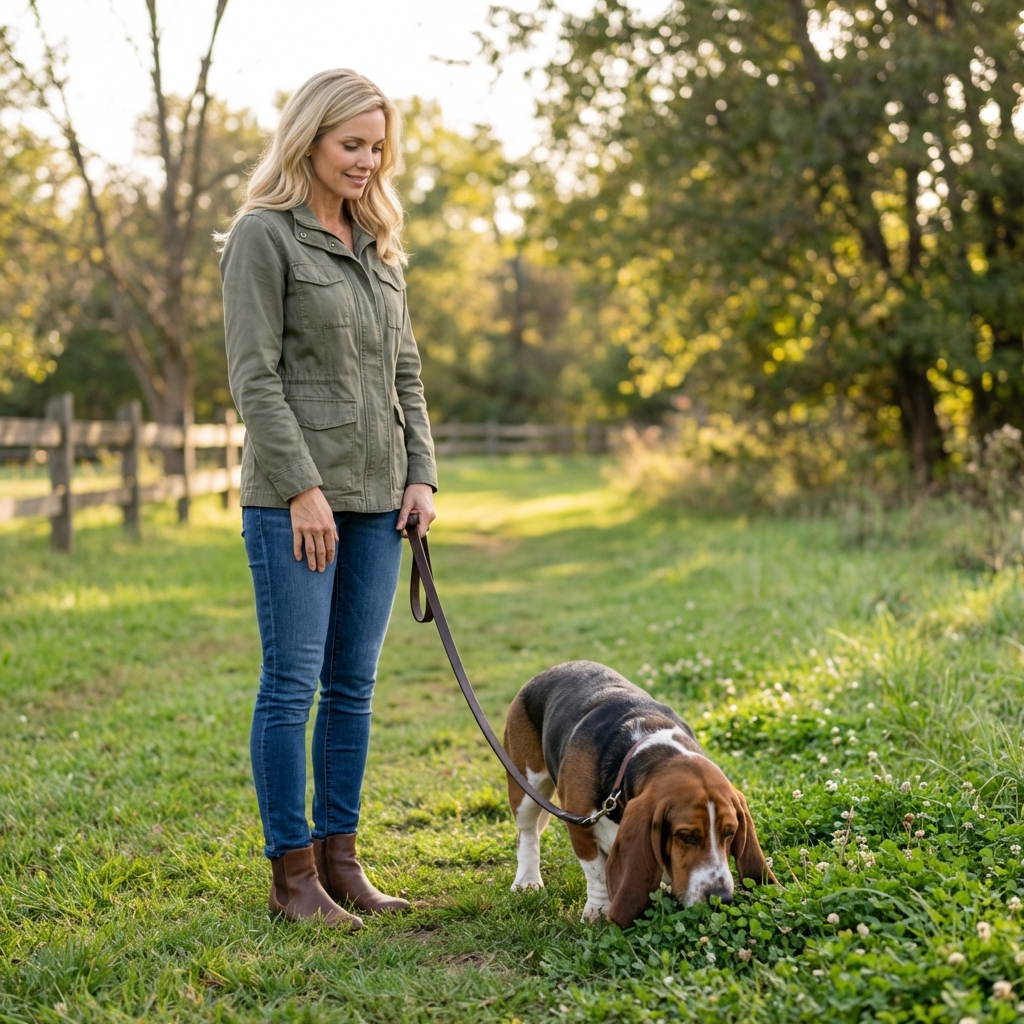
Bassets are often labeled stubborn, but I like to reframe it: they are independent problem-solvers with strong scent-drive. They were bred to follow a trail with focus and persistence. So if your Basset ignores you outside, it is not personal. Their nose is giving them a very convincing argument.
What works best is training that feels rewarding and consistent, not confrontational.
Training without power struggles
Use high-value rewards
Many Bassets will do almost anything for the right treat. Tiny soft treats, bits of cooked chicken, or a lick of dog-safe peanut butter can be very motivating. Keep portions small so you can reward frequently without overfeeding. If you use peanut butter, make sure it is xylitol-free (xylitol is toxic to dogs).
Keep sessions short
Think 3 to 6 minutes, a few times a day. End on a win. A bored Basset will quickly decide they have better things to do.
Be consistent with cues
If “come” sometimes means “fun and treat” and sometimes means “bath and nail trim,” your dog will start choosing when to listen. For scent hounds, recall training is a long game. Use a long line in safe areas and reward heavily for check-ins.
Make ear care part of training
Ear care goes smoother when it is taught like a trick, not forced like a wrestling match. Here is a simple approach:
- Touch the ear briefly, then treat.
- Lift the flap for one second, then treat.
- Hold the flap longer, treat.
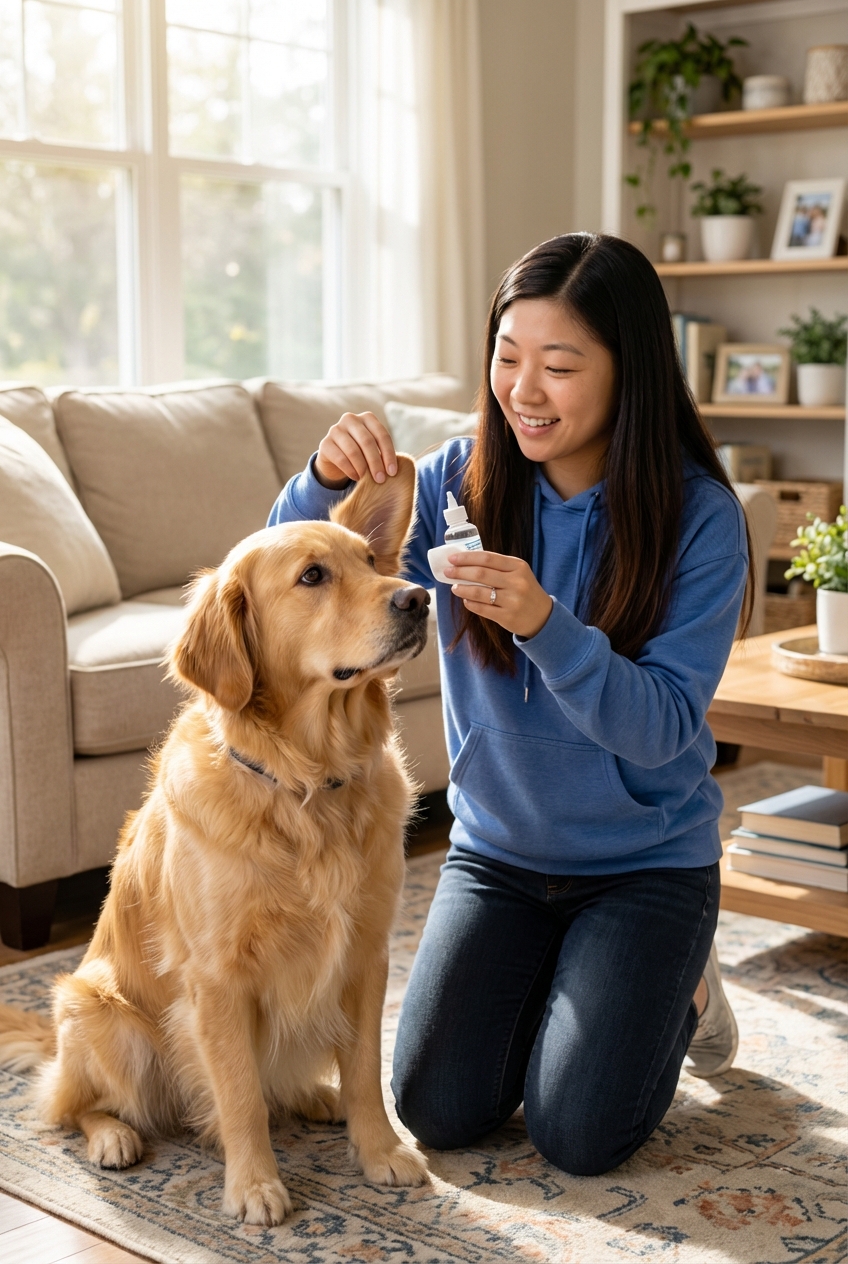
- Introduce the cleaner bottle near the ear, treat.
- Progress slowly to a full clean, with praise and a reward after.
If your dog is already sensitive or painful, stop and call your vet. You cannot train through pain.
A realistic weekly plan
If you want a simple rhythm to follow, try this:
- 2 to 3 times per week: quick ear check, sniff test, wipe visible wax only if needed
- Every 1 to 2 weeks: full clean with a vet-approved ear cleaner if your dog tends to build wax
- Daily: 3 to 6 minutes of positive training, including a few seconds of calm handling (ears, paws, collar)
Consistency is what changes everything with a Basset. Not intensity.
Final encouragement
Basset Hounds are wonderfully devoted, but they thrive with owners who respect their pace and their instincts. When you pair steady ear care with positive, reward-based training, you get a healthier dog and a calmer household.
If your Basset is having repeated ear infections or you are seeing pain, odor, or discharge, bring your vet into the loop sooner rather than later. Ear problems are far easier to treat early than after they become chronic.