Some snakes can fast for weeks or even months, but it isn’t always safe. Learn what affects appetite, typical timelines, husbandry fixes, and vet red flags.
Article
•
Designer Mixes
Ball Python Care

Shari Shidate
Designer Mixes contributor
Ball pythons are one of the most popular pet snakes for a reason. They are typically calm, stay a manageable size, and can thrive for decades with steady, evidence-based husbandry. The key is simple but not “minimal”: ball pythons do best when we consistently meet their needs for heat, humidity, security, and appropriate feeding.
In this guide, I will walk you through comprehensive ball python care in a way that is easy to follow and realistic to maintain, even if you are new to reptiles.
Quick facts
- Scientific name: Python regius
- Adult size: commonly 3 to 5 feet (females often larger than males)
- Lifespan: often 20 to 30 years, sometimes longer with excellent care
- Temperament: generally shy and security-driven, may ball up when stressed
- Best success comes from: correct temperatures, stable humidity, and multiple snug hides
Choosing a healthy ball python
Before you set your heart on a specific morph, prioritize overall health. A healthy ball python should look bright, hydrated, and well-muscled.
What to look for
- Clear eyes (blue or cloudy eyes can be normal during shed)
- Clean vent with no crusting or swelling
- No wheezing, bubbles, or open-mouth breathing
- Body condition that is rounded, not triangular, with no sharp spine
- Skin free of retained shed patches and obvious mites
- Steady tongue flicking when exploring
If possible, ask for feeding history (prey type and size, frequency, and whether it takes frozen thawed reliably). A snake that is already eating frozen thawed prey makes life much easier and safer.
Enclosure setup that actually works
Ball pythons are not “low maintenance” in the sense that they can tolerate poor setups. They are, however, very consistent animals. If you provide a stable environment, they usually do very well.
Enclosure size
- Hatchlings and juveniles: smaller enclosures can work temporarily, as long as you still provide a proper heat gradient and multiple hides.
- Adults: many keepers do well with an enclosure around 4 ft x 2 ft x 2 ft. Bigger can be great if it is properly furnished with cover and hides.
More space is not the problem. The problem is open space without security. Ball pythons want to feel hidden while still being able to thermoregulate.
Security and enrichment
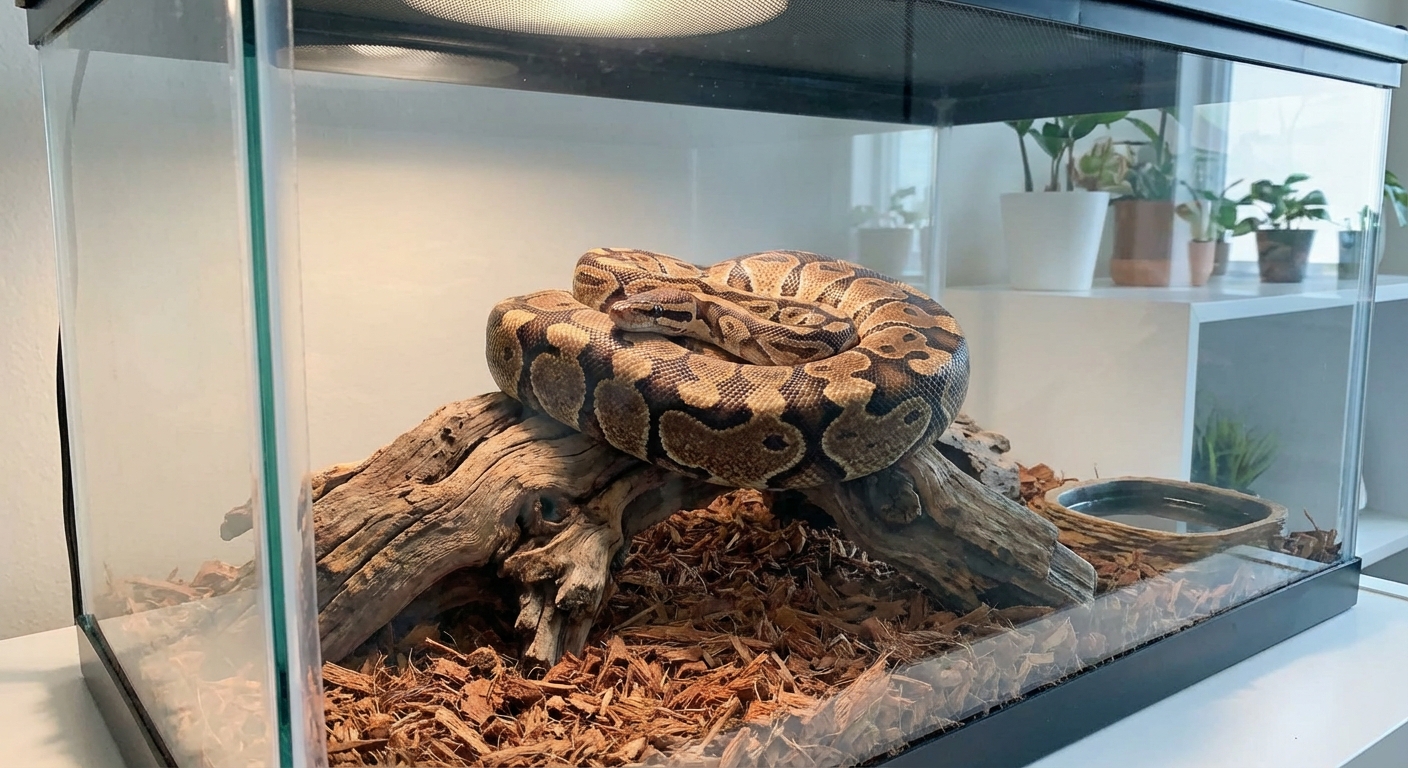
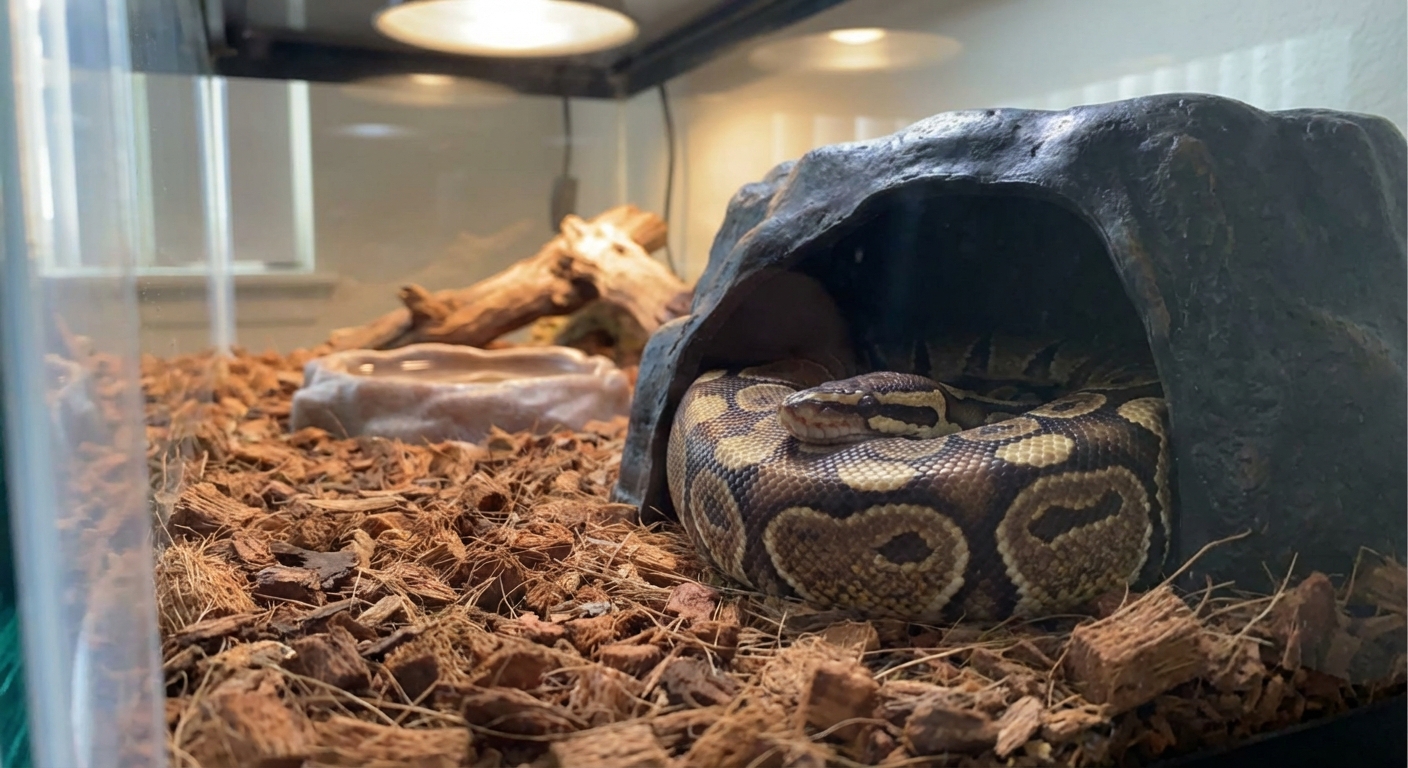
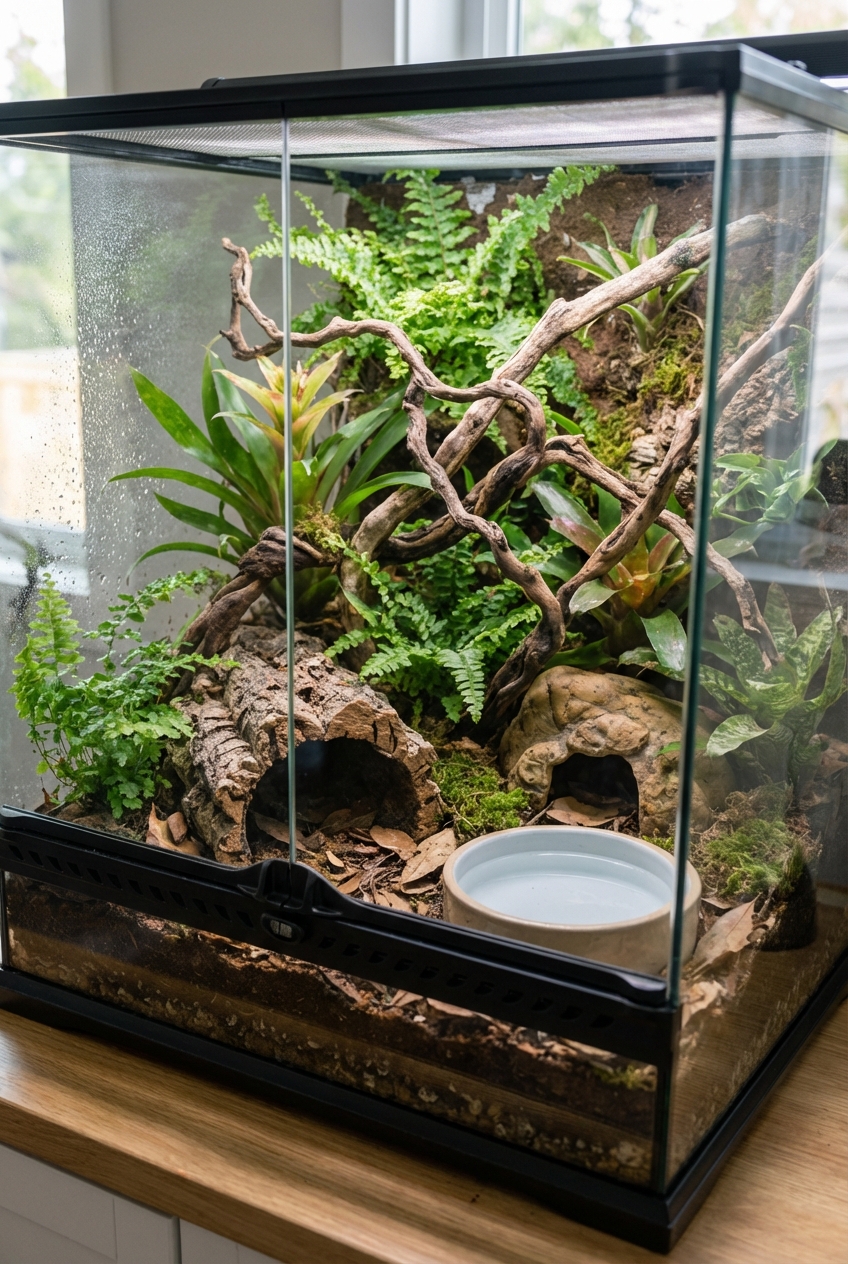
- Two snug hides: one on the warm side and one on the cool side
- Clutter: branches, artificial plants, cork bark, leaf litter
- A water bowl heavy enough not to tip
Temperature and heating
Ball pythons rely on external heat to digest food and maintain normal body function. In practice, they need a gradient: a warm area and a cooler area, so they can choose what they need at any moment.
Target temperatures
- Warm side (ambient air): about 82 to 86°F
- Hot spot (surface temp at the heat source): about 88 to 92°F
- Cool side (ambient air): about 76 to 82°F
- Night drop: a small drop is fine, but avoid letting the enclosure get too cool for long periods
Best practices
- Use a thermostat on any heat source. This is non-negotiable for safety.
- Measure correctly with reliable digital probes on both warm and cool sides, and use an infrared temp gun to check hot spot surface temps.
- Avoid hot rocks. They can cause severe burns.
Many setups use overhead heat (like a radiant heat panel or ceramic heat emitter) or a heat mat, depending on enclosure type. The “best” option is the one you can control precisely with a thermostat while maintaining stable humidity.
Note on heat mats: Heat mats can create a warm surface area, but in larger enclosures (especially a 4x2x2), they are rarely enough to keep warm side ambient air temperatures where they should be on their own. For adult-sized enclosures, most keepers have better results using overhead heat (or a radiant heat panel) to build and maintain the correct ambient warmth.
Humidity and shedding support
Humidity is one of the most common trouble spots in ball python care, and it matters a lot. Inconsistent humidity is a major contributor to incomplete sheds and can increase respiratory risk.
Target humidity
- General range: aim for 60 to 80% (with 60% as a practical minimum for most setups)
- During shed: many snakes benefit from the higher end of that range
How to maintain healthy humidity
- Use a quality hygrometer (digital is usually more accurate than analog dials).
- Choose humidity-friendly substrate that can hold moisture without becoming swampy.
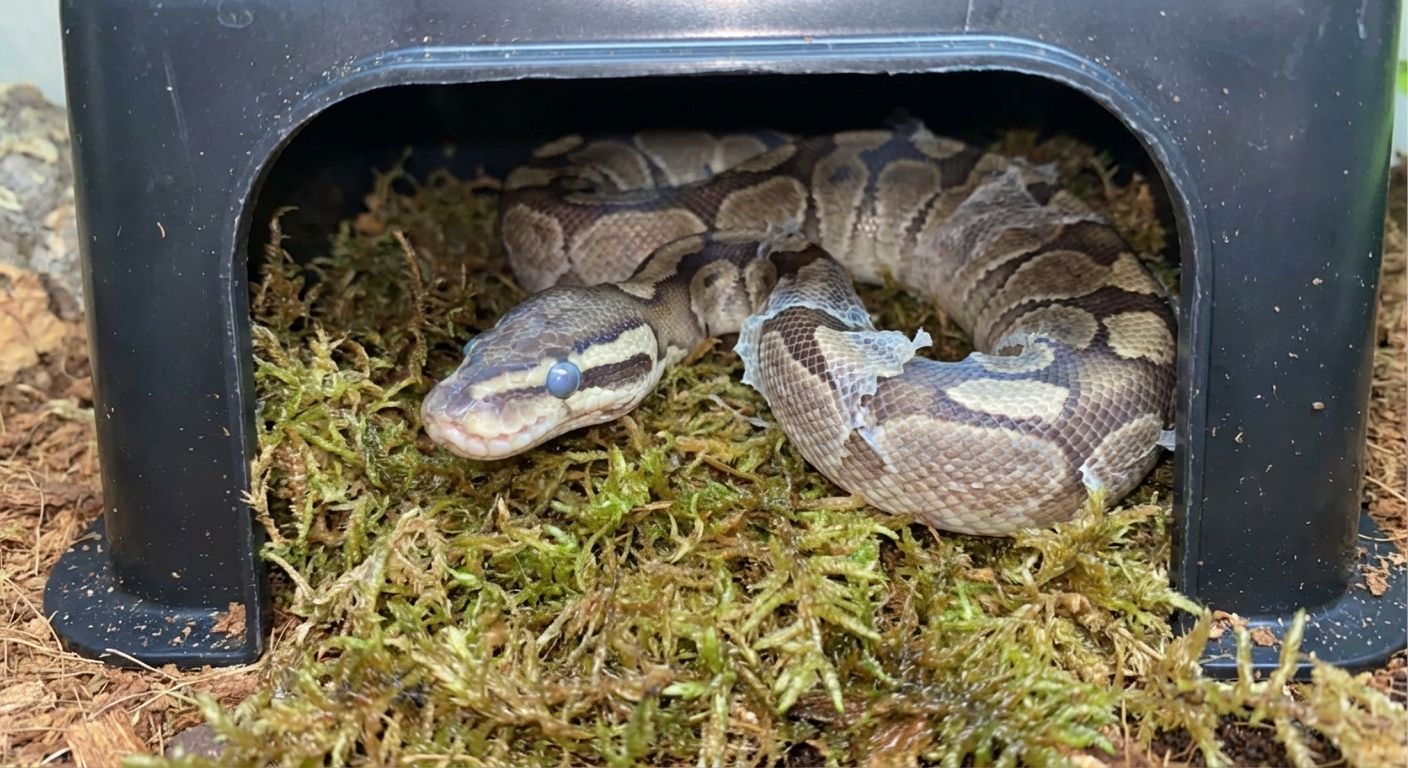
- Provide a humid hide if your snake struggles with shed, using damp sphagnum moss or similar.
- Ventilation matters: too much ventilation can dry the enclosure fast, too little can trap stale air.
Important: Wet, dirty substrate can contribute to skin issues. The goal is stable humidity, not constantly soaked bedding.
Substrate options
Substrate affects humidity, odor control, and how easy your enclosure is to keep clean. There is no one perfect option, but there are clear pros and cons.
Common choices
- Coconut husk or coconut fiber blends: good humidity retention, natural look
- Cypress mulch: commonly used for humidity support
- Paper towels or butcher paper: very easy to monitor health and cleanliness, great for quarantine
For new arrivals and any snake with health concerns, I strongly prefer a simple, easy-to-monitor substrate during quarantine. Once you are confident your snake is stable, you can transition to a more naturalistic bedding if you want.
Lighting and day-night rhythm
Ball pythons are crepuscular to nocturnal, but they still benefit from a consistent day-night cycle. You do not need intense lighting, but you do want predictable timing.
- Photoperiod: aim for a regular light schedule, roughly 10 to 12 hours of light in many households
- UVB: some keepers provide low-level UVB. While ball pythons can thrive without it when diet and husbandry are correct, UVB may support natural behaviors and overall wellness in some setups.
If you use any bulb that produces heat, pair it with a thermostat and keep an eye on enclosure temperatures across seasons.
Feeding: size, schedule, and safety
Feeding is where many well-meaning owners accidentally cause problems. The goal is steady body condition over time, not “as much as they will take.”
Prey type
- Frozen thawed rodents are widely recommended for safety and convenience.
Prey size
A common guideline is choosing prey that leaves only a gentle, temporary “bump,” not an extreme stretch. If you are unsure, ask an experienced reptile veterinarian or reputable breeder for sizing help based on your snake’s weight and age.
Feeding frequency (general)
- Young snakes: often every 5 to 7 days
- Older juveniles: often every 7 to 10 days
- Adults: often every 10 to 21 days depending on body condition, prey size, and activity
Ball pythons are known for occasional food refusals. That does not automatically mean something is wrong, but it is a signal to recheck your husbandry and stress level.
After feeding
- Do not handle for at least 24 to 48 hours after a meal.
- Confirm warm side temps so your snake can digest properly.
Handling and building trust
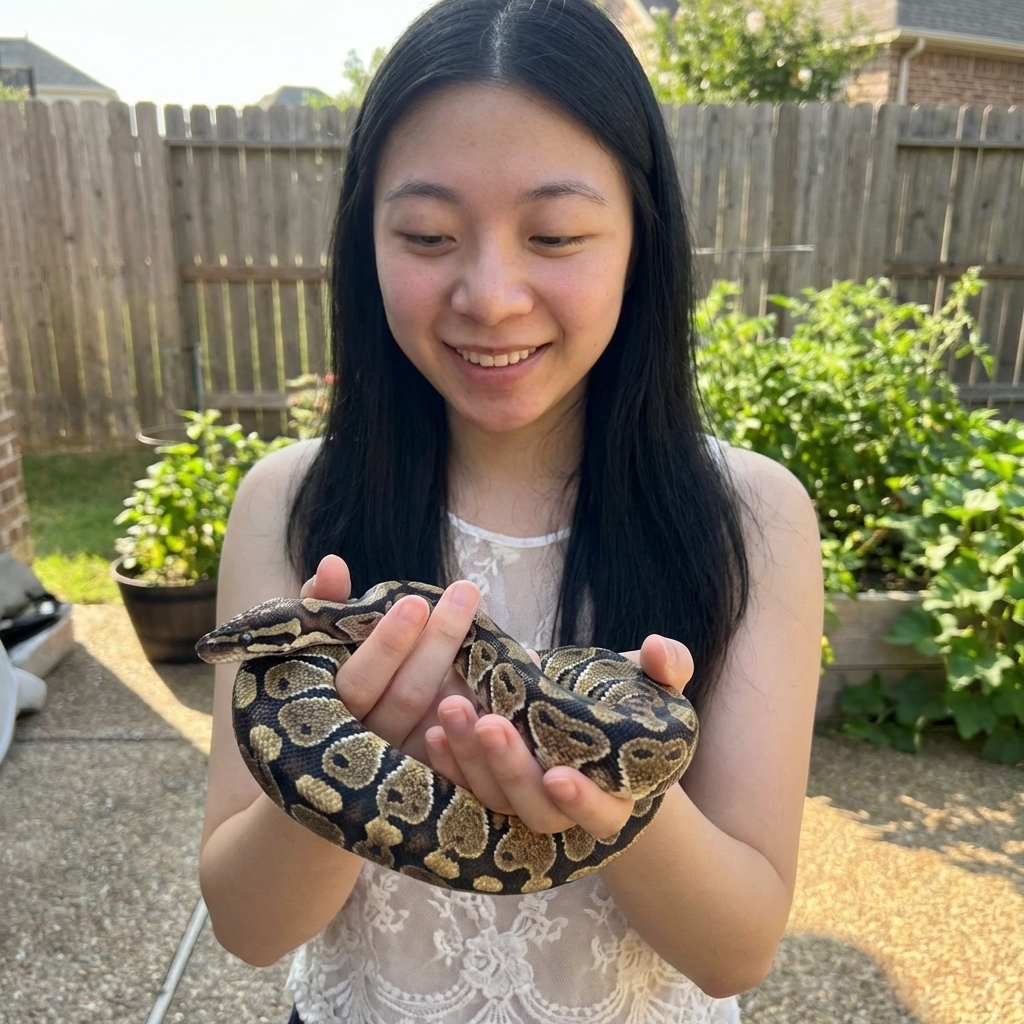
Ball pythons usually do best with calm, predictable handling. Think of handling as a skill you build together, not something you force.
Tips that reduce stress
- Let new snakes settle for at least a week or two before frequent handling, and ideally until they are feeding reliably.
- Short sessions are better than long ones, especially early on.
- Support the body and avoid restraining the head.
- Watch for stress: tight balling, rapid breathing, repeated escape attempts.
If your snake is in shed, handling can be more stressful because vision is reduced. It is often kinder to give them privacy during that time.
Cleaning and routine maintenance
Cleanliness prevents many common issues, but you also want to avoid over-scrubbing the enclosure daily, which can create constant disruption.
Simple routine
- Daily: check temperatures and humidity, refresh water, spot clean waste
- Weekly: wipe obvious surfaces as needed, inspect hides and clutter
- Monthly or as needed: deeper clean and partial substrate replacement depending on your setup
Use reptile-safe disinfectants and rinse thoroughly if required. Always let the enclosure dry and re-stabilize temperature and humidity before returning your snake.
Common health concerns to know
As a veterinary assistant, I always encourage owners to learn what “normal” looks like for their animal. That way, you can catch subtle changes early.
Watch for these red flags
- Respiratory signs: wheezing, clicking, open-mouth breathing, bubbles around the mouth or nose
- Mites: tiny moving dots, frequent soaking, irritation around eyes and chin
- Stuck shed: retained eye caps, patches of old shed, tight rings near the tail tip
- Mouth issues: swelling, excess saliva, refusal to eat paired with visible oral irritation
- Unexplained weight loss or sudden body condition changes
If you see these signs, schedule a visit with a reptile-experienced veterinarian. Many problems are very treatable when addressed early.
Husbandry is health care for reptiles. When something seems “off,” the first step is usually to verify temperatures, humidity, and stress level, then get veterinary guidance if symptoms persist.
Quarantine for new snakes
If you already have reptiles at home, quarantine is one of the most protective things you can do.
- Keep new arrivals in a separate room when possible.
- Use simple substrates like paper towels so you can monitor stool, mites, and shed quality.
- Use separate tools for feeding and cleaning.
- Wash hands between animals.
A typical quarantine period is often several weeks to a few months, depending on your household and risk tolerance. Your reptile vet can advise based on your situation.
Ball python shopping list
If you want a calm start, focus on these essentials first. Fancy decor can come later.
- Secure enclosure with locking lid or doors
- 2 snug hides (warm side and cool side)
- Thermostat for your heat source
- Reliable digital thermometers (warm and cool side)
- Reliable digital hygrometer
- Appropriate heat source (matched to enclosure type)
- Water bowl
- Substrate (and a quarantine option like paper towels)
- Clutter for cover (plants, cork, branches)
- Kitchen scale for tracking weight
Putting it all together
Comprehensive ball python care is not about perfection. It is about consistency. When your snake has a stable heat gradient, healthy humidity, snug hides, and a sensible feeding routine, you will usually see a calmer animal with better sheds, better digestion, and fewer health scares.
If you make just one upgrade today, let it be this: verify temperatures and humidity with accurate tools. Most “mystery issues” improve when the environment is truly dialed in.