Border Collies thrive on more than long runs. Learn ideal daily exercise ranges, enrichment ideas, sniff walks, recovery, and sample routines to prevent rest...
Article
•
Designer Mixes
Australian Cattle Dog (Blue Heeler) Energy and Training Needs

Shari Shidate
Designer Mixes contributor
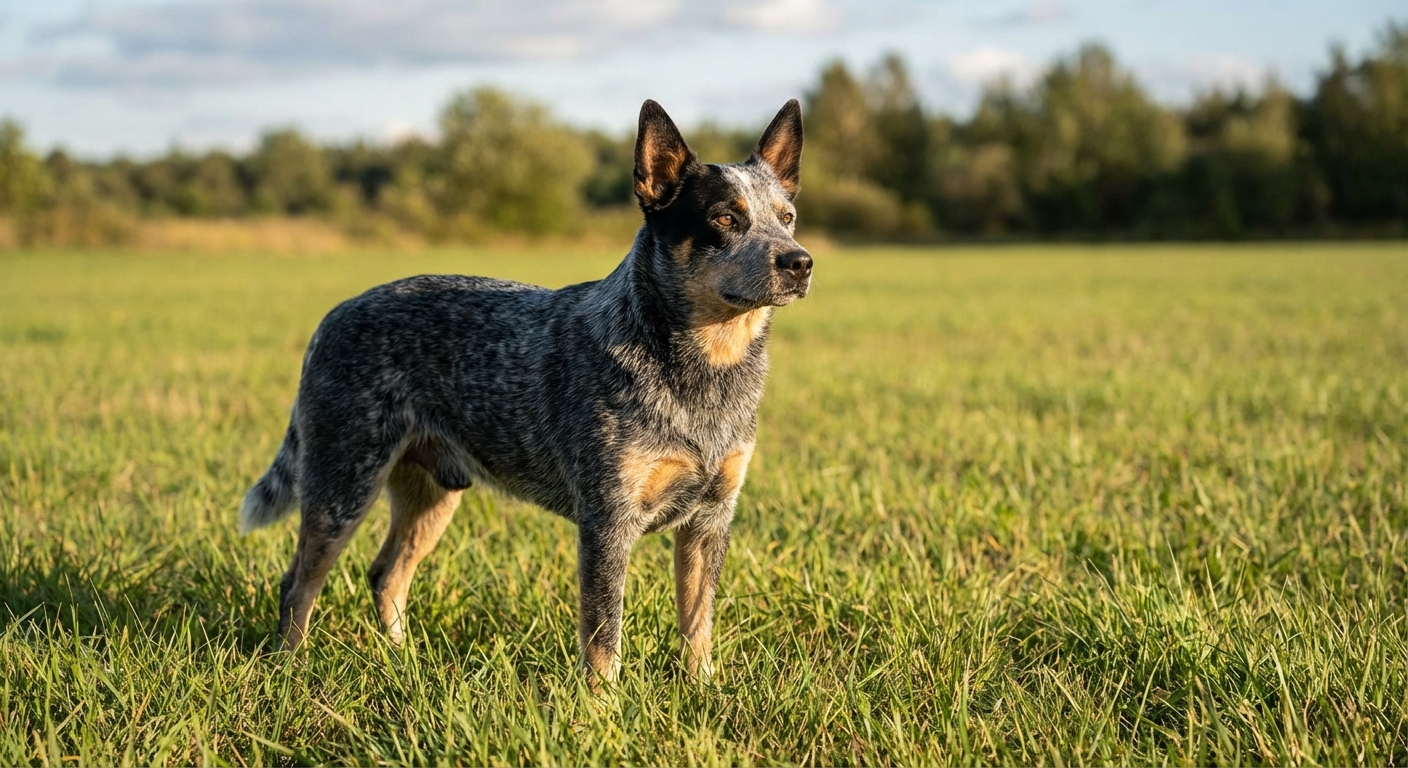
The Australian Cattle Dog, often called the Blue Heeler (or Red Heeler), is one of those breeds that makes people say, “Wow, this dog is smart.” And they are. But as a veterinary assistant, I can tell you the bigger truth is this: Heelers are not just smart. They are driven. Their energy is purpose-built for working livestock, thinking on the move, and making fast decisions.
If you bring that kind of dog into a home without a plan for exercise, mental work, and consistent training, you are likely to see the same pattern we hear about in clinics all the time: nipping, herding kids, shredding pillows, running fence lines, barking, and what owners call “stubbornness.” Usually it is not stubbornness. It is an under-employed athlete with a busy brain.
How much energy does a Blue Heeler have?
In plain language, a healthy Australian Cattle Dog typically has very high daily activity needs. They were developed in Australia for droving cattle over long distances, and that endurance and intensity does not magically switch off because they now live in a suburb.
What “high energy” looks like
- They ramp up fast. A short walk may not take the edge off.
- They stay “on” longer. Many Heelers do best with multiple activity blocks, not one big outing.
- They self-assign jobs. If you do not give them appropriate work, they will invent it.
- They are motion-sensitive. Running kids, bikes, squirrels, and doorbells can light them up quickly.
Energy level also varies with age and genetics. Puppies are often chaotic and bitey. Adolescents tend to be the most challenging. Adults are often wonderfully steady when their needs are met. Seniors may still want daily work, just in a gentler format.
How much is enough?
Most Blue Heelers need daily physical activity and daily mental work, but there is no single number that fits every dog. Age, health, weather, and your dog’s temperament all matter.
- Look for a “good tired.” After activity, your dog should be able to eat, drink, and settle. If they pace, mouth, bark, or seem frantic, they may be over-aroused, not under-exercised.
- Do not build an endurance athlete by accident. If the only answer is “more miles,” many Heelers simply get fitter and harder to tire. Mixing in sniffing, training, and skill work usually helps more than adding distance.
- Adjust for heat and humidity. In hot weather, shift to early morning or later evening walks, add indoor brain games, and watch for overheating.
Exercise: what helps
For a Blue Heeler, exercise is important, but it is not the whole story. Some dogs can run for miles and still come home ready to remodel your living room. That is why I like to think in terms of three buckets: physical exercise, mental exercise, and calm skills.
Physical exercise ideas
- Brisk walks with training breaks (practice sits, stays, check-ins at corners)
- Structured fetch (short sessions with rules, not endless throwing)
- Hiking with sniff time built in
- Canicross or jogging for adult dogs with vet approval
- Flirt pole play in short intervals, ending before your dog is over-aroused
Practical vet note: Many dogs do best with a mix of aerobic activity and enrichment. Also, repetitive high-impact exercise in young dogs may increase risk of joint strain because growth plates are still developing. Ask your veterinarian what intensity is appropriate for your dog’s age, size, and body condition.
Mental exercise (the secret sauce)
- Food puzzles and slow feeders
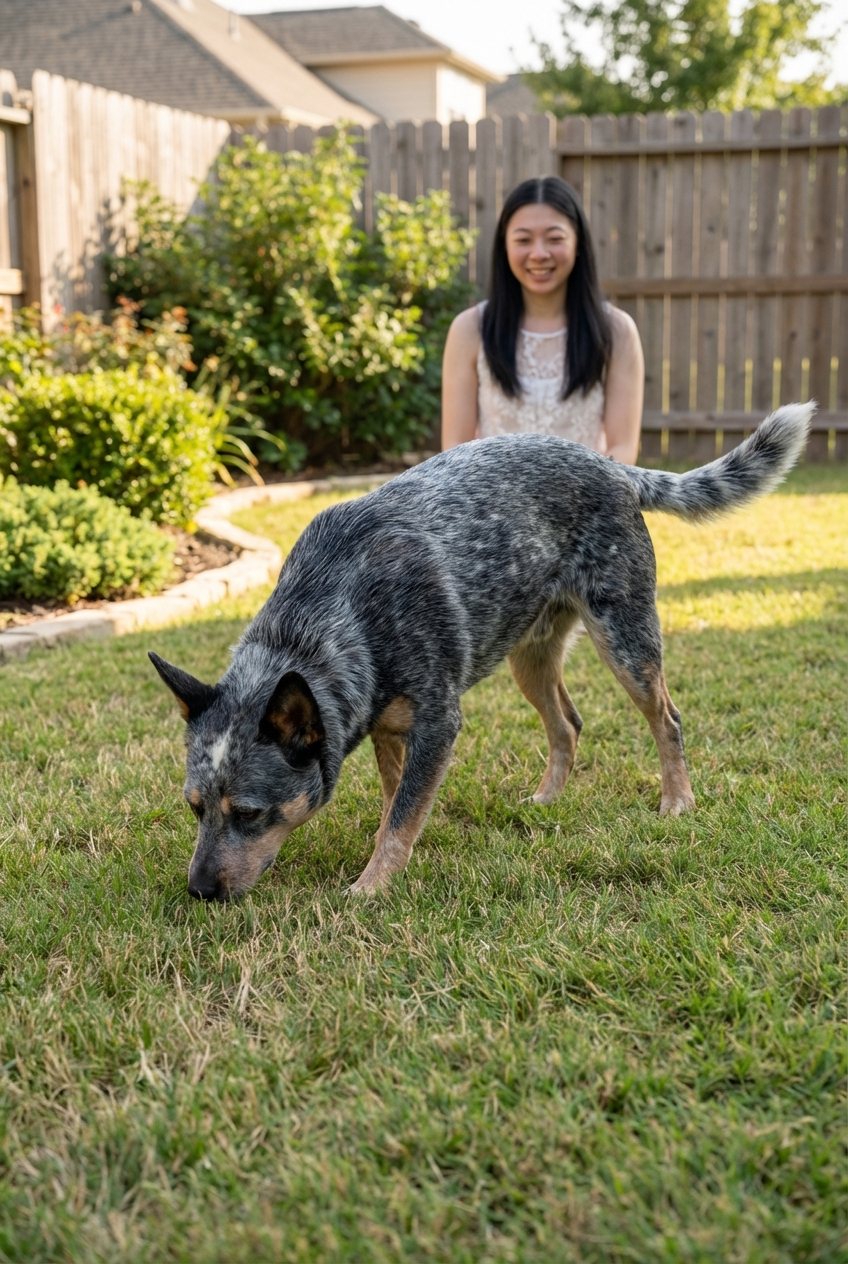
- Scatter feeding in grass for sniffing and decompression
- Short training sessions (5 minutes, several times a day)
- Scent games like “find it” with treats or a favorite toy
- Beginner nose work classes or at-home hide-and-seek
Training: structure matters
Australian Cattle Dogs are learners. They watch patterns. They notice tiny changes. That is wonderful for training, and it also means they learn the things you did not mean to teach. For example, “If I bark at the window, my person runs over.” Or “If I nip the pant leg, the game starts.”
Best training approach
A Heeler typically responds best to positive reinforcement, clear boundaries, and consistency. They usually do not do well with harsh corrections. In many cases, punishment can increase reactivity or avoidance, especially in a sensitive, high-drive dog.
- Reward what you want (calm greetings, loose-leash walking, quiet on a mat).
- Prevent rehearsal of unwanted behavior (management is training’s best friend).
- Keep sessions short and end on success.
- Practice in low-distraction areas before expecting good behavior around squirrels and skateboards.
Core skills to teach early
- Recall (come when called) using high-value rewards
- Place or mat training for an “off switch” inside the home
- Leave it for impulse control
- Drop it to prevent resource issues and keep play safe
- Loose-leash walking so exercise is enjoyable for both of you
Common challenges
Nipping and herding
Heelers were bred to control livestock, and that often includes nipping at heels. In a home, that can show up as ankle nips, chasing, or body-checking (bumping with the shoulder or chest), especially with children or fast movement.
- Redirect to appropriate outlets (tug with rules, structured fetch, training games).
- Teach incompatible behaviors like “go to mat” when kids are running.
- Manage the environment with baby gates and leashes during high-excitement moments.
Kids and safety
If you have young kids, plan for management from day one. Herding dogs can escalate quickly when everyone is running, squealing, and moving fast.
- Supervise all interactions and separate when you cannot.
- Reward calm around kids and practice settle skills during family activity.
- Get help early from a qualified, reward-based trainer if you see chasing, nipping, or stiff body language.
Reactivity and protectiveness
Many Australian Cattle Dogs are naturally alert and can be suspicious of strangers. Early, thoughtful socialization helps, but it should be done gently and at your dog’s pace.
Socialization is controlled, positive exposure, not forced petting. For puppies, the early social window matters, so aim for safe, positive experiences early (with your vet’s guidance on disease risk and vaccine timing).
- Reward calm observation instead of forcing greetings.
- Use distance as a tool. Farther away is often where learning happens.
- Consider a qualified trainer who uses reward-based methods, especially if you see lunging or snapping.
Separation-related behaviors
This breed bonds tightly. Without gradual alone-time training, some Heelers struggle when left without a job or without their person.
- Practice short departures and return before your dog panics.
- Provide enrichment like frozen food toys.
- Build a routine that includes calm time, not constant activity.
A daily routine
Every household is different, but most Heelers thrive with predictable blocks of activity and rest. Here is a simple framework you can adapt:
- Morning: 20 to 45 minutes of brisk walking plus 5 minutes of obedience practice
- Midday: food puzzle, sniff game in the yard, or a short training session
- Evening: a structured play session (tug or fetch with rules) plus a calm decompression walk
- Anytime: mat work while you cook, work, or watch TV to practice settling
That last piece, learning to settle, is what keeps “high energy” from turning into “always wired.”
Rest and calm skills
High-drive dogs still need plenty of downtime, and many of them need to be taught how to rest. If your Heeler seems unable to relax, it is worth adding more calm practice, not just more motion.
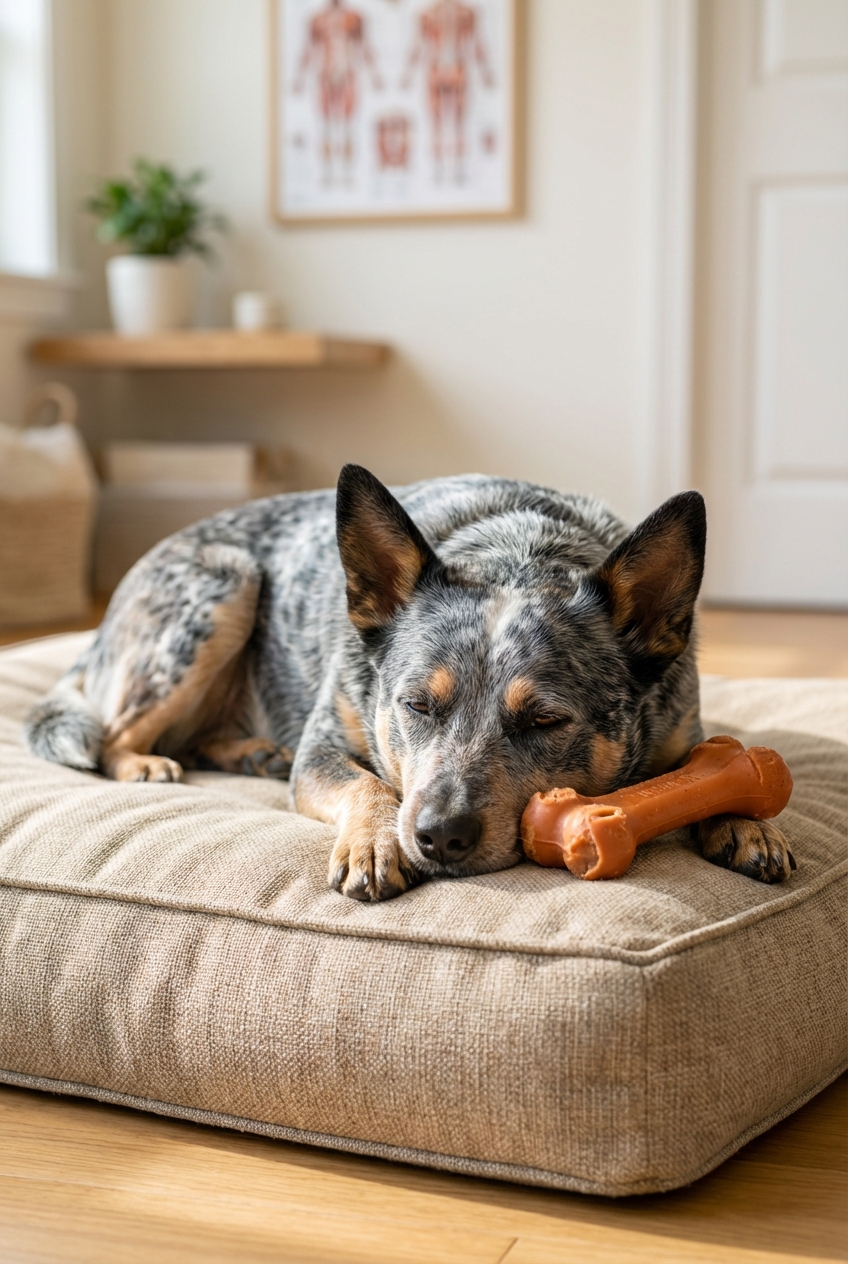
- Practice doing nothing in short, rewarded reps (mat training, calm chewing).
- Watch for overstimulation like frantic zooming, grabby mouthiness, inability to take treats, or trouble settling after exercise.
- Protect sleep by giving your dog a quiet space away from constant household traffic.
Best activities
If you want to see a Blue Heeler light up in the best way, try giving them a sport or job. Many do wonderfully in:
- Agility
- Rally obedience
- Nose work
- Disc dog
- Herding trials (where available)
- Trick training and advanced obedience
These activities do more than burn calories. They provide problem-solving, teamwork, and confidence building.
Health notes
When a dog’s behavior changes, I always encourage owners to think medically as well as behaviorally. If your Heeler is suddenly restless, irritable, or “not listening,” it can be worth a vet check.
- Pain (especially orthopedic discomfort) can reduce tolerance and increase reactivity.
- Skin allergies can cause constant discomfort and poor sleep.
- Under-stimulation can look like anxiety, but so can true anxiety. Getting the right diagnosis matters.
Australian Cattle Dogs can also be predisposed to certain inherited issues, including hip dysplasia, elbow dysplasia, progressive retinal atrophy, hereditary cataracts in some lines, and congenital deafness. Responsible breeders health test, and routine veterinary care helps you catch problems early.
Is a Blue Heeler right for you?
Australian Cattle Dogs can be incredible companions for the right home. They tend to do best with people who enjoy training, like routine, and are willing to provide daily physical and mental work.
If you are looking for a dog who will happily lounge all weekend with a couple of short potty breaks, this may not be your breed. But if you want a loyal partner who learns quickly and loves having a job, a Blue Heeler can be a great match.
When you meet a Blue Heeler’s needs, you get the best version of the breed: focused, funny, devoted, and ready for the next adventure.
Image note: Ensure final publication images include proper file sources (src), captions or credits if required, and accessibility-friendly alt text.