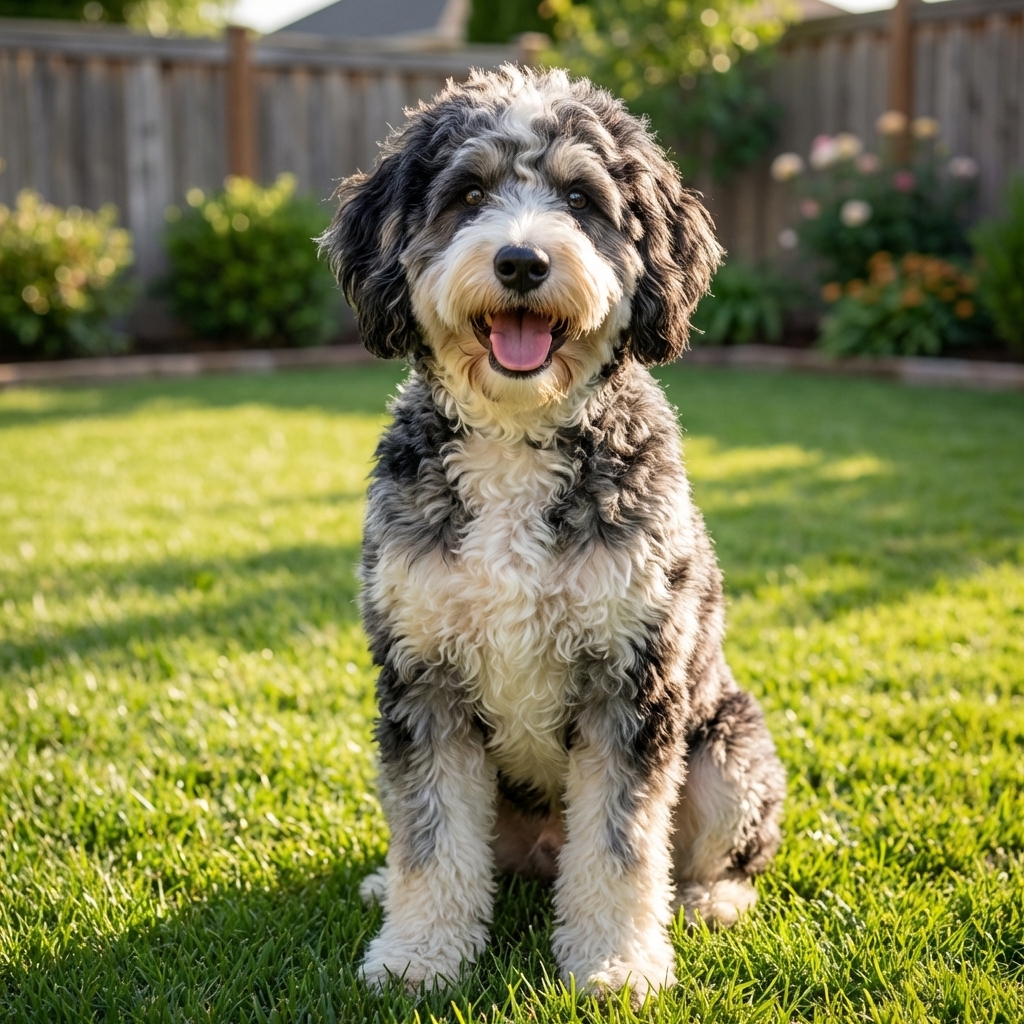
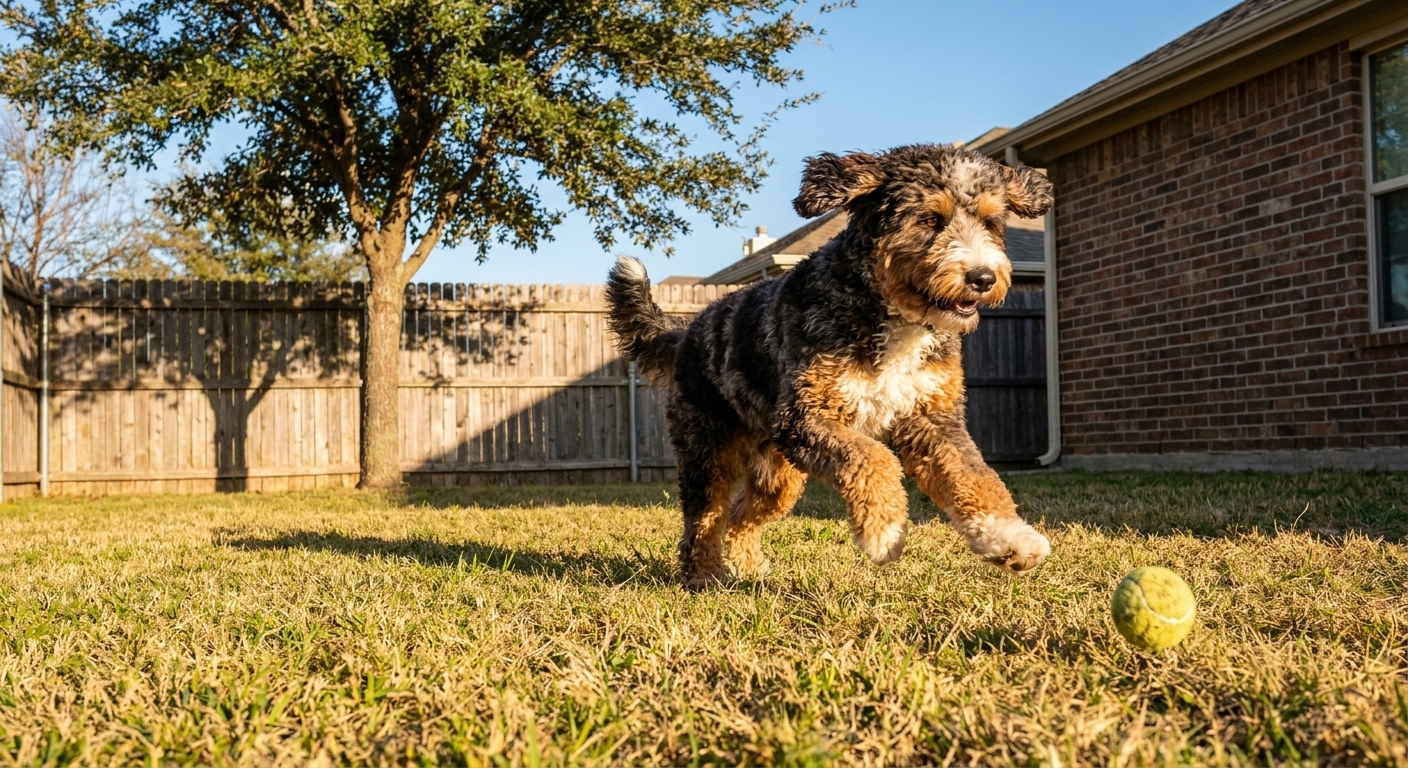
If you are torn between an Aussiedoodle and a Bernedoodle, you are not alone. These are two of the most popular Poodle mixes because they can be smart, affectionate, and family-friendly. But they tend to fit very different homes day to day. The biggest differences usually come down to energy level, adult size, coat care, and how much “busy brain” you are signing up for.
Below is a practical, real-life comparison to help you choose the best match for your family, your schedule, and your tolerance for grooming. (Note: doodles vary a lot by generation, size, and individual dog, so treat the ranges here as starting points, not promises.)
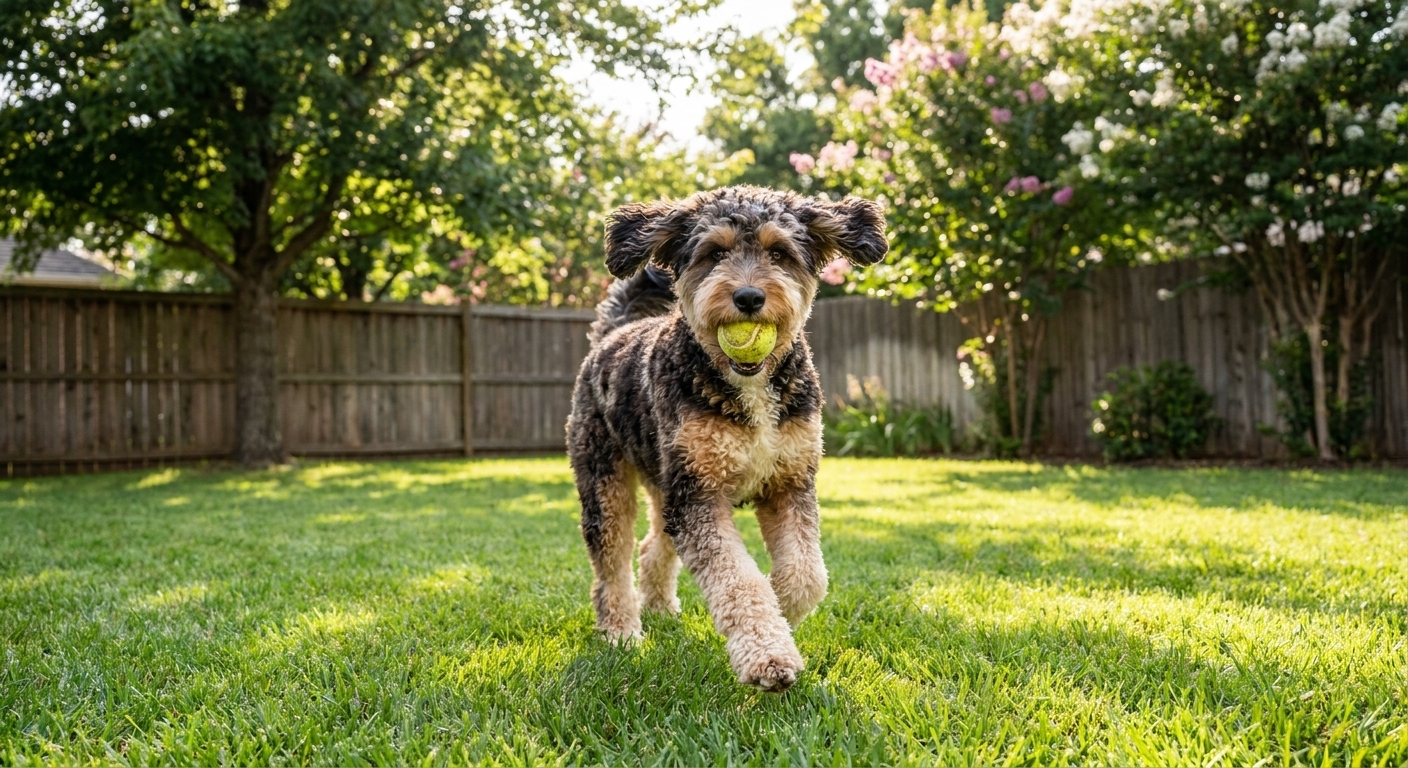
At a glance
- Best for active homes: Aussiedoodle
- Best for a calmer, slower pace: Bernedoodle (many, not all)
- May try to herd running kids: Aussiedoodle
- Often the larger build: Bernedoodle
- Grooming time commitment: High for both, especially with curlier coats
- Training style: Both are intelligent. Aussiedoodles usually need more structured daily outlets.
Where each mix comes from
Aussiedoodle
An Aussiedoodle is typically an Australian Shepherd mixed with a Poodle. Australian Shepherds are athletic herding dogs bred to work all day with close human direction. That working heritage often shows up as alertness, movement sensitivity, and a strong desire for a job.
Bernedoodle
A Bernedoodle is typically a Bernese Mountain Dog mixed with a Poodle. Bernese Mountain Dogs were developed as farm and draft dogs and are often described as steady, affectionate, and people-oriented. Many Bernedoodles inherit that softer, more relaxed vibe, though some have plenty of bounce depending on the individual dog and generation.
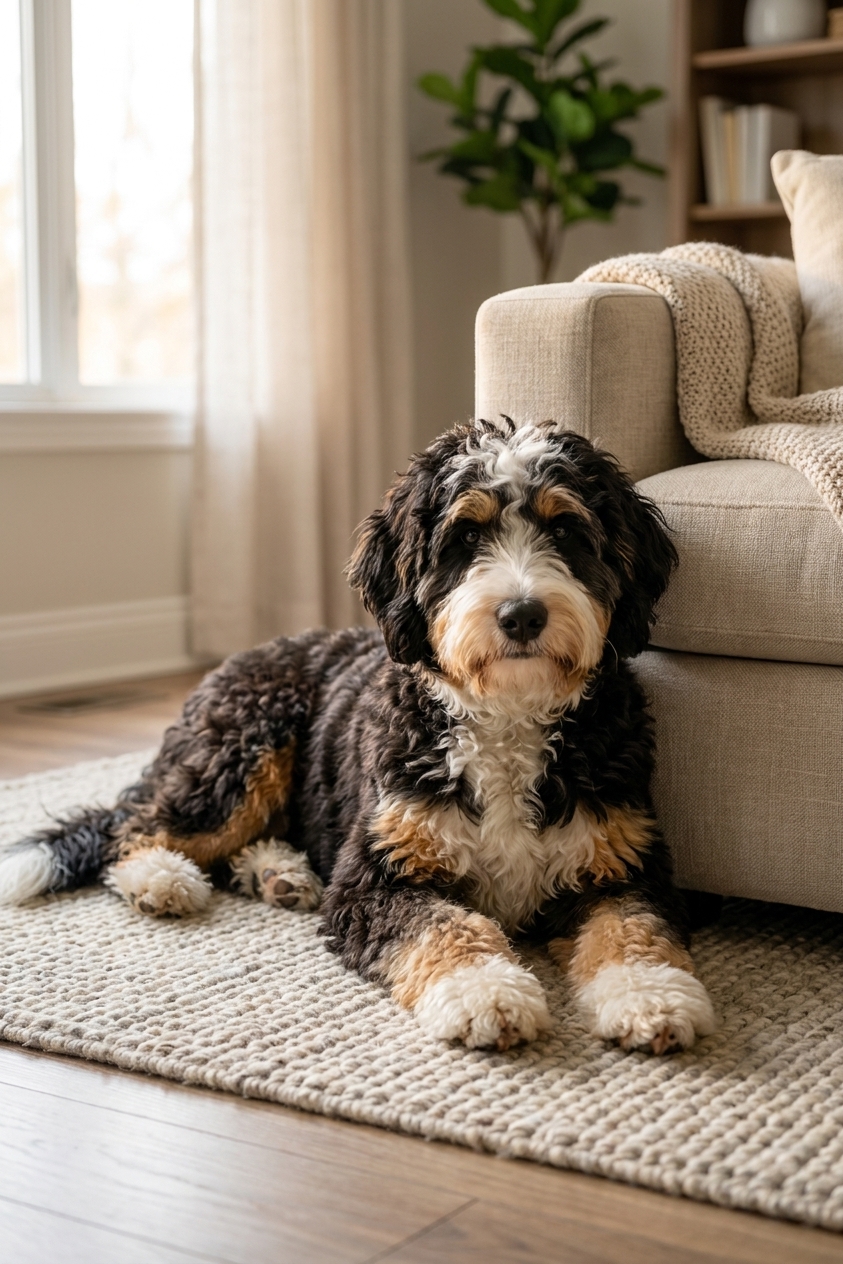
Energy and exercise
Aussiedoodle energy
Most Aussiedoodles are high energy, high engagement dogs. A long walk is nice, but it rarely empties the tank by itself. They typically do best with daily exercise plus mental work.
- Common daily starting point: 60 to 120 minutes of combined exercise and training games (adjust for age, size, and health)
- Best outlets: fetch with rules, structured hikes, agility foundations, nosework, trick training, puzzle feeding
- Common challenge: boredom behaviors like barking, chewing, or “shadowing” you (velcro behavior where they follow you room to room)
Bernedoodle energy
Bernedoodles are often moderate energy, with many individuals happy with a solid walk and some playtime. That said, a young Bernedoodle, a smaller/leggier one, or a higher-drive line can absolutely match the activity needs of an Aussiedoodle. Adolescence can be a whole lot of dog in a big body.
- Common daily starting point: 45 to 90 minutes total (some need more)
- Best outlets: walks, gentle hikes, short training sessions, food puzzles, play with breaks
- Common challenge: mouthiness and bounce in adolescence, plus large dogs need manners early
Joint-friendly note: whatever mix you choose, keep puppy exercise age-appropriate. Most vets recommend avoiding repetitive high-impact jumping and forced running while growth plates are still developing. Ask your veterinarian for guidelines based on your pup’s expected adult size.
Adult size
Size is one of the biggest “surprise factors” with doodle mixes. Adult weight varies widely based on whether the Poodle parent was toy, miniature, or standard, plus genetics from the other breed.
Aussiedoodle size
- Common range: about 25 to 70 pounds
- Build: athletic, quick, and springy
- Home reality: even smaller Aussiedoodles can have big energy
Bernedoodle size
- Common range: about 50 to 100+ pounds (standards), with minis often in the 25 to 55 pound range
- Build: thicker, heavier boned, more “bear-like” in many lines
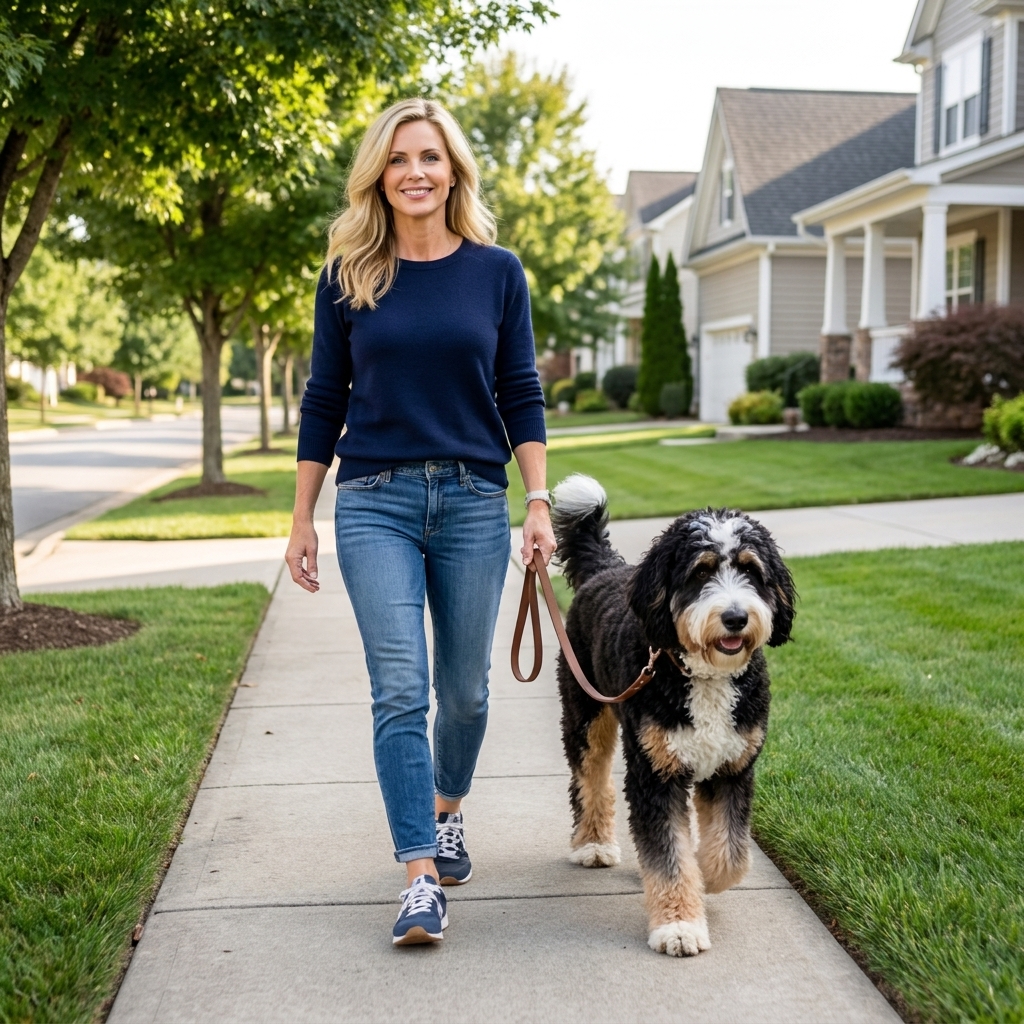
- Home reality: large size means early leash training is not optional
Coat and grooming
This is where many families get caught off guard. Doodles are not automatically low-shedding or low-allergen. Coat traits can vary even within the same litter.
Shedding and allergies
- Aussiedoodle: can be low shedding if the coat leans more Poodle, but some inherit a more Aussie-like coat and shed more seasonally
- Bernedoodle: many are low to moderate shedders, but Bernese heritage can bring more shedding, especially with wavier, thicker coats
If allergies are a big concern, spend time around adult dogs with similar coats and talk to your allergist. No responsible breeder can promise “hypoallergenic.”
Brushing and mat risk
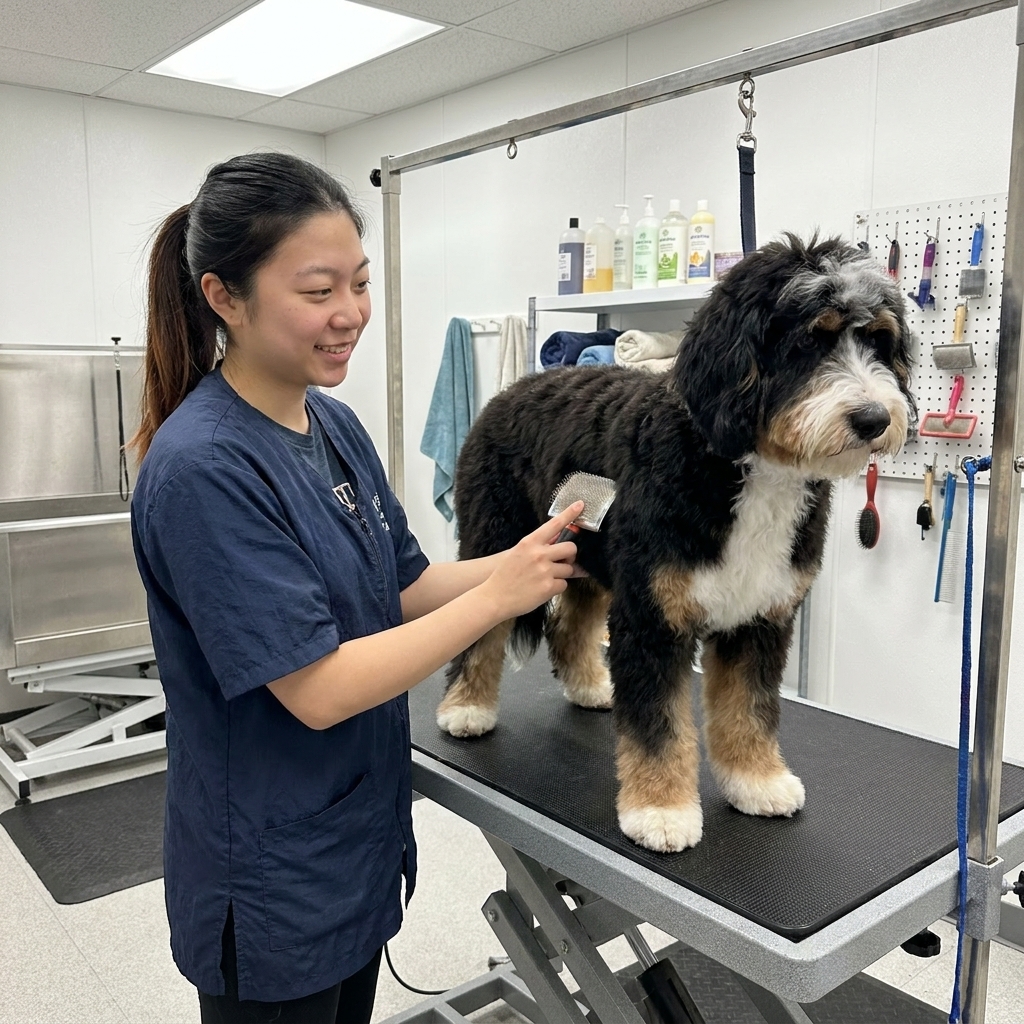
Curly and wavy coats mat easily, especially behind ears, under collars, in armpits, and around the hind end. Mats are not just cosmetic. They can trap moisture against the skin and become painful.
- At-home brushing goal: 10 to 20 minutes, at least 3 to 5 days per week
- Tools that help: slicker brush, metal greyhound comb, detangling spray, and a gentle routine with treats
- Professional grooming: often every 6 to 8 weeks (sometimes 4 to 6 for high-maintenance coats)
Coat clips and lifestyle
If you love the teddy-bear look, budget time and money for grooming. If you prefer easy maintenance, choose a shorter clip and keep a consistent schedule. Many dogs are happier when brushing is quick and mats never get a chance to form.
Generations and predictability
Breeders may describe doodles by “generation,” which is basically how many Poodle generations are in the mix. This matters because coat type and shedding can become more predictable, but it is never guaranteed.
- F1: first generation (one purebred Poodle parent, one purebred Aussie or Bernese parent). Often more variable in coat and shedding.
- F1B: typically an F1 doodle bred back to a Poodle. Often curlier coats and, in many cases, less shedding. Also often higher grooming needs.
- Multigen: doodle to doodle. Predictability depends heavily on the line and breeder selection, so ask to see adult relatives when possible.
Practical tip: ask to meet at least one parent and, ideally, adult dogs from prior litters with similar coat types.
Training and temperament
Aussiedoodle
Aussiedoodles are often extremely trainable, but they can be intense. They notice everything. In the right home, that focus is amazing for training. In a quieter home with limited outlets, it can turn into restlessness or reactivity.
- Strengths: quick learners, eager to engage, great for dog sports and advanced training
- Watch for: chasing or nipping from herding instincts, sensitivity to motion, barking if under-stimulated
Bernedoodle
Bernedoodles are typically friendly, affectionate, and motivated by praise and treats. Many are still very smart, but you may see a more “slow and steady” learning pace compared to a herding mix. Inconsistent training can create a stubborn streak.
- Strengths: people-oriented, often gentle with kids when properly socialized
- Watch for: jumping due to size, teenage goofiness, guarding of favorite people in some individuals
Tip for both: early socialization and positive reinforcement training are key. Prioritize calm skills like settle, place, and leash manners, not just sit and shake.
Family fit
Homes with kids
Both mixes can be wonderful with kids, but they tend to shine in different ways.
- Aussiedoodle: often loves active play, but may try to herd running children. That can look like circling, chasing, or nipping at heels. This is manageable with training and management, but plan for it.
- Bernedoodle: can be very tolerant of chaos, but a large, happy dog can accidentally knock over toddlers. Teaching “four on the floor” and calm greetings is crucial.
Quiet homes and apartments
If your household is low-key and you want a dog who is content with moderate exercise and plenty of cuddles, many Bernedoodles fit that dream more easily. Aussiedoodles can live in apartments too, but only if their exercise and mental needs are met consistently. If not, you may hear about it from your neighbors.
Work schedules
Both mixes can struggle if left alone for long stretches without training and gradual conditioning. If you work long hours, plan on a dog walker, daycare carefully chosen for temperament, or a family schedule that provides mid-day breaks.
Separation habits
Poodle mixes can be very people-oriented, which is sweet until it turns into distress when you leave. You do not need to assume your puppy will have separation anxiety, but you should build independence on purpose.
- Prevention basics: practice short absences daily, reward calm alone time, and avoid making departures and arrivals a big event
- Skills that help: crate training (if it fits your household), a “place” cue, and food enrichment only given when the dog is alone
Heat and weather
Thick, curly coats can make warm weather harder. In summer, aim for early-morning or evening exercise, use shade and water breaks, and learn the signs of overheating. If your dog is a dark-coated Bernedoodle or has a dense coat, be extra cautious.
Quick decision prompts
Choose an Aussiedoodle if you can say yes to most of these
- I enjoy daily training games, not just walks.
- I can provide about 60 to 120 minutes of exercise and enrichment most days.
- I am willing to manage and train through herding-style behaviors.
- I want a sporty, responsive dog for hiking, running, or dog sports.
- I can commit to regular brushing and grooming.
Choose a Bernedoodle if you can say yes to most of these
- I want a moderate-energy companion who can chill with the family (and I understand some will be high-energy, especially when young).
- I am prepared for a larger dog and I will train manners early.
- I am okay with grooming needs, even if the coat is thick and prone to mats.
- I want a dog that tends to be affectionate and people-oriented.
- I have space for a bigger body and a bigger bed, even if my yard is small.
Yard size
A yard is helpful, but it is not a substitute for exercise. Many dogs will simply do “perimeter patrol” and come back inside still full of energy.
- If you have no yard: plan structured walks, sniffing time, and indoor enrichment like scatter feeding and puzzle toys.
- If you have a yard: use it intentionally. Short training sessions, fetch with impulse control, and supervised play are more valuable than unsupervised time.
Health notes
No mix is guaranteed healthier than its parent breeds. Responsible breeding and smart preventive care make the biggest difference.
- Aussiedoodle background risks: Australian Shepherds can be prone to hip dysplasia, certain eye disorders, epilepsy in some lines, and MDR1 drug sensitivity. Poodles can also have orthopedic issues and eye conditions, and some lines are prone to Addison’s disease.
- Bernedoodle background risks: Bernese Mountain Dogs can be prone to orthopedic disease and, as a breed, have a shorter average lifespan than many dogs. Poodles can add risks like patellar luxation (more common in smaller sizes) and certain endocrine conditions, including Addison’s disease in some lines.
Ask breeders about health testing and how results are verified. In the US, many owners look for testing recorded through OFA and breed-specific recommendations such as CHIC. Testing varies by breed and line, but commonly includes hips, elbows (especially for larger dogs), eye exams, and sometimes cardiac testing. Breed-relevant DNA tests may include MDR1 (Aussies), von Willebrand disease (Poodles), and other tests based on family history.
If a breeder cannot clearly explain health testing, early socialization, and why a specific pairing was chosen, that is a yellow flag. A cute puppy grows up fast.
Where to verify: You can review general testing guidance via the Orthopedic Foundation for Animals (OFA) and breed club health pages. Your veterinarian can also help you interpret what testing is most meaningful for your dog’s expected size and family history.
Breeder or rescue
Whether you buy from a breeder or adopt, aim for transparency and support.
- Responsible breeders: show verified health testing, raise puppies in a home environment with a socialization plan, match pups to homes, and have a return-to-breeder clause.
- Rescues: can be a great option if you want an adult dog with a more established temperament. Ask about grooming tolerance, separation behaviors, and what the dog is like in a home setting.
Week 1 starter plan
If you bring home either mix, these early habits make life easier for years.
Daily, 3 to 5 minutes
- Touch paws, ears, and tail gently, then reward.
- Introduce brushing for a few strokes, then stop before your puppy gets wiggly.
- Practice calm collar grabs and treat.
Several times a week
- Short leash walks with “check in” rewards.
- One simple cue like sit, down, or place.
- Sniff walk where your dog sets the pace and explores safely.
Those tiny routines prevent two big doodle struggles families run into: grooming stress and adolescent chaos.
Bottom line
If you want a high-drive, highly interactive dog and you enjoy training as a hobby, an Aussiedoodle can be an incredible partner. If you want a cuddlier, often calmer family dog and you are prepared for the grooming and the potential for a large adult size, a Bernedoodle may fit more naturally.
Whichever you choose, your success will come from three things: consistent enrichment, early training, and a grooming routine you can realistically keep.