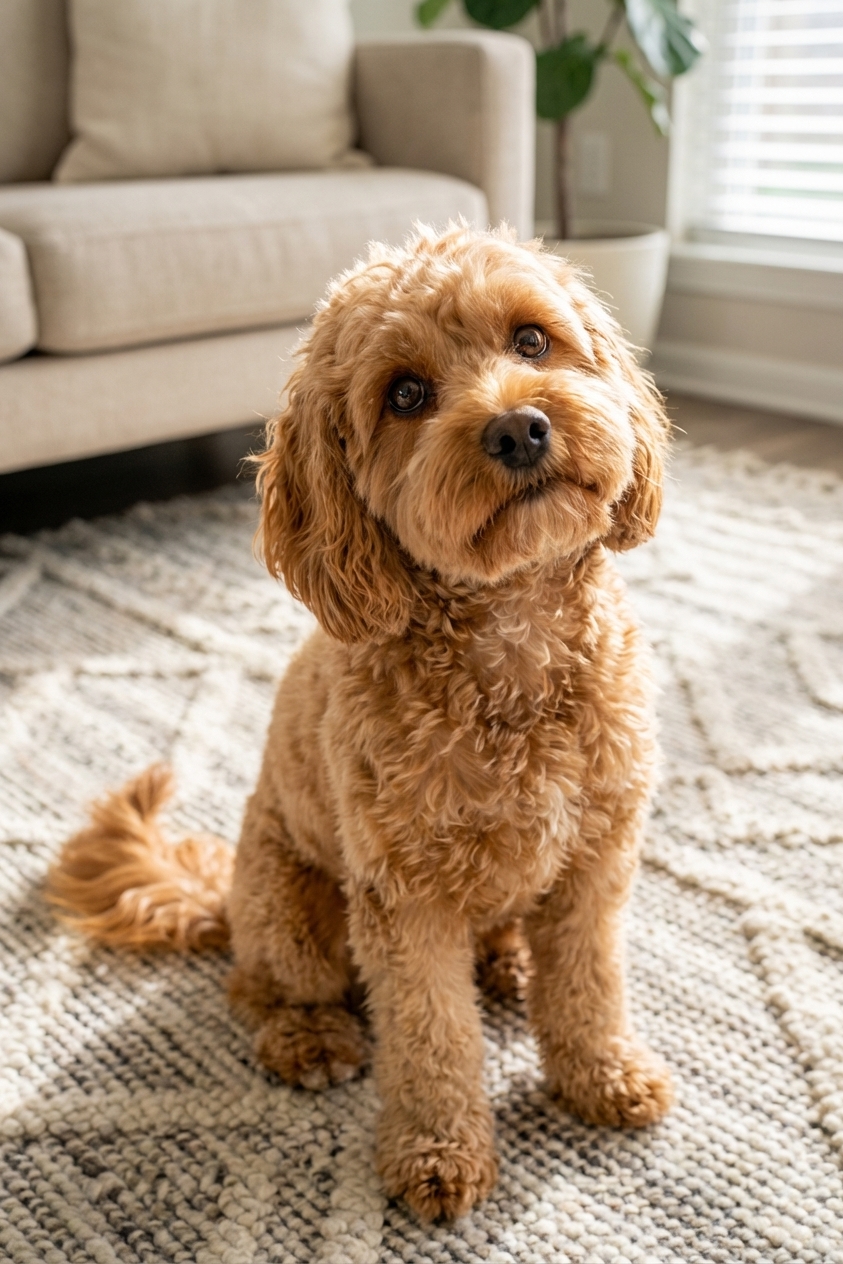
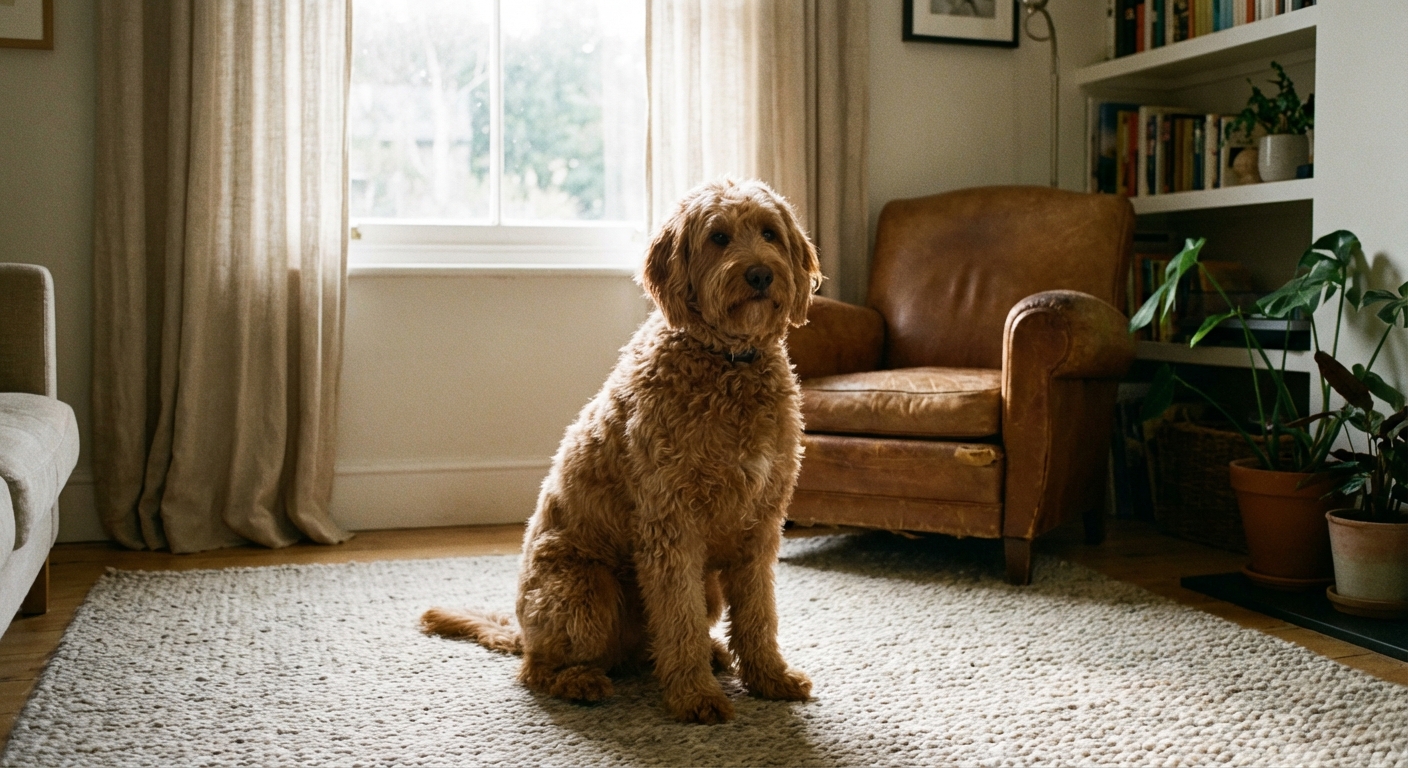
Considering a Bernedoodle? Learn about sizes, coat types and shedding, temperament, exercise, training, grooming schedules, common health risks, costs, and w...
Article
•
Designer Mixes
Aussiedoodle (Australian Shepherd Poodle Mix)

Shari Shidate
Designer Mixes contributor
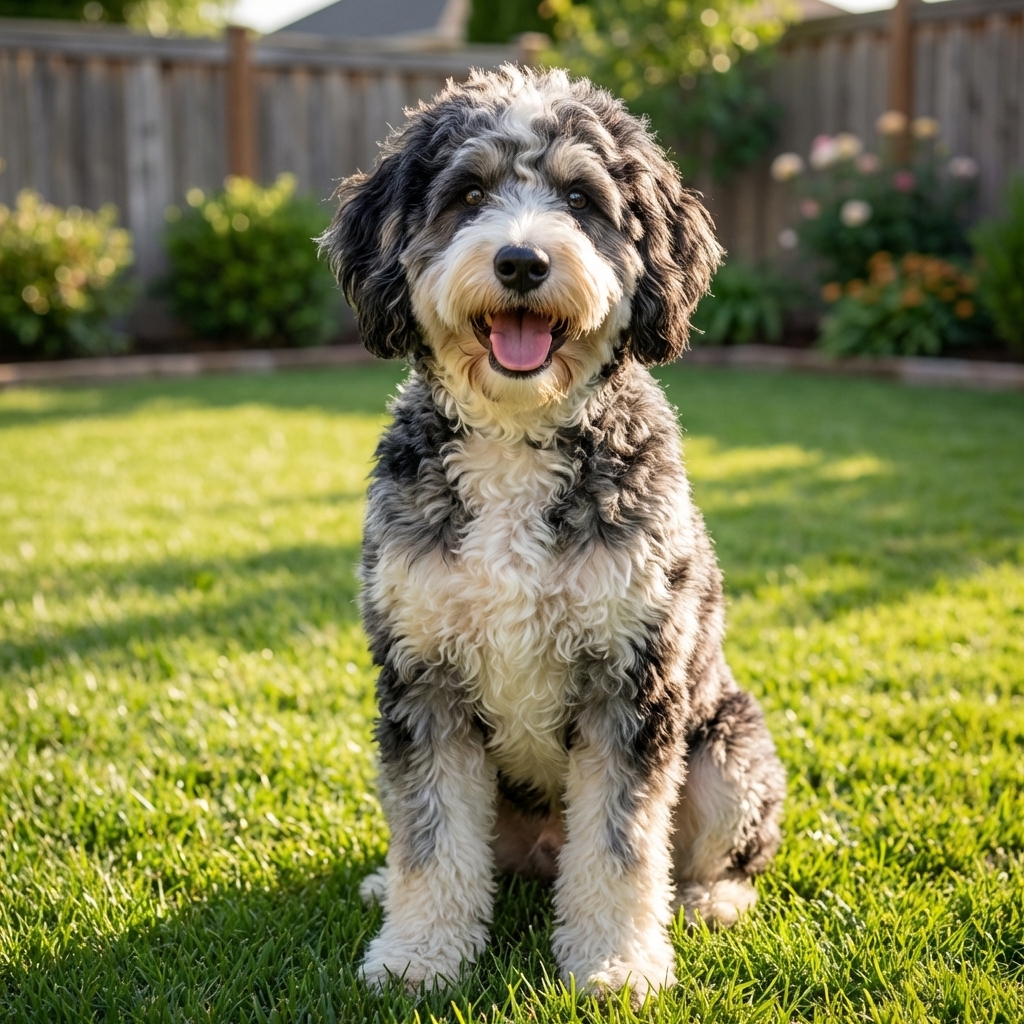
The Aussiedoodle is what happens when you blend the Australian Shepherd’s work-driven temperament with the Poodle’s bright, people-focused personality. In real life, that often looks like a dog who is affectionate, athletic, and always ready for the next activity. As a veterinary assistant here in Frisco, Texas, I can tell you this mix can be a wonderful family companion, but they do best with structure, daily exercise, and consistent training.
Quick overview
- Group: Mixed breed (Australian Shepherd x Poodle)
- Typical size: Small to large, depending on the Poodle parent (Toy, Miniature, or Standard)
- Typical lifespan: Often around 10 to 15 years, with size and health history playing a big role
- Energy level: High
- Coat: Wavy to curly, sometimes more straight; can be low-shedding but not always
- Best for: Active households who enjoy training, walks, play, and mental games
Important note: Because this is a mix, traits are not guaranteed, even within the same litter. If a breeder promises a specific adult size, coat type, or “hypoallergenic” outcome with certainty, that is a red flag.
Size and weight
Aussiedoodles come in a wide range of sizes. You will usually hear people describe them by the Poodle parent size. Even then, mixes can surprise you, so treat any number as an estimate, not a guarantee.
Typical adult ranges
- Toy Poodle cross: Often about 10 to 20 lb
- Miniature Poodle cross: Often about 15 to 35 lb
- Standard Poodle cross: Often about 35 to 70+ lb
Smaller Aussiedoodles can fit a smaller “footprint,” but they are still typically high-energy. Apartment living can work if you have a real plan for daily exercise, training, and noise management.
Temperament and personality
A well-bred, well-socialized Aussiedoodle is typically friendly, attentive, and very bonded to their people. Many are “velcro dogs” who want to be near you in the kitchen, on the couch, and yes, often in the bathroom.
Common strengths
- Highly trainable: They often learn cues quickly and love having a job.
- People-oriented: Many do well in family settings with respectful kids.
- Playful and athletic: Great partners for hiking, jogging, fetch, and dog sports.
Common challenges
- Too smart for their own good: Without enough activity, they can develop nuisance behaviors like barking, chewing, counter-surfing, and digging.
- Sensitivity: Some are emotionally sensitive and do not respond well to harsh corrections.
- Herding tendencies: From the Aussie side, some may nip or “body block” kids, cats, or other dogs, especially when excited.
One reminder I like to give families: individual variation is real with this mix. Two Aussiedoodles can have very different intensity levels, even if they look similar.
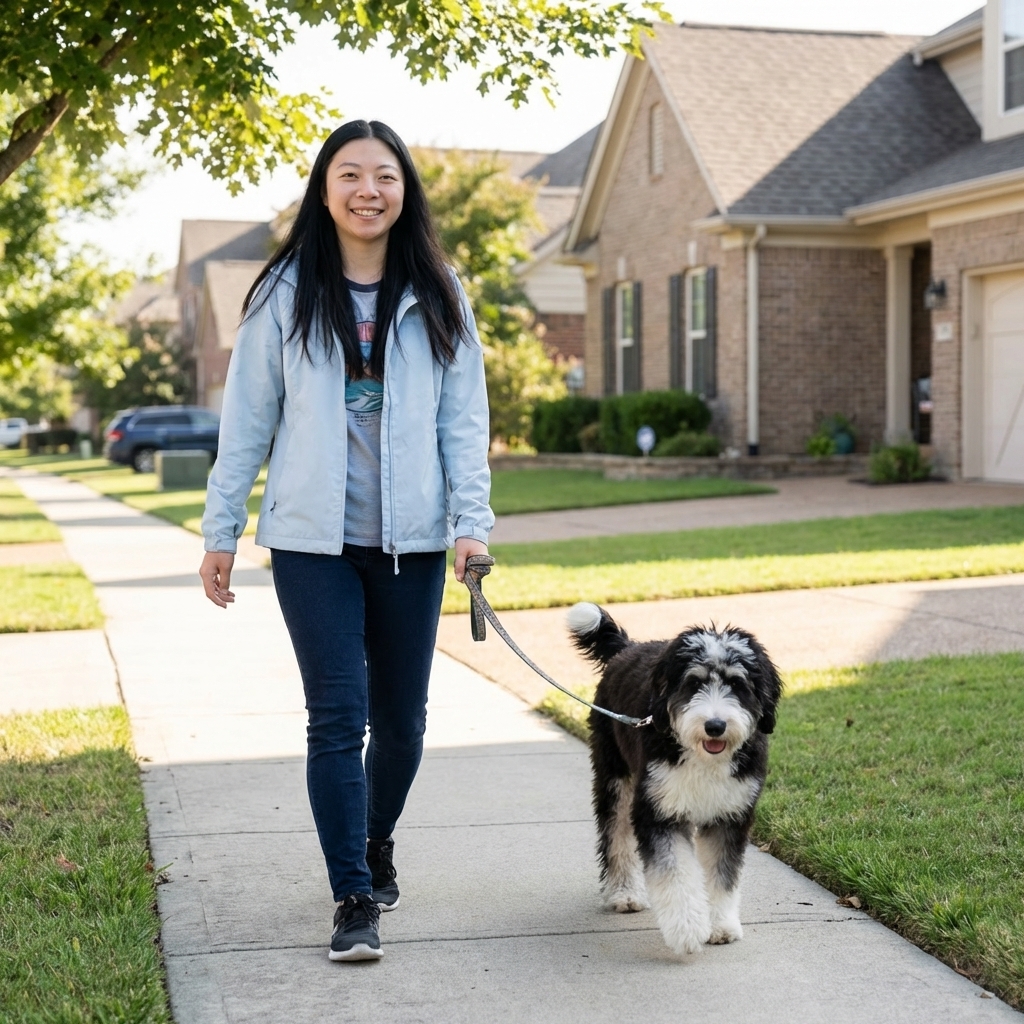
Coat and colors
Ask to see both parents if possible, along with adult relatives from prior litters. That is often the best clue you will get for coat maintenance and adult size.
Coat types you may see
- Wavy fleece: Common, often easygoing in texture but can mat if neglected.
- Curly: More Poodle-like; may shed less but typically needs more grooming maintenance.
- Straighter coat: May shed more and still mat, especially behind the ears and in the armpits.
Colors are diverse and can include black, blue merle, red, red merle, chocolate, and combinations with white or tan points. Merle is striking, but it comes with important genetic considerations (more on that below).
Exercise and enrichment
If you love a dog who wants to do things, the Aussiedoodle can be a dream. If you want a low-key couch companion, this may not be the best match. Most Aussiedoodles need daily physical activity plus brain work, but the exact amount varies with age, size, and drive.
Realistic daily needs
- Exercise: Many adults do well with about 60 to 90 minutes a day total, split into two or three sessions. Some higher-drive dogs need more.
- Mental work: 10 to 20 minutes of training, puzzle feeding, scent games, or skill-building.
Puppies and teens
- Puppies: Keep exercise age-appropriate and avoid repetitive high-impact work while growth plates are developing. Think short play sessions, gentle walks, training games, and lots of sleep.
- Adolescents: This is when many Aussiedoodles get “extra.” Increase enrichment, keep training consistent, and expect some boundary testing.
My favorite “busy brain” ideas
- Snuffle mat meals or scatter-feeding in the yard
- Short training bursts: sit, down, stay, place, recall, leash skills
- Hide-and-seek with treats or a favorite toy
- Beginner agility, rally, or dock diving for the sporty dogs
Tip from the clinic: a young Aussiedoodle that is “wild” is often just under-exercised, under-enriched, or both. Meeting their needs early can prevent a lot of frustration later.
Training and socialization
Aussiedoodles tend to thrive with positive reinforcement training, clear boundaries, and consistency. Start training the day you bring your puppy home. Not because your puppy is “bad,” but because you are building habits while their brain is soaking everything up.
First 3 months at home
- Socialization: Calm, safe exposure to people, dogs, grooming tools, car rides, vet visits, and everyday sounds.
- Handling practice: Touch paws, ears, tail, and mouth gently while pairing with treats.
- Crate and alone-time skills: Prevent separation-related distress by practicing short, positive departures.
- Impulse control: “Wait,” “leave it,” and “place” can be game-changers for this mix.
If your Aussiedoodle is showing fearfulness, reactivity, or intense herding behaviors, get help early. A qualified trainer can make a huge difference when the dog is still young and flexible.
Grooming and shedding
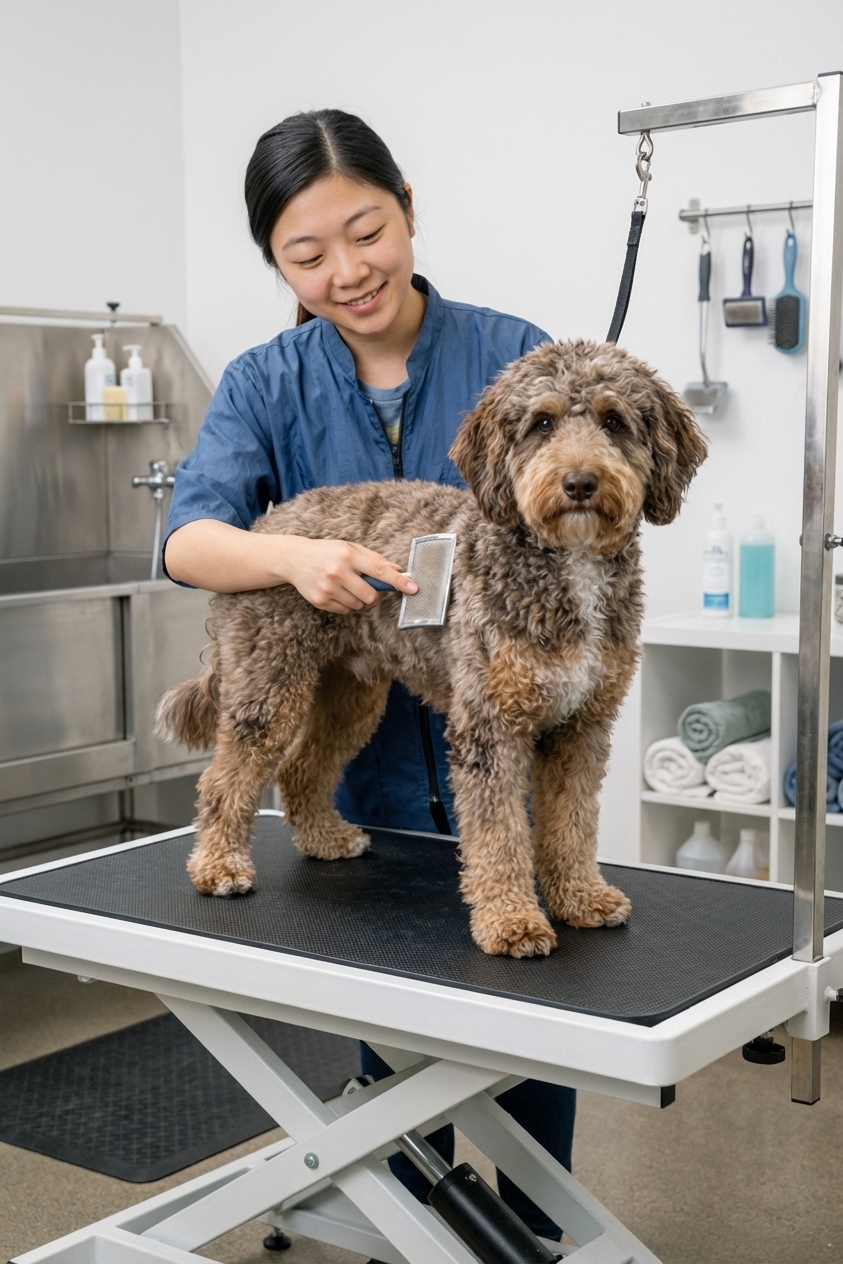
Many families choose Aussiedoodles hoping for a low-shedding dog. Some do shed very little, but it is not guaranteed. What is very consistent is grooming needs. Wavy and curly coats can mat quickly, and mats are not just cosmetic. They can pull on the skin, trap moisture, and lead to irritation or infection.
A practical grooming routine
- At-home brushing: 3 to 5 times per week for many coats, focusing on behind the ears, collar area, armpits, belly, and tail.
- Comb check: After brushing, run a metal comb to the skin. If the comb cannot pass through, you still have tangles starting to mat.
- Professional grooming: Often every 6 to 8 weeks.
- Ear care: Check weekly, especially if your dog swims or has floppy, hairy ears.
- Nail trims: Every 2 to 4 weeks for most dogs.
If matting gets severe, a shave-down may be the most humane option. It is not a “bad owner” moment, it is a reset so you can keep the skin healthy and start fresh with a manageable routine.
Health considerations
Mixed breeds can be wonderfully hardy, but they can also inherit conditions from either parent breed. The best protection is thoughtful breeding, early screening, and ongoing preventive care.
Commonly discussed risks
- Hip dysplasia: Seen in many active medium to large breeds. Maintaining a lean body condition matters.
- Eye conditions: Both Poodles and Australian Shepherds can have inherited eye disease. Ask about routine ophthalmic screening such as CAER, plus any relevant genetic testing.
- Allergies and skin issues: Can be an issue in some Aussiedoodles, especially in allergy-prone areas.
- Ear infections: Hairy, floppy ears plus moisture can be a perfect setup for yeast or bacterial overgrowth.
- Epilepsy: Reported in Australian Shepherd lines and can appear in mixes.
Merle and “double merle” risk
If your Aussiedoodle is merle, ask your breeder about genetic testing and parent coat genetics. Breeding two merle dogs together can produce “double merle” puppies, which have a much higher risk of serious hearing and vision problems.
One more detail that matters: merle can be cryptic, meaning a dog may carry merle genetics without looking obviously merle. That is why responsible breeders use genetic testing (often listed as PMEL or SILV testing) and are transparent about results.
Veterinary note: No online article can replace individual medical guidance. If you are choosing a puppy, ask for health testing documentation and talk with your veterinarian about an ideal preventive plan for your dog’s size, lifestyle, and region.
Preventive care basics
Preventive care is where I see families “win” long-term, especially here in Texas.
- Vaccines: Follow your veterinarian’s schedule for core and lifestyle vaccines.
- Parasite prevention: Heartworm prevention is a big one in our area, and many dogs also need consistent flea and tick prevention.
- Routine visits: Annual or twice-yearly wellness exams help catch issues early, including ears, skin, weight, and dental health.
Feeding
These dogs burn energy and many have enthusiastic appetites, so balanced nutrition and portion control are key. Whether you feed a quality commercial diet, a carefully formulated homemade diet, or a combination, the goal is the same: steady energy, a healthy coat and skin, good stools, and a lean body condition.
What I encourage families to focus on
- Keep them lean: You should be able to feel ribs easily with a light fat covering.
- Choose a complete and balanced diet: Look for diets formulated to meet AAFCO nutrient profiles for your dog’s life stage.
- Go slow with changes: Transition over 7 to 10 days to reduce stomach upset.
- Be cautious with extras: Treats, chews, and table food add up fast.
If you want to add fresh foods, start small. A spoonful of plain cooked chicken, a bit of steamed carrots, or a few blueberries can be a gentle way to boost variety. If you want to go fully homemade, work with your veterinarian or a board-certified veterinary nutritionist so the recipe stays balanced, especially for puppies.
Is this mix right for you?
This mix is often happiest in a home that values activity and training. Before you commit, ask yourself a few honest questions.
- Do I have time every day for exercise and training?
- Am I willing to maintain professional grooming and regular brushing?
- Can I provide structure so my dog does not create their own “job”?
- Am I prepared for a dog who may be very attached to people?
If your answer is yes, an Aussiedoodle can be a bright, loving companion who makes your days more active and your home feel a little more connected.
Breeder and rescue questions
- What health testing was done on both parents (hips, eyes, genetic tests), and can I see proof?
- Do you do routine eye screening such as CAER, and can I see results?
- How were the puppies socialized between 3 and 12 weeks?
- What are the adult sizes and temperaments in previous litters?
- Do you avoid merle-to-merle pairings, and do you test for cryptic merle?
- What grooming needs do you typically see in your lines?
- If adopting, what is known about the dog’s comfort with kids, cats, and other dogs?
Good breeders and reputable rescues welcome these questions. They want the match to be right for you and for the dog. With rescues in particular, remember that coat care and early history may be unknown, so plan for a grooming evaluation and a calm decompression period at home.