
Aussiedoodle
What Is an Aussiedoodle?
An Aussiedoodle is a popular “designer mix” created by crossing an Australian Shepherd with a Poodle (most often a Miniature or Standard Poodle). Families are often drawn to Aussiedoodles for their affectionate nature, playful energy, and soft, curly or wavy coats. Like any mixed-breed dog, though, an Aussiedoodle’s temperament, size, and coat can vary widely depending on genetics, early socialization, and day-to-day care.
On Designer Mixes, we love helping future owners understand what real life with a breed mix can look like. With Aussiedoodles, the biggest theme is this: they are usually smart, people-focused, and active. If you enjoy a dog that wants to be part of everything, this mix can be a wonderful match.
Appearance, Size, and Coat Types
Aussiedoodles can look quite different from one another, even within the same litter. You may see a teddy-bear curl, a looser wave, or a straighter coat. Color patterns can be especially striking, including solid shades, parti colors, and merle patterns inherited from the Australian Shepherd side.
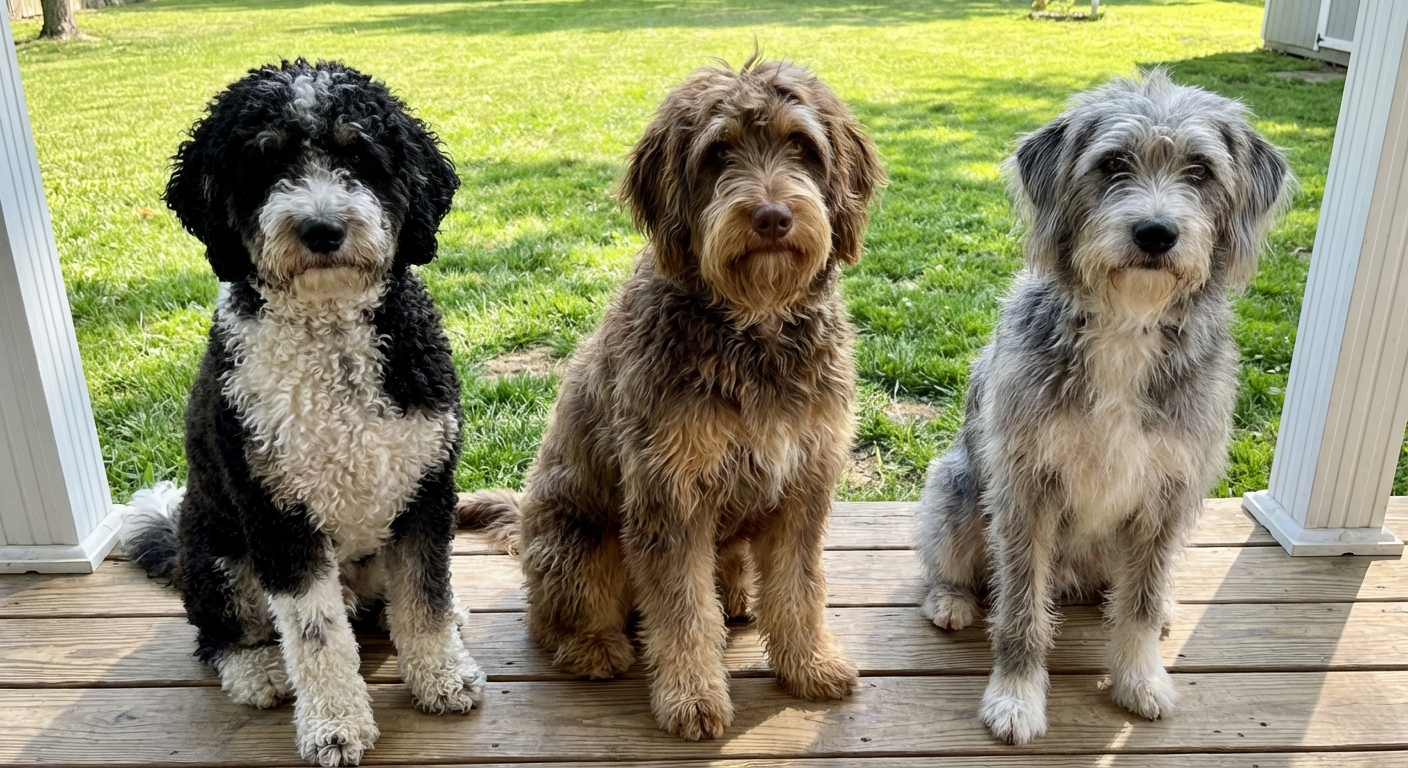
Typical size ranges
- Toy or small mixes: Often under 20 pounds, depending on the Poodle parent and lines used.
- Mini Aussiedoodle: Commonly 20 to 40 pounds.
- Standard Aussiedoodle: Often 40 to 70+ pounds.
Because breeders may use different Poodle sizes and because “Aussiedoodle” is not a single standardized breed, it helps to ask about the parents’ weights, heights, and temperaments rather than relying on a label alone.
Do Aussiedoodles shed?
Many people hope an Aussiedoodle will be low-shedding, but there is no guarantee. Poodles tend to shed less, while Australian Shepherds are known to shed more. Your dog’s coat may be lower-shedding, moderate, or somewhere in between. If allergies are a concern, spend time with the puppy and adult relatives if possible, and talk with your healthcare professional about managing pet allergies at home.
Temperament: What Living With an Aussiedoodle Feels Like
Aussiedoodles are often described as friendly, bright, and eager to engage. In my experience working with families on healthy lifestyle routines, a dog like this can be a powerful motivator for daily movement and consistent schedules. The flip side is that a bored Aussiedoodle can become noisy, restless, or mischievous.
Common personality traits
- Highly intelligent: Quick learners who often enjoy training and problem-solving games.
- People-oriented: Many want to stay close to their favorite humans and may not love being left alone for long periods.
- Energetic and playful: Usually thrive with regular exercise and structured activities.
- Sensitive: Often respond best to calm, consistent, reward-based training.
Early socialization matters. Gentle exposure to different people, environments, sounds, and handling can help your Aussiedoodle grow into a confident adult.
Exercise and Mental Stimulation Needs
Aussiedoodles are typically athletic dogs with working-dog roots. Many do best with a combination of physical activity and mental enrichment. Think of it like supporting a healthy body and a healthy brain; both are important.
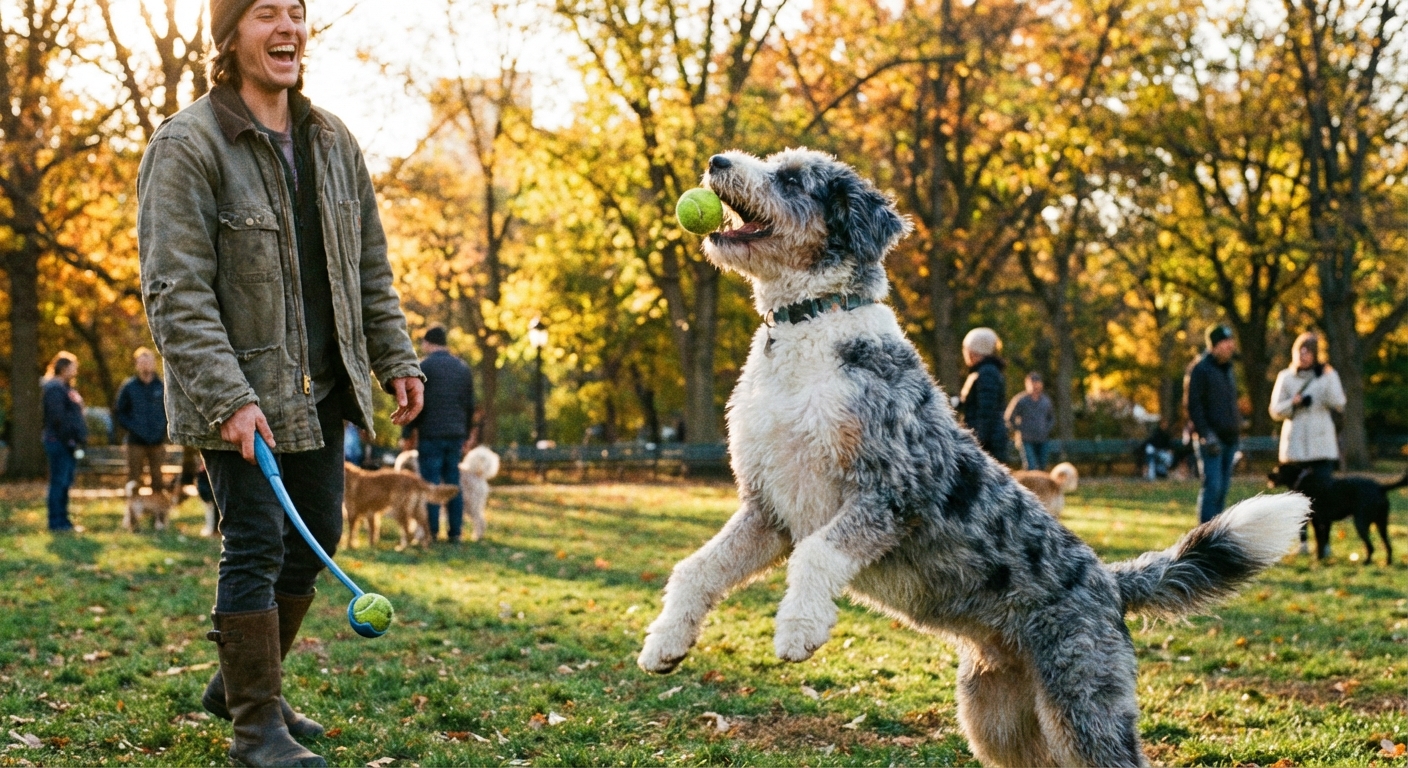
Daily activity ideas
- Brisk walks: Aim for at least one longer walk plus a shorter outing, adjusting for age and health.
- Fetch or tug: Short play sessions can burn energy quickly.
- Training “mini sessions”: 5 to 10 minutes of practice sprinkled throughout the day can be more effective than one long session.
- Puzzle feeders and sniff games: Great for rainy days or when you need your dog to settle.
Puppies need extra care. Overdoing high-impact activity can stress growing joints. Your veterinarian can help you set age-appropriate exercise guidelines.
Training: Setting Your Aussiedoodle Up for Success
This mix often excels with positive reinforcement methods, meaning you reward the behaviors you want with treats, praise, or play. Because Aussiedoodles are smart, they can also learn unwanted habits quickly. Consistency is key.
Helpful training priorities
- Basic cues: Sit, down, stay, come, and leave it.
- Loose-leash walking: A must for energetic, curious dogs.
- Impulse control: Waiting at doors, calm greetings, and settling on a mat.
- Crate training and alone-time practice: Builds comfort and reduces anxiety.
If you notice signs of separation distress, reactivity, or persistent fearfulness, working early with a certified trainer or veterinary behavior professional can make a big difference.
Grooming and Coat Care
Aussiedoodles generally require regular grooming. Mats can form easily, especially behind the ears, under the collar, and around the legs. A predictable routine keeps your dog comfortable and helps you spot skin issues early.
A practical grooming routine
- Brushing: Often 3 to 5 times per week for wavy or curly coats, sometimes daily for longer coats.
- Professional grooming: Many owners schedule a trim every 6 to 8 weeks.
- Bathing: As needed, typically every 4 to 6 weeks, using a dog-appropriate shampoo.
- Ears, nails, and teeth: Check ears weekly, trim nails regularly, and brush teeth if your dog will tolerate it.
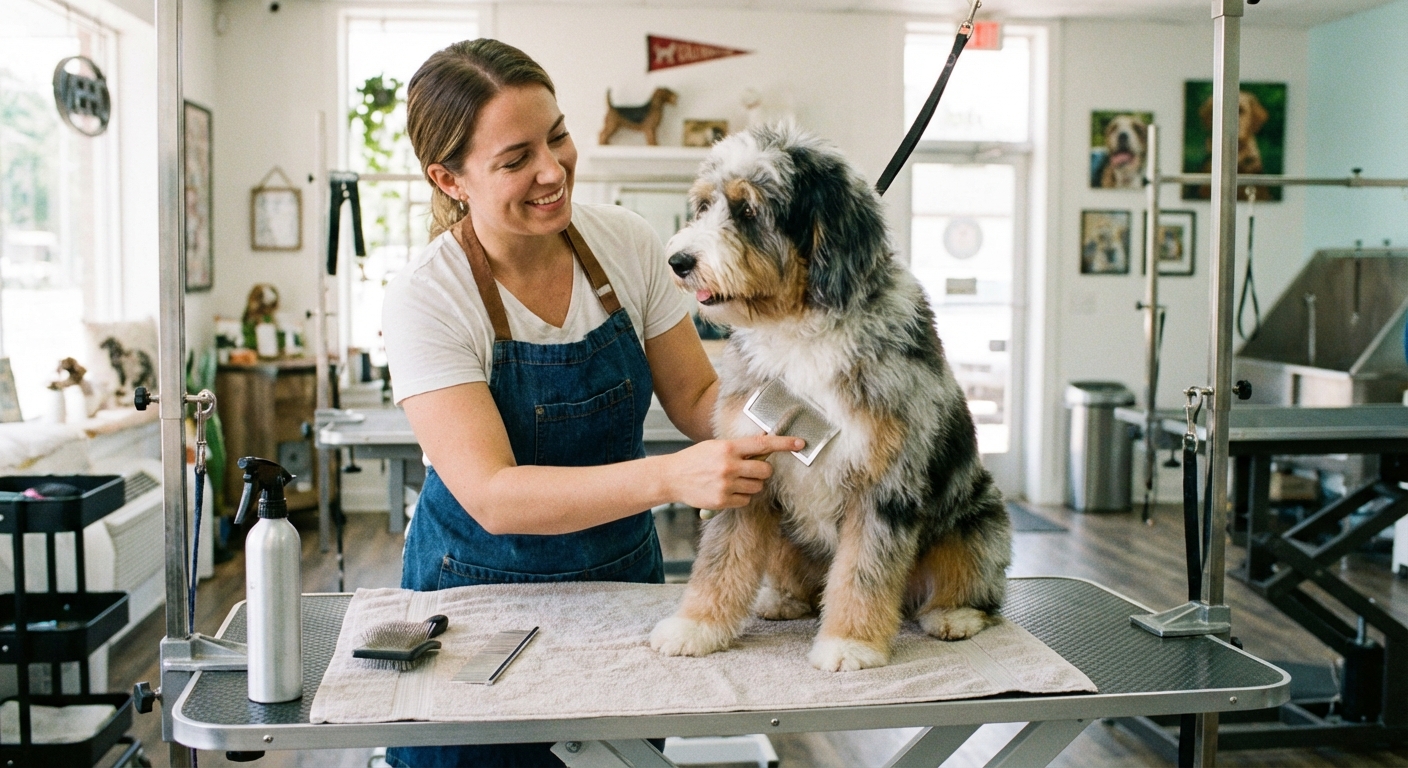
If you are new to coat maintenance, ask your groomer to show you how to brush down to the skin with the right tools. This one skill prevents many common grooming headaches.
Health Considerations to Know
Mixed-breed dogs can be healthy, but they can still inherit conditions from either parent breed. Responsible breeding and good preventive care matter. Always choose a breeder or rescue that prioritizes health screening and transparent records.
In general, many Aussiedoodles live around 12 to 15 years, though lifespan can vary based on size, genetics, and overall care.
Concerns sometimes seen in Aussiedoodles
- Hip or elbow dysplasia: Can affect mobility and comfort.
- Eye issues: Including inherited eye conditions, which is why eye exams and screening can be important.
- Allergies or skin sensitivities: Can show up as itching, ear infections, or digestive changes.
- Epilepsy: Seen in some lines of Australian Shepherds and other breeds.
- MDR1 gene mutation (drug sensitivity): Australian Shepherds can carry the MDR1 mutation, which can make certain medications unsafe at standard doses. If your dog may be affected, ask your veterinarian about MDR1 testing and always mention the possibility before your dog receives new medications or parasite preventives.
Schedule regular veterinary visits, keep vaccinations and parasite prevention up to date, and ask your vet about nutrition, weight management, and age-appropriate joint support.
Nutrition and Healthy Weight: A Simple Plan That Works
From a wellness perspective, one of the most protective things you can do for an active dog like an Aussiedoodle is maintain a healthy body condition. Extra weight puts stress on joints, can worsen inflammation, and often reduces stamina.
Feeding tips for everyday life
- Choose a complete, balanced diet: Look for foods that meet AAFCO standards for your dog’s life stage.
- Measure meals: Use a measuring cup or kitchen scale, especially for calorie-dense foods.
- Use treats strategically: Keep treats to about 10% or less of daily calories when possible.
- Monitor body condition: You should be able to feel ribs easily with a light touch, without prominent bones.
If your Aussiedoodle is very active, your veterinarian can help you fine-tune calories and protein needs. The right diet supports energy, coat quality, and long-term health.
Is an Aussiedoodle Right for You?
Aussiedoodles can be a wonderful fit for people who enjoy an engaged, energetic companion. They often thrive in homes that include daily movement, consistent training, and plenty of family interaction.
This mix may be a great match if you want:
- A smart dog who enjoys learning and staying busy
- A companion for walks, hikes, and active play
- A people-focused dog that likes to be involved
You may want to think twice if:
- Your schedule keeps you away from home for long stretches
- You prefer a low-energy dog with minimal training needs
- You are not able to commit to regular grooming
When families choose a dog that matches their lifestyle, everyone benefits, including the dog. If you are considering an Aussiedoodle, meet adult dogs if possible, ask detailed questions about health screening, and plan a routine that supports both physical activity and calm downtime.