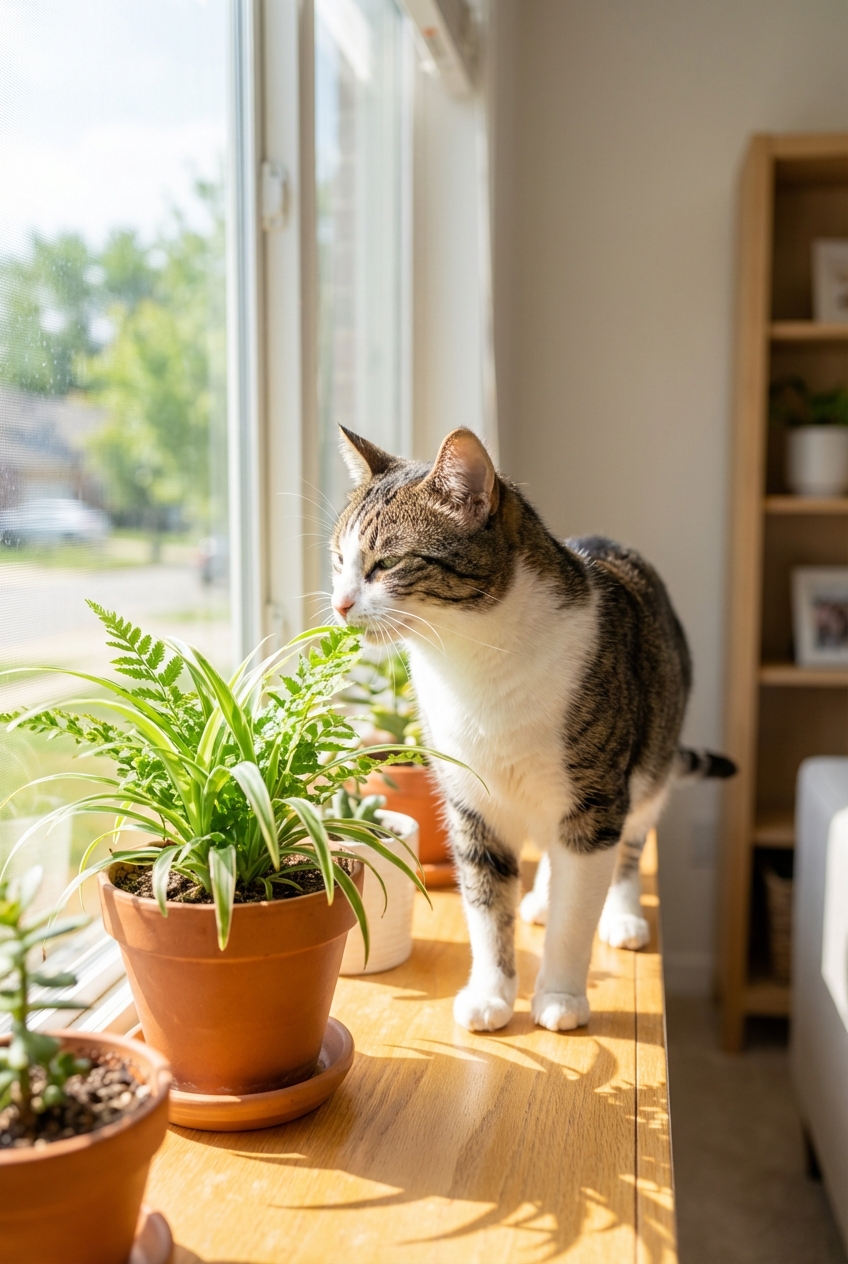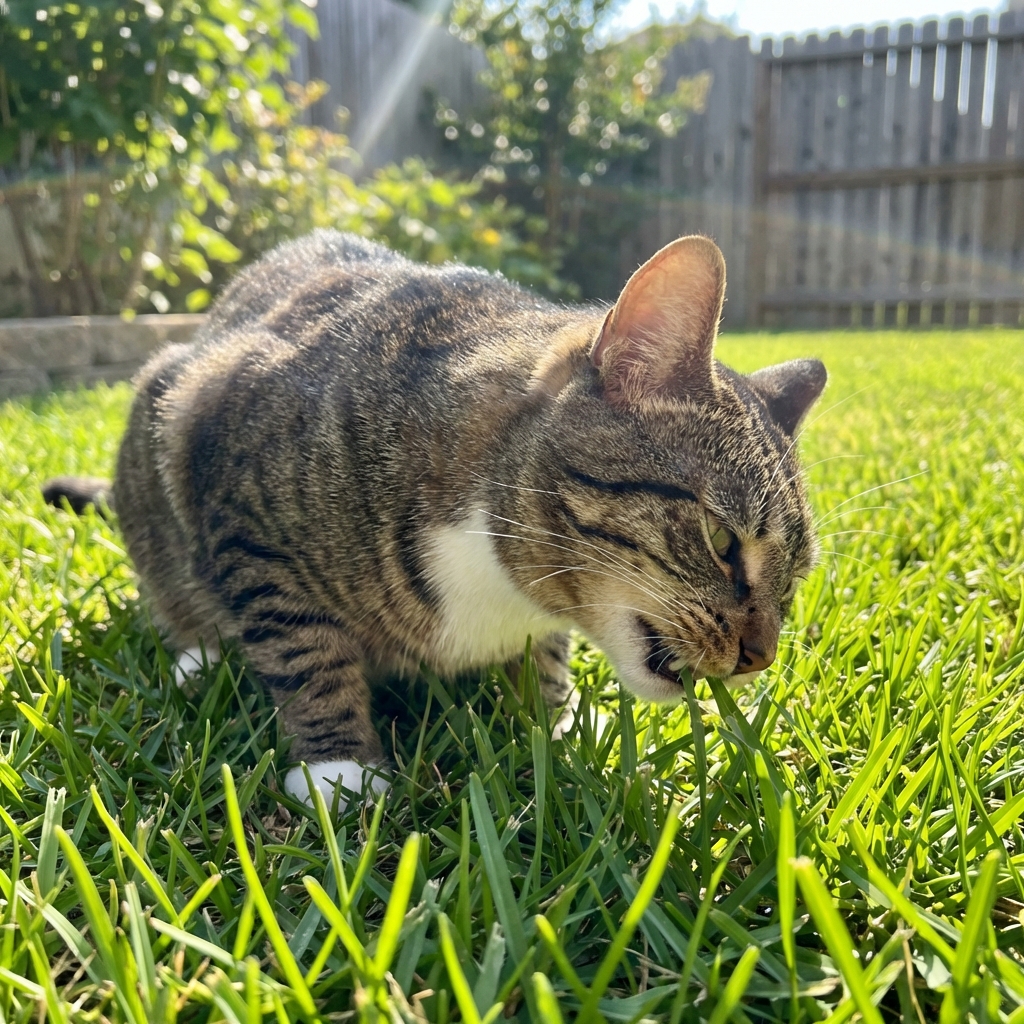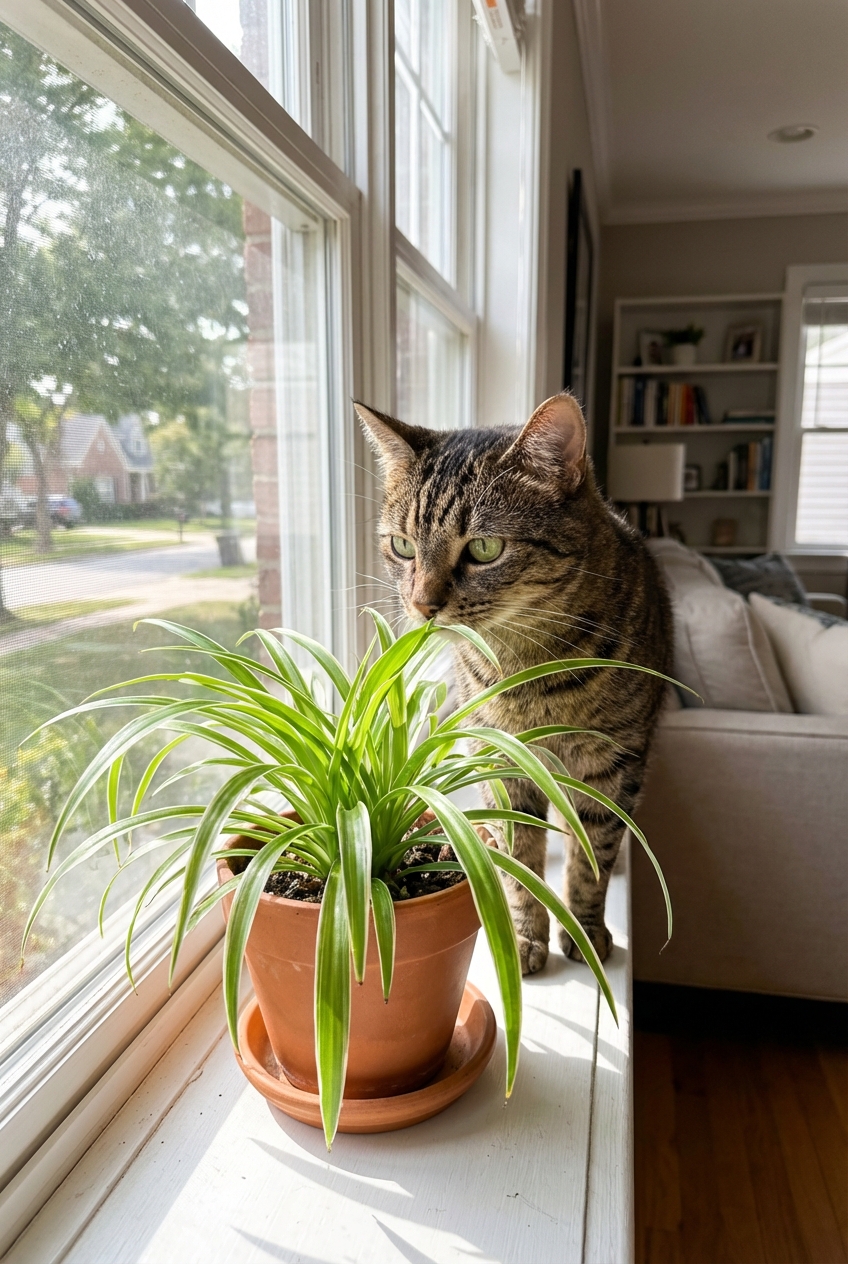
A vet assistant’s guide to the most dangerous indoor plants for cats—true lilies, sago palm, oleander and more—plus early poisoning signs, emergency st...
Article
•
Designer Mixes
Are Spider Plants Toxic to Cats?

Shari Shidate
Designer Mixes contributor
As a veterinary assistant, I hear this question all the time: are spider plants toxic to cats? The reassuring answer is that spider plants (Chlorophytum comosum) are considered non-toxic to cats by widely used pet safety references like the ASPCA Animal Poison Control database. But here is the twist: even though they are not considered “poisonous,” spider plants can still make some cats feel sick, especially if they chew a lot.
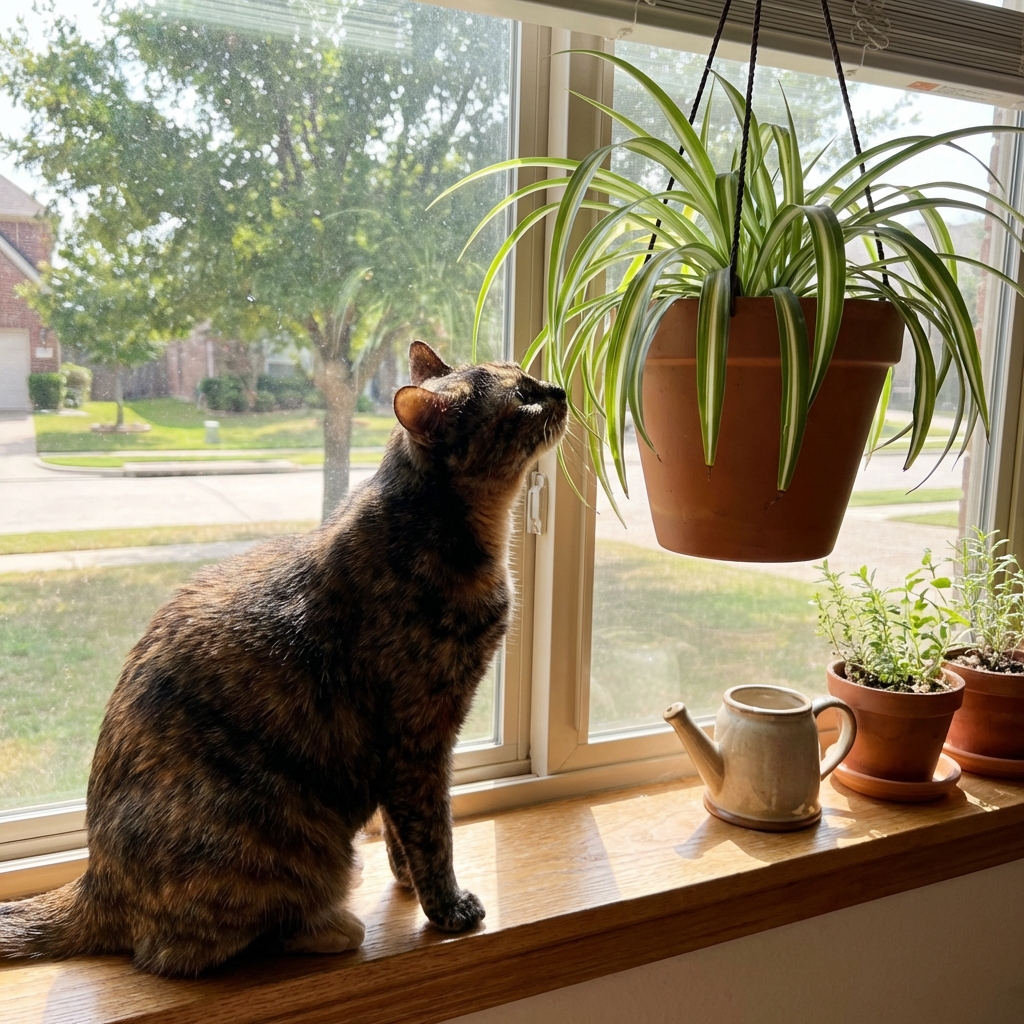
And yes, cats really do seem to love them. If you have ever walked into a room and found your spider plant looking like a shredded salad bar, you are not alone.
Quick answer
Spider plants are generally non-toxic to cats. Most cats who nibble a leaf or two will be totally fine. The most common issues are mild stomach upset from eating plant material.
That said, “non-toxic” does not mean “risk-free.” Any plant chewing can cause:
- Vomiting (often from stomach irritation)
- Drooling (especially if your cat chews a lot at once)
- Loose stool or diarrhea
- Gagging or retching if long leaves are swallowed
If your cat is acting normal after a small chew, you can usually monitor at home. If symptoms are persistent, severe, or your cat seems painful or lethargic, it is time to call your vet.
Why cats chew them
Spider plants have a reputation in cat households for one simple reason: many cats find them irresistible. Here are the most common reasons I see.
1) The leaves feel like grass
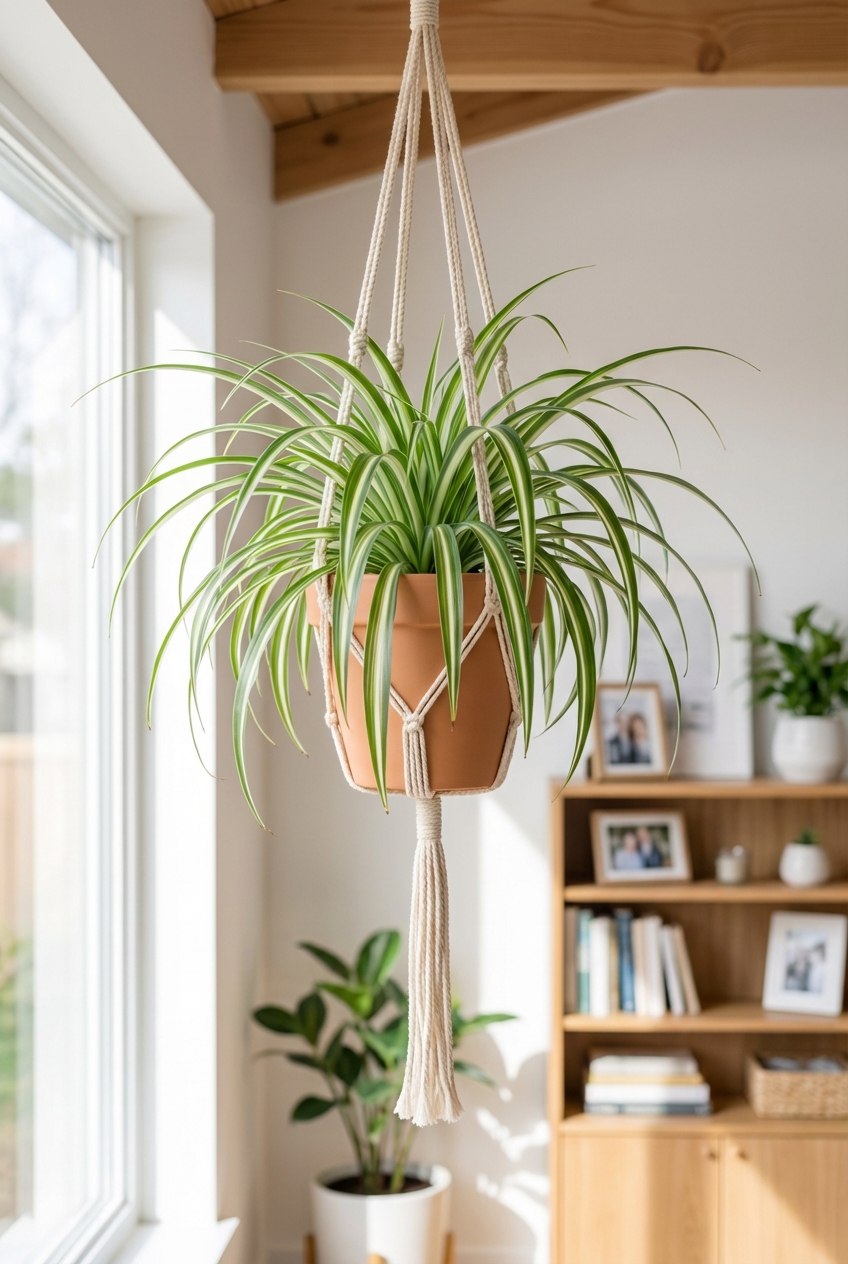
Spider plant leaves are narrow and arching, similar to grass. Many cats have an instinct to chew grass-like plants. Sometimes this is boredom, sometimes it is enrichment, and sometimes it is just a habit that feels good.
2) They move like toys
Those long leaves sway when a cat bats at them, and the “spiderettes” (baby plants, also called plantlets) can dangle like toys. For a cat, it is basically a self-serve entertainment station.
3) Some owners report a mild catnip-like reaction
You may have heard people say spider plants can act like catnip. Some owners report extra excitement or playful behavior after chewing them, but evidence is limited and the mechanism is not well-established. Either way, enthusiastic chewing can still lead to vomiting or diarrhea.
4) Stress, diet, or pica
Some cats chew plants more when they are stressed, under-stimulated, or dealing with pica (eating non-food items). If your cat is obsessively chewing plants, licking plastic, or eating strings and fabric, please talk to your veterinarian. Compulsive chewing can sometimes signal underlying issues that deserve attention.
Symptoms to watch
Most spider plant nibbling causes either no symptoms or mild gastrointestinal upset. Keep an eye out for:
- Repeated vomiting (more than once or twice)
- Diarrhea that lasts longer than 24 hours
- Refusing food or hiding
- Abdominal discomfort (hunched posture, reluctance to be picked up)
- Constipation or straining
- Coughing, gagging, or trouble swallowing
Important: Spider plant leaves are long and fibrous. If a cat swallows larger pieces, the bigger concern is not “poison,” but the possibility of GI irritation or, in some cases, a foreign body problem, especially in cats that gulp.
One more practical note: the plant itself may not be the only issue. Fertilizers, pesticides, systemic insecticides, and leaf-shine products on houseplants can be more irritating or dangerous than the spider plant. If your plant was recently treated, mention that to your vet.
What to do
If your cat seems fine
- Remove the plant and prevent further access.
- Offer water and keep things calm.
- Monitor for vomiting, stool changes, and appetite for the next 24 hours.
If there is mild vomiting or soft stool
- Prevent further access and monitor closely.
- Call your veterinarian if symptoms persist, worsen, or your cat has any medical conditions (like kidney disease, diabetes, or IBD).
Call for help promptly if
- Your cat is vomiting repeatedly or cannot keep water down.
- You see lethargy, weakness, or obvious pain.
- Your cat swallowed a large amount of leaves, or you notice ongoing gagging or trouble swallowing.
- Your cat is known for chewing and swallowing non-food items.
If you are unsure what plant your cat chewed, take a clear photo of the plant and bring it, or the photo, to your vet. Plant look-alikes can matter.
After hours, you can also contact a poison resource for guidance, especially if you suspect exposure to plant treatments: ASPCA Animal Poison Control or Pet Poison Helpline (consult fees may apply).
How to stop the chewing
I totally understand wanting plants and cats to coexist peacefully. Here are realistic, cat-friendly strategies that work in many homes.
Put it out of reach
Cats are talented climbers, so “high shelf” only works if it is not near a launch point. Consider:
- A room your cat cannot access
- A truly high hanging basket with no nearby furniture
- A plant cabinet designed for houseplants
Offer a safe alternative
Give your cat something appropriate to chew, such as:
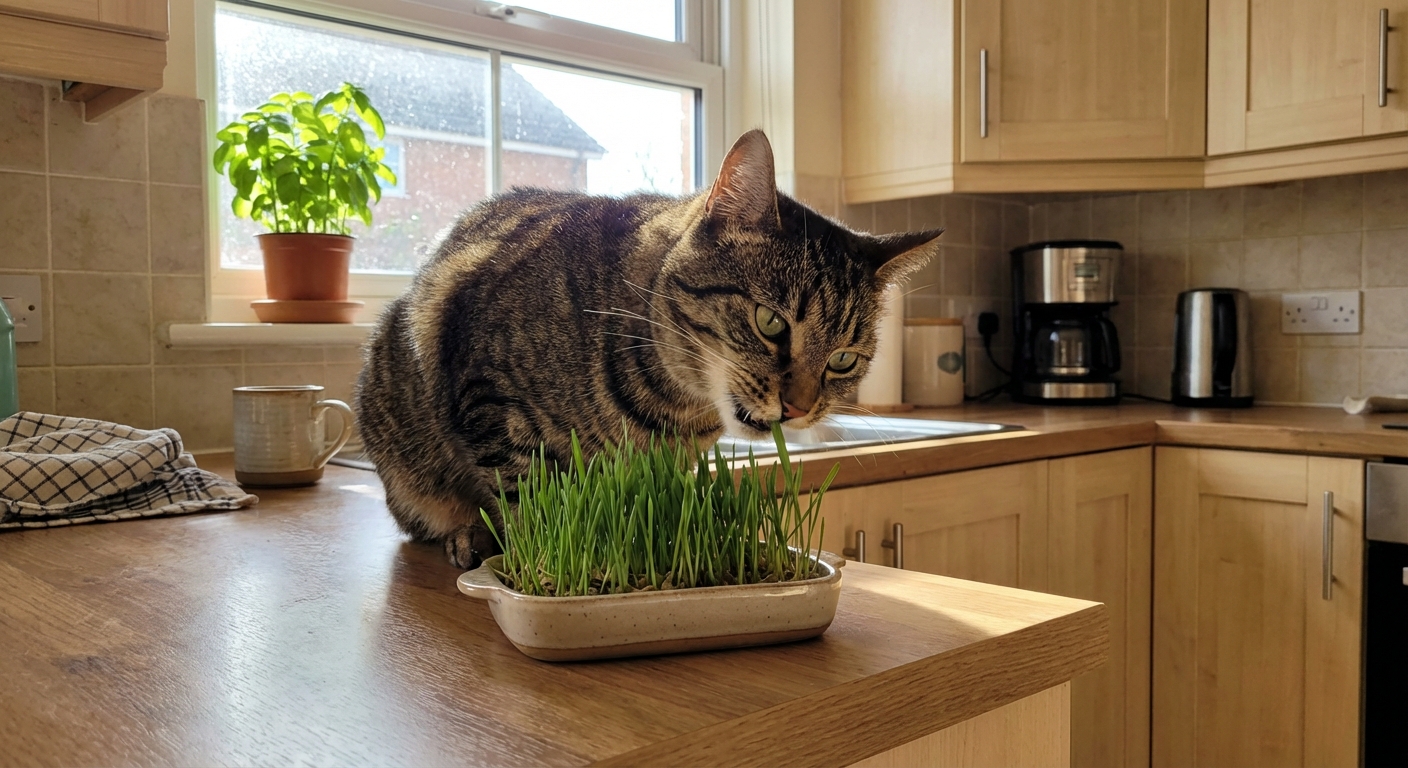
- Cat grass (wheatgrass or oat grass grown for pets)
- More play and enrichment to reduce boredom chewing
Use deterrents carefully
Some owners have success with bitter sprays, but results vary and some cats are not deterred. If you try one, test it on a small leaf first and follow label directions. Never apply anything potentially harmful to plant surfaces that your cat might ingest.
Add enrichment
Many “plant crimes” happen when cats are under-stimulated. Add:
- Daily interactive play (wand toys are great)
- Foraging toys or treat puzzles
- Window perches for bird watching
- Scratchers and climbing options
More dangerous plants
Spider plants get a lot of attention because cats love them. But many common houseplants are far more dangerous.
One of the biggest household threats is true lilies and daylilies (Lilium and Hemerocallis), which can cause severe kidney injury in cats, even from small exposures. A common point of confusion is the peace lily, which is not the same type of lily and typically causes mouth and stomach irritation rather than the classic lily-related kidney failure risk.
Other plants that are commonly found in homes and can be risky include sago palm (very dangerous), and irritating plants like pothos and dieffenbachia.
If you keep houseplants, it is a smart habit to check every new plant against trusted pet safety resources and to ask your veterinarian when in doubt.
My Frisco, Texas tip: If your cat is a committed plant chewer, build a “cat-safe plant zone” with pet-friendly greenery and keep higher-risk plants completely out of the home. Prevention is so much easier than an emergency visit.
FAQs
Can spider plants make cats high?
Some cats seem extra excited after chewing spider plants, and many owners compare it to catnip. The response is inconsistent and the science is limited, so I treat it as an anecdotal effect. The bigger practical issue is that enthusiastic chewing can lead to vomiting or diarrhea.
Are spider plants safe for kittens?
They are generally considered non-toxic, but kittens are more likely to chew excessively and swallow pieces. Because kittens are smaller, stomach upset can hit harder. I recommend keeping spider plants out of reach and offering cat grass instead.
What if my cat vomits after eating a spider plant?
One or two episodes of vomiting can happen after plant chewing. If vomiting continues, if your cat seems unwell, or if you suspect a large amount was eaten, contact your veterinarian promptly. If there is gagging, trouble swallowing, or you suspect exposure to fertilizers or pesticides, call right away.