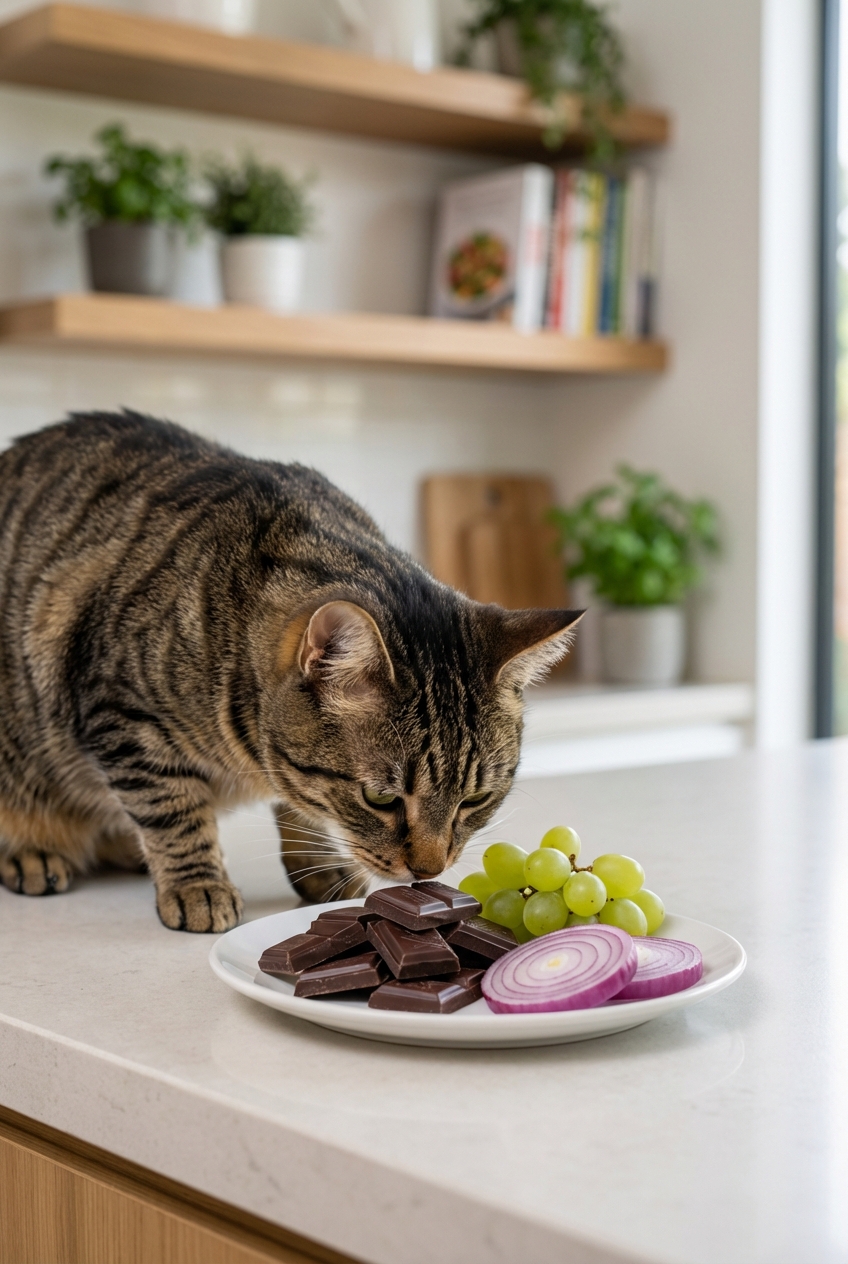
Cats can be harmed quickly by chocolate, grapes/raisins, and onions (Allium). Learn toxicity risks, warning signs, timelines, and exactly what to do if expos...
Article
•
Designer Mixes
Are Grapes Toxic to Cats? What to Do Immediately

Shari Shidate
Designer Mixes contributor
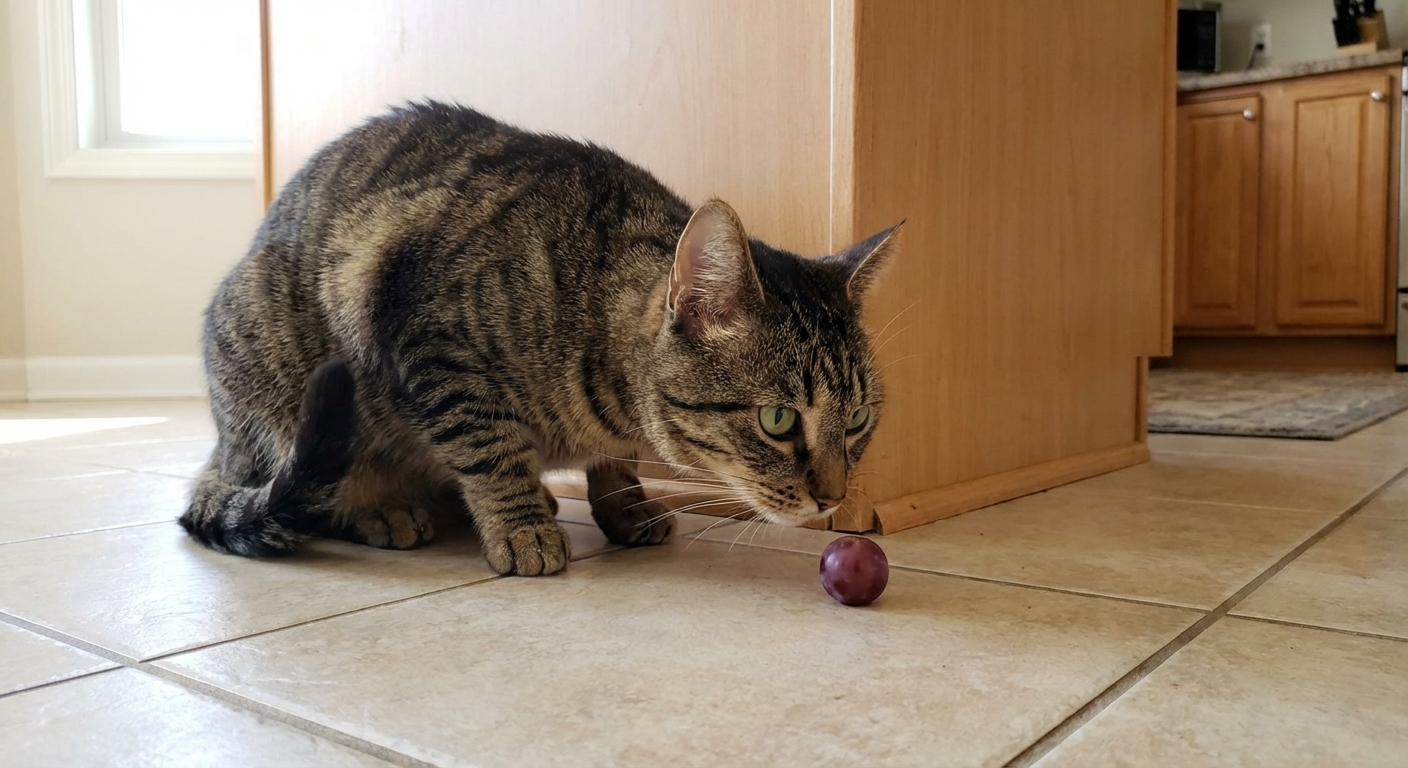
If you just caught your cat licking a dropped grape or chewing on a raisin, your heart is probably in your throat. I get it. In vet clinics, we see a lot of “Is this an emergency?” moments, and it is always better to ask quickly than to wait and wonder.
Bottom line: Grapes and raisins are not recommended for cats. In dogs, they are a known cause of serious kidney injury in some cases. In cats, the evidence is much less clear and true risk is unknown, but because kidney injury has been reported and we cannot predict sensitivity or dose, most veterinarians recommend prompt consultation after any suspected ingestion.
Why grapes are a concern
We still do not fully understand what compound in grapes and raisins causes toxicity. What we do know from veterinary toxicology is that in susceptible animals, ingestion can be associated with acute kidney injury. The scary part is the unpredictability. Some pets seem fine after a small amount, while others can become very ill.
Because the data in cats is limited and the mechanism and dose are unknown, the safest approach is to treat grapes and raisins like a “do not feed” food and to get guidance quickly if your cat gets into them.
How much is toxic?
There is no proven safe amount of grapes or raisins for cats. A single grape may not cause problems in every cat, but we cannot predict which cat will be sensitive, and we do not have a reliable toxic dose for cats.
Raisins are especially concerning because they are more concentrated and easier to eat quickly, especially when they are in trail mix, cookies, cereal, granola bars, or bread.

What to do now
1) Remove access and confirm what happened
- Take away the grapes, raisins, or foods containing them.
- Try to estimate how many were eaten and when.
- Save the packaging or ingredients list if it was a baked good or snack mix.
2) Call for guidance right away
Do not wait for symptoms. Call:
- Your veterinarian, or
- An emergency veterinary hospital, or
- ASPCA Animal Poison Control (fee may apply): 1-888-426-4435, or
- Pet Poison Helpline (fee may apply): 1-855-764-7661
3) Do not try to make your cat vomit at home
Many well-meaning home remedies are unsafe for cats. Do not use hydrogen peroxide in cats. Cats are at higher risk of complications from at-home vomiting attempts, including aspiration and severe irritation or injury.
If decontamination is appropriate, your veterinarian will tell you what to do. In general, it is most effective when started within a few hours of ingestion, which is another reason not to wait.
4) If you are told to come in, go now
If your vet recommends an exam, time matters. Early care may include:
- Decontamination performed safely in clinic (and possibly activated charcoal, if appropriate)
- Baseline labwork to assess kidney values
- IV fluids to support kidney perfusion
- Monitoring urine output and repeat bloodwork
In toxicology cases, prompt treatment can make a big difference. Even when a pet appears normal, the goal is to reduce absorption early and support the kidneys before injury develops.
What not to do
- Do not “wait and see” just because your cat looks fine.
- Do not give milk, oil, salt, or other home remedies.
- Do not force food or water.
- Do not give human medications unless a veterinarian instructs you to.
Symptoms to watch for
Some cats may show no immediate signs. Others can develop symptoms within hours to a day. Contact a veterinarian urgently if you notice any of the following after possible grape or raisin exposure:
- Vomiting or retching
- Diarrhea
- Drooling
- Loss of appetite
- Lethargy or weakness
- Abdominal discomfort
- Changes in drinking or urination (drinking more or peeing more, or urinating less than usual)
Important: Early absence of symptoms does not rule out a problem. If ingestion may have happened, call first and let your vet guide you.

What your vet may ask
These details help your care team decide the safest next step:
- Your cat’s weight, age, and any known kidney or chronic conditions
- The exact item (fresh grape vs raisin vs baked good)
- Approximate amount eaten
- Time since ingestion
- Any current symptoms
- Whether other pets were exposed too
Possible follow-up
Because kidney changes can be delayed, your veterinarian may recommend repeat kidney values and urine checks after treatment, often in the 24 to 72 hour window, depending on exposure and your cat’s health.
If you are not sure it was grapes
It is not always obvious what cats get into. If you found chewed food or crumbs, scan for common sources of raisins and grapes, such as:
- Trail mix and lunchbox snacks
- Granola bars and cereal mixes
- Oatmeal cookies and baked goods
- Cinnamon-raisin bagels, raisin bread, and muffins
- Some salads (raisins added for sweetness)
If you are unsure what was eaten, take a photo of the product or ingredient list and share it with your vet or poison control.
Prevention tips
As a vet assistant, I love simple prevention because it saves you stress and keeps cats safe.
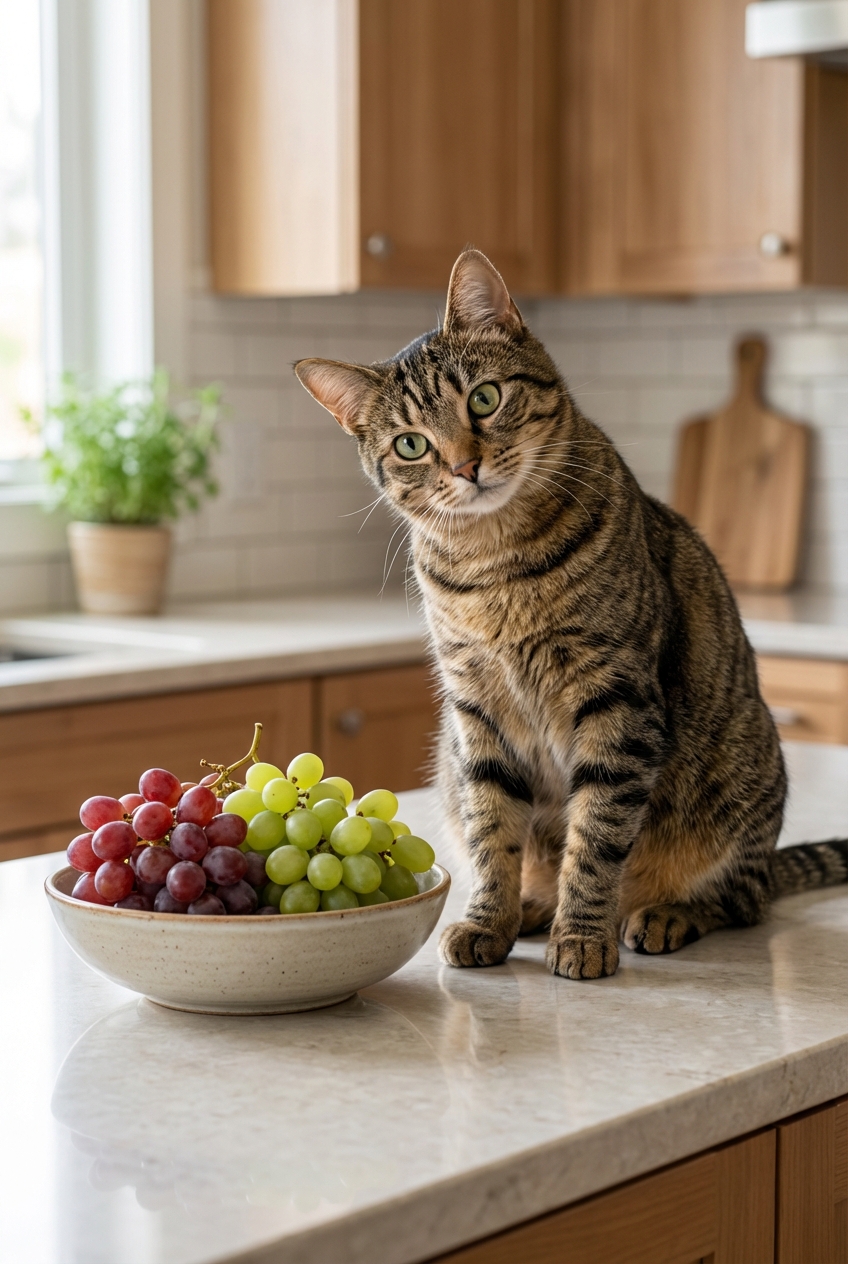
- Store grapes and raisins in closed containers and keep them off counters. Cats can surprise you with their reach.
- Be extra careful with trail mix, oatmeal cookies, raisin bread, granola bars, and lunchboxes.
- Teach kids that sharing snacks with pets is not allowed unless an adult approves.
- If you want a treat, ask your vet. Small amounts of cat-safe options may be fine for some cats, but cats do not nutritionally need fruit.
Quick FAQ
Are grape stems or grape juice dangerous?
Because the toxic component is not clearly identified, treat products containing real grapes or raisins (including skins, pulp, dried fruit, and some extracts) as a concern. With juices and processed foods, ingredients vary a lot. Some contain very little grape, while others may include additional toxins (for example, xylitol in certain sugar-free products). When in doubt, call your vet or poison control with the ingredient list.
What if my cat only licked a grape?
A lick may be low risk, but it is still worth a quick call to your vet, especially if your cat is very small, has kidney disease, or you are not sure whether a bite was taken.
Should I watch at home instead of going in?
Home monitoring may be recommended in some low-exposure cases, but that decision should be made with a veterinarian after they review the details.
If your cat may have eaten grapes or raisins, the safest move is to call your veterinarian or poison control immediately. It is one of those situations where fast guidance is far better than waiting to see what happens.