Not sure what to share with your cat? Discover the safest human foods (plain meats, cooked egg, some fruits/veggies), how much is okay, and what to avoid lik...
Article
•
Designer Mixes
Are Eggs Good for Cats? Cooked vs. Raw

Shari Shidate
Designer Mixes contributor
As a veterinary assistant, I get this question all the time: Can cats eat eggs? If so, should they be cooked or raw? The good news is that eggs can be a nutritious, budget-friendly add-on for many cats when they are prepared safely and fed in the right amount.
But there is an important distinction here. Cooked eggs are the safer choice. Raw eggs come with real risks that are easy to avoid, especially for kittens, seniors, and cats with underlying health conditions.
Are eggs good for cats?
In most healthy cats, eggs can be a wholesome treat because they provide:
- High-quality protein with essential amino acids, which support muscle, skin, and immune function.
- Healthy fats that can help with energy and coat condition.
- Key nutrients like vitamin A, several B vitamins, selenium, and choline.
Cats are obligate carnivores, meaning they thrive on animal-based nutrients. Eggs are an animal product, so they fit the basic idea of a feline-friendly food. Still, eggs should be a small add-on, not a replacement for a complete and balanced cat food.
Cooked vs. raw eggs for cats
Why cooked eggs are best
Cooking eggs lowers the risk of foodborne illness and generally makes them easier to digest. That said, some cats can still get an upset stomach even with cooked egg, especially if they eat too much too fast.
The risks of raw eggs
Raw eggs are not “more natural” in a way that makes them safer for cats. The main concerns are:
- Bacteria exposure: Raw eggs can carry Salmonella and other foodborne germs. Cats can get sick, and there is also a possible risk to people in the home through handling contaminated food, contact with saliva, or litter box cleanup. Good handwashing and routine kitchen hygiene go a long way.
- Biotin interference: Raw egg whites contain avidin, a protein that binds biotin (a B vitamin). This is mostly a concern with frequent, long-term feeding of raw whites.
- More tummy trouble: Some cats simply do not tolerate raw egg well and can develop vomiting or diarrhea.
Even if eggs are pasteurized, I still do not recommend feeding them raw. If you are deciding between the two, cooked wins on safety for the average household.
How to feed eggs safely
If your cat is curious about eggs, keep it simple and cat-appropriate:
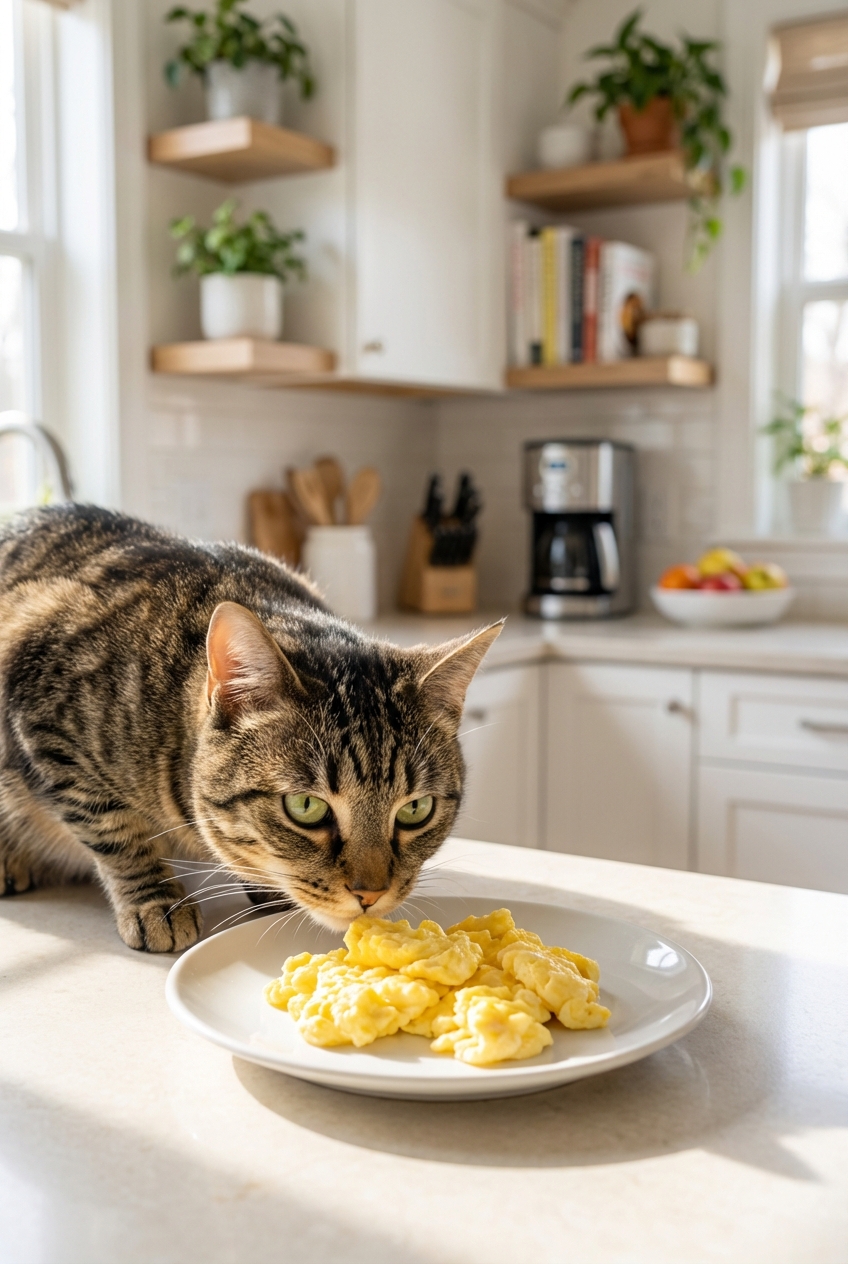
- Cook thoroughly: Scrambled, hard-boiled, or a plain omelet cooked through (no fillings or seasoning) is fine.
- Serve plain: No salt, pepper, garlic, onion, cheese, butter, or oils.
- Skip the shell: Eggshell can be a choking hazard and may irritate the GI tract.
- Offer small portions: Start with 1 to 2 small bites and see how your cat does.
- Go slow: Introduce eggs on a day you can monitor your cat for vomiting, loose stool, or itching.
- Refrigerate leftovers: Store cooked egg promptly. Discard anything left at room temperature for more than 2 hours (less time if it is hot).

How much egg can a cat have?
For most cats, egg works best as an occasional treat. A practical guideline is to keep treats, including eggs, at 10% or less of daily calories. Too much egg can add extra calories and fat quickly, which matters because feline weight gain is so common.
To make that easier to picture, here are simple, conservative serving examples:
- Small cats (or cats who gain weight easily): about 1 teaspoon of cooked egg.
- Average adult cats: about 1 to 2 teaspoons, up to 1 tablespoon of cooked egg.
- Upper limit for most cats: roughly no more than 1/4 of an egg at a time, and not daily.
If you want a frequency guideline, once or twice a week at most is a reasonable “occasional treat” schedule for many healthy cats.
If your cat is overweight, has a history of pancreatitis, has high blood fats, or needs a lower-fat plan, keep portions even smaller since the yolk is higher in fat.
If your cat is on a therapeutic diet (for urinary issues, kidney disease, food allergies, pancreatitis, or GI disease), check with your veterinarian before offering eggs. Even a healthy food can be the wrong choice for a specific medical plan.
Signs eggs may not agree with your cat
Even with cooked egg, some cats may react poorly. Stop feeding egg and call your vet if you notice:
- Vomiting or diarrhea that persists or is severe
- Excessive drooling, lip-smacking, or repeated swallowing
- Itching, facial swelling, hives, or ear inflammation
- Lethargy, loss of appetite, or signs of abdominal pain
Food sensitivities and allergies can happen with almost any protein, including egg.
Special situations
If your cat is a kitten, elderly, pregnant, or has a condition that affects immune function, it is especially important to avoid raw eggs. These cats are more vulnerable to complications from foodborne bacteria. For them, if you want to share egg at all, stick to fully cooked and very small amounts.
Bottom line
Yes, eggs can be good for many cats as a simple, protein-rich treat. The safest option is plain, fully cooked egg served in small portions. Skip the raw egg trend, and focus on what keeps your cat thriving long-term: a complete and balanced diet with thoughtful, safe extras.
When in doubt, treat eggs like a topper, not a staple. Small amounts can be a simple way to add variety without throwing off your cat’s nutrition.