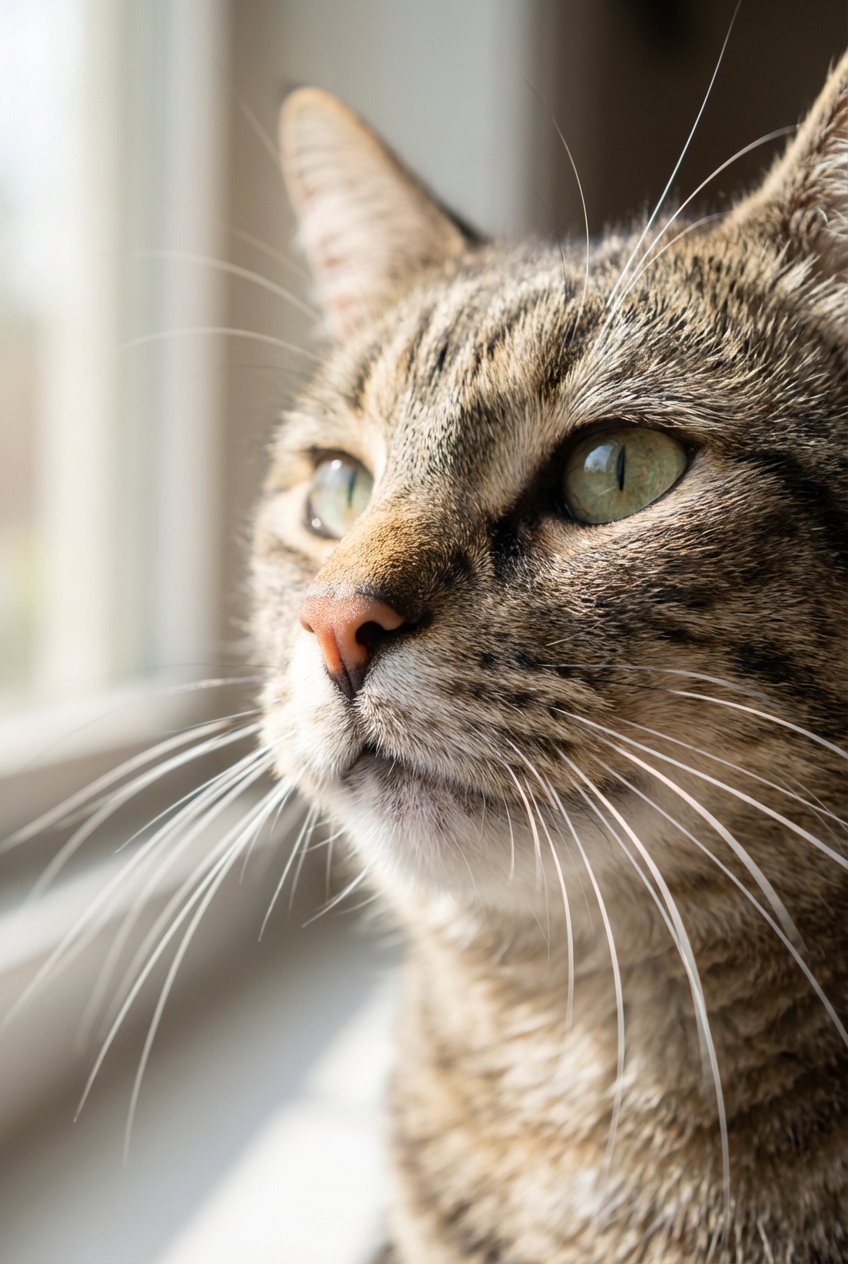
Cats can’t see in total darkness, but they excel in low light. Discover how big pupils, the tapetum lucidum, and rod-heavy retinas boost night vision—and...
Article
•
Designer Mixes
Are Cats Colorblind?

Shari Shidate
Designer Mixes contributor
As a veterinary assistant, I hear this question a lot: Are cats colorblind? Not exactly. Cats can see color, but their world is more muted than ours, with vision built for low light and movement. So if you have ever wondered why your cat ignores that bright red toy but goes wild for a feather that twitches, it is not you. It is feline biology.
Quick answer
Cats are not fully colorblind. Most research supports that cats are dichromats, meaning they primarily use two types of color-sensitive cone cells in the retina. Humans are typically trichromats with three cone types, and that difference matters.
In simple terms, cats can see some colors, but they have a harder time with fine color discrimination than we do.
- Cats’ cone vision is tuned toward blue-violet and yellow-green, which can make those hues easier to distinguish than reds.
- Reds and greens are harder to tell apart and often look more muted or less distinct.
- Their eyes prioritize dim-light sensitivity and motion detection more than crisp color detail.
What colors can cats see?
So what does that mean in everyday life? Think of your cat’s color vision as similar to a human with red-green color deficiency. Blues may look relatively more distinct, while reds and greens can blend into the background, especially in certain lighting.
While individual variation exists and lighting changes what stands out, many scientists agree cats are most responsive to:
- Blue-violet hues
- Yellow-green hues (often more “yellowish” than “emerald green”)
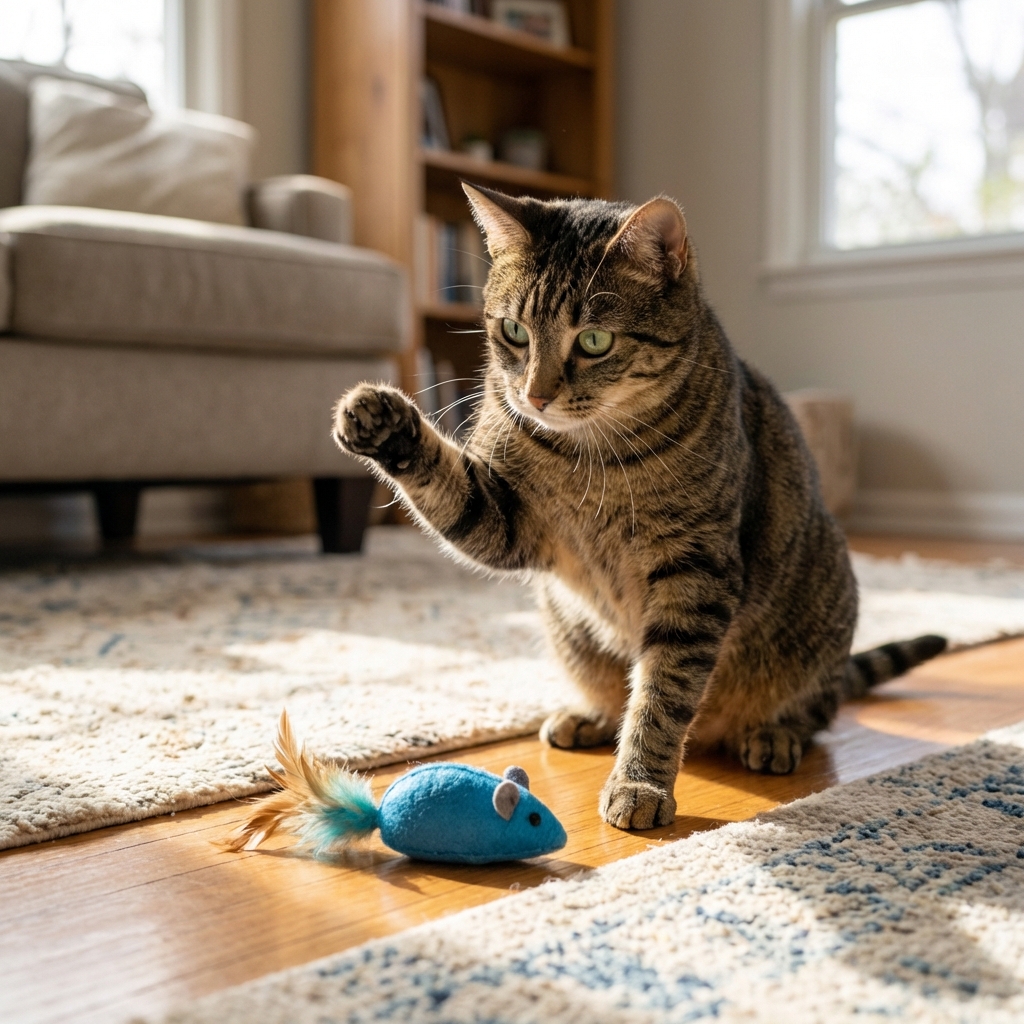
So when you are choosing toys, bedding, or enrichment items, blue and yellow tones may be more visually distinct to a cat than red or orange. That said, brightness and contrast, plus motion, often matter more than the exact shade.
Why cats do not need it
Cats are designed to hunt small prey, not to admire a rainbow. Their visual priorities are different from ours. Compared to humans, cats tend to have:
- More rod cells (better sensitivity in low light, relative to humans)
- Fewer cone cells (less color detail, relative to humans)
- A reflective layer called the tapetum lucidum, which helps maximize available light
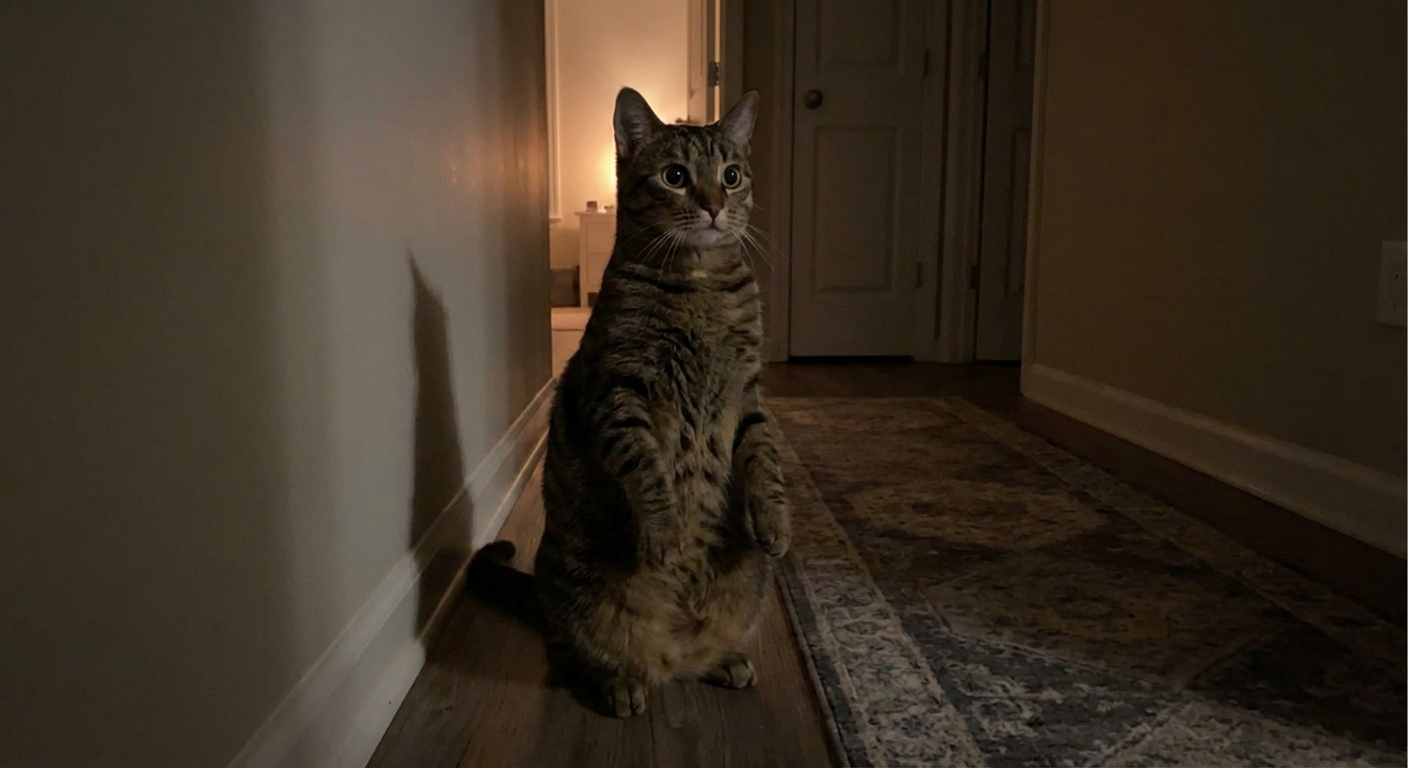
This is why your cat’s eyes can appear to “glow” in photos or headlights. It is also why many cats can navigate confidently in dim light, even though they cannot see in complete darkness.
What cats see
If we could step into a cat’s eyes for a minute, here are a few big differences you would likely notice:
1) Less saturated color
Colors are there, but they look more washed out. Reds can look darker or duller, and some greens may be harder to separate from similar tones.
2) Better dim-light vision
Cats do not see perfectly in complete darkness, but they can see far better than humans in very low light. Their eyes are built to use tiny amounts of available light efficiently.
3) Strong motion detection
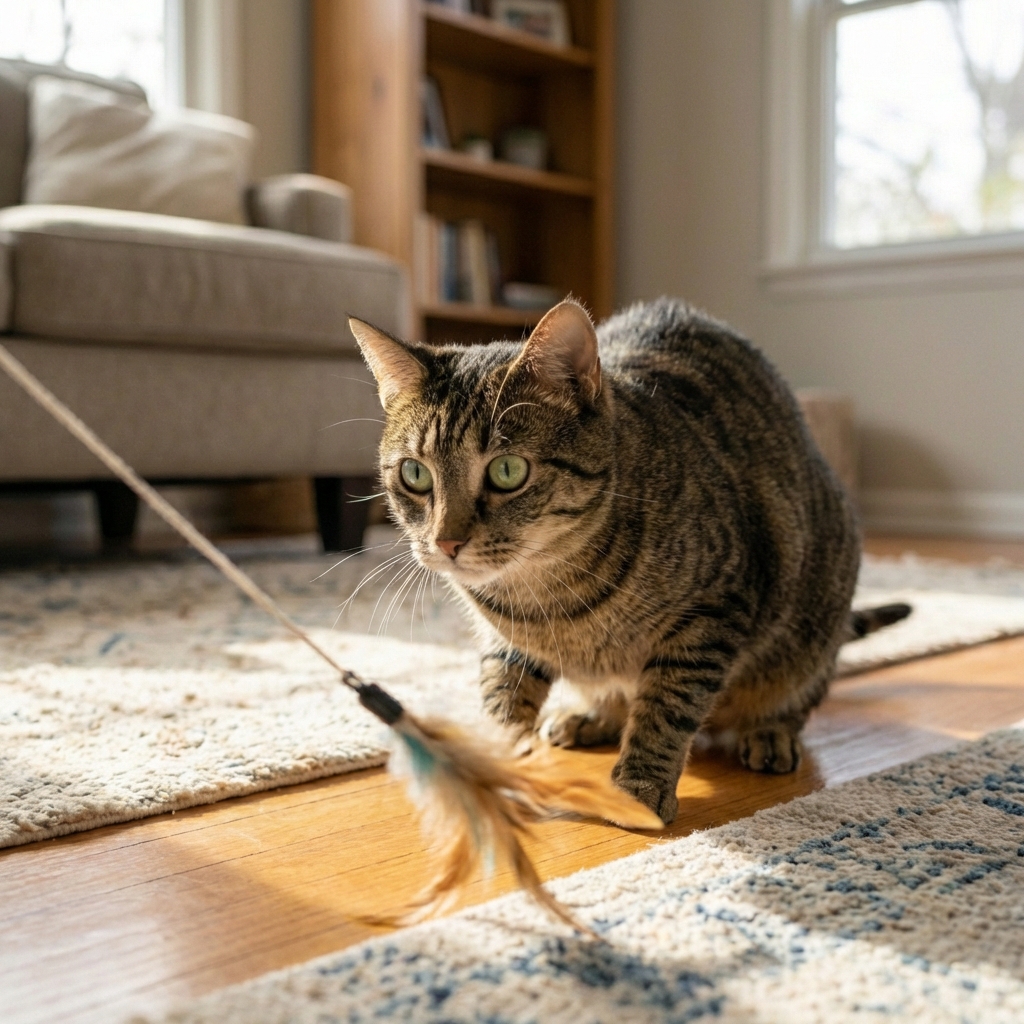
A small flick of a tail, a twitchy toy, or the tiniest movement under a blanket can grab their attention quickly.
4) Lower sharpness than humans
In general, cats are estimated to see fine detail less sharply than we do. They are often better tuned for closer-range focus, while humans tend to do better with distance detail.
Does color matter?
Color matters some, but it is not their main sense for decision-making. Cats rely heavily on:
- Smell (for recognition and comfort)
- Hearing (especially high frequencies)
- Whisker and body sensation (for spatial awareness)
- Movement and contrast (for visual targeting)
That is why a toy that is the “wrong” color can still be a favorite if it moves unpredictably, has an interesting texture, makes a sound, or carries a familiar scent.
Quick FAQ: Do cats prefer certain colors? Usually, preferences are driven more by movement, contrast, texture, and scent than by color alone.
Home tips
If you want to make your home more visually engaging for your cat, here are a few practical ideas you can try today:
- Try toys in blue or yellow tones if you want higher visual contrast.
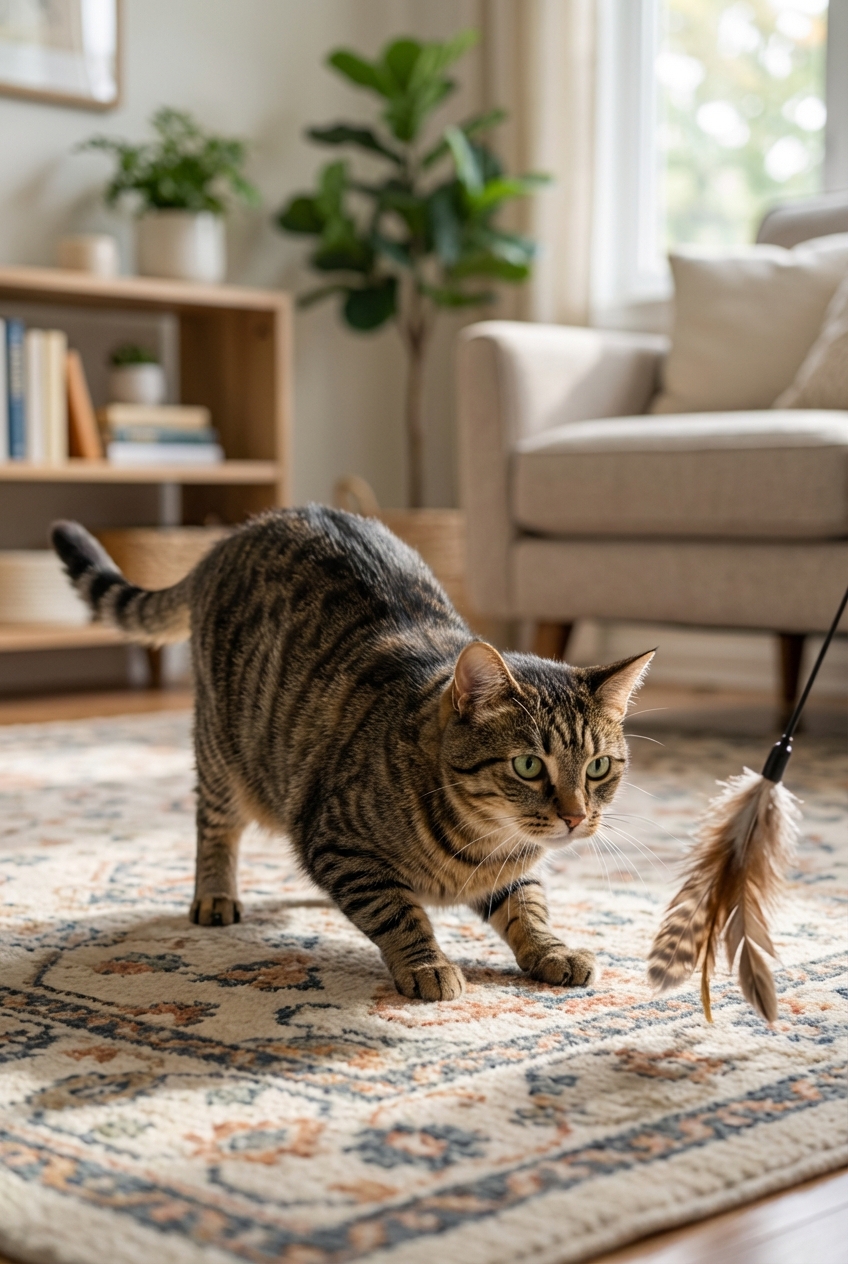
- Prioritize motion over color: wand toys, rolling toys, and anything that skitters often win.
- Use clear contrast for senior cats: if your cat is aging or has vision changes, choose bowls, beds, and pet stairs that stand out from the floor.
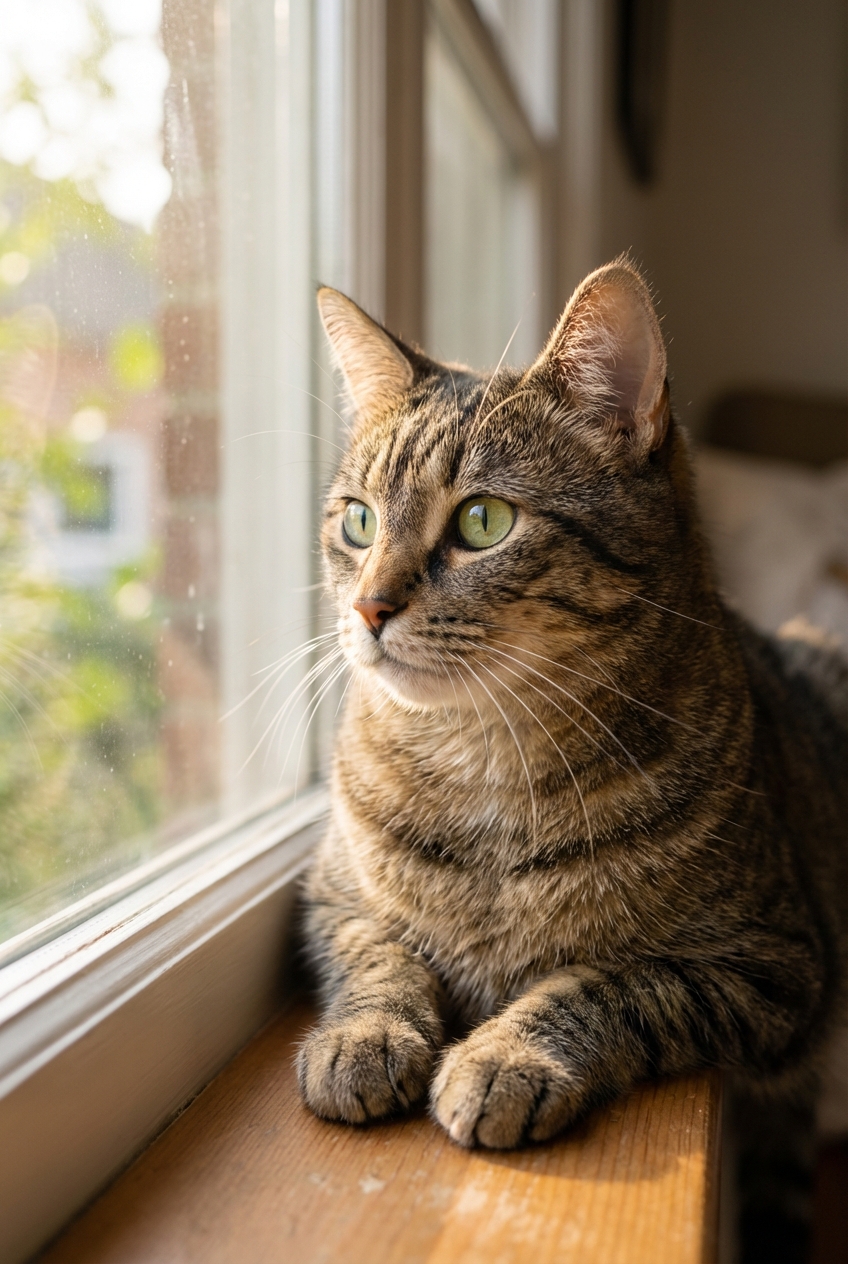
- Create a window viewing spot: bird feeders and outdoor activity offer “cat TV,” especially around dawn and dusk.
If you ever notice sudden clumsiness, bumping into objects, new hesitation on stairs, or one eye looking different from the other, it is worth calling your veterinarian. This article is general education, not a diagnosis, and vision changes can be subtle at first.
Bottom line
Cats are not colorblind, but they do not see the same color-rich world that we do. Their vision is tuned for what matters most to a small predator: dim light, movement, and quick detection. If you keep that in mind when choosing toys and setting up your home, you will be working with your cat’s natural strengths, not against them.