Scooting, licking, or a fishy smell can signal anal gland trouble. Learn key causes, warning signs, and prevention steps—stool quality, weight control, and...
Article
•
Designer Mixes
Anal Glands in Dogs: Care and Training Tips

Shari Shidate
Designer Mixes contributor
Anal glands are one of those dog health topics that feels awkward until it is happening in your living room. Scooting, sudden licking under the tail, or a strong fishy or musky smell are common clues. The good news is that most anal gland issues are manageable, and many dogs improve with a mix of smart home care, calm handling practice, and a few habit changes that support healthy poop.
As a veterinary assistant, I like to keep this evidence-based and practical. I will walk you through what anal glands do, what is normal, what is not, and how to safely build your dog’s comfort with tail and rear-end handling. I will also be very clear about when you should skip home care and call your vet.
What anal glands are and why they act up
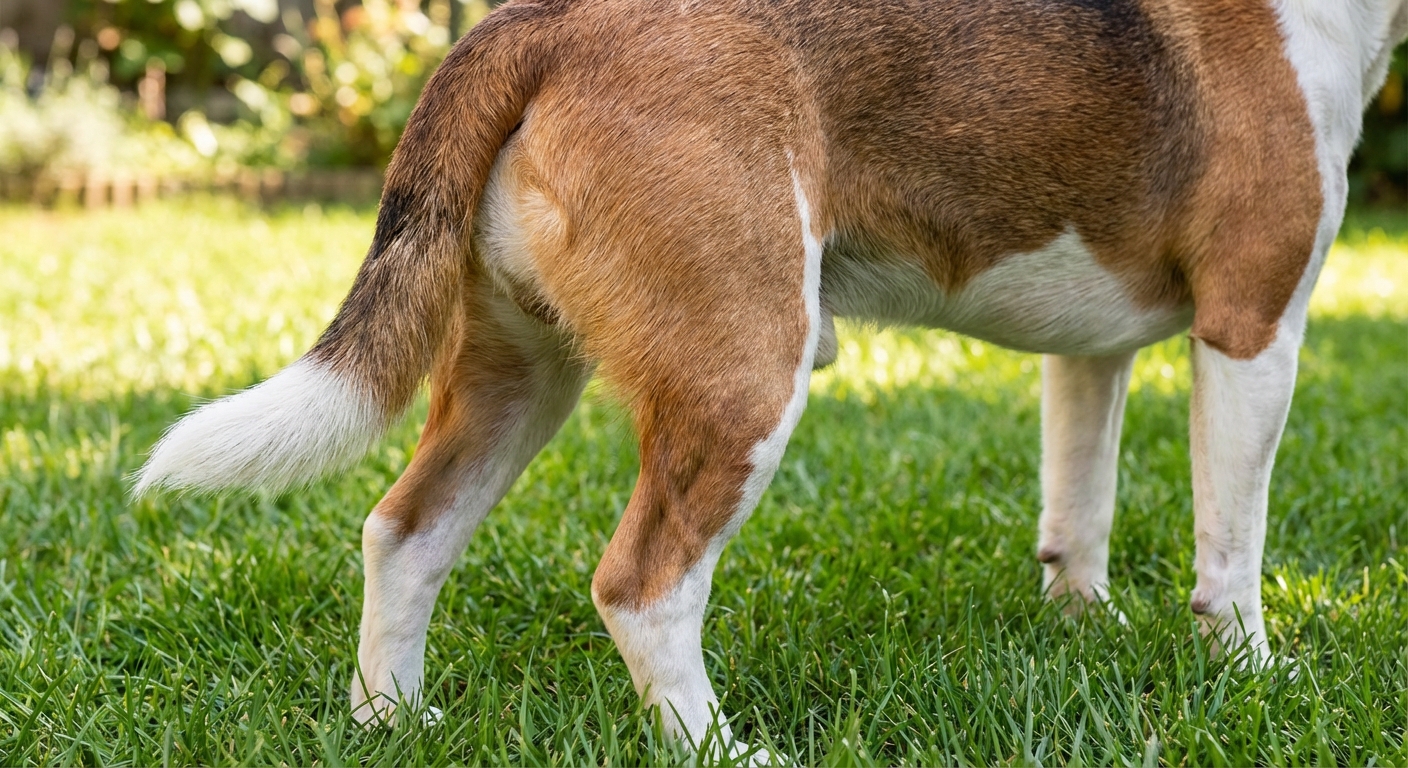
Dogs have two small anal sacs located just inside the anus, roughly around the 4 o’clock and 8 o’clock positions. These sacs hold a strong-smelling fluid that normally expresses in tiny amounts when a dog has a firm bowel movement. The scent is part of canine communication.
Problems happen when the sacs do not empty well. This can lead to impaction (thickened material that will not express), infection, or even an abscess that can rupture through the skin.
Common risk factors
- Soft stool or chronic diarrhea so there is not enough pressure to empty the sacs.
- Small breeds and some fluffy designer mixes that are prone to recurrent issues.
- Allergies (environmental or food) that cause inflammation around the anus.
- Obesity which can reduce normal muscle tone and expression.
- Stool that is consistently soft, small-volume, or low-bulk which may reduce natural emptying. (Fiber helps some dogs and worsens others, so it is not one-size-fits-all.)
Signs your dog may need help
Anal gland discomfort looks a lot like itchiness or “rear-end weirdness.” Watch for:
- Scooting on carpet or grass
- Sudden licking or chewing under the tail
- Straining to poop or seeming uncomfortable after pooping
- A fishy or musky odor
- Swelling near the anus, redness, or pain when sitting
- Blood, pus, or a draining spot near the anus
Also keep in mind: scooting alone does not prove anal gland trouble. Other common causes include tapeworm segments or other parasites, perianal skin irritation or allergies, messy stool stuck in the coat, fleas, diarrhea or GI upset, and even orthopedic or back pain that makes sitting feel strange.
If you see swelling, an open sore, bleeding, pus, or your dog is painful, do not try to express glands at home. Call your veterinarian the same day.
Home care: when and when not
Home care can be reasonable if
- Your dog is otherwise acting normal and comfortable.
- You notice mild scooting or licking with no swelling, no heat, no wounds.
- Your vet has confirmed in the past that your dog gets simple impactions and has shown you safe technique.
Skip home care and go to the vet if
- Your dog yelps, snaps, or cannot sit comfortably.
- You see swelling, a lump, redness, broken skin, or discharge.
- Your dog has fever, lethargy, reduced appetite, or constipation.
- This is the first time you suspect anal gland trouble.
- The problem is frequent or increasing (for example, more than a few times a year).
Why so cautious? Because expressing an infected or abscessed sac can be extremely painful and can worsen tissue irritation. Also, masses in the anal sac area can occur, and they should be evaluated by a veterinarian.
At-home prevention checklist
1) Aim for “perfect poop”
Most routine anal gland issues improve when stool is consistently firm and formed. Your goal is stool that is easy to pass, holds shape, and does not smear.
- Consider fiber, slowly. Many dogs do well with plain canned pumpkin (not pie filling) or a veterinary-approved fiber supplement, but some dogs do not. Introduce gradually and ask your vet for an amount that fits your dog’s size, diet, and medical history.
- Hydration matters. Fiber needs water to work well. Encourage drinking with fresh bowls, fountains, or adding water to meals.
- Address diarrhea quickly. A few days of soft stool can set off scooting. For a healthy adult dog with mild diarrhea, a quick check-in with your vet is wise if it lasts more than 24 to 48 hours. Call sooner for puppies, seniors, small dogs, dogs with blood in stool, vomiting, lethargy, dehydration, or any chronic condition.
2) Keep the area clean and trimmed
For fluffy mixes, hair can trap stool and irritate the skin around the anus, which can increase licking and inflammation.
- Ask your groomer for a sanitary trim.
- Wipe gently with a pet-safe, fragrance-free wipe after messy stools.
- Watch for skin redness or moisture, which can invite infection.
3) Manage allergies when they are part of the picture
Chronic licking, ear infections, paw chewing, and recurrent anal gland problems can be connected. If you suspect allergies, talk with your veterinarian about a plan that may include parasite control, diet trials, and targeted medication.
Cooperative care training
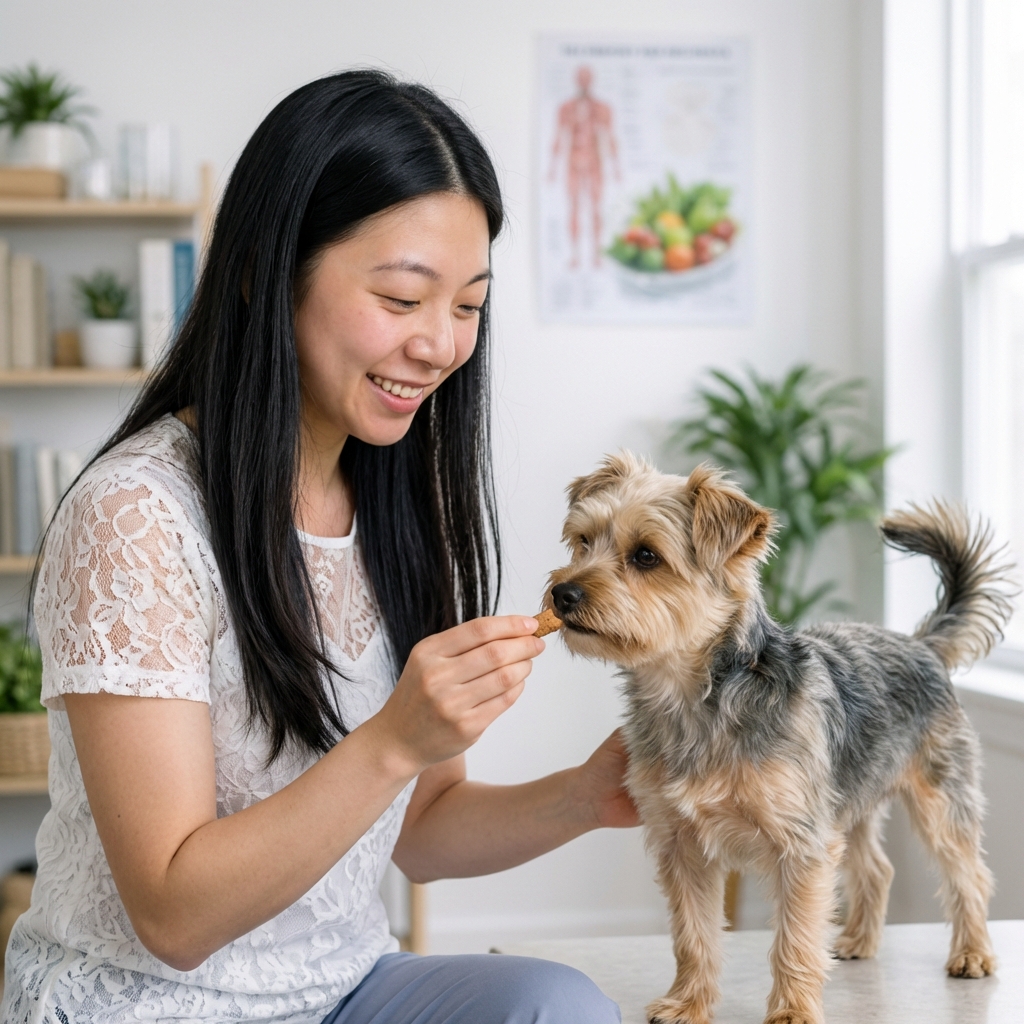
Even if you never express glands at home, teaching your dog to calmly tolerate tail lifts, gentle wiping, and vet exams is a gift. This is cooperative care training. It reduces stress and makes medical handling safer for everyone.
What you need
- High-value treats (soft and smelly works best)
- A non-slip mat
- A calm space
- Optional: a helper to feed treats
1) Build a “yes” moment
Mark and reward calm behavior. If you use a clicker, great. If not, a cheerful “yes” works. The order matters: touch briefly, then mark, then treat.
2) Start far from the target
Begin by touching the shoulder or chest, mark, treat. Then move to the back, mark, treat. Then the hips, mark, treat.
3) Introduce tail touches
Gently touch the base of the tail for one second, mark, treat. Repeat until your dog looks relaxed and expectant rather than worried.
4) Add a tiny tail lift
Lift the tail just an inch, mark, treat. Keep sessions short, like 1 to 2 minutes. Stop before your dog gets restless.
5) Add a predictable cue
You can say “tail” right before you touch. Predictability lowers stress.
6) Add gentle wiping practice
Hold a dry tissue near the area first, mark, treat. Then briefly touch the fur near the anus, mark, treat. Later, you can practice with a pet-safe wipe if needed after potty breaks.
7) Teach a “pause” option
If your dog turns their head away, sits down, tucks tail, or walks off, respect that. Take a break and go back to an easier step next time. Consent-based handling builds long-term cooperation.
What not to do
- Do not use essential oils or home remedies on the area. They can burn and worsen inflammation.
- Do not use human wipes with fragrance or alcohol. Choose pet-safe, fragrance-free wipes.
- Do not squeeze hard or repeatedly. Force can bruise delicate tissue.
- Do not attempt any expression if there is pain, swelling, heat, bleeding, pus, or an open sore.
- Do not assume scooting means glands. Check with your vet, especially if this is new.
If your vet taught you: expression basics
Some owners are shown how to do external expression for dogs with frequent impactions. If you have not been trained by your veterinary team, please use this section as context only, not a how-to you attempt for the first time.
Safety notes first
- Wear gloves and have paper towels ready. The smell is strong and can spray.
- Never force it. Pain, swelling, or thick pasty material can mean infection or impaction needing professional care.
- If you see blood or pus, stop and call your vet.
External vs internal
Some anal sacs can be partially emptied with gentle external pressure, but many require internal expression performed by a trained professional for a complete and safer emptying. If external expression does not help quickly, or if your dog is uncomfortable, it is time to stop and call your veterinary team.
General external approach (high-level overview)
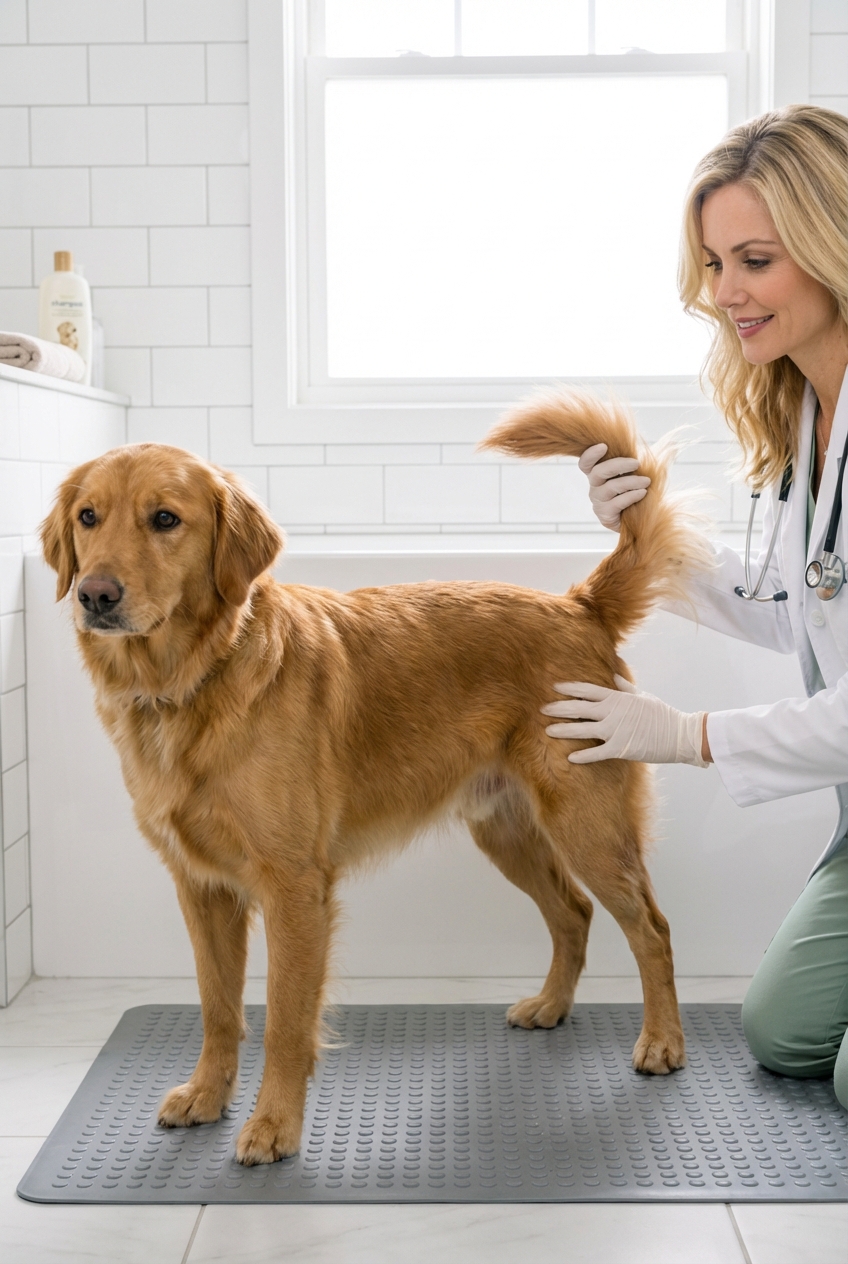
With your dog standing, the tail is gently lifted. From the outside, light pressure is applied on both sides of the anus, as if pushing material toward the opening. Many dogs do best when this is done by a professional because the tissues are sensitive and improper technique can cause irritation.
If your dog needs frequent expression, ask your vet about underlying causes like allergies, diet changes to improve stool quality, parasites, or medical conditions that affect the area.
Preventing repeat problems
Nutrition and stool quality
For many dogs, prevention starts with stool consistency. Discuss safe fiber and diet options with your veterinarian, especially if your dog has pancreatitis history, IBD, or food sensitivities.
Healthy weight and movement
Daily walks help regular bowel movements. Maintaining a healthy body condition also supports normal muscle tone in the pelvic region.
Grooming for designer mixes
Many designer mixes have dense coats that trap debris. Routine sanitary trims and gentle cleaning after messy stools can reduce irritation that leads to licking and inflammation.
Do not over-express
Expressing too often can inflame tissues and may make some dogs more prone to irritation. Many dogs do not need routine expression unless your veterinarian recommends it.
When to call the vet
Your veterinarian may recommend:
- Anal sac expression and flushing
- Cytology to look for infection
- Antibiotics and pain relief if infected
- Allergy management if chronic inflammation is suspected
- Dietary changes to improve stool consistency
- Surgery in rare, severe, or recurrent cases
Seek urgent care if there is a rapidly growing swelling, a ruptured abscess, significant bleeding, or your dog is clearly painful.
You know your dog best. If the behavior is sudden, intense, or painful, trust your instincts and call your veterinarian.
Quick takeaways
- Anal glands usually empty naturally with firm stools.
- Scooting is common but not “normal” if it keeps happening.
- Focus on poop quality, hygiene, parasite prevention, and allergy control for prevention.
- Train cooperative handling so exams and cleanups are low stress.
- Skip home expression if there is pain, swelling, blood, pus, or this is the first episode.