
Alaskan Malamute Temperament, Exercise, and Cold-Weather Care

Alaskan Malamutes are powerful, people-focused working dogs built for endurance and serious pulling. They are often described as friendly and affectionate, and that can be true, but it is only part of the story. A Malamute is also large, strong, independent, and typically driven to move, dig, and pull. When those needs are met, they can be wonderful family companions. When they are not, life can get loud, chaotic, and expensive.
Below is a full, honest breed guide focused on temperament, exercise minimums, grooming a double coat, cold-weather care, and real-world fit for modern homes, including rentals.
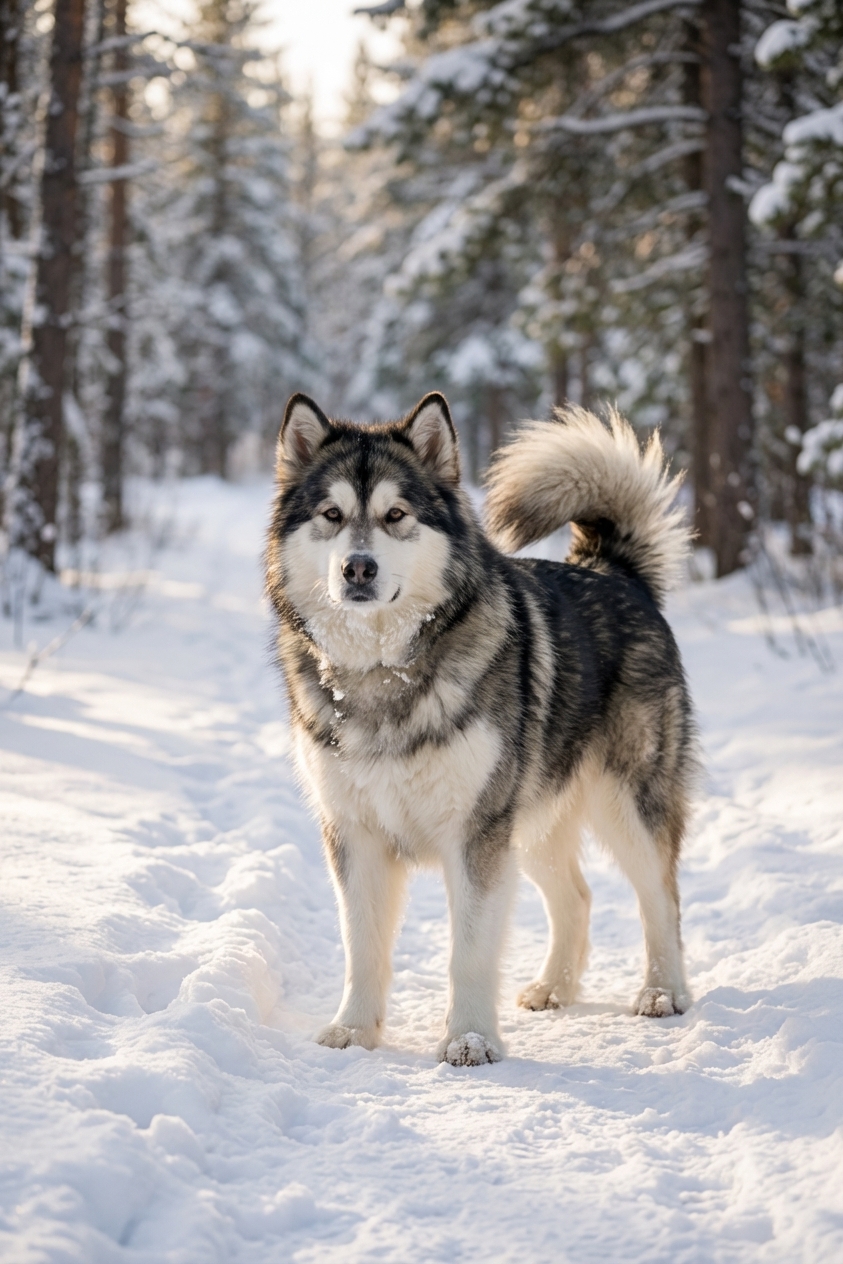
Quick facts
- Group: Working
- Size: Large and heavy-boned
- Typical weight: Females often ~65 to 75 pounds, males often ~75 to 85+ pounds (with plenty of variation)
- Energy: Medium-high with a strong need for daily work-like activity
- Coat: Dense double coat with seasonal shedding
- Cold tolerance: High
- Heat tolerance: Low (individual tolerance varies, but plan conservatively)
- Best for: Active households who enjoy training, outdoor time, and structured exercise
Temperament: what living with a Malamute feels like
Malamutes tend to be affectionate with their people and social in a confident, outgoing way. Many are what I call “lean-in dogs” that want to be near you, touch you, and participate in whatever you are doing. They also tend to have an independent streak that surprises first-time owners. They were developed to work with humans, but not necessarily to obey quickly or automatically.
Common temperament traits
- Friendly with family: Usually very attached, often goofy and playful.
- Not a classic guard dog: Many will greet strangers rather than deter them, though they can look intimidating.
- Independent thinker: They may ask “Is this worth it?” before complying.
- Strong physicality: Excitement plus size can mean accidental knocks, especially with kids or seniors.
- Potential dog selectivity: Some can be pushy or intense with other dogs, particularly same-sex pairings.
- Prey drive varies: Many will chase squirrels, rabbits, and neighborhood cats.
- Vocal communication: Howling and “talking” can be normal, especially with boredom, excitement, or routine changes.
Family fit
In the right home, Malamutes can be excellent family dogs, especially with older children who can follow training rules and respect boundaries. For homes with toddlers, the biggest issue is often body control, not aggression. An 80-pound dog joyfully spinning, bouncing, and leaning can be too much in tight indoor spaces.
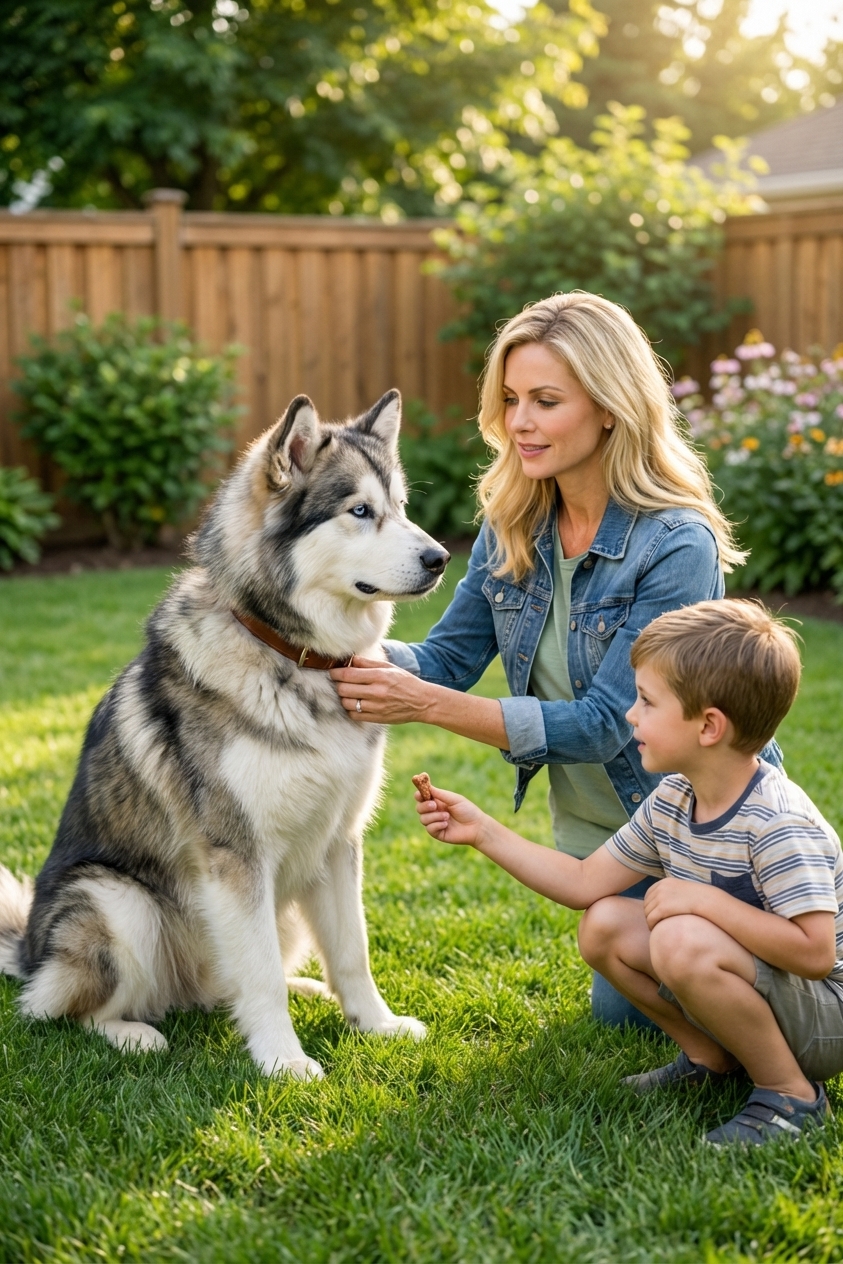
My best advice as a veterinary assistant is to plan for structure: teach a calm greeting, use baby gates, and reward “four paws on the floor.”
Size, strength, and pulling
Malamutes were bred to haul heavy loads over long distances. That history shows up in daily life as a natural desire to lean into the leash, tow you toward interesting smells, and dig in when they decide to go the other direction. This is not “bad behavior.” It is instinct plus strength.
Why leash training matters
If you wait until a Malamute is full-grown to address pulling, you will be playing catch-up. Start early with:
- Front-clip harness for training walks (to reduce leverage)
- Reinforcement-based loose-leash practice in low-distraction areas
- Daily short sessions that end before everyone is frustrated
- Skill-building outlets like sledding sports, carting, weight pull, or structured hikes
Some owners love teaching the difference between “work mode” and “walk mode.” For example, a harness and a verbal cue can mean “you may pull,” while a collar or different harness means “stay with me.” Consistency matters.
Exercise minimums
Malamutes are endurance dogs. Most do best with about 90 to 120 minutes of combined activity per day, plus mental work, but treat that as a practical starting point, not a universal rule. Some individuals need more, especially young adults. Others can do well with a bit less if the activity is higher quality and consistent. A quick potty walk will not touch their needs, and boredom is a top trigger for chewing, digging, and howling.
A realistic daily plan
- Morning: 30 to 45 minute brisk walk or training hike
- Midday: 10 to 15 minutes of training, sniff work, or food puzzles
- Evening: 45 to 60 minutes of activity, ideally including hills, pulling work, or a long sniffy walk
Best exercise outlets
- Backpacking or longer weekend hikes (build up slowly and check with your vet for joint safety)
- Canicross or skijoring (in appropriate conditions)
- Carting or pulling a weight-approved rig with proper conditioning
- Structured play with known, compatible dogs
- Enrichment feeding: frozen Kongs, scatter feeding, puzzle toys
Heat and exercise
In warm climates like the American South or Southwest, many Malamutes struggle in summer. Plan exercise at dawn and after sunset, provide shade and water, and learn the early signs of heat stress (heavy panting that does not settle, bright red gums, weakness, vomiting, collapse). When in doubt, stop, cool them down, and contact your veterinarian.

Training, recall, and containment
Malamutes can learn a lot, but they are rarely “auto-pilot” dogs. If you bring one home, plan to train like it is part of your weekly schedule, not a one-time puppy class.
What works best
- High-value rewards: Many Malamutes are not impressed by boring treats.
- Short, upbeat sessions: 5 to 10 minutes can go farther than a long drill.
- Impulse-control practice: Wait at doors, polite greetings, leave-it, and settling on a mat.
- Realistic recall expectations: Train it, reinforce it, but do not assume off-leash reliability around wildlife or exciting distractions.
Escape prevention
Many Malamutes dig and some will test fences like it is their hobby. If you rely on a yard, consider:
- Solid fencing that is tall enough for your specific dog
- Dig deterrents like buried wire, pavers, or a dig-proof footer (and a designated dig zone if you want to be kind)
- Supervision because bored dogs get creative
Double coat grooming
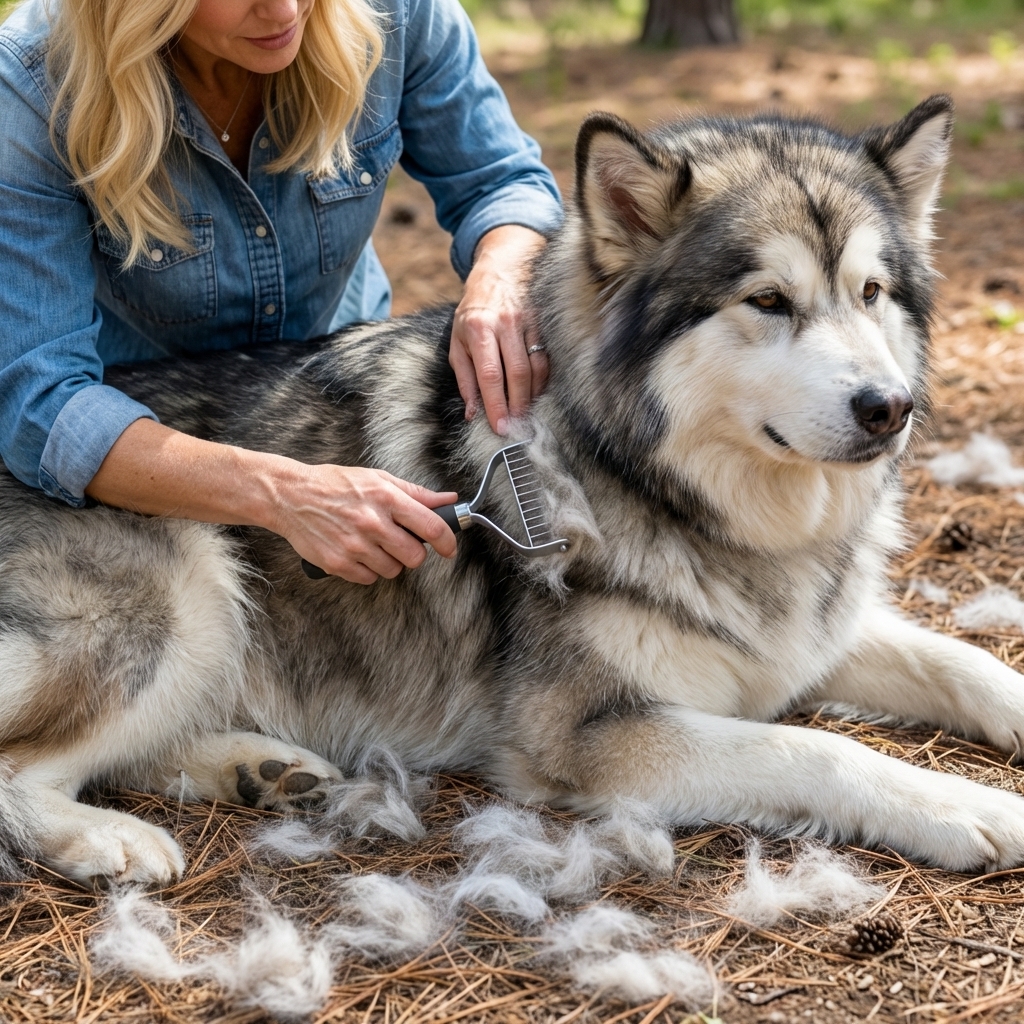
The Malamute double coat is gorgeous, insulating, and very functional in cold weather. It is also a lifestyle. Most Malamutes shed year-round and “blow coat” seasonally, often in spring and fall. During those weeks, hair can come out in handfuls.
Grooming basics
- Brush 2 to 4 times per week most of the year
- Daily brushing during coat blow, especially behind ears, pants, and chest
- Use the right tools: an undercoat rake, a slicker brush, and a metal comb for finishing
- Bathing: every 6 to 10 weeks or as needed, followed by thorough drying
- Nails: every 2 to 4 weeks (working dogs often need frequent trims)
- Ears and teeth: weekly checks and regular dental care
Should you shave a Malamute?
Usually, no. Shaving can reduce the coat’s protective insulation, increase sunburn risk, and sometimes lead to uneven or altered regrowth. If a medical condition requires shaving, your veterinarian will guide you. For hot weather comfort, focus on brushing out undercoat, indoor cooling, and smart scheduling instead.
Cold-weather care
Malamutes are famous for loving cold weather, and many will happily nap outside in safe winter conditions. That does not mean they are invincible. Cold-weather care is about balancing their comfort with real hazards like ice, salted sidewalks, and dehydration.
Winter safety checklist
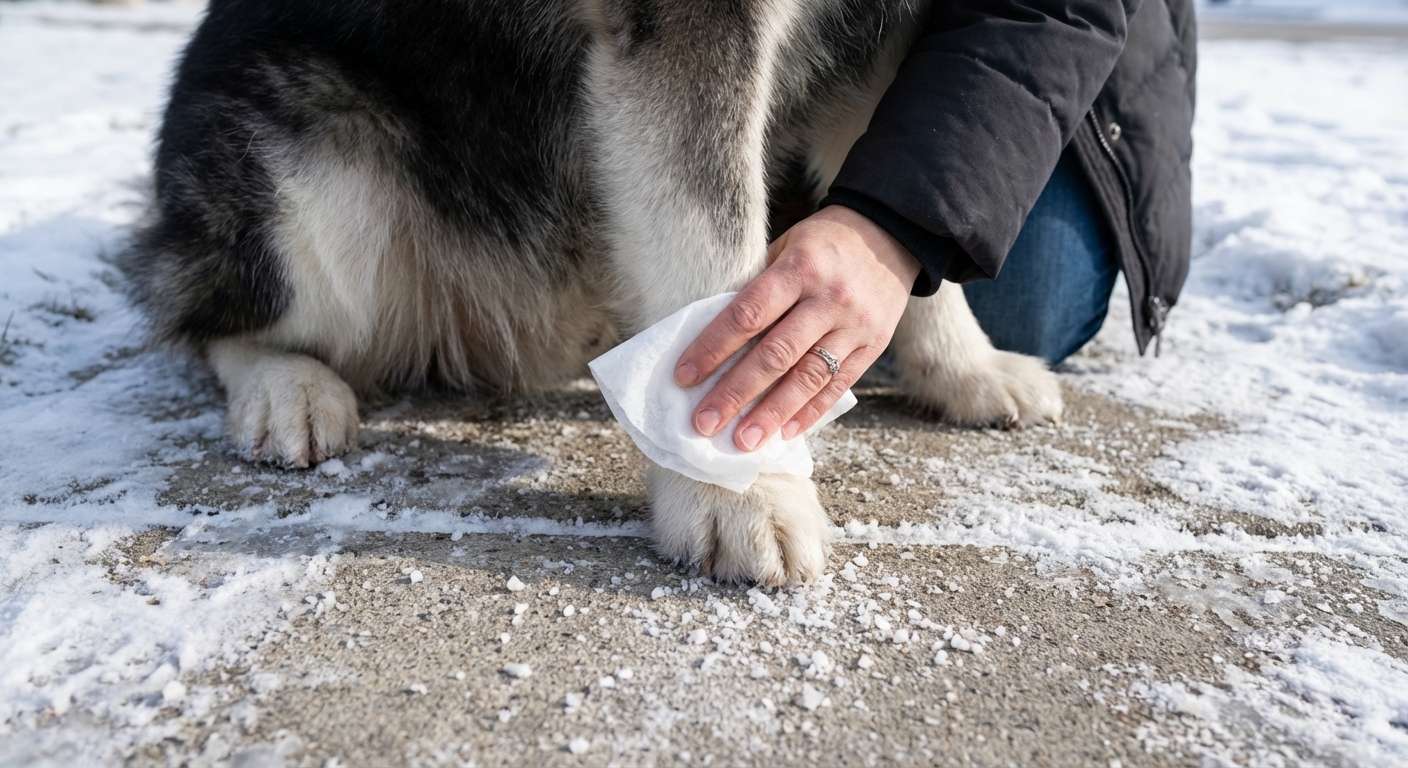
- Paw care: check between toes for ice balls and cracked pads
- Salt and deicers: wipe paws after walks to reduce irritation and GI upset if licked
- Hydration: active winter dogs still need plenty of water
- Visibility: reflective gear for dark mornings and evenings
- Watch for overexertion: endurance does not mean unlimited stamina
Outdoor time and shelter
Even cold-loving breeds should have access to a safe, dry shelter and the ability to come indoors. Wind, wet coat conditions, and extreme storms can overwhelm even a thick double coat. If your dog is shivering, lifting paws, or seems reluctant to move, bring them inside and warm them slowly.
Warm-climate living
Many Malamutes live in warmer states, but it takes commitment. In heat, they can overheat faster than short-coated breeds. Air conditioning is not a luxury for many Malamutes, it is a safety tool.
Warm-climate essentials
- Strong indoor cooling: reliable AC and fans
- Cool surfaces: tile floors, cooling mats, shaded areas
- Summer schedule: exercise only during cooler hours
- Grooming: frequent brushing to remove loose undercoat
- Vet guidance: ask about safe conditioning, weight management, and heat-risk factors
Common misconceptions
Misconception: “They are just big, fluffy couch dogs.”
Many Malamutes love lounging with their people, but most still need daily, purposeful exercise and training. Without it, that couch will be shredded.
Misconception: “A fenced yard is enough.”
A yard helps, but it rarely replaces planned activity. Also, many Malamutes dig and can be talented escape artists. Think of a yard as a bonus, not the plan.
Misconception: “They will protect the house.”
They may look imposing, but many are socially friendly. If you want a watchdog, consider that this breed often prefers to make friends first.
Misconception: “They are easy with all dogs.”
Some Malamutes do great in multi-dog homes. Others are selective or intense. Early socialization, training, and careful introductions matter. If you already have a dog, plan a thoughtful meet-and-greet and keep expectations realistic.
Renter-friendly reality checks
I want to be extra honest here because I have seen families heartbroken when housing rules change. Malamutes can be difficult in rentals due to weight limits, breed restrictions, noise complaints, and damage deposits. It is not impossible, but it requires planning.
Questions to ask first
- Is there a weight limit? Many Malamutes exceed typical rental cutoffs.
- Are “northern breeds” restricted? Some leases group them with restricted lists.
- How soundproof is the building? Malamutes can howl and “talk,” especially when bored.
- Do you have elevator and hallway space? A strong dog in tight spaces needs excellent leash manners.
- Can you commit to twice-daily long outings? A small apartment can work if the lifestyle is active.
Renter tips that help
- Get breed-knowledgeable training help early and document progress.
- Use enrichment feeding to reduce boredom barking and chewing.
- Choose durable flooring protection and have a grooming plan for shedding.
- Build a reliable routine for quiet time training so your dog can settle when you are away.
Health notes
Any dog can develop health issues, but it is smart to understand common breed concerns so you can ask good questions and plan preventative care. Malamutes are often associated with:
- Hip dysplasia and other orthopedic concerns
- Arthritis as they age, especially if overweight
- Eye disease in some lines (your vet can recommend appropriate screening)
- Hypothyroidism in some individuals
- Bloat (GDV) risk in deep-chested large breeds (ask your vet about prevention strategies)
- Alaskan Malamute Polyneuropathy (AMPN), an inherited neurologic condition that reputable breeders screen for
- Zinc-responsive dermatosis in some dogs
- Chondrodysplasia (dwarfism) in some lines
Choose a reputable breeder or rescue that prioritizes health screening, and schedule regular veterinary checkups. Keeping a Malamute lean is one of the kindest things you can do for joints and longevity.
Note: This guide is educational and not a substitute for veterinary care. If you have concerns about your dog’s health, training safety, or exercise plan, ask your veterinarian for individualized advice.
Is a Malamute right for you?
A Malamute may be a great fit if you want a large companion who loves outdoor life, you enjoy training, and you can provide consistent exercise every day. They tend to thrive with people who see them as a working partner, not a decorative pet.
You may love this breed if you:
- Want a friendly, social dog who bonds closely with family
- Have time for daily exercise and mental enrichment
- Can manage grooming and heavy shedding
- Are comfortable training a strong, independent dog
Think twice if you:
- Need a low-shedding or low-odor dog
- Are gone long hours without a plan for enrichment and exercise
- Live in a rental with strict weight or breed rules
- Want a dog that is reliably off-leash safe without extensive training and management
Bottom line: Malamutes are loving, capable dogs, but they are not “easy mode.” If you meet their needs consistently, they give back a steady kind of devotion that feels like true partnership.