Discover what it’s really like to live with a Siamese cat—social, vocal, and smart. Learn care essentials, enrichment, grooming, diet, and key health ris...
Article
•
Designer Mixes
Abyssinian Cat: Energy, Personality, and Health

Shari Shidate
Designer Mixes contributor
If you have ever met an Abyssinian cat, you probably remember it. These cats are bright, athletic, and deeply curious, with a personality that often feels more like a busy little teammate than a “sit and look pretty” lap cat. As a veterinary assistant, I love helping families understand what makes a breed tick, because the best relationships happen when expectations match reality.
This guide walks you through the Abyssinian’s energy level, typical temperament, and the health topics owners should know, plus practical ways to support a long, happy life.
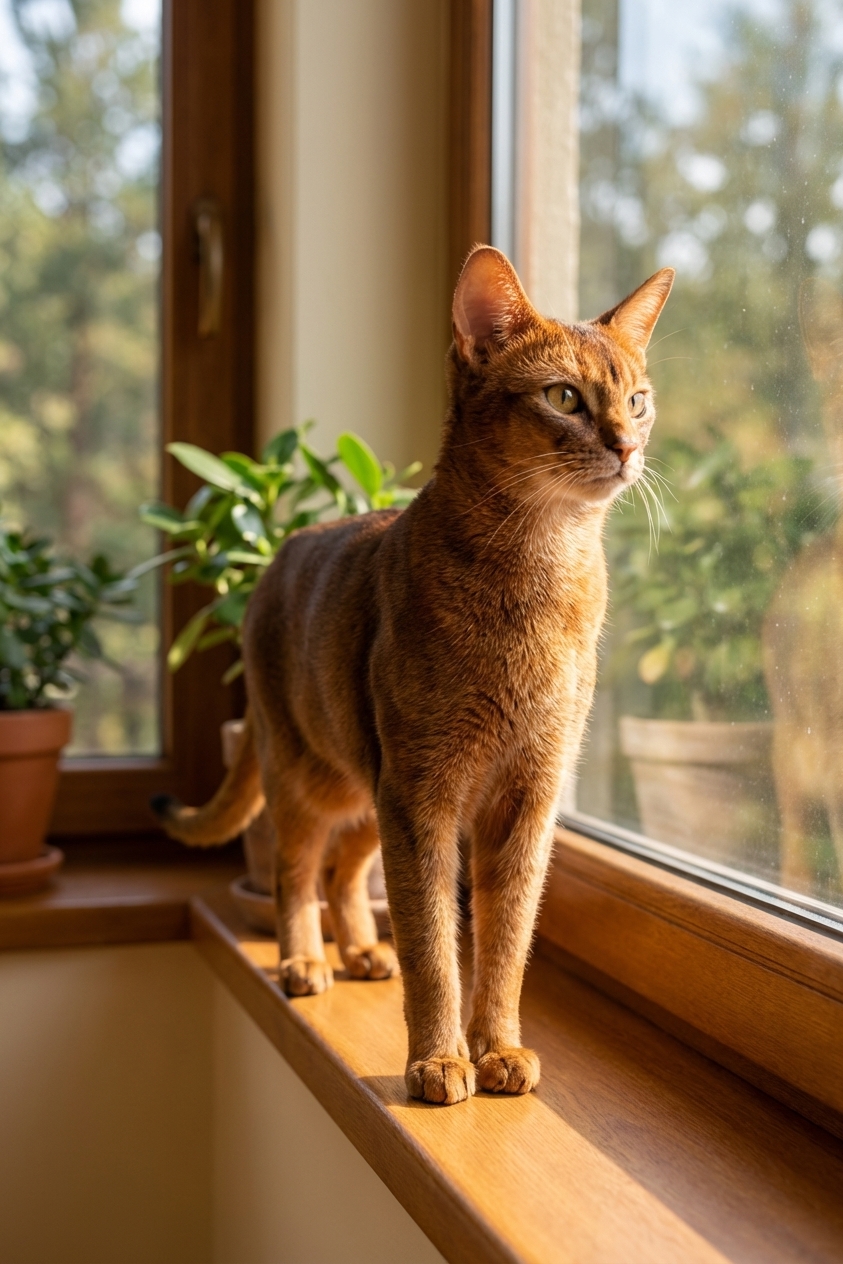
Quick Abyssinian overview
- Known for: High activity, intelligence, curiosity, and an affectionate but independent style
- Coat: Short, fine, ticked coat (each hair has bands of color)
- Body type: Lean, muscular, agile
- Average weight: About 8 to 12 pounds (varies by build, sex, and lifestyle)
- Average lifespan: Commonly 12 to 15+ years with good preventive care
- Best fit for: Homes that enjoy regular interaction, play, climbing space, and variety
Think of the Abyssinian as a cat who wants to be part of the action, not just watch it.
Energy level: Why Abyssinians seem “always on”
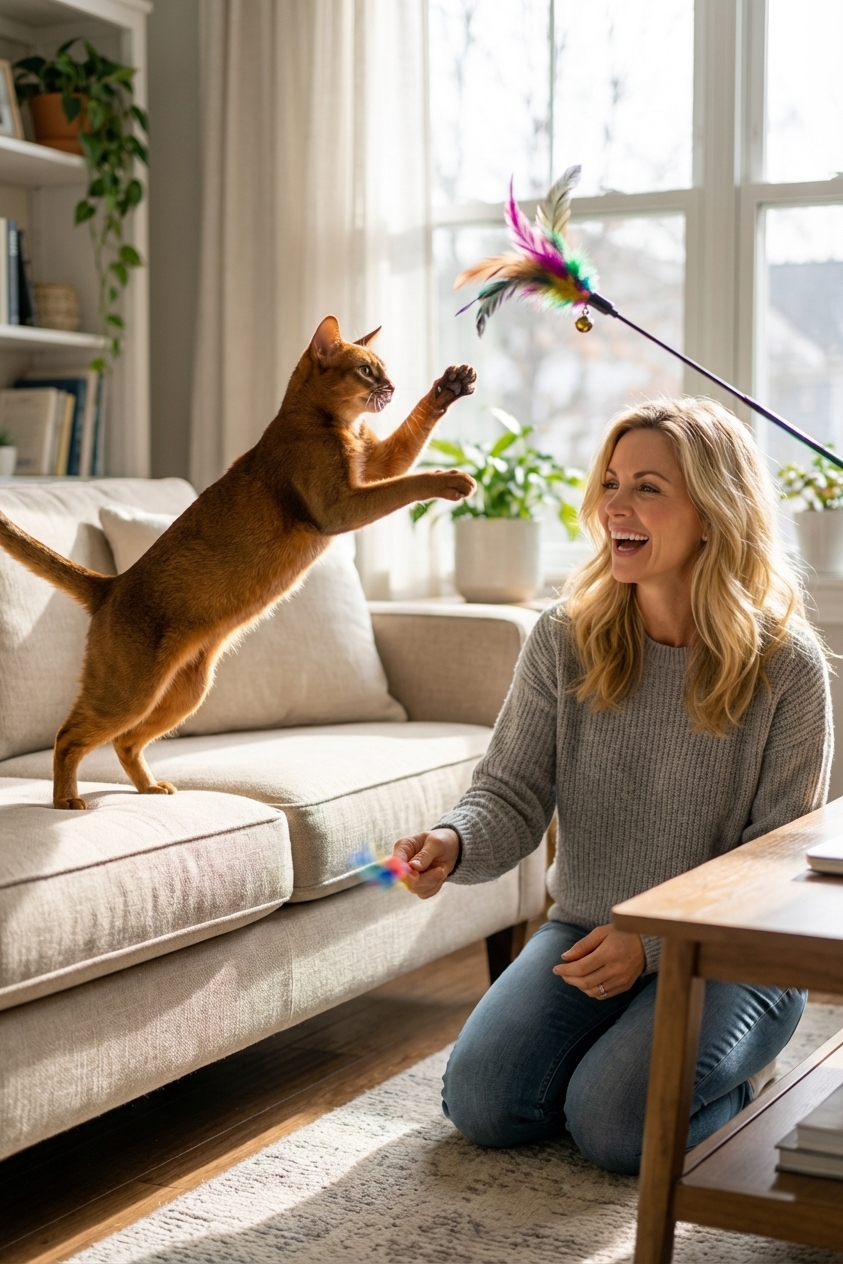
Abyssinians are famous for their high energy and athleticism. Many will sprint, climb, jump, and explore throughout the day, especially in short bursts. This is normal for the breed and not automatically a sign they are “hyper” in a problematic way. It is a sign they need the right outlets.
What healthy energy looks like
- Regular play sessions with chasing, pouncing, and climbing
- Curiosity about rooms, cabinets, and new objects
- “Helping” behaviors like following you from task to task
What bored energy can look like
- Knocking items off counters, opening doors, getting into closets
- Rough play (especially with hands)
- Nighttime zoomies that disrupt sleep
The key is structured enrichment. A tired Abyssinian is usually a well-behaved Abyssinian.
Personality: Social, smart, and opinionated
Abyssinians tend to be people-oriented and interactive. Many enjoy cuddling on their terms, but they are often more interested in being near you than being held for long periods. Some can become stressed if they are left alone too much, especially without routine play and companionship.
Common traits owners notice
- Highly intelligent: Learns routines quickly and may learn to open cabinets
- Play-motivated: Toy-driven, often enjoys fetch-like games
- Communicative: May “talk” with soft chirps or meows
- Confident and curious: Usually wants to investigate everything new
Are Abyssinians good with kids and other pets?
Often, yes, with the right match. Many do well with respectful children and can thrive with other cats or cat-friendly dogs, especially if introduced gradually. Because they are energetic, they tend to appreciate a playful companion more than a timid one.
Tip: If you work long hours, consider a second cat or plan daily interactive play and other enrichment to reduce loneliness and mischief.
Home setup: The “yes space” they need
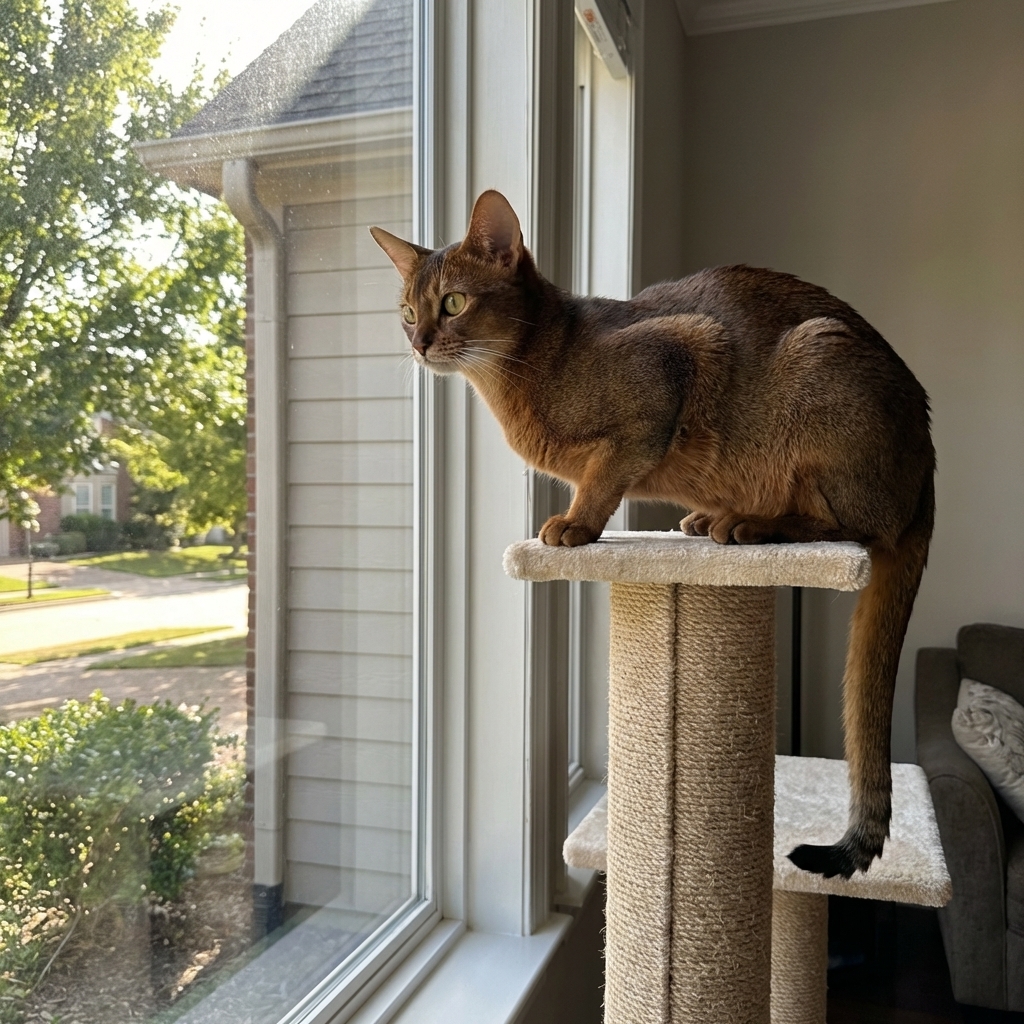
You do not need a huge house, but you do need vertical space and daily engagement. Abyssinians love height, movement, and novelty.
Must-haves for most Abyssinians
- Tall cat tree or wall shelves: Give them safe climbing options
- Window perch: A front-row seat to the outdoors
- Interactive toys: Wand toys, kicker toys, puzzle feeders
- Scratch stations: Vertical and horizontal options
Daily routine that works
- 2 to 3 play sessions of 10 to 15 minutes (hunt, chase, pounce)
- Food puzzles for at least one meal or snack
- Calm wind-down in the evening to reduce midnight zoomies
Life stages: What to expect
Abyssinian energy is famous, but it does change over time.
- Kittens and teens: Often non-stop explorers. Expect more climbing, more mischief, and a bigger need for structured play.
- Adults: Typically still very active, but more predictable once routines are established.
- Seniors: Many remain playful, just in shorter bursts. This is also when regular exams and lab work become especially valuable.
Health guide: What to watch for
No breed is “problem-free,” and the best approach is informed, proactive care. Abyssinians are generally robust, but there are a few concerns that show up in the breed more than average. A good breeder, early screening when appropriate, and regular veterinary care make a big difference.
Common breed-associated health concerns
- Dental disease and gingivitis: Like many cats, they can develop tartar and gum inflammation. Home dental care and professional cleanings as recommended can reduce oral pain and bacterial load and may help support overall health.
- Patellar luxation: This can occur in cats, including Abyssinians. It may cause intermittent limping or “skipping.”
- Progressive retinal atrophy (PRA): An inherited eye condition that can lead to vision loss. Responsible breeding with genetic testing for known variants reduces risk.
- Pyruvate kinase (PK) deficiency: An inherited condition that can cause anemia. DNA testing is available and is a standard discussion point with reputable breeding programs.
- Kidney concerns (including amyloidosis in some lines): Not every Abyssinian is affected, but it is one reason routine lab work matters as cats age.
Important: If you are choosing a kitten, ask the breeder about DNA testing documentation for PK deficiency and applicable PRA variants, and ask what health guarantees are offered. If you are adopting, that is okay too. Just plan for consistent preventive care and consider early baseline bloodwork so your veterinarian has a starting point.
Signs that deserve a veterinary visit
- Reduced appetite, weight loss, or increased thirst
- Bad breath, drooling, pawing at the mouth, or dropping food
- New limping, stiffness, or reluctance to jump
- Changes in litter box habits
- Cloudy eyes, bumping into objects, or hesitation in dim light
When to seek urgent care
- Straining to urinate or producing little to no urine
- Open-mouth breathing, severe lethargy, or collapse
- Sudden vision changes, such as bumping into objects or acting disoriented
- Repeated vomiting with inability to keep water down
Nutrition and weight: Fueling an athlete
Abyssinians burn energy, but they can still gain weight if treats and free-feeding add up. Extra pounds can worsen joint strain and reduce overall vitality. The goal is a lean, muscular body with a visible waistline and ribs you can feel easily under a thin layer of tissue.
Practical feeding tips
- Prioritize high-quality protein: Cats are obligate carnivores and do best with protein-forward diets.
- Measure portions: Even a small daily “extra” can add up over months.
- Use puzzle feeders: Great for mental stimulation and slowing fast eaters.
- Keep treats small: Use part of their daily calories for treats instead of adding on top.
If you are considering homemade diets for your cat, work with your veterinarian or a board-certified veterinary nutritionist. Cats have very specific nutrient requirements, and “close enough” can lead to serious deficiencies over time.
Grooming and care: Easy coat, key basics
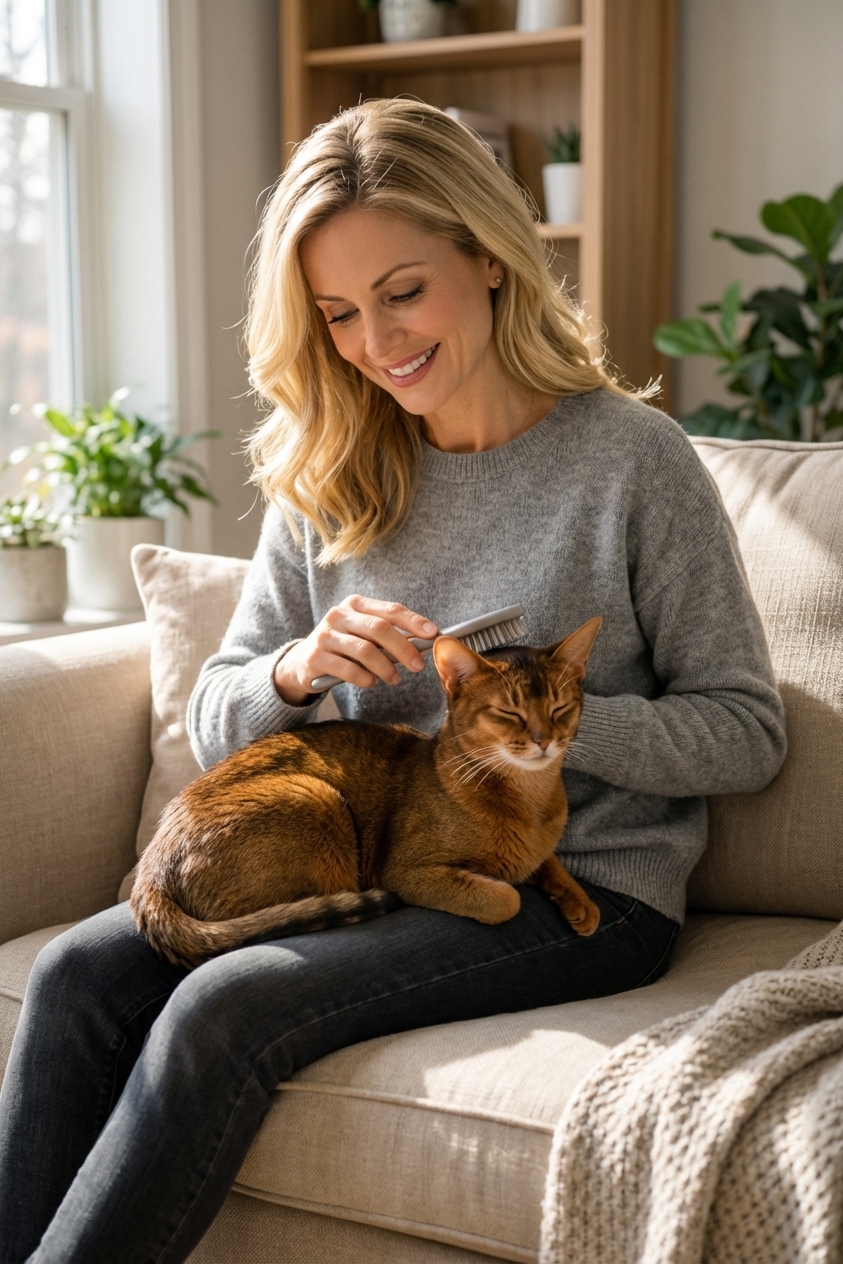
The Abyssinian’s short coat is fairly low-maintenance, but the basics still matter. Many owners find that weekly brushing reduces shedding and keeps the coat glossy.
Care checklist
- Brush weekly: A soft brush or grooming mitt usually works well.
- Nails every 2 to 4 weeks: Especially important for active climbers.
- Dental care: Daily brushing is ideal. Even 3 to 4 times a week helps.
- Routine wellness exams: Yearly for adults, twice yearly for seniors, with lab work as recommended.
Training and enrichment: Yes, you can train one
Because they are smart and food- or play-motivated, many Abyssinians learn quickly. Training is not just cute, it is enrichment that reduces stress and unwanted behaviors.
Fun training ideas
- Clicker training: Teach sit, touch, spin, or “go to mat.”
- Harness training: Some enjoy safe outdoor time with gradual, patient training.
- Fetch: Many will chase and return small toys.
Safety note: Keep play with hands to a minimum. Use toys to prevent accidental bites or scratches and to encourage healthy hunting behavior.
Choosing a breeder or adoption path
However you find your Abyssinian, a little homework up front can save heartache later.
What to ask a breeder
- Written proof of DNA testing for breed-associated conditions relevant to their lines (such as PK deficiency and applicable PRA variants)
- How kittens are socialized (handling, household noise exposure, early play routines)
- Veterinary records, vaccines, deworming, and contract terms
What to ask a rescue or shelter
- Any known medical history, prior lab work, and observed behavior in foster care
- What the cat has been eating and their litter box routine
- Whether a slow introduction plan is available for other pets
Is an Abyssinian right for you?
An Abyssinian can be a wonderful fit if you want a cat who interacts, plays, and stays involved in your day. They are less ideal for someone looking for a quiet, low-energy lap cat or a pet that is content with minimal engagement.
You will probably love this breed if you want
- A cat that follows you around and “supervises”
- Daily play and an active home environment
- A smart, curious companion with a big personality
Consider a different match if you prefer
- A very calm, sedentary cat
- A pet that is happy being alone most of the day
- Minimal play and little home enrichment
With the right setup, an Abyssinian’s energy becomes pure joy. Give them places to climb, games to play, and consistent preventive care, and you will get a confident, affectionate companion who keeps life interesting.