A vet assistant’s guide to the most dangerous indoor plants for cats—true lilies, sago palm, oleander and more—plus early poisoning signs, emergency st...
Article
•
Designer Mixes
A Deadly Bouquet: Flowers Toxic to Cats

Shari Shidate
Designer Mixes contributor
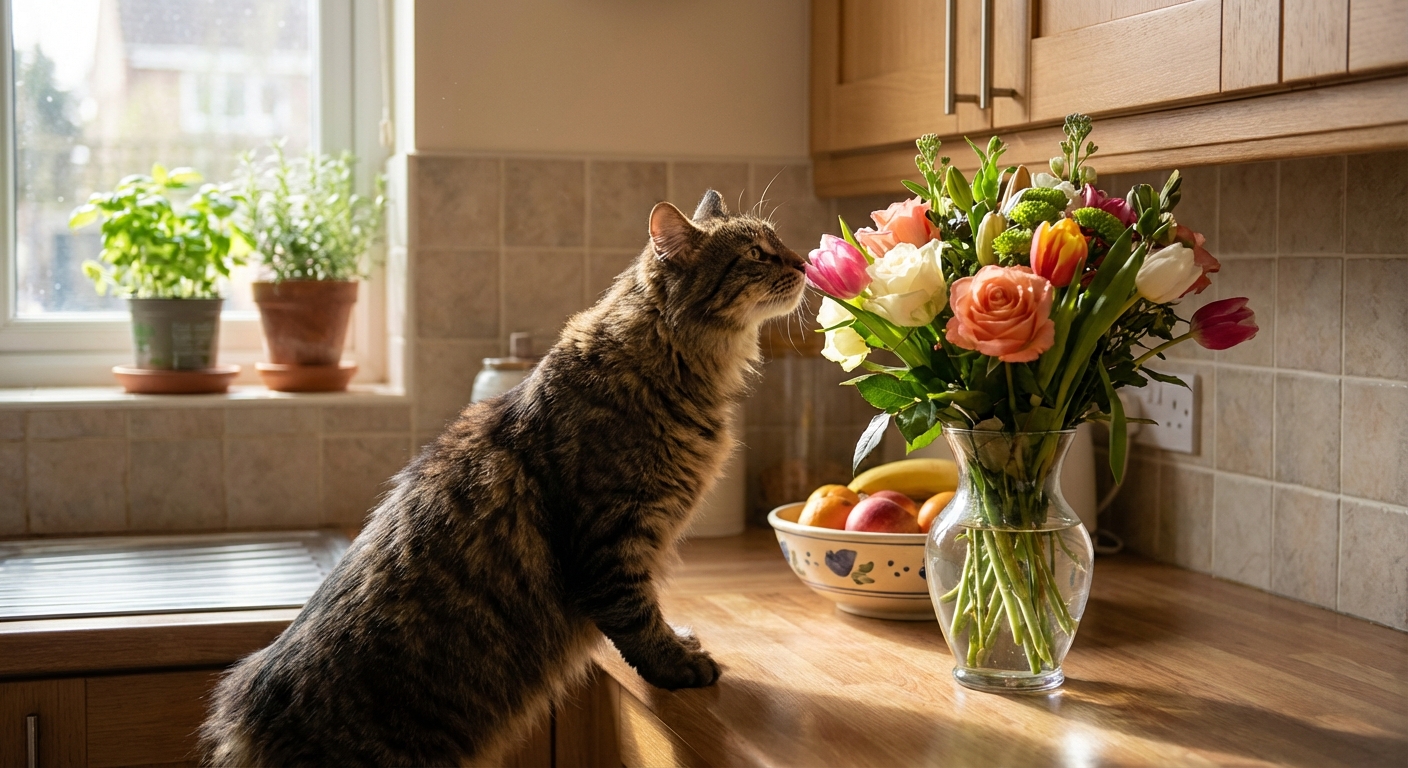
Cats have a talent for getting into whatever we bring home, especially something new on the counter, dining table, or windowsill. And while a bouquet feels like a harmless treat, many popular flowers can be truly dangerous for cats. As a veterinary assistant, I have seen heartbreaking cases that started with a curious nibble or a little pollen on the fur.
The good news is that a little knowledge goes a long way. Below you will find the most common toxic flowers, what symptoms to watch for, and exactly what to do if you suspect exposure.
Important: This article is for awareness only and is not a substitute for veterinary care. If exposure is possible, contact a veterinarian or pet poison resource right away.
The biggest threat: lilies
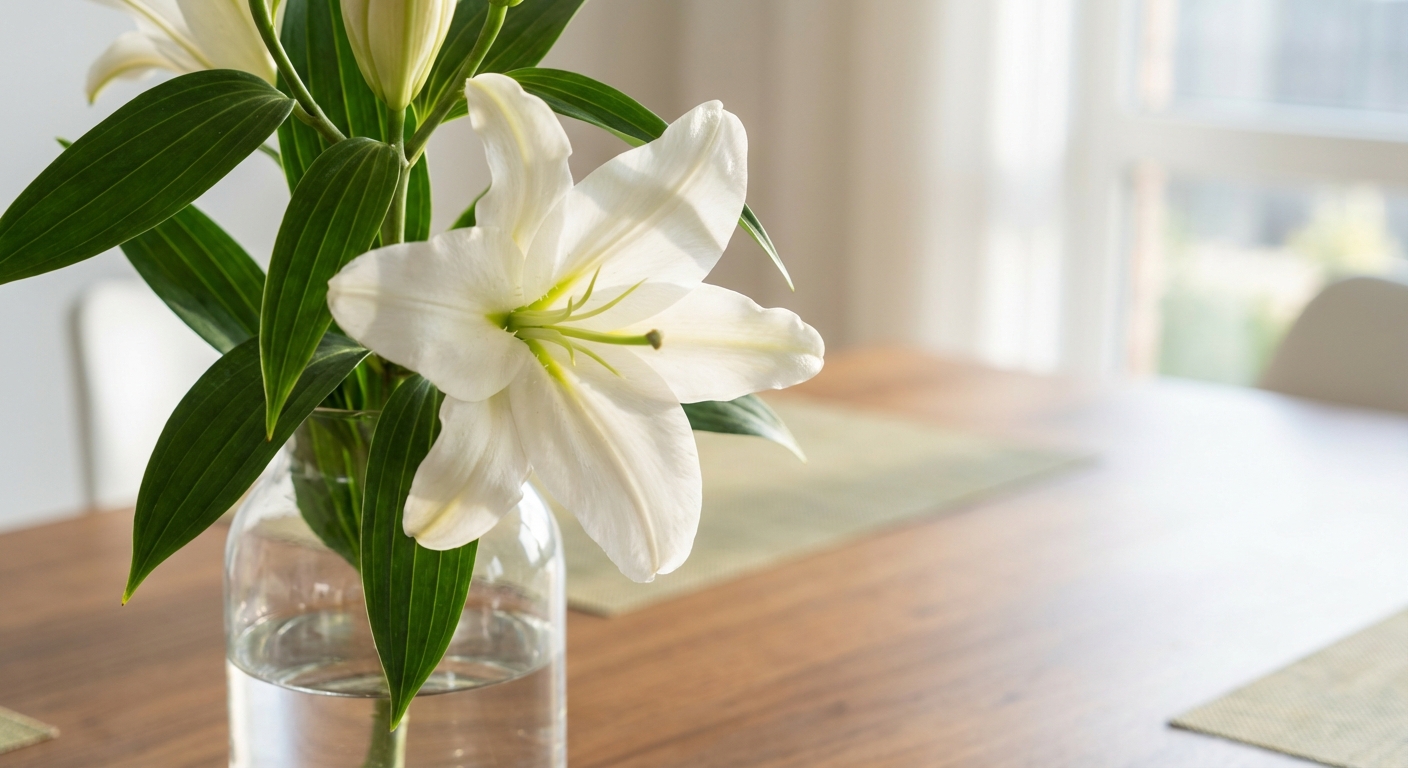
If you remember only one thing from this article, let it be this: true lilies are an emergency for cats. Even small exposures can cause sudden, severe kidney injury.
Most dangerous lily types
- Easter lily (Lilium longiflorum)
- Stargazer lily (Lilium orientalis)
- Asiatic lilies (many Lilium species)
- Tiger lily (Lilium lancifolium)
- Daylily (Hemerocallis species, not a “true” lily but similarly dangerous)
How cats get exposed
Cats do not need to eat much to be at risk. Chewing petals, licking pollen off fur, drinking vase water, or mouthing fallen plant pieces can all be enough to cause harm.
Signs to watch for
Early signs can include vomiting, drooling, decreased appetite, or lethargy, sometimes within hours. Clinical kidney failure can develop within 24 to 72 hours. If you suspect any lily exposure, do not wait for symptoms.
If your cat may have been around lilies, call your veterinarian or a pet poison helpline right away. Time matters.
Other toxic bouquet flowers
Not all plant toxicities look the same. Some flowers cause stomach upset, some irritate the mouth, and others can affect the heart, nervous system, liver, or kidneys. Here are several of the most common “surprise” offenders.
Tulips and hyacinths
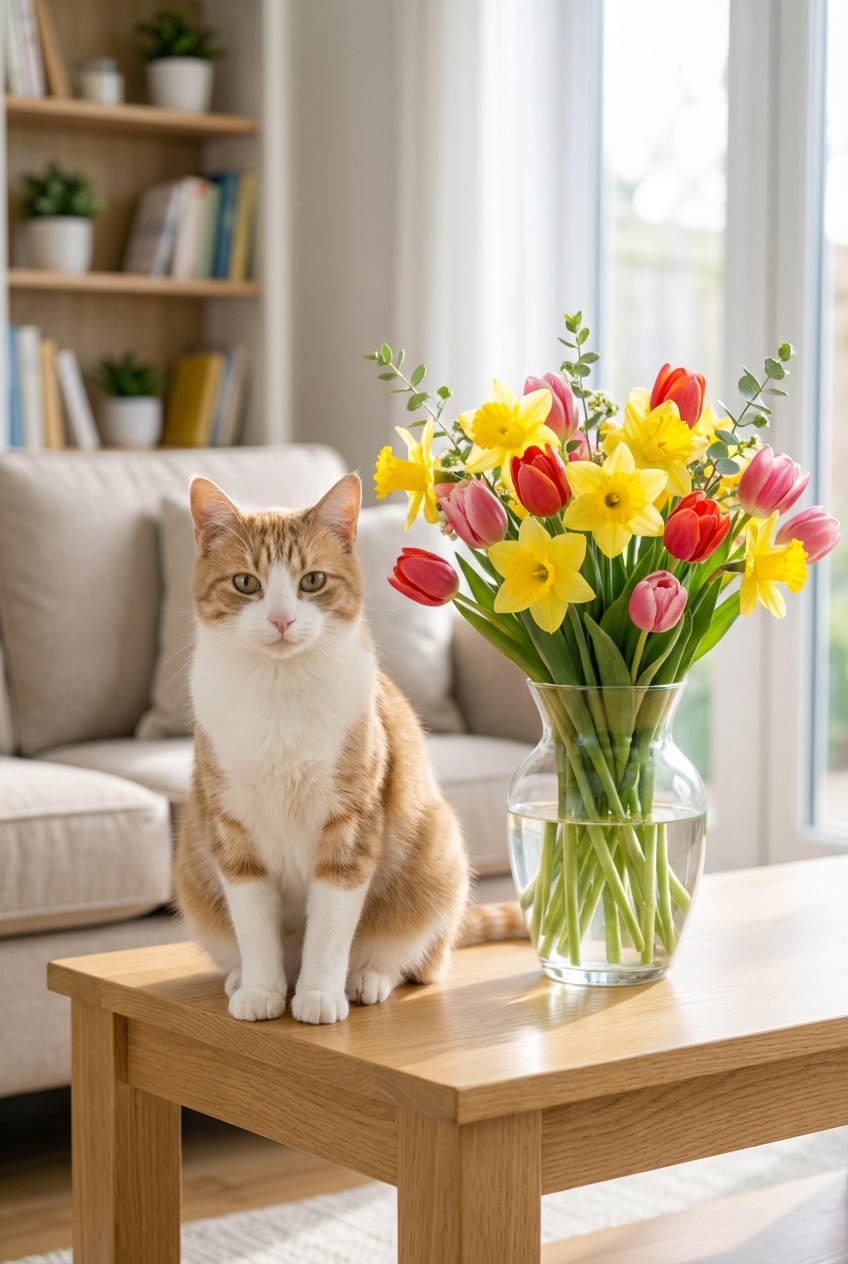
Tulips (Tulipa) and hyacinths (Hyacinthus) can cause drooling, vomiting, diarrhea, and significant irritation. The bulbs are typically the most concentrated part, but cats can still get sick from leaves and flowers.
Daffodils
Daffodils (Narcissus) are irritating and can cause vomiting, diarrhea, abdominal pain, and lethargy. Bulbs are especially risky and may lead to more serious signs in larger exposures.
Chrysanthemums
Mums can cause drooling, vomiting, diarrhea, and in some cases wobbliness or weakness. They are very common in fall arrangements, porch pots, and seasonal decor.
Amaryllis
Amaryllis (Hippeastrum) can cause vomiting, drooling, diarrhea, belly pain, decreased appetite, and lethargy.
Azaleas and rhododendrons
These are more common as landscaping plants than bouquets, but they are worth mentioning because they can be serious. Azaleas and rhododendrons can cause vomiting, diarrhea, weakness, and potentially dangerous heart and neurologic signs.
Not all “lilies” are the same
This confuses many caring cat parents. Some plants have “lily” in the name but do not carry the same kidney-failure risk as true lilies. That said, they may still cause other problems.
- Peace lily (Spathiphyllum): not a true lily, but can cause intense mouth irritation, drooling, and vomiting due to insoluble calcium oxalate crystals. Severe swelling is uncommon, but if you notice facial swelling, trouble swallowing, or breathing changes, treat it as urgent.
- Calla lily (Zantedeschia): similar mouth and GI irritation risks, with the same caution about swelling or breathing trouble.
Because common names are messy, the safest move is to treat any “lily” as dangerous until you confirm the exact plant.
Poisoning symptoms in cats
Different plants cause different signs, but these are the most common red flags:
- Drooling or foaming at the mouth
- Pawing at the mouth, shaking the head
- Vomiting or diarrhea
- Loss of appetite
- Lethargy or hiding
- Wobbliness, tremors, or weakness
- Increased thirst or urination, or not urinating (especially concerning with lily exposure)
If you see symptoms and you also have flowers in the home, it is a strong clue to take seriously.
What to do right now
Step 1: Remove access and save clues
- Move your cat to a safe room away from the plant.
- Remove the flowers, fallen petals, and any chewed pieces.
- Save the bouquet tag or take a clear photo of the flowers and leaves.
- Dump the vase water and rinse the vase if lilies might be involved.
Step 2: Call a pro first
Do not induce vomiting unless a veterinarian tells you to. Some substances and situations make vomiting unsafe.
Call your veterinarian, an emergency animal hospital, or a pet poison resource. In the U.S., two commonly used options are:
- ASPCA Animal Poison Control Center (a consultation fee may apply)
- Pet Poison Helpline (a consultation fee may apply)
Step 3: Go fast if lilies are possible
With lilies, early treatment can be life-saving, and sooner is always better. Veterinary care may include decontamination (for example, bathing to remove pollen and other steps your vet recommends), bloodwork to assess kidney values, anti-nausea medications, hospitalization and monitoring, and IV fluids for kidney support.
Safer ways to enjoy flowers
You can absolutely have a cheerful, welcoming home without risking your cat’s health. Consider these safer options and habits:
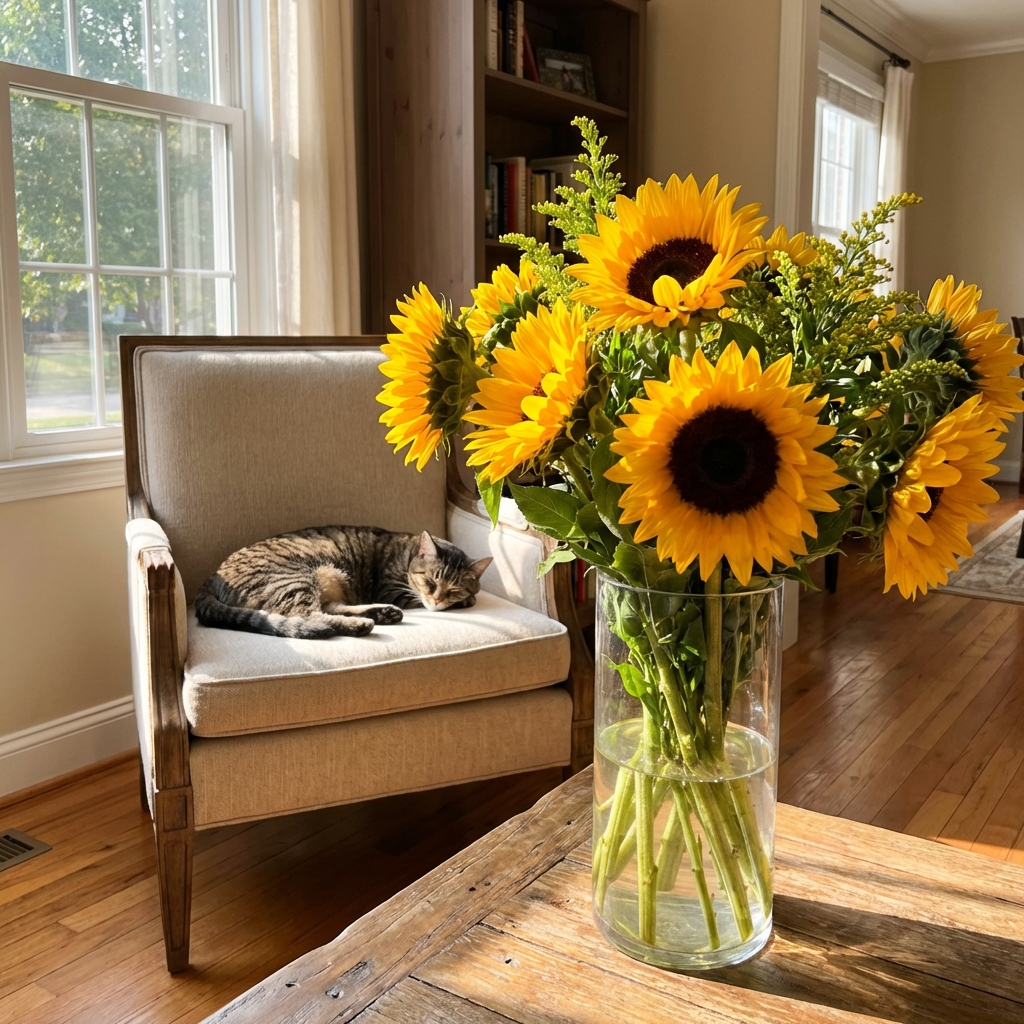
- Choose blooms generally considered non-toxic such as roses, sunflowers, gerbera daisies, and many orchids. (Still keep out of reach, as any plant material can cause mild stomach upset in some cats.)
- Be cautious with “safe lists”: availability and labeling vary, and some plants have look-alikes. When in doubt, verify the exact plant name.
- Skip mixed bouquets unless you can confirm every stem, including greens.
- Use a closed room for flowers if you cannot resist gifting season blooms.
- Go faux for high-risk holidays like Easter and Mother’s Day when lilies are everywhere.
Watch out for filler greens
Bouquets are not just flowers. Florists often add greens and filler stems that can also cause problems. If you cannot identify everything in the arrangement, assume there may be a risk.
- Baby’s breath (Gypsophila) can cause stomach upset in cats.
- Eucalyptus is commonly used in modern arrangements and can be toxic if chewed.
- Ivies (Hedera species) are sometimes used as greenery and can cause GI upset and drooling.
Quick prevention checklist
- Do not bring true lilies or daylilies into a home with cats.
- Assume bouquets may contain toxic filler greens and surprise stems.
- Teach guests: “Please no lilies” on invitations and wish lists.
- Keep the phone number and address of your nearest emergency vet easy to find.
Our cats depend on us to keep their world safe. With a few smart swaps, you can enjoy flowers and peace of mind at the same time.