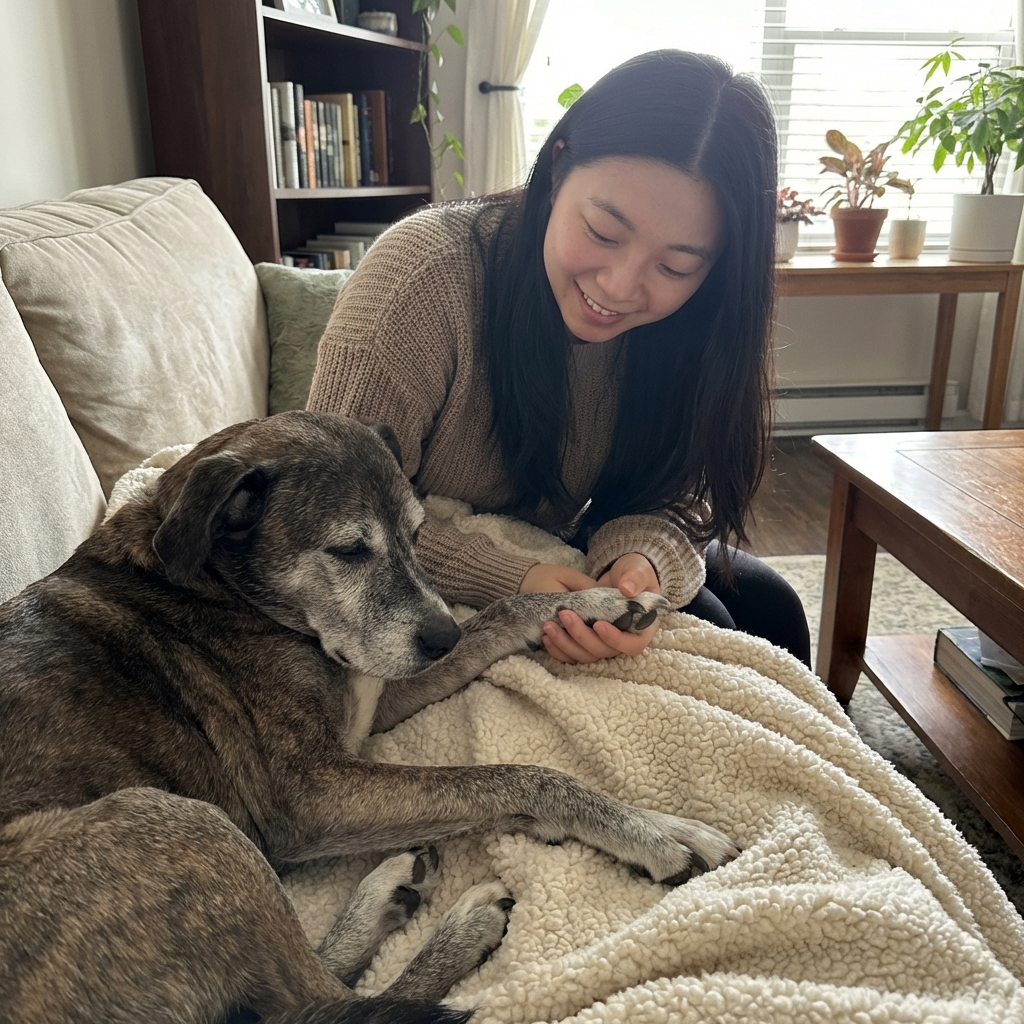
A compassionate guide to end-of-life signs in dogs, what the dying process may look like, comfort care at home, urgent red flags, and how to assess quality o...
Article
•
Designer Mixes
18 Signs Your Dog May Be Dying (And What to Do Next)

Shari Shidate
Designer Mixes contributor
If you’re here, you’re probably scared and something feels wrong right now. Noticing changes in an older or seriously ill dog can feel overwhelming and confusing, especially when you don’t know whether what you’re seeing is an emergency or something that can wait.
I want to say this gently but clearly: many signs people interpret as “my dog is dying” can also be caused by treatable problems like pain, infection, dehydration, heart disease, or medication side effects. The goal is not to diagnose at home. The goal is to recognize red flags early, keep your dog comfortable, and get timely veterinary guidance.
If your gut says something is seriously wrong, trust that instinct. Some symptoms in dogs do require immediate veterinary care, while others signal a decline that calls for different decisions. When dogs are nearing the end of life, small shifts often add up into a pattern — and knowing how to interpret that pattern matters.

Before the list: what these signs really mean
Dying is a process, not a single moment. Some dogs decline slowly over weeks or months. Others change dramatically within days, especially with internal bleeding, severe infection, organ failure, or advanced cancer.
Most families notice a mix of changes in:
- Energy and behavior (less interest in life’s usual joys)
- Appetite and hydration (eating and drinking less)
- Breathing and circulation (respiratory effort, gum color changes)
- Mobility and comfort (pain, weakness, inability to stand)
- Elimination (accidents, diarrhea, constipation)
One sign alone does not always mean “the end.” But multiple signs, especially when they are worsening or happening together, deserve prompt veterinary attention.
18 signs your dog may be dying
Use this as a supportive guide, not a substitute for an exam. If you are seeing several of these at once, call your veterinarian and describe the timeline and what has changed.
1) Marked drop in appetite
Skipping a meal happens. But consistent refusal of favorite foods, especially with weight loss, nausea, or lethargy, can signal advanced disease or significant pain.
2) Drinking much less, or not at all
Dehydration can develop quickly and worsens weakness, nausea, and confusion. Some dogs also drink excessively with kidney disease, diabetes, or Cushing’s, so any major shift matters.
3) Ongoing vomiting or regurgitation
Repeated vomiting can indicate organ failure, intestinal obstruction, toxin exposure, pancreatitis, or end-stage disease. It is also a fast path to dehydration.
4) Persistent diarrhea, especially with blood
Severe diarrhea can cause dangerous fluid and electrolyte loss. Blood can appear bright red or as dark, tarry stool.
5) Extreme lethargy and withdrawal
Many dogs nearing end of life stop engaging: no greeting at the door, no interest in walks, toys, or family routines. They may sleep much more and seem “not themselves.”
6) Trouble standing, walking, or frequent falling
Weakness can come from pain, neurologic disease, anemia, heart failure, or organ dysfunction. A dog who cannot rise or keep balance is at high risk of suffering and injury.
7) Labored breathing or breathing changes at rest
Watch the chest and belly. Straining to breathe, open-mouth breathing (when not hot or exercising), wheezing, or rapid breathing at rest are urgent signs.
Seek emergency care if breathing looks difficult or your dog cannot settle.
8) Coughing that worsens or seems exhausting
Chronic cough can be related to heart disease, collapsing trachea, fluid in or around the lungs, infection, or cancer. A sudden change in cough pattern is important.
9) Pale, blue, or gray gums
Healthy gums are typically bubblegum pink (pigmentation varies by dog). Pale gums can signal anemia, shock, or internal bleeding. Blue or gray tones can signal low oxygen.
This is an emergency.
10) Cool extremities and reduced circulation
As circulation declines, paws and ears may feel cooler. You might also notice slower “capillary refill” when gently pressing the gum and watching how fast pink returns.
11) Confusion, disorientation, or unusual behaviors
Dogs may seem “lost” in familiar spaces, get stuck in corners, stare blankly, or respond differently to family members. Causes range from canine cognitive dysfunction to metabolic changes and toxin buildup.
12) Restlessness or inability to get comfortable
Constant shifting positions, panting at rest, pacing, or repeatedly getting up and lying down can point to pain, nausea, anxiety, or trouble breathing.
13) Hiding or seeking isolation
Many dogs instinctively withdraw when they feel vulnerable. Hiding under furniture or choosing closets or corners can be a sign of distress or pain.
14) Signs of significant pain
Pain does not always look like crying. It can look like: trembling, guarding the belly, flinching when touched, stiff movement, hunched posture, or refusing to lie down.
15) Loss of bladder or bowel control
Accidents can happen with arthritis, cognitive changes, urinary tract infections, or weakness. But frequent accidents in a previously house-trained dog can also occur late in serious illness.
16) Seizures or collapse
Seizures can occur with epilepsy, brain tumors, toxin exposure, organ failure, or metabolic imbalance. Collapse can be cardiac, neurologic, or due to internal bleeding.
Urgent evaluation is needed.
17) Rapid weight loss or muscle wasting
When a dog loses weight despite eating, or begins to look bony and weak, it can indicate cancer, advanced organ disease, or chronic inflammation.
18) A general, progressive decline
This is the pattern many families recognize: your dog has “more bad days than good,” struggles with normal activities, and seems to be fading despite supportive care.
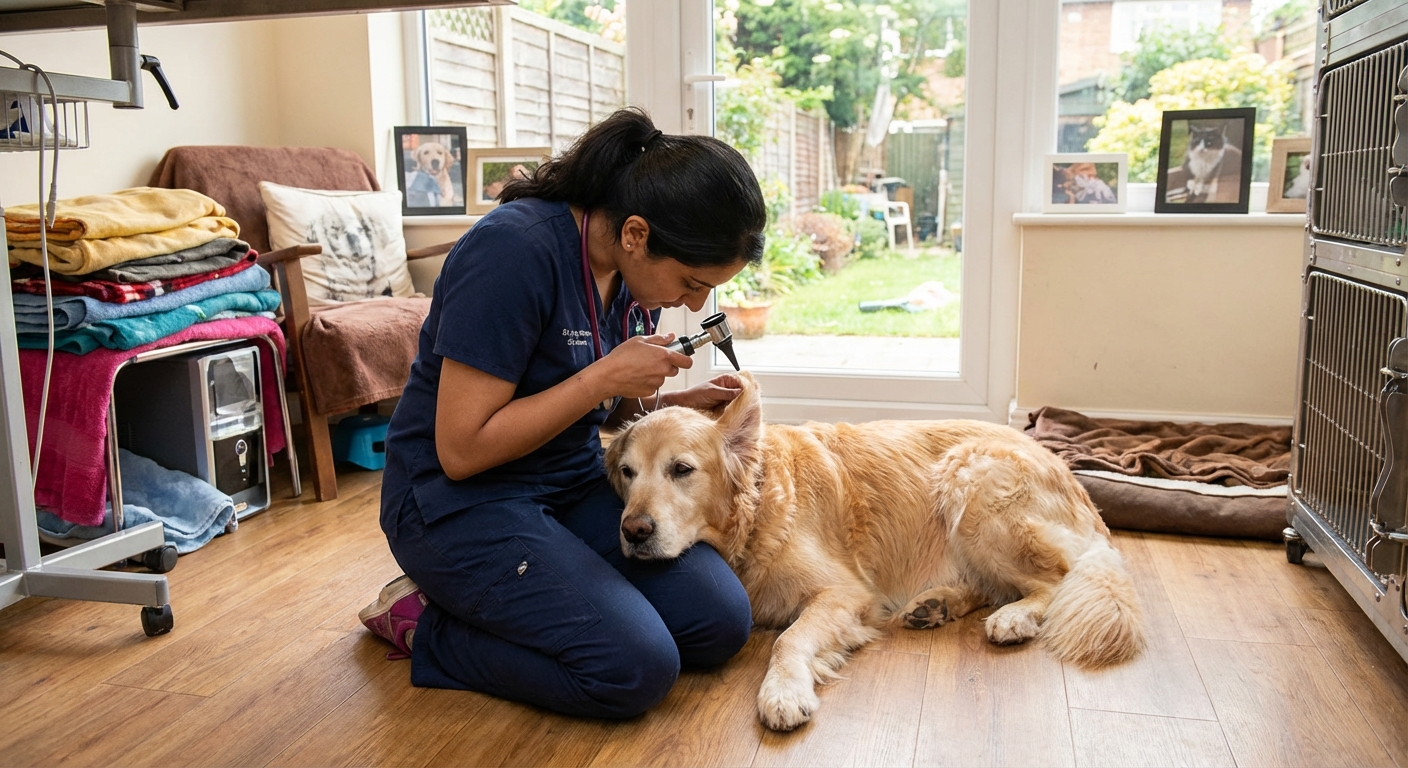
When it is an emergency
Get immediate veterinary or emergency help if you notice:
- Difficulty breathing, gasping, or blue or gray gums
- Collapse, inability to stand, or sudden extreme weakness
- Repeated vomiting with inability to keep water down
- Bloated, painful abdomen or unproductive retching
- Seizures (especially repeated or lasting more than a few minutes)
- Pale gums, sudden weakness, or signs of internal bleeding
If it is after hours, call the nearest emergency clinic. If transport is difficult, ask about tele-triage and comfort steps while you travel.
What to do next: a calm, practical plan
1) Call your veterinarian and be specific
Share what changed, when it started, and what is getting worse. Helpful details include breathing rate at rest, eating and drinking amounts, vomiting or diarrhea frequency, and mobility changes.
2) Ask about pain and nausea control
Comfort is not a “last resort.” Many dogs improve significantly with better pain relief, anti-nausea medication, appetite support, or fluids. Only use medications prescribed for your dog. Never give human pain relievers like ibuprofen, naproxen, or acetaminophen unless your vet instructs you to.
3) Consider a quality-of-life check-in
A simple daily note can help remove guesswork. Track:
- Eating and drinking
- Ability to stand, walk, and rest comfortably
- Breathing at rest
- Interest in family and favorite activities
- More good days than bad days
4) Make the home environment easier
- Keep your dog close to where you spend time, on a non-slip surface.
- Add padding with washable blankets or an orthopedic bed.
- Offer water often, and ask your vet about hydration options if drinking is low.
- Use ramps or support slings if mobility is limited.
- Keep potty breaks short and frequent to reduce accidents and stress.

Talking about euthanasia with compassion
This is one of the hardest conversations a family can face. When suffering cannot be controlled, or your dog’s body is shutting down, euthanasia can be a peaceful, humane option.
If you are unsure, ask your veterinarian these direct questions:
- “Is my dog in pain right now, and can we realistically control it?”
- “What changes would indicate that waiting is causing suffering?”
- “What would the next one to two weeks likely look like?”
- “Do you offer in-home euthanasia, or can you refer us?”
One gentle way to frame the decision is this: you are not choosing a day too soon or too late. You are choosing to prevent suffering when comfort and joy are no longer possible.
How to support yourself, too
Anticipatory grief is real. Many loving people feel guilt, second-guessing, or a constant urge to “fix” the unfixable. If you can, lean on support: a trusted friend, a pet loss counselor, or your veterinary team.
Small things can help right now:
- Create a quiet, comforting space and sit with your dog.
- Take a few photos or a short video of an ordinary moment together.
- Write down what your dog still enjoys, even if it is just being near you.
Key takeaways
- Many end-of-life signs overlap with treatable conditions, so prompt veterinary guidance matters.
- Multiple changes together, especially breathing issues, collapse, pale gums, or uncontrolled vomiting, can be urgent.
- Comfort care, pain control, and quality-of-life tracking can help you make clearer decisions.
- If euthanasia becomes the kindest option, planning ahead can reduce stress for both you and your dog.
If you are worried today: call your veterinarian, describe the changes clearly, and ask about same-day evaluation. You do not have to figure this out alone.