Feeling overwhelmed by homemade cat food? Get safety basics, key nutrients like taurine and calcium balance, an easy transition plan, and 18 cooked toppers a...
Article
•
Designer Mixes
17 Homemade Cat Food Recipes (Plus Safe Prep Tips)

Shari Shidate
Designer Mixes contributor
As an assistant vet, I see the impact of nutrition every single day - it is the foundation for how long and how well our cats live. By exploring homemade cat food, you are choosing to take full control over exactly what goes into your cat’s body. This is one of the most proactive, loving decisions you can make to ensure they thrive for years to come.
Transitioning to home-cooked meals is a strategic health upgrade. By cutting out mystery fillers, excessive carbohydrates, and artificial preservatives found in many commercial kibbles, you can directly influence improved coat quality, better weight management, and higher energy levels. Furthermore, once you learn to source quality proteins, you’ll often find it is significantly more cost-effective than the "premium" canned brands found at the store.
The most critical rule to remember is that cats are obligate carnivores. Their biology is a high-performance machine fueled exclusively by animal protein and fat, requiring a precise balance of vitamins and minerals - especially Taurine, which is non-negotiable for heart and vision health. Use these recipes as vet-guided options and occasional toppers unless you are working with a nutritionist to formulate a 100% complete daily diet tailored to your cat’s specific life stage.
Before you cook
Homemade is not always complete
Many homemade recipes found online are missing key nutrients cats require. The most common gaps include taurine, calcium, vitamins A and D, iodine, certain B vitamins, and essential fatty acids like arachidonic acid. Omega-3 and omega-6 balance can also be off without a plan. A complete diet usually requires a feline-specific vitamin and mineral premix and a recipe designed or reviewed by a veterinarian or board-certified veterinary nutritionist.
Food safety
- Cook meat and eggs thoroughly to reduce foodborne illness risk. This includes fully cooking egg whites, since raw whites can interfere with biotin over time.
- Avoid cooked bones. They can splinter and cause serious injury.
- Refrigerate promptly and discard leftovers after 48 hours for cooked meat or egg mixtures (or follow USDA and FDA refrigeration guidance; when in doubt, discard).
- Portion and freeze in small containers to reduce waste and keep food fresh.
Ingredients to avoid
- Onion, garlic, chives, leek
- Grapes and raisins
- Chocolate, caffeine
- Xylitol (often in sugar-free items)
- Alcohol
- High-salt seasonings and spicy foods
Practical rule: If it is heavily seasoned for humans, it is usually not a good fit for cats.
What makes a complete diet
If your goal is fully homemade meals, a complete feline diet typically needs more than just meat. In general, it includes:
- Muscle meat for protein and calories
- Organ meat (especially liver) in controlled amounts for vitamins
- A calcium source to balance phosphorus (for example, eggshell powder or bone meal in the correct amount)
- Taurine at appropriate levels
- A feline vitamin and mineral premix (or a veterinary nutritionist recipe) for trace nutrients like iodine and B vitamins
- Essential fats with appropriate omega-3 and omega-6 balance, including arachidonic acid
If you want to do this right, consider asking for a referral to a board-certified veterinary nutritionist (Diplomate, ACVIM (Nutrition) in the US, or ECVCN in Europe).
How to use these recipes
Below are 17 simple homemade options grouped by protein. They are designed to follow vet-friendly principles for safety and simplicity.
- Most important: These are complementary foods unless you are using a formulated premix or a veterinary nutritionist recipe to make them complete.
- As toppers: Keep homemade toppers to about 10 to 15 percent of daily calories.
- Starting amount: Start with 1 to 2 teaspoons once daily. If your cat does well, you can work up to 1 tablespoon, depending on size and calorie needs.
- Introduce one at a time: Add only one new topper at a time for several days. This helps you spot intolerance or allergy. Stop and call your veterinarian if vomiting, diarrhea, itchiness, or appetite loss occurs.
- Transition slowly: Mix a small amount into current food for a few days, then increase gradually over 7 to 10 days.
- Prescription diets: If your cat is on a prescription or therapeutic diet, ask the prescribing veterinarian before adding toppers. Even small changes can matter for some conditions.
- Raw caution: Avoid raw diets unless you are working directly with your veterinarian or a veterinary nutritionist and you have a clear food safety plan.
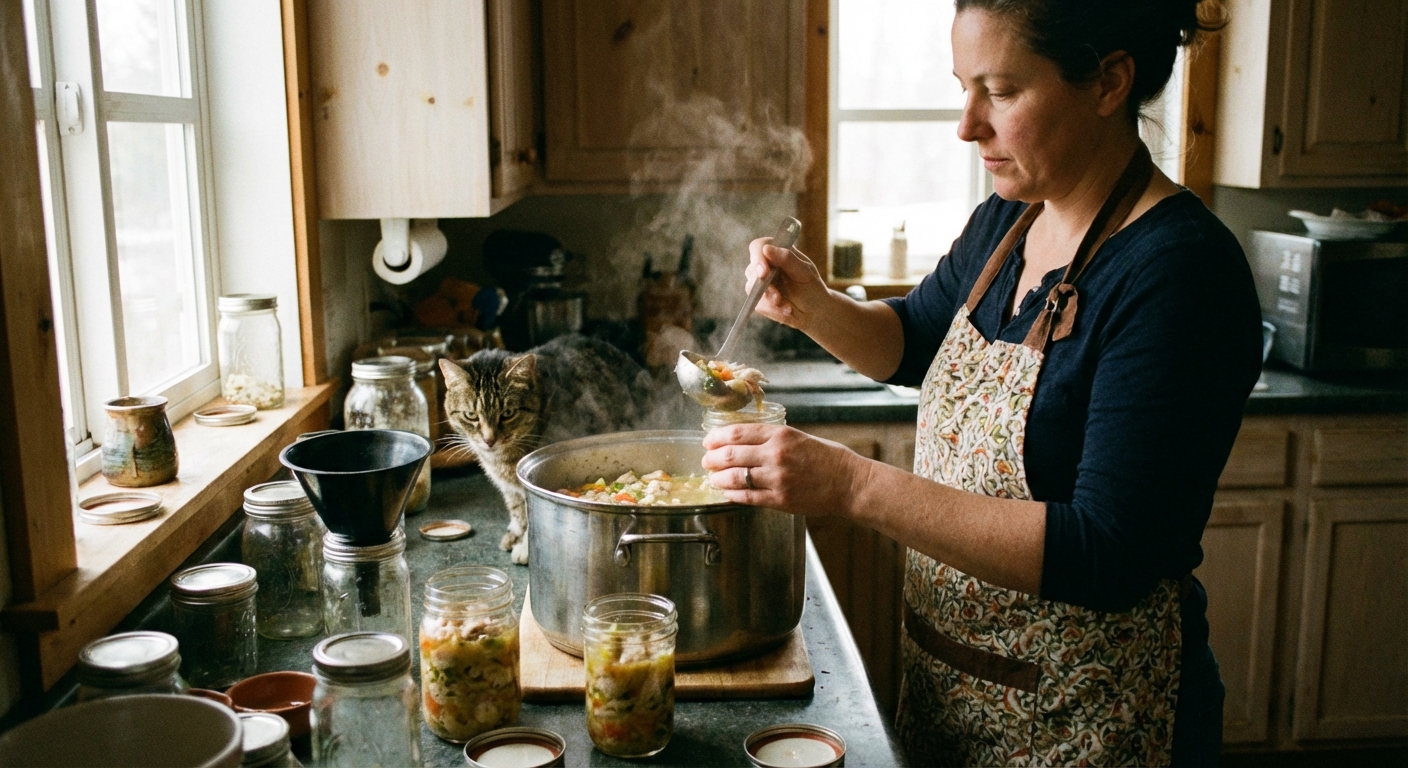
17 homemade cat food recipes
Reminder: Unless balanced with a formulated premix or a veterinary nutritionist recipe, the options below are best used as toppers or short-term supports as directed by your veterinarian.
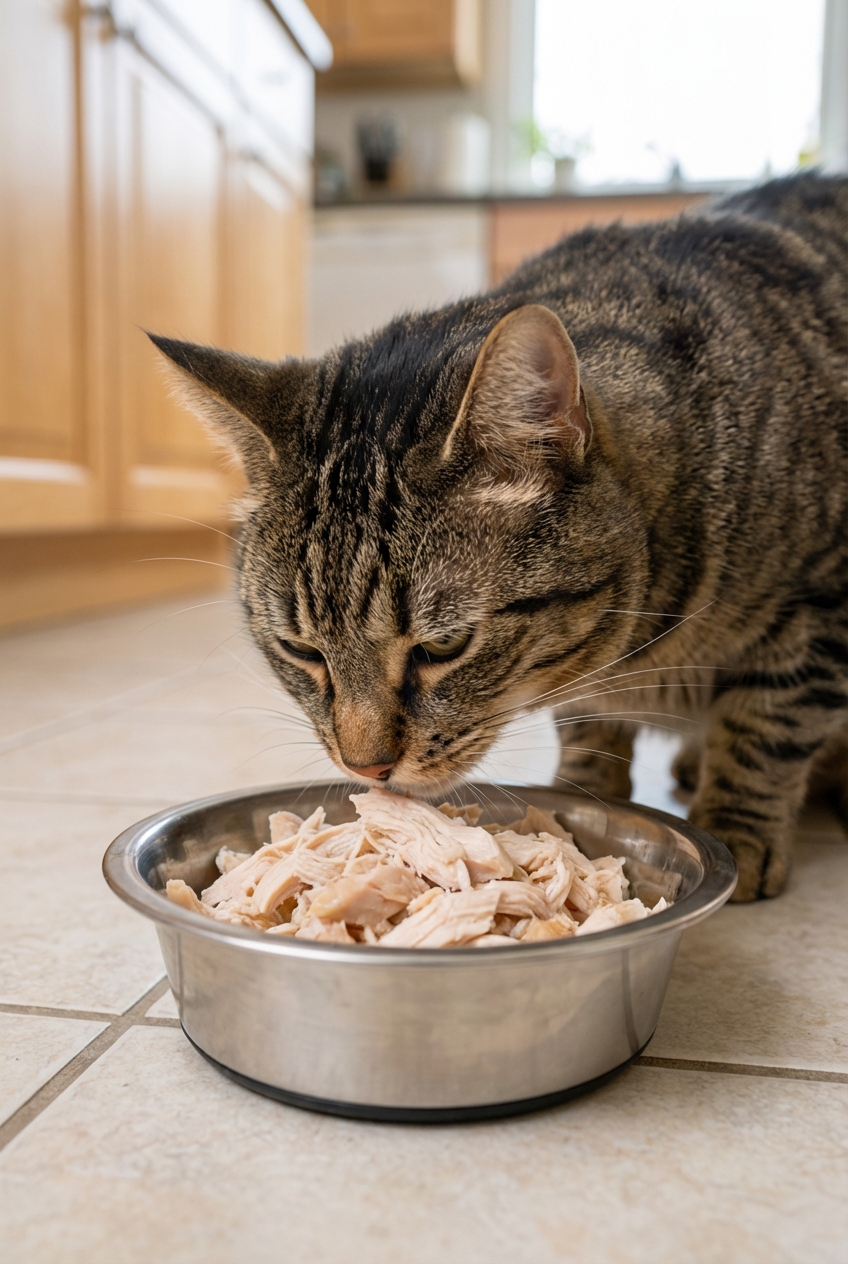
1) Shredded chicken and broth
Ingredients: boneless skinless chicken thighs or breasts, water.
Method: Poach chicken gently until fully cooked. Shred finely. Moisten with a few spoonfuls of the cooking broth.
Serving: Start with 1 to 2 teaspoons as a topper.
Best for: picky eaters and hydration support when used as a topper.
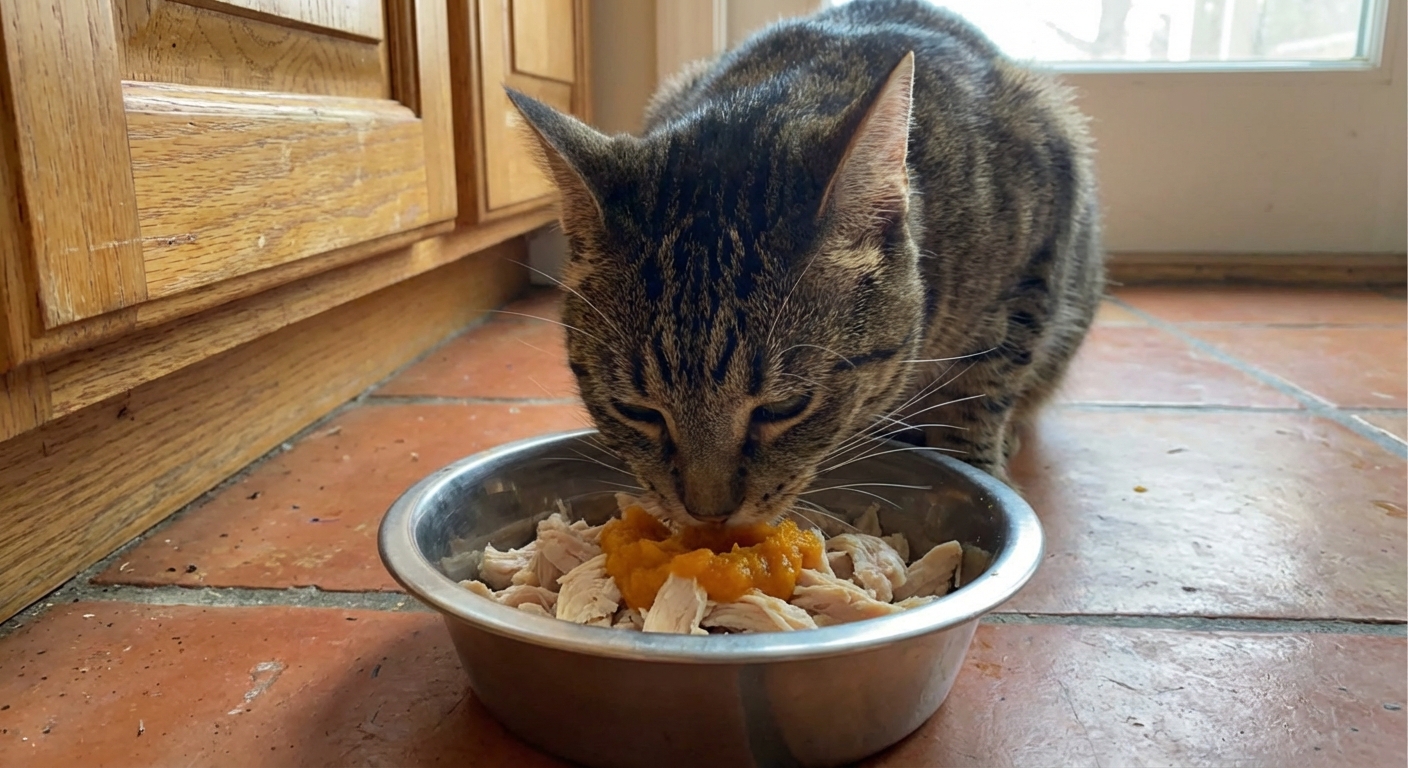
2) Chicken and pumpkin mix
Ingredients: cooked shredded chicken, plain canned pumpkin (not pie filling).
Method: Mix 2 to 3 tablespoons chicken with 1 teaspoon pumpkin.
Serving: Start with 1 teaspoon total. Too much fiber can backfire.
Best for: may help some cats with stool consistency or hairballs. Stop if stools worsen and check in with your veterinarian.
3) Chicken and egg scramble
Ingredients: 1 egg, 2 to 3 tablespoons cooked chopped chicken, a splash of water.
Method: Scramble egg fully in a nonstick pan with water, then stir in chicken until warmed.
Serving: 1 to 2 teaspoons as a topper, occasional use.
Best for: an occasional high-protein boost.
4) Turkey and zucchini mince
Ingredients: ground turkey, finely grated zucchini.
Method: Cook turkey thoroughly. Stir in a small spoonful of zucchini and cool.
Serving: 1 to 2 teaspoons as a topper.
Best for: cats who like a softer, minced texture.
5) Turkey and rice bland bowl
Ingredients: cooked ground turkey, well-cooked white rice, water or low-sodium unsalted broth.
Method: Combine turkey with a small amount of rice, add moisture, mash slightly.
Serving: 1 to 2 teaspoons, short-term only (up to 2 to 3 days), and vet-directed.
Best for: short-term bland feeding when your veterinarian recommends it. It is not a default fix for ongoing vomiting or diarrhea.
6) Turkey with salmon oil
Ingredients: cooked turkey, a few drops of pet-grade salmon oil.
Method: Warm turkey slightly and add salmon oil right before serving.
Serving: 1 to 2 teaspoons turkey. Use only a few drops of oil.
Best for: boosting palatability and omega-3 intake. Skip added oils if your cat has pancreatitis or needs a low-fat plan.
7) Beef and liver micro-boost
Ingredients: lean ground beef, a very small portion of cooked beef liver.
Method: Cook beef fully and drain. Mix in finely minced cooked liver.
Serving: 1 to 2 teaspoons as a topper.
Best for: encouraging appetite. Use liver sparingly to avoid excess vitamin A.
8) Beef with calcium base
Ingredients: cooked ground beef, feline-safe calcium source (bone meal or eggshell powder), water.
Method: Cook beef, cool, then mix in calcium source according to your veterinarian or product directions.
Serving: Use as part of a vet-formulated plan, not a casual topper.
Best for: owners working toward a more complete homemade plan.
9) Lamb and green bean mash
Ingredients: cooked ground lamb, very soft chopped green beans.
Method: Combine lamb with a small spoonful of green beans and mash.
Serving: 1 to 2 teaspoons as a topper.
Best for: cats who tolerate a tiny amount of fiber.
10) Sardine and egg mix
Ingredients: sardines packed in water (no added salt if possible), hard-boiled egg yolk.
Method: Mash a small sardine portion with a bit of yolk.
Serving: Half to 1 teaspoon as a high-value topper, occasional use.
Best for: variety and appetite. Fish-based toppers are best kept occasional, since frequent fish can skew overall nutrients. Sardines are rich, so keep portions small.
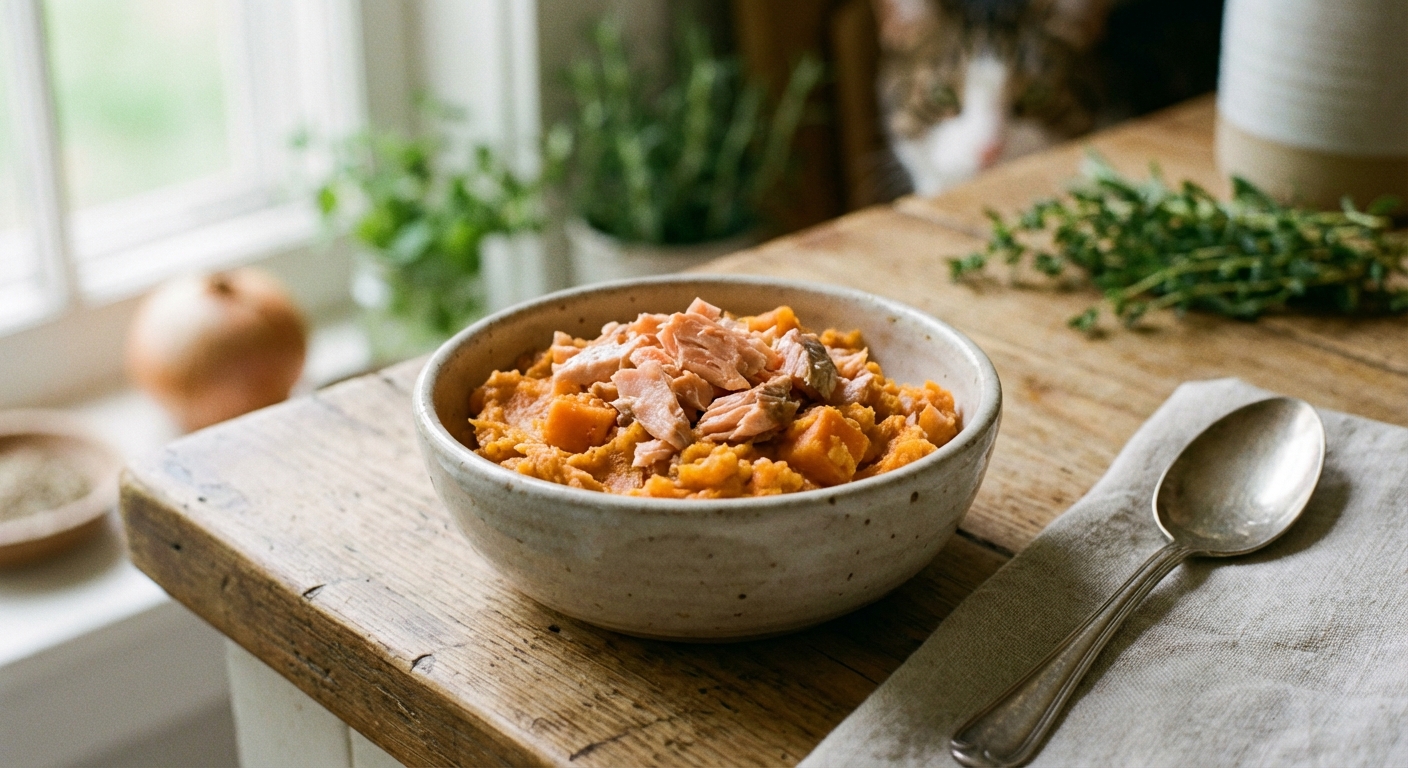
11) Salmon and sweet potato
Ingredients: cooked salmon, cooked mashed sweet potato.
Method: Flake salmon carefully, checking for bones. Mix with 1 teaspoon sweet potato.
Serving: 1 to 2 teaspoons as a topper.
Best for: variety days. Use caution with fatty fish for cats needing low-fat diets.
12) Tuna hydration mash
Ingredients: tuna in water (not brine), extra water, optional tiny bit of pumpkin.
Method: Mash tuna with water to create a soft, soupy texture.
Serving: 1 teaspoon as an occasional topper.
Best for: encouraging fluid intake. Choose tuna in water with no added salt when possible. Use tuna occasionally due to mercury and imbalance risks, and because some cats develop strong preferences for it.
13) White fish and carrot puree
Ingredients: cooked cod or tilapia, very soft cooked carrot.
Method: Flake fish and blend or mash with a small amount of carrot.
Serving: 1 to 2 teaspoons as a topper.
Best for: cats who prefer a smoother texture. Keep fish-based toppers occasional rather than daily.
14) Pork and pea bowl
Ingredients: cooked lean pork, a few cooked peas.
Method: Chop pork very finely. Add 2 to 3 peas, smashed.
Serving: 1 to 2 teaspoons as a topper.
Best for: rotation protein option for cats without sensitivities.
15) Rabbit and broth bowl
Ingredients: cooked rabbit meat, water or low-sodium unsalted broth.
Method: Cook rabbit thoroughly, shred, and moisten well.
Serving: 1 to 2 teaspoons as a topper.
Best for: cats with suspected food sensitivities, with veterinary input.
16) Chicken hearts and thigh mix
Ingredients: cooked chopped chicken hearts, cooked chopped chicken thigh.
Method: Cook both thoroughly, chop finely, and mix.
Serving: 1 to 2 teaspoons as a topper.
Best for: using organ meats thoughtfully. Hearts naturally contain taurine, but a complete diet still requires proper balancing.
17) Warm bone broth topper
Ingredients: pet-safe bone broth (no onion or garlic, low-sodium), cooked shredded chicken.
Method: Warm broth slightly, then pour a little over chicken or your cat’s regular food.
Serving: 1 to 2 teaspoons broth over the meal.
Best for: hydration and aroma, especially for older cats. Avoid broths that are salty or greasy.
Portioning and storage
Storage
- Refrigerator: up to 48 hours in a sealed container for cooked meat or egg mixtures (or follow USDA and FDA guidance; when in doubt, discard).
- Freezer: 1 to 2 months for best quality.
- Thaw safely: overnight in the fridge, not on the counter.
Serving temp
Many cats prefer food at body temperature. If you warm it, warm gently and stir well to avoid hot spots. Food should feel just warm, not hot.
Add water
Many cats have a low thirst drive, especially if they eat mostly dry food. Adding a tablespoon or two of warm water or low-sodium broth can improve total fluid intake.
Call your vet first
Homemade diets need extra caution if your cat has medical conditions. Get personalized guidance if your cat is:
- a kitten, pregnant, or nursing
- senior and losing weight
- diagnosed with kidney disease, urinary crystals, diabetes, pancreatitis, IBD, or food allergies
- vomiting, having diarrhea, constipated, or refusing food for more than 24 hours
Also keep in mind that some cats truly need prescription diets for urinary disease, kidney disease, or severe GI conditions. In those cases, homemade toppers may not be appropriate without your veterinarian’s approval.
Homemade cat food can be a supportive tool, but it is not a substitute for medical care when symptoms are ongoing.
Next step
If you are new to homemade cat food, start small. Pick one recipe your cat is likely to accept, use it as a topper for a week, and watch energy, stool quality, coat shine, and appetite. If you want to move toward fully homemade meals, ask your veterinarian about a complete formulation with the right levels of taurine, calcium, essential fatty acids, and vitamins.
Consistency is what makes nutrition powerful. A little thoughtful prep each week can support hydration, appetite, and a calmer mealtime routine for your cat.